
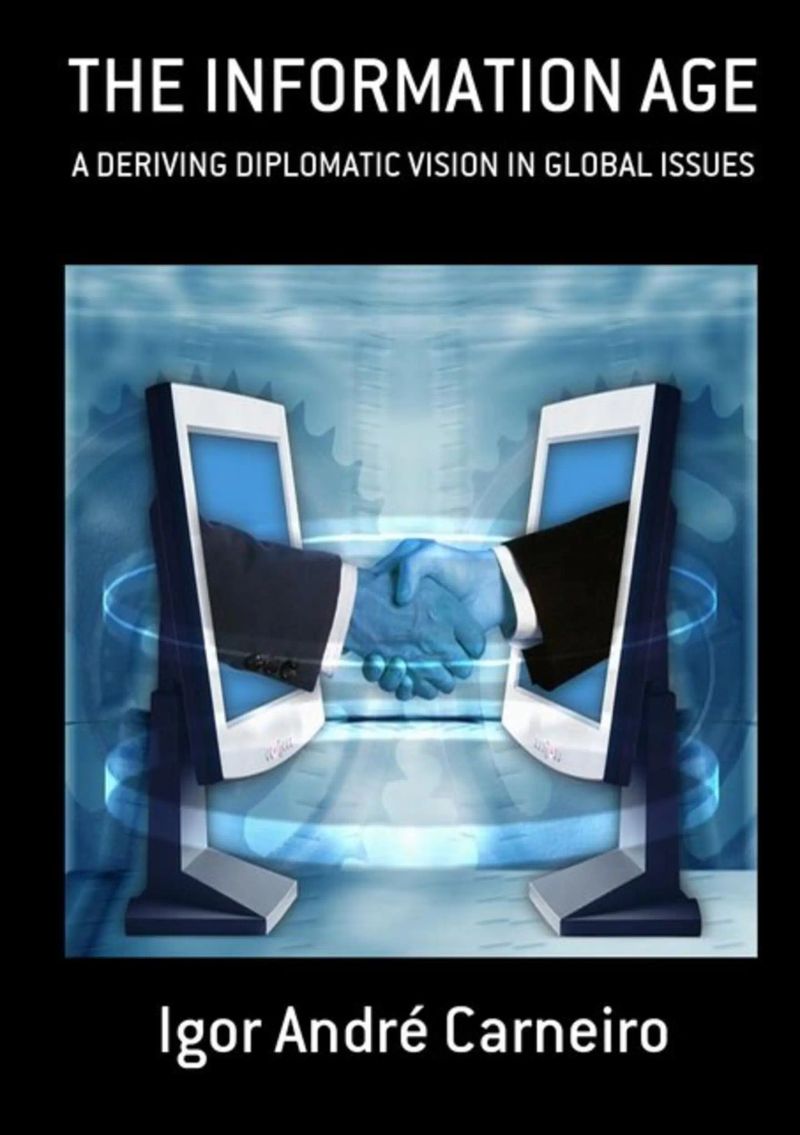


Length18h 14m
About this audiobook
More than ever before, advances in the fields of information and communication technologies (ICTs) have substantially affected most segments of our individual life in today's world. Manifested in various aspects and to varying extents, the changes and evolution are often collectively referred to as the "Information Age," or the "Information Revolution." It is this Information Age that has been posing a direct or indirect influence– whether positive or negative–on the way we think, behave, communicate, work, and even on how we earn our living. 'Information' has become a principal 'commodity' by which one measures levels of not only education, skills and knowledge, but also levels of well-being, prosperity, wealth, and development on a personal, local, national, and international scale. As the worldwide information landscape becomes more and more interconnected and interdependent, it is argued that the existing gap between the "haves" and "have-nots" will diminish. Interdependencies growing in all aspects of our lives should, after all, lead to real possibilities for achieving economic prosperity and attaining global peace. Nevertheless, they also produce powerful forces of social fragmentation, open critical vulnerabilities, and breed violence and conflict. Crises now bypass traditional state borders. The expanding global economic interactions, the spread of knowledge, the dispersion of advanced technologies, and the movements of people are just some of the threats, which are global in scope.
Audiobook details
GenrePsychology, Literary Classics
Length18 hrs 14 mins
Narrated byListen with 1,000+ voices
FormateBook with Audio
Publish dateJan 11, 2011
LanguagePortuguese
Table of contents
1IGOR ANDRÉ CARNEIRO
2ACKNOWLEDGEMENTS
3Revolution.”
4Geneva in 2003, and in Tunisia in 2005.
5Even more so, the global reach and influence of transnational corporations
Show all chaptersShow less
6Even at the local government level, certain traditional mechanisms of
7THE INFORMATION AGE
8I.I. The Evolution of the Knowledge Society
9(‘History of Computer Science: Treatment of information and automation’), at: http://www.histoire-informatique.org/grandes_dates/1_2.html
10Figure 1. 1. Real Median Hourly Wage by Education Level, 1973-2001
11educational sector.
12million, or 16.5%, by the year of 2010.
137 International Literacy Explorer, Statistics, “Introduction: The Limitations of Literacy
148 International Literacy Explorer, “Literacy Overview: Using Literacy Statistics,” at:
15I.I.I. Features of the Information Age
16optical media 0.002%.
17of the world’s
18Risks’), sous la direction de Pascal CHAIGNEAU, Paris: Economica, 2001, pp.
19almost unimpeachable source, rather than an unknown Kuwaiti girl, the
20I.I.II. Power in the Information Age
21Then there
22Illustration 1. 1. The distribution of power in the Information Age
23plant crops. Distance learning and Internet connections may even more
24and economies of scale remain in some of the aspects of power
25Information Age).
26States).21
27As an eventual consequence of the religious wars between the East and
2822 “Soviets Launch Computers Literacy Drive,” Science, January 10, 1986, 109-10.
29I.I.IV. Global Trends of Science and Technology in the Information Age
3026 “MIT Technology Review,” at: www.technologyreview.com, January/February 2001.
3127 The Global Technology Revolution, Summary, 2001, pp. 1-2.
32Another remarkable progress
3329 Ibid.
34features just a few centimeters in diameter on the ground.
35the traditions and modes of thought of a single culture.
36experience….
37Like
38the significant development of the erotic dimension of the Internet.
39Since technology-based international communication cannot, as
40For instance, the National Security Educational Program (NSEP)35 uses
4136 Walter R. Roberts, “Government Broadcasting,” iMP Magazine, July 23, 2001
42Pacific.
43Asia” (essentially to China, Vietnam, Laos, Cambodia).39 39
44Principal dates’, at: http://rfi.fr/Fichiers/RFI/Historie/histoire.asp).
45allies and enemies.
4641 Veran Matic, “Between an Electronic Gulag and the Global Village,”
47I.II. The Rise of Globalization
48Globalization, with particular reference to its role as a generator of
49I.II.I. The Emergence and Implications of Globalization
50world without reference to nationality, government authority, time of day

Negligência emocionalJonice Webb7h 46m4.3 (26.3K)$11 · $0.00

Crianças resilientesTovah P. Klein10h 23m4.3 (282)$11 · $0.00

A clínica gestáltica com criançasSheila Antony6h 21m4.8 (1.1K)$9 · $0.00

Fundamentos da clínica psicanalíticaSigmund Freud13h 25m4.7 (1.3K)$13 · $0.00

Sem perder a raizNilma Lino Gomes16h 3m4.7 (296)$13 · $0.00

Racismo e antirracismo na educaçãoEliane Cavalleiro6h 27m4.7 (260)$8.99 · $0.00

Elementos para uma compreensão diagnóstica em psicoterapiaÊnio Brito Pinto4h 19m4.7 (447)$4.99 · $0.00

Gestalt-terapia com criançasLuciana Aguiar11h 42m4.7 (379)$8.99 · $0.00

A construção do pensamento e da linguagemLev Semionovich Vigotski18h 53m4.5 (4.4K)$13 · $0.00

Uma voz sem palavrasPeter A. Levine14h 16m4.5 (19.1K)$14 · $0.00

Psicologia Do EmagrecimentoEvandro Borges4h 18m4.6 (1.2K)$7 · $0.00

Exercícios de bioenergéticaAlexander Lowen, Leslie Lowen4h 33m4.5 (2.4K)$7 · $0.00

Couraça muscular do caráter (Wilhelm Reich)J. A. Gaiarsa11h 7m4.6 (260)$12 · $0.00

Sobre a morte e o morrerElisabeth Kübler-Ross10h 18m4.4 (5.9K)$10 · $0.00

Um corpo estranhoGuacira Lopes Louro2h 53m4.5 (355)$7.99 · $0.00

Três guinéusVirginia Woolf11h 29m4.5 (1.2K)$11.99 · $0.00

O homem e seus símbolosCarl G. Jung, Joseph L. Henderson, M.-L. von Franz, Aniela Jaffé, Jolande Jacobi, John Freeman14h 50m4.4 (156.9K)$14 · $0.00

Exercícios de comunicação não violentaLucy Leu5h 47m4.4 (2.2K)$8.99 · $0.00

AlegriaAlexander Lowen12h 13m4.4 (2.2K)$11 · $0.00

Do que estamos falando quando falamos de estuproSohaila Abdulali7h 15m4.4 (3.4K)$11.99 · $0.00

Contos de Terror e MistérioArthur Conan Doyle8h 18m4.6 (2.1K)$4.60 · $0.00

Edgar Allan PoeEdgar Allan Poe11h 36m4.5 (323.5K)$8 · $0.00
O assassinato de Roger Ackroyd (traduzido)Agatha Christie8h 52m4.5 (45.2K)$4.60 · $0.00

O cão dos Baskerville (Traduzido)A. Conan Doyle6h 38m4.4 (22.1K)$4.70 · $0.00

1984George Orwell12h 36m4.3 (6M)$6 · $0.00

Arsène Lupin, o ladrão de casacaMaurice Leblanc6h 37m4.3 (35.6K)$8 · $0.00

Contos FluminensesMachado De Assis6h 3m4.3 (8.6K)$5 · $0.00

Noites brancasFiódor Dostoiévski3h 22m4.2 (183.6K)$5 · $0.00

O PeregrinoJohn Bunyan5h 22m4.2 (190.9K)$6 · $0.00

As Aventuras de Sherlock HolmesArthur Conan Doyle11h 45m4.3 (334.3K)$4.60 · $0.00

Dez índios pequenosAgatha Christie6h 27m4.4 (1.9M)$5.90 · $0.00

O Mestre e Margarita (Traduzido)Mikhail Bulgakov17h 29m4.6 (10.6K)$3.40 · $0.00

Dom Quixote - Vol. Ii - CervantesFabio Lins Org19h 50m4.7 (1.4K)$6 · $0.00

Deus no banco dos réusC.S. Lewis12h 52m4.6 (10.3K)$11 · $0.00

O Corpo Astral e os Fenômenos RelacionadosAle.mar.sas, Arthur E. Powell9h 13m4.6 (827)$4.50 · $0.00

KalevalaElias Lönnrot5h 46m4.6 (2.4K)$14 · $0.00

FaustoJohann Wolfgang von Goethe15h 58m4.6 (3.2K)$18 · $0.00
A Revolução dos Bichos (Traduzido)George Orwell3h 20m4.5 (221K)$3.40 · $0.00

Nossos Silêncios DouradosNatália Sartor De Moraes3h 25m4.6 (2K)$7 · $0.00

A porta secreta para o sucessoFlorence Scovel2h 29m4.5 (2.7K)$4.70 · $0.00
You may also like

Inteligência ArtificialAlvaro Algusto Comin, Cristina Godoy Bernardo de Oliveira, Dora Kaufman, Sarajane Marques Peres, Marcelo Fantinato, João Paulo Veiga, Eugenio Bucci, Rubens Beçak, Juliano Maranhão, Glauco Arbix13h 48m4.3 (28)$50 · $0.00

Fundamentos De Logística E Distribuição Física InternacionalLeonardo Specorte Russi2h 12m$6 · $0.00
Os Gestores Públicos E Os Desafios Da Sociedade DigitalSilvino Silveira4h 49m$9 · $0.00

Direito dos Seguros em Movimento - 1ª Ed - 2024Mario Viola, Nelson Rosenvald, Priscila Mathias Fichtner, Renato Chalfin, Rodrigo da Guia Silva, Roque de Holanda Melo, Ricardo Azevedo, Solange Paiva Vieira, Simone Negrão, Thaís Dias David Junqueira, Thaminy Teixeira, Thiago Gabbardo, Thiago Junqueira, Vinicius Padrão, Vivian Vicente de Almeida25h 56m$30 · $0.00

Direito do Consumidor e Argumentação JurídicaMaria do Socorro Rodrigues Coelho18h 5m$14 · $0.00

Direito Administrativo informacionalEurico Bitencourt Neto, Fernanda Fontenelle Grillo12h 23m$15 · $0.00

A incorporação das novas tecnologias médicas na saúde suplementarLucas Coelho Nabut10h$14 · $0.00
Gestão da tecnologia na educaçãoCharles Henrique Leal Vieira2h 38m$15 · $0.00
Revolução da Criatividade e do Direito AutoralVictor Prata6h 21m$13 · $0.00
Direito, Regulação e Políticas PúblicasAna Flávia Borges Paulino, Lucas Zabulon11h 49m$14 · $0.00

A tributação das Big Techs pela exploração econômica dos dados de seus usuários e a promoção de justiça tributária na economia digitalCristina Barbosa Rodrigues8h 46m$11 · $0.00

Relações Governamentais E InovaçãoEduardo Galvão (org.)10h 34m$8 · $0.00

Precisamos falar sobre o Poder JudiciárioMontgomery Muniz6h 29m$13 · $0.00

Lei Geral de Proteção de DadosAnita Spies da Cunha, Camila Rosa da Mata, Carolina da Rosa Roncatto, Caroline Schlatter, Clarissa Fernandes de Lima, Daniela de Andrade Fabro, Fabiano Menke, Gabriela Barcellos Scalco, Gustavo da Silva Melo, João Ricardo Bet Viegas, Lucas Cardoso Martini, Luísa Dresch da Silveira Jacques, Marcio Furtado, Maria Luiza Baillo Targa, Otávio Bertaco, Roberta Philippsen Janz, Rosana de Souza Kim Jobim, Silvia Levenfus, Taís Bigarella Lemos, Tatiana Meinhart Hahn e Vitória do Prado Bernardinis15h$16 · $0.00

Marketing PolíticoCarlos Márcio Salles De Vasconcelos10h 50m$37 · $0.00

Campanha Eleitoral Com Inteligência ArtificialMarcos Saheki9h 30m$19 · $0.00

"balanço Global: O Brasil No Comércio Internacional"Iraci Trentini53m$7 · $0.00

Comunicação, Tecnologia E DireitosLígia Maria Lopes Reis3h 10m$6 · $0.00

O Futuro do BlockchainUnknown Author56m$9 · $0.00

Da utilização da inteligência artificial nas execuções fiscais no BrasilPedro Henrique Moreira Simões2h 28m$8 · $0.00