
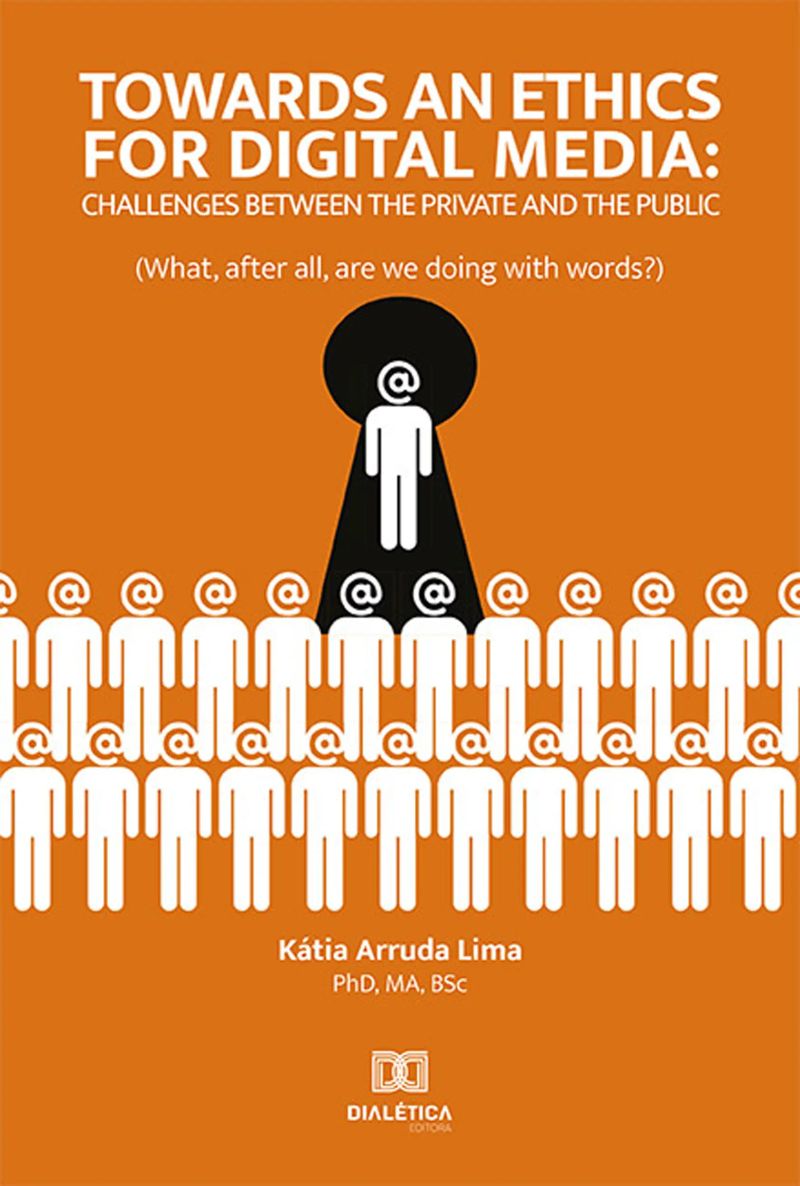
Towards an ethics for digital media
challenges between the private and the publicBy Kátia Arruda Lima


Length9h 10m
About this audiobook
Present societies are now immersed in a new and broader ?world ecology? that also includes a digital realm. We thus are capable of sharing much more information and of holding meetings and discussions, to an increasingly wider extent, via digital media. In such a context, we end up interacting on a daily basis through the mediation of "intelligent" machines relying on increasingly "smarter" algorithms. Considering the challenges that this new context brings, we wonder whether the elaboration of general (internationally agreed upon) regulations and guidelines applying to such (sometimes complex) platforms may be urgently needed. This, in order to guarantee that basic democratic rights (e.g., privacy and freedom of expression) are still respected and protected, in order to keep communication equal and free (see, e.g., relevant discussion about "net neutrality" in chapter 4). We also address the call for a more global Digital Media Ethics (Ess 2009), towards hopefully arriving at a consensual Magna Carta for the Internet (Sir Berners-Lee 2016), which would be coherent with basic democratic requirements and still relevant and encompassing enough to an increasingly "globalized" (post)modern world.
Audiobook details
GenreBusiness and Economics
Length9 hrs 10 mins
Narrated byListen with 1,000+ voices
FormateBook with Audio
Publish dateMar 2, 2021
LanguagePortuguese
Table of contents
1ACKNOWLEDGEMENTS
2RÉSUMÉ
31. INTRODUCTION
41.1 OBJECTIVES
51.2 METHODOLOGY
Show all chaptersShow less
6PART A
72. DEMOCRACY, PRAGMATISM AND COMMUNICATION
82.1 CAN SCIENCE and MORAL PHILOSOPHY BE RECONCILED? — A HISTORICAL CONTEXT
92.2 DEWEY’S APPROACH: EDUCATION, PUBLIC OPINION, AND COMMUNICATION
102.3 THE SEMIOTIC APPROACH: A PEIRCE-MEAD SYNTHESIS
113. A REINTERPRETATION OF THE TRANSCENDENTAL-PRAGMATIC APPROACH TO DISCUSSION
123.1 DISCOURSE ETHICS
133.2 ON COMMUNICATION POWER: FACING THE PARADOX OF ARGUMENTATION
143.2.1 The relevance of Perelman’s and Olbrechts-Tyteca’s New Rhetoric
153.2.2 Argumentation: naturally logical?
163.2.3 Philippe Breton’s triangular model of ethics for communication
173.3 PEIRCE-MEAD-GRIZE-BRETON COMPOUNDED MODEL FOR AUTONOMOUS SELVES
18PART B
194. DIGITAL MEDIA ETHICS
204.1 THE NEW “WORLD ECOLOGY”: DIGITAL MEDIA, POLITICS, AND SOCIAL NETWORKS
214.2 THE CHALLENGE OF PLURALISM
224.3 WHAT ABOUT PRIVACY?
234.4 CONTEMPORARY TRADEMARK
244.4.1 On Surveillance
254.4.2 The prospect of a Magna Carta for the Internet: discussion and analysis
264.4.3 Cases of regulations in Brazil and Canada
274.4.3.1 Brazil
284.4.3.2 Canada
295. CONCLUSIONS

O jogo do dinheiro infinitoMatheus Gaboardi14h 51m4.8 (126)$11 · $0.00

Como criar o seu negócio do zeroCamila Vidal5h 19m4.5 (1.3K)$9 · $0.00
Liderança e propósitoFred Kofman11h 44m4.5 (2.5K)$9 · $0.00

A psicologia financeiraMorgan Housel6h 59m4.4 (419.3K)$8 · $0.00
Deixe de ser pobreEduardo Feldberg6h 37m4.4 (408)$6 · $0.00

Paixão por vencerJack Welch, Suzy Welch11h 33m4.3 (3.8K)$9 · $0.00

Satisfação garantidaTony Hsieh9h 17m4.2 (109.1K)$9 · $0.00

A lógica do consumoMartin Lindstrom8h 37m4.1 (3K)$8 · $0.00

Do mil ao milhão: sem cortar o cafezinho – O best-seller de Thiago Nigro, autor de "O homem que comprou o tempo"Thiago Nigro6h 49m4.0 (50.3K)$7 · $0.00
Hit MakersDerek Thompson12h 54m4.0 (9.2K)$11 · $0.00

Gatilhos mentaisGustavo Ferreira3h 49m4.0 (3.7K)$7 · $0.00

Guia Essencial Para EmpreendedoresJoão Sá3h 14m5.0 (1)$6 · $0.00
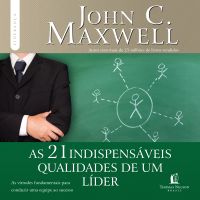
As 21 indispensáveis qualidades de um líderJohn C. Maxwell3h 20m4.6 (3.7K)$9 · $0.00

O que os olhos não veem, mas o coração senteFred Elboni2h 26m4.5 (3.1K)$11 · $0.00

Bem-vindo à Dunder MifflinBrian Baumgartner, Ben Silverman14h 5m4.6 (542)$20 · $0.00

GraçaMax Lucado3h 44m4.5 (4.6K)$8 · $0.00

Teoria Dos JogosFernando Barrichelo2h 21m4.5 (543)$5 · $0.00

Como ser tudo o que você quiserEmilie Wapnick6h 6m4.4 (2.8K)$9 · $0.00

Escola dos DeusesElio D'Anna18h 7m4.4 (4.2K)$12 · $0.00

A arte de gastar dinheiro: Escolhas simples para uma vida equilibrada – Do mesmo autor de "A psicologia financeira"Morgan Housel6h 24m4.3 (28.4K)$10 · $0.00
You may also like

O circuito dos afetosVladimir Safatle18h 8m4.6 (341)$11 · $0.00
Curso de Filosofia do Direito ContemporâneaDaniel Peixoto Murata37h 23m$22 · $0.00
Conservadorismo é uma ideologia?Robério Rosa2h 57m$13 · $0.00
LINDB - LEI DE INTRODUÇÃO ÀS NORMAS DO DIREITO BRASILEIRORonaldo Marinho19h 24m$21 · $0.00

As Relações entre Mídia e EleiçõesAidil Soares Navarro11h 6m$15 · $0.00
Quando dizer é poderRaphael Barcellos5h 41m$12 · $0.00
Administração como ação políticaDorival De Stefani7h 57m$14 · $0.00

Manipulação da identidade coletiva e poder político na trajetória do bolsonarismoPedro de Oliveira Filho4h 23m$13 · $0.00

Trocando o pneu com o carro andandoValéria Moraes8h 47m$14 · $0.00

As Leis Do PoderLarz Trent6h 47m$6 · $0.00

ErísticaDaiana Carolina da Silva Fernandes Couto3h 35m$15 · $0.00

História da educação no Rio Grande do NorteHananiel de Souza Amorim4h 14m$12 · $0.00

A Ética na Formação do Profissional do DireitoSilvia Munin Zancan4h 41m$12 · $0.00
A Teoria da Ponderação de Interesses e sua Aplicação na Tutela dos Direitos FundamentaisCláudio Fernandes Ferreira6h 46m$12 · $0.00
O Direito à Liberdade de Expressão Eleitoral em Tempos de Fake NewsLuiz Antonio da Silva Oliveira5h 57m$12 · $0.00

O Teatro De Bernardo SantarenoFernanda V. Botton E Flavio Botton7h 15m$6 · $0.00

PrudênciaCarlos Araujo Carujo1h 33m$7 · $0.00
Curso de Filosofia PolíticaLucas Magalhães Costa, Fernando Batista Pereira, Sandro Amadeu Cerveira, Zara Rego de Souza, José Roberto P. de Andrade Jr.4h 42m$12 · $0.00

Direito e IdeologiaLuiz Sibahi10h 39m$14 · $0.00

Aprenda A PensarClaudionor Aparecido Ritondale9h 11m$9 · $0.00