
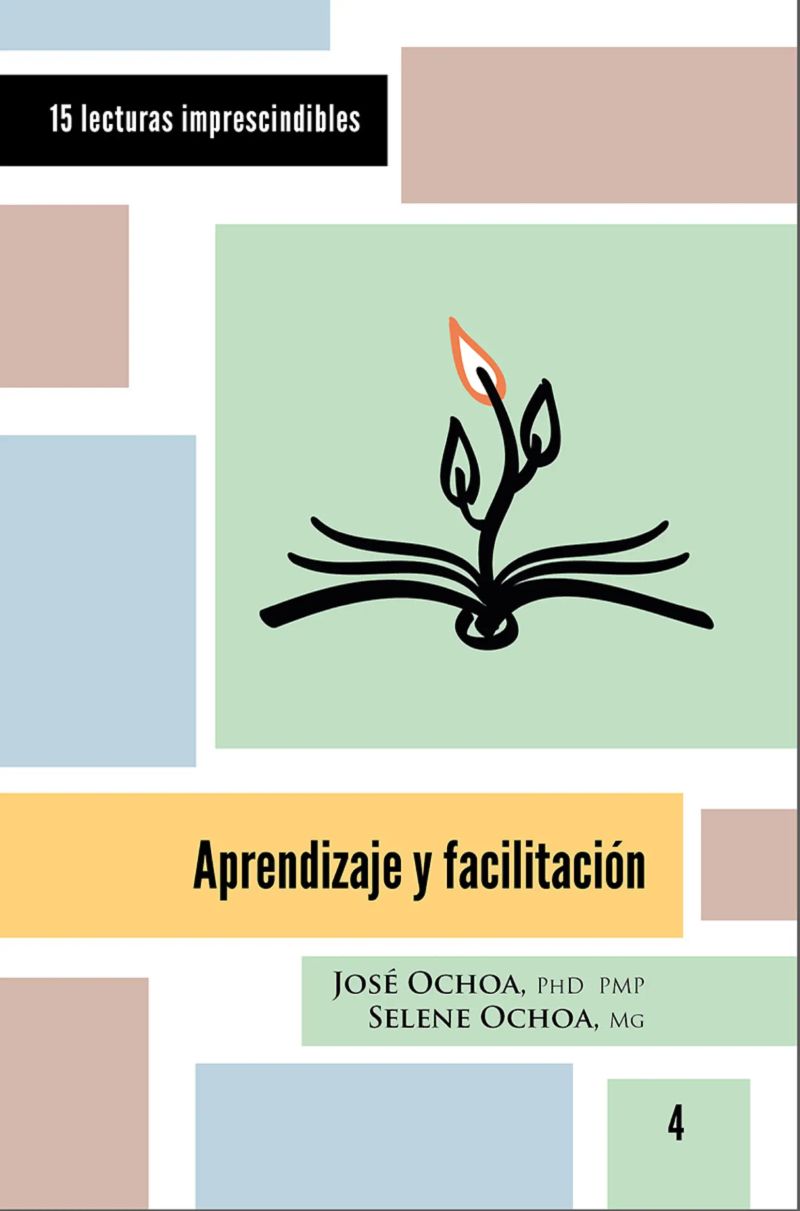
Aprendizaje y facilitación
By José Ochoa, Selene Ochoa


Length3h 14m
About this audiobook
Todo docente se plantea en algún momento cómo conseguir o mejorar la motivación e involucración de sus alumnos, pero no siempre dispone de pistas sobre cómo conseguirlo. En este libro pretendemos ofrecerle algunas de las propuestas más estimulantes e innovadoras.
El aprendizaje activo es una buena respuesta a este reto. Poner el foco en la persona que aprende, recuperar la dinámica de juego e introducir la dimensión lúdica en el proceso de aprendizaje son factores que pueden cambiar el entorno educativo en todos los niveles, de la escuela a la universidad, y en el aprendizaje continuo para el desempeño profesional.
Este planteamiento implica una revisión del rol del docente. Deja de ser el que sabe y transmite, para ser el guía en la aventura de descubrimiento que supone el aprendizaje. Por tanto, tendrá que desplegar habilidades de facilitación, una forma distinta de dinamizar grupos de trabajo, que también es cada vez más necesaria en el entorno empresarial y en todo tipo de organizaciones.
Con la ayuda de expertos exploraremos las claves de una facilitación eficaz, que contribuya a que los equipos consigan sus objetivos por medio del consenso y el compromiso.
Audiobook details
GenreEducation and Learning
Length3 hrs 14 mins
Narrated byListen with 1,000+ voices
FormateBook with Audio
Publish dateMay 31, 2017
LanguageSpanish
Table of contents
1Introducción
2Gardner, H. (1994) Estructuras de la mente. La teoría de las inteligencias múltiples. México: Fondo de Cultura Económica.
3Sternberg, R. J. y O’Hara, L. (2000) “Intelligence and Wisdom”, en Sternberg, R. J. (ed.) Handbook of Intelligence. Cambridge: Cambridge University Press: Capítulo 28.
4Marina, J. A. (2010) La educación del talento. Barcelona: Ariel.
5Morin, E. (1999) Los siete saberes para la educación del futuro. París: UNESCO.
Show all chaptersShow less
6Robinson, K. (2015) Escuelas creativas. La revolución que está transformando la educación. Barcelona: Grijalbo.
7Mellander, K. (1993) The power of learning. Nueva York: Mc-Graw-Hill.
8Kirkpatrick, D.L. (1998) Evaluación de acciones formativas. Los cuatro niveles. Barcelona: Epise.
9De Caluwé, L., Hofstede, G.J., y Peters, V. (eds.) (2008) Why do games work? In search of the active substance. Deventer: Kluwer.
10Thiagarajan, S. (2005) Thiagi’s interactive lectures. Power up your training with interactive games and exercises. Baltimore: ASTD Press.
11Townsend, J. y Donovan, P. (2009) Facilitator’s pocketbook. Alresford: Management Pocketbooks Ltd. (2a. ed).
12Bens, I. (2000) Advanced Team Facilitation. Tools to achieve high performance teams. Salem (NH): Participative Dynamics.
13Wilkinson, M. (2004) The secrets of facilitation. The SMART Guide to getting results with groups. San Francisco: Jossey-Bass.
14Schwarz, R. (2002) The Skilled Facilitator. A comprehensive resource for consultants, facilitators, managers, trainers, and coaches. San Francisco: Jossey-Bass.
15Grey, D. Brown, S. y Macanufo, J. (2010) Gamestorming. A Playbook for Innovators, Rulebreakers, and Changemakers. Sebastopol (CA): O’Reilly.
16Derby, E. y Larsen, D. (2006) Agile Retrospectives. Making good teams great. Raleigh, Dallas: The Pragmatic Bookshelf.
17Sobre los autores
Series

La gran estafaJuan Andrés Guzmán, Juan Andrés Guzmán, Mónica González, Juan Pablo Figueroa, Gregorio Riquelme18h 45m4.5 (133)$17 · $0.00

Cada niño un lector: Estrategias innovadoras para enseñar a leer y escribirStanley L. Swartz8h 42m4.8 (12)$9 · $0.00

La mala educaciónFernando Atria6h 37m4.4 (15)$6 · $0.00
La construcción de la mente: Cómo se desarrolla la teoría de la menteHenry Wellman M.19h 21m$13 · $0.00

Claves para la educación del futuroPatricio Meller6h 30m$9 · $0.00

Universitarios, el problema no es el lucro es el mercadoPatricio Meller2h 49m$9 · $0.00

El DhammapadaBuda Gautama2h 24m4.4 (35K)$12 · $0.00

Arte infantilMary Ann Kohl7h 6m4.4 (467)$18 · $0.00
Cómo funciona el aprendizajeSusan Ambrose, Michele DiPietro, Michael W. Brideges, Marshal Lovett, Marie K Norman11h 39m4.3 (3.8K)$16 · $0.00

Bueno, Bonito y CaritoDavid Gómez10h 21m4.4 (639)$10 · $0.00

El Tratado De La Pintura.Leonardo Da Vinci Y Javier Tavera Mas.8h 53m4.3 (2.8K)$8 · $0.00

Tratado De Medicina Oculta Y Magia Practica En EspañolAun Weor8h 20m4.4 (452)$13 · $0.00

Burro GenioVictor Villasenor12h 18m4.3 (3.7K)$29 · $0.00

TimeoPlatón4h 22m4.2 (15.1K)$9 · $0.00
Desde el nacimiento hasta los 5 añosMary D. Sheridan2h 18m4.3 (287)$13 · $0.00
La utilidad de lo inútilNuccio Ordine, Jordi Bayod Brau (Translator)4h 37m4.2 (7.4K)$12 · $0.00

Lettres De Madame De Sévigné By Marquise De Marie De Rabutin-chantal Sévigné.Marie De Rabutin-chantal Sévigné. , Javier Tavera Mas.27h 5m4.1 (3K)$8 · $0.00

Mi primer año como docenteTodd Whitaker, Madeline Whitaker, Katherine Whitaker4h 26m4.2 (474)$19 · $0.00
Ética a EudemoAristóteles5h 27m4.1 (2.2K)$0.60 · $0.00

Las nubesAristófanes2h 6m3.9 (16K)$0.60 · $0.00
You may also like
Piense como un millonarioCamilo Cruz, Brian Tracy3h 6m4.4 (2.2K)$14 · $0.00
Cómo hacer posibles conversaciones imposiblesPeter Boghossian, James Lindsay7h 9m4.2 (2.7K)$12 · $0.00
Lidera con gratitudAdrian Gostick, Chester Elton6h 24m4.4 (1.2K)$12 · $0.00

Siete pasos para convertir tus sueños en realidadDr. Camilo Cruz4h 7m4.4 (260)$14 · $0.00

La magia de creerClaude M. Bristol8h 22m4.4 (1.4K)$14 · $0.00

El arte de conseguir dinero (traducido)P. T. Barnum1h 30m4.1 (3.2K)$4.70 · $0.00

Un año para cambiar el chipNapoleón Hill4h 37m4.3 (620)$14 · $0.00
Imagina lo imposible: manual práctico & caja de herramientas para la innovaciónGerard J Prins III10h 59m$11 · $0.00

Cerebro y liderazgoRené Rodríguez8h 11m$14 · $0.00

Cómo transformar las adversidades en oportunidadesWillie Jolley6h 15m$14 · $0.00
Management 5.0Ruth Arroyo Tobar7h 18m$14 · $0.00
Territorios pedagógicosJuan David Chávez10h 51m$8 · $0.00

Aprendizaje extraordinario en FinlandiaKirsti Lonka12h 2m3.9 (47)$14 · $0.00

Administración de Hospitales y Servicios de SaludJavier Arellano Díaz, Manuel Cervantes Ocampo, Jaime Eduardo Guzmán Pantoja, Elsa Armida Gutiérrez Román9h 35m4.8 (12)$12 · $0.00
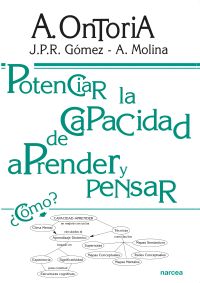
Potenciar la capacidad de aprender a pensarAntonio Ontoria, Juan Pedro R. Gómez, Ángela de Luque6h 7m$17 · $0.00
Dirección y Gestión de ProyectosNelson Antonio Moreno Monsalve, Merlín Patricia Grueso Hinestroza, Yésica Mayett-Moreno, Laura Sánchez Baltasar16h 14m$12 · $0.00
Dime cómo evalúas y te diré qué valorasMariela Cuda5h 25m$9 · $0.00
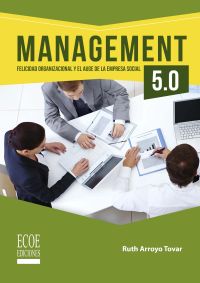
Management 5.0Ruth Arroyo Tobar8h 23m$19 · $0.00
Domina las inversionesMatthew Partridge9h 3m$26 · $0.00
GAMIFICACIÓNJosé Luis Ramírez3h 15m4.3 (19)$12 · $0.00