
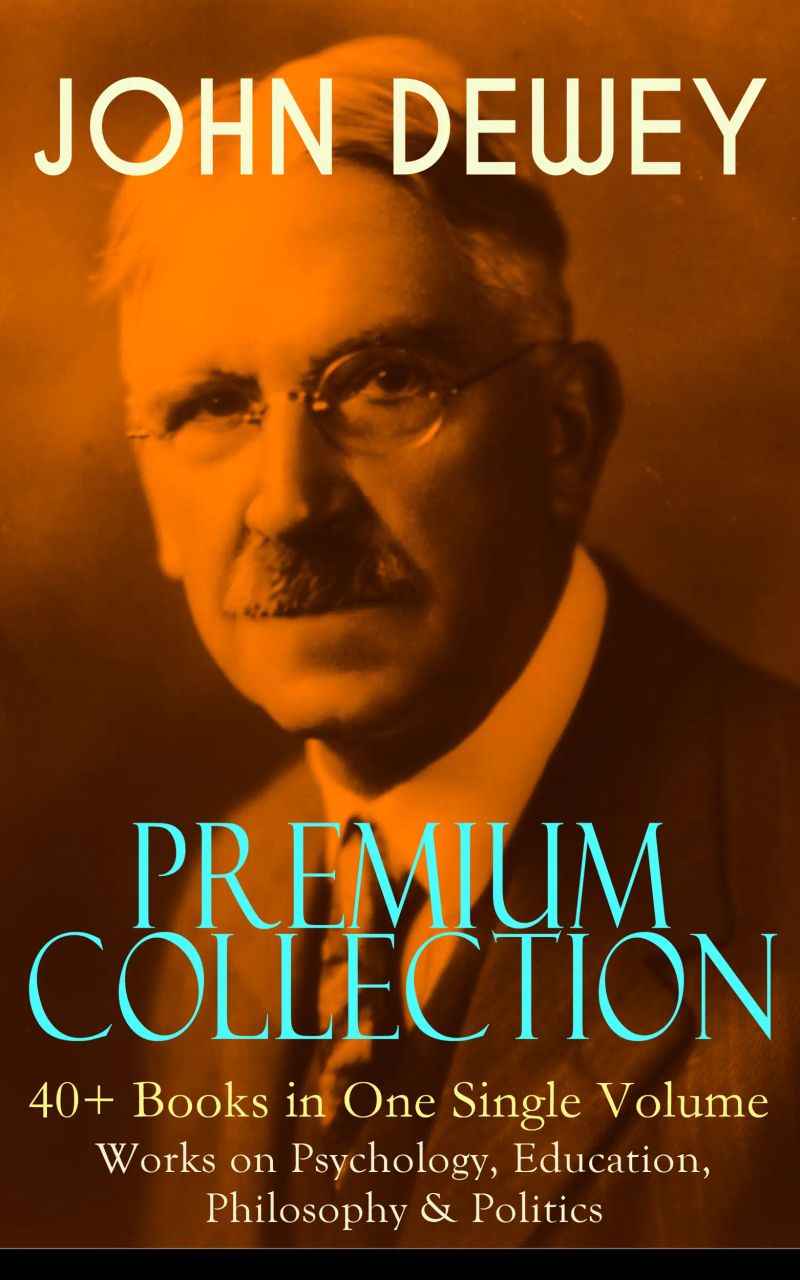
JOHN DEWEY Premium Collection – 40+ Books in One Single Volume: Works on Psychology, Education, Philosophy & Politics
Progressive Education, Pragmatism, DemocracyBy John Dewey


Length166h 52m
About this audiobook
This carefully crafted ebook: "JOHN DEWEY Premium Collection – 40+ Books in One Single Volume: Works on Psychology, Education, Philosophy & Politics" is formatted for your eReader with a functional and detailed table of contents.
The collection contains:
Books on Education
Democracy and Education
Child and the Curriculum
School and Society
Schools Of To-morrow
The Schools of Utopia
Moral Principles in Education
Interest and Effort in Education
Health and Sex in Higher Education
My Pedagogic Creed
Books on Philosophy
German Philosophy and Politics
Leibniz's New Essays Concerning the Human Understanding
Studies in Logical Theory
Interpretation of Savage Mind
Ethics
The Problem of Values
Soul and Body
Logical Conditions of a Scientific Treatment of Morality
Evolutionary Method As Applied To Morality
Influence of Darwin on Philosophy
Nature and Its Good: A conversation
Intelligence and Morals
Experimental Theory of Knowledge
Intellectualist Criterion for Truth
A Short Catechism Concerning Truth
Beliefs and Existences
Experience and Objective Idealism
The Postulate of Immediate Empiricism
"Consciousness" and Experience
Significance of the Problem of Knowledge
Essays in Experimental Logic
Reconstruction in Philosophy
Does Reality Possess Practical Character?
Books on Psychology
Psychology and Social Practice
Psychological Doctrine and Philosophical Teaching
Psychology as Philosophic Method
New Psychology
How We Think
Reflex Arc Concept in Psychology
Psychology of Effort
Creative Intelligence
Ego as Cause
Terms 'Conscious' and 'Consciousness'
On Some Current Conceptions of the term 'Self'
Psychological Standpoint
Theory of Emotion
Psychology of Infant Language
Knowledge and Speech Reaction
Human Nature and Conduct
Books on Politics
China, Japan and the U.S.A
Letters
Criticisms
...
John Dewey (1859-1952) is one of the primary figures associated with the philosophy of pragmatism and is considered one of the founders of functional psychology.
Audiobook details
GenrePhilosophy
Length166 hrs 52 mins
Narrated byListen with 1,000+ voices
FormateBook with Audio
Publish dateMay 13, 2016
LanguageEnglish
Table of contents
1JOHN DEWEY Premium Collection – 40+ Books in One Single Volume: Works on Psychology, Education, Philosophy & Politics
142The Evolutionary Method As Applied To Morality: Its Scientific Necessity & Its Significance for Conduct
2On Education
143Its Scientific Necessity
3Democracy and Education: An Introduction to the Philosophy of Education
144Its Significance for Conduct
4Chapter One: Education as a Necessity of Life: Summary. It is the very nature of life to strive to continue in being
145The Influence of Darwin on Philosophy1
5Chapter Two: Education as a Social Function: Summary. The development within the young of the attitudes and
146Nature and Its Good: A conversation1
Show all chaptersShow less
6Chapter Three: Education as Direction: Summary. The natural or native impulses of the young do not agree with
147Intelligence and Morals1
7Chapter Four: Education as Growth: Summary. Power to grow depends upon need for others and plasticity
148The Experimental Theory of Knowledge1
8Chapter Five: Preparation, Unfolding, and Formal Discipline: Summary. The conception that the result of the educative process is
149The Intellectualist Criterion for Truth1
9Chapter Six: Education as Conservative and Progressive: Summary. Education may be conceived either retrospectively or
150A Short Catechism Concerning Truth1
10Chapter Seven: The Democratic Conception in Education: Summary. Since education is a social process, and there are many kinds
151Beliefs and Existences1
11Chapter Eight: Aims in Education: Summary. An aim denotes the result of any natural process brought to
152Experience and Objective Idealism1
12Chapter Nine: Natural Development and Social Efficiency as Aims: Summary. General or comprehensive aims are points of view for surveying
153The Postulate of Immediate Empiricism1
13Chapter Ten: Interest and Discipline: Summary. Interest and discipline are correlative aspects of activity
154"Consciousness" and Experience1
14Chapter Eleven: Experience and Thinking: Summary. In determining the place of thinking in experience we first
155The Significance of the Problem of Knowledge1
15Chapter Twelve: Thinking in Education: Summary. Processes of instruction are unified in the degree in which
156I. Introduction
16Chapter Thirteen: The Nature of Method: Summary. Method is a statement of the way the subject matter of an
157II. The Relationship of Thought and its Subject-Matter
17Chapter Fourteen: The Nature of Subject Matter: Summary. The subject matter of education consists primarily of the
158III. The Antecedents and Stimuli of Thinking
18Chapter Fifteen: Play and Work in the Curriculum: Summary. In the previous chapter we found that the primary subject
159IV. Data and Meanings
19Chapter Sixteen: The Significance of Geography and History: Summary. It is the nature of an experience to have implications which
160V. The Objects of Thought
20Chapter Seventeen: Science in the Course of Study: Summary. Science represents the fruition of the cognitive factors in
161VI. Some Stages of Logical Thought
21Chapter Eighteen: Educational Values: Summary. Fundamentally, the elements involved in a discussion of value
162VII. The Logical Character of Ideas
22Chapter Nineteen: Labor and Leisure: Summary. Of the segregations of educational values discussed in the
163VIII. The Control of Ideas by Facts
23Chapter Twenty: Intellectual and Practical Studies: Summary. The Greeks were induced to philosophize by the increasing
164IX. Naïve Realism vs. Presentative Realism58
24Chapter Twenty-one: Physical and Social Studies: Naturalism and Humanism: Summary. The philosophic dualism between man and nature is reflected in
165X. Epistemological Realism: The Alleged Ubiquity of the Knowledge Relation
25Chapter Twenty-two: The Individual and the World: Summary. True individualism is a product of the relaxation of the grip
166XI. The Existence of the World as a Logical Problem
26Chapter Twenty-Three: Vocational Aspects of Education: Summary. A vocation signifies any form of continuous activity which
167XII. What Pragmatism Means by Practical
27Chapter Twenty-four: Philosophy of Education: Summary. After a review designed to bring out the philosophic issues
168XIII. An Added Note as to the "Practical"
28Chapter Twenty-five: Theories of Knowledge: Summary. Such social divisions as interfere with free and full
169XIV. The Logic of Judgments of Practice (pt. 1)
29Chapter Twenty-six: Theories of Morals: Summary. The most important problem of moral education in the school
170XIV. The Logic of Judgments of Practice (pt. 2)
30The Child and the Curriculum
171Chapter I. Changing Conceptions of Philosophy
31The School and Society
172Chapter II. Some Historical Factors in Philosophical Reconstruction
32The School and Social Progress
173Chapter III. The Scientific Factor in Reconstruction of Philosophy
33The School and the Life of the Child
174Chapter IV. Changed Conceptions of Experience and Reason
34Waste in Education
175Chapter V. Changed Conceptions of the Ideal and the Real
35Three Years of the University Elementary School
176Chapter VI. The Significance of Logical Reconstruction
36The Psychology of Elementary Education
177Chapter VII. Reconstruction in Moral Conceptions
37Froebel's Educational Principles
178Chapter VIII. Reconstruction as Affecting Social Philosophy
38The Psychology of Occupations
179Does Reality Possess Practical Character?
39The Development of Attention
180Psychology and Social Practice1
40The Aim of History in Elementary Education
181Psychological Doctrine and Philosophical Teaching
41Preface
182Psychology as Philosophic Method
42Chapter I. Education As Natural Development
183The New Psychology
43Chapter II. An Experiment In Education As Natural Development
184Preface
44Chapter III. Four Factors In Natural Growth
185Part One: The Problem of Training Thought
45Chapter IV. The Reorganization Of The Curriculum
186Chapter One. What is Thought?
46Chapter V. Play
187Chapter Two. The Need for Training Thought
47Chapter VI. Freedom And Individuality
188Chapter Three. Natural Resources in the Training of Thought
48Chapter VII. The Relation Of The School To The Community
189Chapter Four. School Conditions and the Training of Thought
49Chapter VIII. The School As A Social Settlement
190Chapter Five. The Means and End of Mental Training: The Psychological and the Logical
50Chapter IX. Industry And Educational Readjustment
191Part Two: Logical Considerations
51Chapter X. Education Through Industry
192Chapter Six. The Analysis of a Complete Act of Thought
52Chapter XI. Democracy And Education
193Chapter Seven. Systematic Inference: Induction and Deduction
53The Schools of Utopia
194Chapter Eight. Judgment: The Interpretation of Facts
54Introduction
195Chapter Nine. Meaning: Or Conceptions and Understanding
55I. The Moral Purpose Of The School
196Chapter Ten. Concrete and Abstract Thinking
56II. The Moral Training Given By The School Community
197Chapter Eleven. Empirical and Scientific Thinking
57III. The Moral Training From Methods Of Instruction
198Part Three: The Training of Thought
58IV. The Social Nature Of The Course Of Study
199Chapter Twelve. Activity and the Training of Thought
59V. The Psychological Aspect Of Moral Education
200Chapter Thirteen. Language and the Training of Thought
60Outline
201Chapter Fourteen. Observation and Information in the Training of Mind
61Introduction
202Chapter Fifteen. The Recitation and the Training of Thought
62I. Unified Versus Divided Activity
203Chapter Sixteen. Some General Conclusions
63II. Interest As Direct And Indirect
204The Reflex Arc Concept in Psychology
64III. Effort, Thinking, And Motivation
205The Psychology of Effort
65IV. Types Of Educative Interest
206Creative Intelligence: Essays in the Pragmatic Attitude et al.
66V. The Place Of Interest In The Theory Of Education
207The Need for a Recovery of Philosophy
67Outline
208Reformation of Logic
68Health and Sex in Higher Education
209Intelligence and Mathematics
69My Pedagogic Creed
210Scientific Method and Individual Thinker
70Article One. What Education Is
211Consciousness and Psychology
71Article Two. What The School Is
212The Phases of the Economic Interest
72Article Three. The Subject-matter Of Education
213The Moral Life and the Construction of Values and Standards64
73Article Four. The Nature Of Method
214Value and Existence in Philosophy, Art, and Religion
74Article Five. The School And Social Progress
215The Ego as Cause
75On Philosophy
216The Terms 'Conscious' and 'Consciousness'
76German Philosophy and Politics
217On Some Current Conceptions of the term 'Self'
77Preface
218The Psychological Standpoint
78I. German Philosophy: The Two Worlds
219The Theory of Emotion: Emotional Attitudes & the Significance of Emotions
79II. German Moral and Political Philosophy
220Emotional Attitudes
80III. The Germanic Philosophy of History
221The Significance of Emotions
81Preface
222The Psychology of Infant Language
82Chapter I. The Man.
223Knowledge and Speech Reaction
83Chapter II. The Sources of His Philosophy.
224Preface
84Chapter III. The Problem, and its Solution.
225Introduction
85Chapter IV. Locke and Leibniz.—Innate Ideas.
226Part One. The Place of Habit in Conduct
86Chapter V. Sensation and Experience.
227I
87Chapter VI. The Impulses and the Will.
228II
88Chapter VII. Matter and its Relation to Spirit.
229III
89Chapter VIII. Material Phenomena and Their Reality.
230IV
90Chapter IX. Some Fundamental Conceptions.
231V
91Chapter X. The Nature and Extent of Knowledge.
232VI
92Chapter XI. The Theology of Leibniz.
233Part Two. The Place of Impulse in Conduct
93Chapter XII. Criticism and Conclusion.
234I
94Preface
235II
95I. Thought and its Subject-Matter: The General Problem of Logical Theory
236III
96II. Thought and its Subject-Matter: The Antecedent Conditions and Cues of the Thought-Function
237IV
97III. Thought and its Subject-Matter: The Datum of Thinking
238V
98IV. Thought and its Subject-Matter: The Content and Object of Thought
239VI
99V. A Critical Study of Bosanquet's Theory of Judgment44
240VII
100VI. Typical Stages in the Development of Judgment
241Part Three. The Place of Intelligence in Conduct
101VII. The Nature of Hypothesis
242I
102VIII. Image and Idea in Logic
243II
103IX. The Logic of the Pre-Socratic Philosophy87
244III
104X. Valuation as a Logical Process (pt. 1)
245IV
105X. Valuation as a Logical Process (pt. 2)
246V
106XI. Some Logical Aspects of Purpose (pt. 1)
247VI
107XI. Some Logical Aspects of Purpose (pt. 2)
248VII
108Interpretation of Savage Mind
249VIII
109Preface
250IX
110Chapter I. Introduction
251Part Four. Conclusion
111Part I. The Beginnings and Growth of Morality
252I
112Chapter II. Early Group Life
253II
113Chapter III. The Rationalizing and Socializing Agencies in Early Society
254III
114Chapter IV. Group Morality—Customs or Mores
255IV
115Chapter V. From Custom to Conscience; From Group Morality to Personal Morality
256On Politics
116Chapter VI. The Hebrew Moral Development
257I. On Two Sides of the Eastern Seas
117Chapter VII. The Moral Development of the Greeks
258II. Shantung, As Seen From Within
118CHAPTER VIII. The Modern Period
259III. Hinterlands in China
119CHAPTER IX. A General Comparison of Customary and Reflective Morality
260IV. A Political Upheaval in China
120Part II. Theory of the Moral Life
261V. Divided China
121Chapter X. The Moral Situation
262VI. Federalism in China
122Chapter XI. Problems of Moral Theory
263VII. A Parting of the Ways for America
123Chapter XII. Types of Moral Theory
264Letters from China and Japan (pt. 1)
124Chapter XIII. Conduct and Character
265Letters from China and Japan (pt. 2)
125Chapter XIV. Happiness and Conduct: The Good and Desire
266Criticisms of John Dewey
126Chapter XV. Happiness and Social Ends139
267The Chicago School1 by William James
127Chapter XVI. The Place of Reason in the Moral Life: Moral Knowledge
268Preface
128Chapter XVII. The Place of Duty in the Moral Life: Subjection to Authority
269Chapter I. "Psychology as Philosophic Method"
129Chapter XVIII. The Place of the Self in the Moral Life
270Chapter II. The Development of the Psychological Standpoint
130Chapter XIX. The Virtues
271Chapter III. "Moral Theory and Practice"
131Part III. The World of Action
272Chapter IV. Functional Psychology
132Chapter XX. Social Organization and the Individual
273Chapter V. The Evolutionary Standpoint
133Chapter XXI. Civil Society and the Political State
274Chapter VI. "Studies in Logical Theory"
134Chapter XXII. The Ethics of the Economic Life
275Chapter VII. The Polemical Period
135Chapter XXIII. Some Principles in the Economic Order
276Chapter VIII. Later Developments
136Chapter XXIV. Unsettled Problems in the Economic Order
277Chapter IX. Conclusions
137Chapter XXV. Unsettled Problems in the Economic Order (Continued)
278Introductory
138Chapter XXVI. The Family
279Chapter I. The Pragmatic Doctrine as Originally Proposed by Peirce.
139The Problem of Values
280Chapter II. The Interpretation Given to Pragmatism by James.
140Soul and Body
281Chapter III. The Pragmatic Doctrine as Set Forth by Dewey.
141Logical Conditions of a Scientific Treatment of Morality
282Chapter IV. Summary and Conclusion.
More from John Dewey

Reconstruction in PhilosophyJohn Dewey6h 43m$1 · $0.00

The Collected Works of John DeweyJohn Dewey168h 59m$1 · $0.00

The Essential John Dewey: 20+ Books in One EditionJohn Dewey88h 54m$1 · $0.00

Leibniz's New Essays Concerning the Human Understanding: A Critical ExpositionJohn Dewey8h 57m$1 · $0.00
How We Think & Other Works On LogicJohn Dewey51h 12m$2 · $0.00

John Dewey: Philosophical WorksJohn Dewey86h 57m$1 · $0.00

Schools Of To-morrow + The Schools of UtopiaJohn Dewey7h 42m$1 · $0.00

John Dewey: The Philosophy of EducationJohn Dewey33h 59m$1 · $0.00

The Collected Works of John DeweyJohn Dewey166h 52m$2 · $0.00
CREATIVE INTELLIGENCE & Other Works on the Human Thought ProcessJohn Dewey52h 19m$1 · $0.00

Democracy and Education & Experience and EducationJohn Dewey19h 11m$1 · $0.00

John Dewey: The Philosophy of EducationJohn Dewey32h 37m$2 · $0.00
The Greatest Works of John DeweyJohn Dewey169h 4m$2 · $0.00

Becoming the Superpowers: John Dewey's Reflections on U.S.A., China & JapanJohn Dewey8h 46m$2 · $0.00

John Dewey - Ultimate Collection: 40+ Works on Psychology, Education, Philosophy & PoliticsJohn Dewey166h 59m$2 · $0.00

Schools Of To-morrow & The Schools of Utopia (Illustrated Edition)John Dewey7h 43m$2 · $0.00

The Pragmatic Philosophy of John Dewey – Premium Collection: 20+ Books in One VolumeJohn Dewey86h 58m$2 · $0.00

John Dewey: The Philosophy of EducationJohn Dewey32h 38m$2 · $0.00
How We ThinkJohn Dewey8h 52m$22 · $0.00

Old Path White CloudsThich Nhat Hanh16h 39m$25

Plato: Complete WorksPlato141h 44m$2 · $0.00

WitnessAriel Burger8h 1m$20 · $0.00

Philosophy and Opinions of Marcus GarveyMarcus Mosiah Garvey3h 1m$2 · $0.00

Feeling Is The SecretNeville Goddard44m5 (1)$2 · $0.00

The Way to a Beautiful WorldJames Norbury44m$9 · $0.00

The Collected Works of Friedrich NietzscheFriedrich Nietzsche92h$2 · $0.00
The Practicing StoicWard Farnsworth9h 56m$20

Moral Letters to LuciliusLucius Annaeus Seneca25h 38m$2 · $0.00

THE THREE CRITIQUES: The Critique of Pure Reason, The Critique of Practical Reason & The Critique of JudgmentImmanuel Kant46h 10m$1 · $0.00

The Complete Essays of MontaigneMichel de Montaigne45h 30m$2 · $0.00

The Origin of OthersToni Morrison2h 25m$20
The LawFrédéric Bastiat2h 7m$10

IlluminationsWalter Benjamin10h 12m$20 · $0.00

Tâo Teh KingLaozi2h 38m$2 · $0.00

Buddhist Boot CampTimber Hawkeye2h 39m$18 · $0.00

The DhammapadaFriedrich Max Müller1h 30m$15
Change Your MindRJ Spina7h 5m$17

SUMMA THEOLOGICAThomas Aquinas282h 57m$1 · $0.00

The Meditations of the Emperor Marcus Aurelius AntoninusEmperor of Rome Marcus Aurelius6h 24m$1 · $0.00
You may also like

The Perfect Backpack (Pixi Bedtime Stories 69)Ruth Rahlff4m$2 · $0.00
John Dewey - Ultimate Collection: 40+ Works on Psychology, Education, Philosophy & PoliticsJohn Dewey166h 59m$2 · $0.00

My Weird School: Talent Show Mix-UpDan Gutman7m$4 · $0.00

Enseñar a leer y escribir en educación inicialMaría Cristina Solís Zañartu, Emy Suzuki S., Paz Baeza B.6h 2m$11 · $0.00

A Man of Samples. Something about the men he met "On the Road"William H. Maher5h 10m$1 · $0.00

Dr. Montessori's Own HandbookMaria Montessori2h 42m$10 · $0.00

Five Towns: The Complete CollectionArnold Bennett135h 50m$2 · $0.00

Dr. Montessori's Own HandbookMaria Montessori2h 43m$2.30

The Gathering of Brother HilariusMichael Fairless3h 3m$2 · $0.00

Rappy and His Favorite ThingsDan Gutman8m$4 · $0.00

Primary HandworkElla Victoria Dobbs1h 57m$2 · $0.00
The Curmudgeon’s Guide to Getting AheadCharles Murray3h 10m$14

George Washington's Rules of CivilityMoncure Daniel Conway, George Washington3h 37m$2 · $0.00

Michael CurtizAlan K. Rode25h 19m$30

Linda CondonJoseph Hergesheimer6h 53m$2 · $0.00

The True Citizen: How to Become OneWilliam Fisher Markwick, William Alexander Smith7h 42m$2 · $0.00

Of Solids and SurdsSamuel R. Delany4h 4m$15
The Elements of General Method, Based on the Principles of HerbartCharles A. McMurry4h 51m$2 · $0.00
Are People Slowing You Down?Steve Pavlina14m$4 · $0.00

The Field Guide to the North American TeenagerBen Philippe9h 12m$29 · $0.00