



Length166h 51m
About this audiobook
The Collected Works of John Dewey represents a comprehensive anthology of writings that encapsulate the philosophical and educational theories of one of the most influential figures in American philosophy. Dewey's prose is characterized by its clarity and pragmatism, reflecting a deep engagement with contemporary issues in education, ethics, and democracy. The collection spans a crucial period in early 20th century thought, illustrating how Dewey's ideas on experiential learning and social reform challenged conventional pedagogical paradigms and contributed to the development of progressive education. Each text reveals his commitment to aligning philosophy with practical life and democratic values, making the collection an essential resource for understanding the evolution of modern educational theory. John Dewey, born in 1859, was not only a philosopher but also an educator and social reformer committed to improving the human experience through learning. His formative experiences—both in academia and in a rapidly changing society—shaped his insights on the interdependence of thought and action. Dewey's affiliation with the Chicago School and his extensive involvement in social activism reflected his belief in education as a tool for nurturing a more engaged and responsible citizenry. For scholars, educators, and students alike, The Collected Works of John Dewey serves as an indispensable repository of ideas that continue to resonate throughout educational discourse today. By engaging with Dewey's writings, readers will gain a profound understanding of the philosophical underpinnings that inform progressive education and democratic ideals, making it a vital addition to any intellectual library.
Audiobook details
Rating★★★★ 4.1 (31)
Includes Goodreads
GenreEducation and Learning
Length166 hrs 51 mins
Narrated byListen with 1,000+ voices
FormateBook with Audio
Publish dateNov 13, 2022
LanguageEnglish
Table of contents
1On Education
2Democracy and Education: An Introduction to the Philosophy of Education
3Chapter One: Education as a Necessity of Life: Summary. It is the very nature of life to strive to continue in being
4Chapter Two: Education as a Social Function: Summary. The development within the young of the attitudes and
5Chapter Three: Education as Direction: Summary. The natural or native impulses of the young do not agree with
Show all chaptersShow less
6Chapter Four: Education as Growth: Summary. Power to grow depends upon need for others and plasticity
7Chapter Five: Preparation, Unfolding, and Formal Discipline: Summary. The conception that the result of the educative process is
8Chapter Six: Education as Conservative and Progressive: Summary. Education may be conceived either retrospectively or
9Chapter Seven: The Democratic Conception in Education: Summary. Since education is a social process, and there are many kinds
10Chapter Eight: Aims in Education: Summary. An aim denotes the result of any natural process brought to
11Chapter Nine: Natural Development and Social Efficiency as Aims: Summary. General or comprehensive aims are points of view for surveying
12Chapter Ten: Interest and Discipline: Summary. Interest and discipline are correlative aspects of activity
13Chapter Eleven: Experience and Thinking: Summary. In determining the place of thinking in experience we first
14Chapter Twelve: Thinking in Education: Summary. Processes of instruction are unified in the degree in which
15Chapter Thirteen: The Nature of Method: Summary. Method is a statement of the way the subject matter of an
16Chapter Fourteen: The Nature of Subject Matter: Summary. The subject matter of education consists primarily of the
17Chapter Fifteen: Play and Work in the Curriculum: Summary. In the previous chapter we found that the primary subject
18Chapter Sixteen: The Significance of Geography and History: Summary. It is the nature of an experience to have implications which
19Chapter Seventeen: Science in the Course of Study: Summary. Science represents the fruition of the cognitive factors in
20Chapter Eighteen: Educational Values: Summary. Fundamentally, the elements involved in a discussion of value
21Chapter Nineteen: Labor and Leisure: Summary. Of the segregations of educational values discussed in the
22Chapter Twenty: Intellectual and Practical Studies: Summary. The Greeks were induced to philosophize by the increasing
23Chapter Twenty-one: Physical and Social Studies: Naturalism and Humanism: Summary. The philosophic dualism between man and nature is reflected in
24Chapter Twenty-two: The Individual and the World: Summary. True individualism is a product of the relaxation of the grip
25Chapter Twenty-Three: Vocational Aspects of Education: Summary. A vocation signifies any form of continuous activity which
26Chapter Twenty-four: Philosophy of Education: Summary. After a review designed to bring out the philosophic issues
27Chapter Twenty-five: Theories of Knowledge: Summary. Such social divisions as interfere with free and full
28Chapter Twenty-six: Theories of Morals: Summary. The most important problem of moral education in the school
29The Child and the Curriculum
30The School and Society
31The School and Social Progress
32The School and the Life of the Child
33Waste in Education
34Three Years of the University Elementary School
35The Psychology of Elementary Education
36Froebel's Educational Principles
37The Psychology of Occupations
38The Development of Attention
39The Aim of History in Elementary Education
40Preface
41Chapter I. Education As Natural Development
42Chapter II. An Experiment In Education As Natural Development
43Chapter III. Four Factors In Natural Growth
44Chapter IV. The Reorganization Of The Curriculum
45Chapter V. Play
46Chapter VI. Freedom And Individuality
47Chapter VII. The Relation Of The School To The Community
48Chapter VIII. The School As A Social Settlement
49Chapter IX. Industry And Educational Readjustment
50Chapter X. Education Through Industry

Shaping Tomorrow's Education: John Dewey's Edition - 9 Books in One VolumeJohn Dewey33h 43m$1.99 · $0.00
The Schools of Utopia + Schools of To-morrow (Illustrated Edition)John Dewey8h 54m$1.99 · $0.00
The Universal Compass for EducatorsJohn Dewey19h 11m$1.99 · $0.00
The Logic of Human Mind & Other WorksJohn Dewey40h 53m$1.99 · $0.00

The Schools of Utopia & Schools of To-morrow (Illustrated)John Dewey8h 56m3.9 (167)$1.99 · $0.00
Democracy and Education & Other Writings (A Collected Edition)John Dewey25h 20m4.1 (12.5K)$1.99 · $0.00

John Dewey - Ultimate Collection: 40+ Works on Psychology, Education, Philosophy & PoliticsJohn Dewey168h 47m$1.99 · $0.00

The Principles of Education We Lack InJohn Dewey33h 45m$1.99 · $0.00

China, Japan and U.S.A: The Geopolitical AnalysisJohn Dewey8h 57m3.4 (12)$1.99 · $0.00
The Logic of ThoughtJohn Dewey52h 28m$1.99 · $0.00

China, Japan and the USA (Annotated)John Dewey8h 57m$1.99 · $0.00

The Collected Works of John Dewey (Annotated)John Dewey168h 46m4.5 (36)$2 · $0.00
Collected Writings on Education (Annotated)John Dewey24h 16m$2 · $0.00
PSYCHOLOGY & SOCIAL PRACTICE – Premium Collection (Annotated)John Dewey40h 49m$2 · $0.00

China, Japan and the U.S.A (Annotated)John Dewey8h 54m3.8 (12)$2 · $0.00
EXPERIENCE AND EDUCATION – Premium Edition (Including Democracy & Education) (Annotated)John Dewey19h 17m4.6 (1K)$2 · $0.00

Reconstruction in PhilosophyJohn Dewey6h 43m4.0 (690)$1 · $0.00

The Collected Works of John DeweyJohn Dewey168h 59m4.1 (45)$1 · $0.00
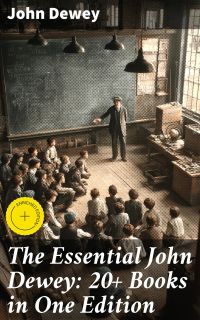
The Essential John Dewey: 20+ Books in One EditionJohn Dewey88h 54m$1 · $0.00

Leibniz's New Essays Concerning the Human Understanding: A Critical ExpositionJohn Dewey8h 57m3.9 (24)$1 · $0.00

A Brief History of IntelligenceMax S. Bennett12h 18m4.6 (6.6K)$29 · $0.00

HomeschooledStefan Merrill Block7h 10m3.6 (18.5K)$28 · $0.00

EducationEllen G. White9h 41m4.6 (1.5K)$2 · $0.00

Parents and Children (Annotated)Charlotte Mason9h 23m4.6 (988)$2 · $0.00

Children Under FireJohn Woodrow Cox10h 17m4.5 (1.6K)$29 · $0.00

The State Must ProvideAdam Harris7h 15m4.5 (775)$24 · $0.00

The Call of the Wild and FreeAinsley Arment9h 7m4.4 (21.2K)$29 · $0.00
The Freelance WayRobert Vlach19h 48m4.5 (528)$40 · $0.00

Race to the BottomLuke Rosiak9h 20m4.5 (600)$29 · $0.00

They Came for the SchoolsMike Hixenbaugh9h 5m4.5 (2.6K)$8 · $0.00

Find Me UnafraidKennedy Odede, Jessica Posner11h 11m4.5 (2.7K)$29 · $0.00

Asking for ItKate Harding8h 55m4.4 (5.3K)$20 · $0.00
Defining Moments in Black HistoryDick Gregory7h 37m4.4 (6K)$26 · $0.00

The Emerald Tablets of Thoth the AtlanteanMaurice Doreal3h 4m4.4 (8.8K)$6 · $0.00

Learning AmericaLuma Mufleh6h 37m4.4 (564)$24 · $0.00
Math-ishJo Boaler7h 21m4.4 (588)$24 · $0.00

Daddy-Long-LegsJean Webster12h 18m4.2 (91K)$1.99 · $0.00
It Worked For MeColin Powell7h 42m4.3 (9.8K)$26 · $0.00

Little SoldiersLenora Chu11h 30m4.3 (3.1K)$29 · $0.00

Grammar-land; Or, Grammar in Fun for the Children of Schoolroom-shireM. L. Nesbitt2h 36m4.4 (488)$1 · $0.00
You may also like
Democracy and Education & Other Writings (A Collected Edition)John Dewey25h 20m4.1 (12.5K)$1.99 · $0.00
Democracy and Education: An Introduction to the Philosophy of EducationJohn Dewey15h 22m4.0 (6.6K)Free

Orthodoxy (Annotated)G. K. Chesterton8h 12m4.3 (51.1K)$2 · $0.00
Barking Up the Wrong TreeEric Barker9h 1m4.3 (24.2K)$29 · $0.00
Rules for the Direction of the MindRené Descartes1h 34m3.9 (1K)$2 · $0.00

Letters to a Young ArtistAnna Deavere Smith4h 29m4.2 (975)$12 · $0.00
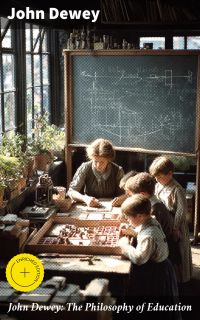
John Dewey: The Philosophy of EducationJohn Dewey33h 59m4.0 (64)$1 · $0.00
How to Find Your PurposeSteve Pavlina45m$5 · $0.00

The Ageism-Proof Job SearchImad Muratspahic3h 40m4.8 (11)$13 · $0.00
How to Master the Art of Selling 2Taylor McCarthy3h 56m$20
Youth ScribesR. Joseph Rodríguez7h 14m$23
Being an AchieverSteve Pavlina23m$4 · $0.00

The Triumph of the Man Who Acts (Annotated)Edward Earle Purinton8h 3m$1.20 · $0.00

Auntie Culture is Singapore's Real Intangible Cultural HeritageRICE media17m$6 · $0.00

The Montessori Elementary Material (Annotated)Maria Montessori13h 10m$2 · $0.00
What’s Your Creative Type?Meta Wagner6h 43m3.7 (265)$17 · $0.00

The Power of Sympathy: Politics and Moral Sentimentalism - A Conversation with Michael FrazerHoward Burton2h 5m$3 · $0.00

Krzysztof Zanussi. Portrait of a FriendDariusz Domański2h 2m$13 · $0.00

John Dewey - Ultimate Collection: 40+ Works on Psychology, Education, Philosophy & PoliticsJohn Dewey166h 48m3.6 (38)$1.99 · $0.00

All Women WantAlyx Gorman11h4.1 (63)$29 · $0.00