



Length86h 57m
About this audiobook
In "John Dewey: Philosophical Works," the seminal American philosopher encapsulates his innovative contributions to pragmatism, education, and democracy. Dewey's writing style is marked by clarity and a commitment to practical implications, making complex philosophical concepts accessible to a broader audience. The collection reflects the early 20th-century intellectual climate, emphasizing the interplay between experience and thought, thus situating Dewey within the larger context of American idealism while challenging traditional dogmas of the time. His philosophical inquiries extend beyond abstract theorizing to address pressing social issues, advocating for progressive education and experiential learning as essential to fostering a democratic society. John Dewey (1859-1952) was a pivotal figure in the development of modern educational theory and social reform, deeply influenced by his experiences within the context of an evolving America. His philosophical journey was informed by a belief in the social nature of knowledge and the importance of education as a vehicle for social change. Dewey's teachings at institutions like the University of Chicago and Columbia University reflect his dedication to creating a more participatory democratic society, a vision that permeates this collection of his works. For readers interested in philosophy, education, or social theory, "John Dewey: Philosophical Works" is an essential anthology that provides insight into Dewey's transformative ideas. This collection not only enhances understanding of his philosophical legacy but also serves as a guide for contemporary discourses on democracy and learning, making it invaluable for scholars, educators, and anyone seeking to engage with Dewey's enduringly relevant ideas.
Audiobook details
GenrePhilosophy
Length86 hrs 57 mins
Narrated byListen with 1,000+ voices
FormateBook with Audio
Publish dateNov 13, 2022
LanguageEnglish
Table of contents
1German Philosophy and Politics
2Preface
3I. German Philosophy: The Two Worlds
4II. German Moral and Political Philosophy
5III. The Germanic Philosophy of History
Show all chaptersShow less
6Preface
7Chapter I. The Man.
8Chapter II. The Sources of His Philosophy.
9Chapter III. The Problem, and its Solution.
10Chapter IV. Locke and Leibniz.—Innate Ideas.
11Chapter V. Sensation and Experience.
12Chapter VI. The Impulses and the Will.
13Chapter VII. Matter and its Relation to Spirit.
14Chapter VIII. Material Phenomena and Their Reality.
15Chapter IX. Some Fundamental Conceptions.
16Chapter X. The Nature and Extent of Knowledge.
17Chapter XI. The Theology of Leibniz.
18Chapter XII. Criticism and Conclusion.
19Preface
20I. Thought and its Subject-Matter: The General Problem of Logical Theory
21II. Thought and its Subject-Matter: The Antecedent Conditions and Cues of the Thought-Function
22III. Thought and its Subject-Matter: The Datum of Thinking
23IV. Thought and its Subject-Matter: The Content and Object of Thought
24V. A Critical Study of Bosanquet's Theory of Judgment44
25VI. Typical Stages in the Development of Judgment
26VII. The Nature of Hypothesis
27VIII. Image and Idea in Logic
28IX. The Logic of the Pre-Socratic Philosophy87
29X. Valuation as a Logical Process (pt. 1)
30X. Valuation as a Logical Process (pt. 2)
31XI. Some Logical Aspects of Purpose (pt. 1)
32XI. Some Logical Aspects of Purpose (pt. 2)
33Interpretation of Savage Mind
34Preface
35Chapter I. Introduction
36Part I. The Beginnings and Growth of Morality
37Chapter II. Early Group Life
38Chapter III. The Rationalizing and Socializing Agencies in Early Society
39Chapter IV. Group Morality—Customs or Mores
40Chapter V. From Custom to Conscience; From Group Morality to Personal Morality
41Chapter VI. The Hebrew Moral Development
42Chapter VII. The Moral Development of the Greeks
43CHAPTER VIII. The Modern Period
44CHAPTER IX. A General Comparison of Customary and Reflective Morality
45Part II. Theory of the Moral Life
46Chapter X. The Moral Situation
47Chapter XI. Problems of Moral Theory
48Chapter XII. Types of Moral Theory
49Chapter XIII. Conduct and Character
50Chapter XIV. Happiness and Conduct: The Good and Desire

Shaping Tomorrow's Education: John Dewey's Edition - 9 Books in One VolumeJohn Dewey33h 43m$1.99 · $0.00
The Schools of Utopia + Schools of To-morrow (Illustrated Edition)John Dewey8h 54m$1.99 · $0.00
The Logic of Human Mind, Self-Awareness & Way We ThinkJohn Dewey40h 51m$1.99 · $0.00
The Universal Compass for EducatorsJohn Dewey19h 11m$1.99 · $0.00
The Logic of Human Mind & Other WorksJohn Dewey40h 53m$1.99 · $0.00

The Schools of Utopia & Schools of To-morrow (Illustrated)John Dewey8h 56m3.9 (167)$1.99 · $0.00

Democracy and Education & Other Writings (A Collected Edition)John Dewey25h 20m4.1 (12.5K)$1.99 · $0.00
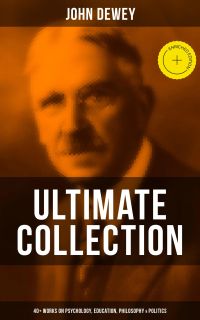
John Dewey - Ultimate Collection: 40+ Works on Psychology, Education, Philosophy & PoliticsJohn Dewey168h 47m$1.99 · $0.00

The Principles of Education We Lack InJohn Dewey33h 45m$1.99 · $0.00

China, Japan and U.S.A: The Geopolitical AnalysisJohn Dewey8h 57m3.4 (12)$1.99 · $0.00
The Logic of ThoughtJohn Dewey52h 28m$1.99 · $0.00

China, Japan and the USA (Annotated)John Dewey8h 57m$1.99 · $0.00

The Essential John Dewey: 20+ Books in One EditionJohn Dewey87h 20m$0.99 · $0.00

The Collected Works of John Dewey (Annotated)John Dewey168h 46m4.5 (36)$2 · $0.00

Collected Writings on Education (Annotated)John Dewey24h 16m$2 · $0.00

PSYCHOLOGY & SOCIAL PRACTICE – Premium Collection (Annotated)John Dewey40h 49m$2 · $0.00

China, Japan and the U.S.A (Annotated)John Dewey8h 54m3.8 (12)$2 · $0.00

EXPERIENCE AND EDUCATION – Premium Edition (Including Democracy & Education) (Annotated)John Dewey19h 17m4.6 (1K)$2 · $0.00

Reconstruction in PhilosophyJohn Dewey6h 43m4.0 (690)$1 · $0.00

The Collected Works of John DeweyJohn Dewey168h 59m4.1 (45)$1 · $0.00

Sceptical Essays (Annotated)Bertrand Russell9h 16m4.6 (1K)$2 · $0.00

WitnessAriel Burger8h 1m4.6 (1.3K)$20 · $0.00

The Magic PresenceGodfré Ray King10h 21m4.6 (307)$1.20 · $0.00

The Art of LivingThich Nhat Hanh5h 1m4.5 (14.2K)$24 · $0.00

Moral Letters to LuciliusLucius Annaeus Seneca24h 26m4.5 (71.7K)$0.99 · $0.00

Lessons in TruthH. Emilie Cady3h 50m4.5 (2.4K)$20 · $0.00
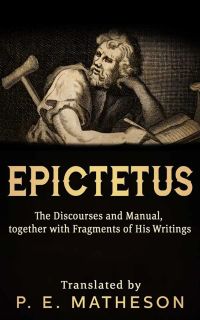
The Discourses of EpictetusP. E. MATHESOM12h 47m4.4 (17.7K)$1.20 · $0.00

IlluminationsWalter Benjamin10h 12m4.4 (16.2K)$20 · $0.00

That Bird Has My WingsJarvis Jay Masters9h 49m4.4 (13.7K)$29 · $0.00

Tâo Teh KingLaozi2h 34m4.4 (230.9K)$2 · $0.00

SymposiumPlato3h 26m4.4 (97.9K)$1.20 · $0.00

Buddhist Boot CampTimber Hawkeye2h 39m4.4 (8.4K)$18 · $0.00
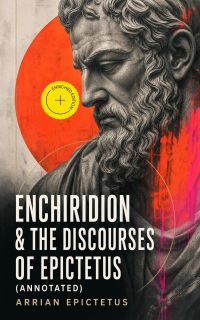
Enchiridion & The Discourses of Epictetus (Annotated)Arrian Epictetus18h 9m4.4 (3.5K)$2 · $0.00

The Meditations of the Emperor Marcus Aurelius AntoninusEmperor of Rome Marcus Aurelius5h 41m4.4 (1.8M)$1 · $0.00

Crime and PunishmentFyodor Dostoevsky23h 11m4.4 (1.3M)$12 · $0.00

MeditationsMarcus Aurelius5h 52m4.4 (433.7K)$1 · $0.00

Everyday DharmaSuneel Gupta5h 2m4.5 (761)$20 · $0.00

The Joyful Wisdom ("La Gaya Scienza")Friedrich Wilhelm Nietzsche11h 37m4.4 (26.6K)$1 · $0.00
The Art of LivingEpictetus, Sharon Lebell3h 16m4.4 (50.1K)$18 · $0.00

MeditationsEmperor Of Rome Marcus Aurelius7h 23m4.3 (477.5K)$1.20 · $0.00
You may also like

The Big SortBill Bishop12h 31m3.8 (2.4K)$33 · $0.00
The RepublicPlato13h 29m4.1 (283K)$4 · $0.00

The Nature of the Judicial ProcessBenjamin N. Cardozo3h 39m4.1 (365)$20

The Right Side of HistoryBen Shapiro6h 6m4.1 (23.5K)$24 · $0.00

Love Thy BodyNancy R. Pearcey11h 28m4.5 (6.6K)$20
Plato in 90 MinutesPaul Strathern1h 14m3.7 (2.1K)$7
The Social ContractJean-Jacques Rousseau10h 49m3.9 (68.7K)$9 · $0.00

The Children’s StoryJames Clavell36m4.4 (3.6K)$4

The Essays of Arthur Schopenhauer; On Human NatureArthur Schopenhauer4h 22m4.2 (923)$2 · $0.00
10 Books Every Conservative Must ReadBenjamin Wiker PhD10h 34m4.2 (827)$20 · $0.00

History of European Morals From Augustus to CharlemagneWilliam Edward Hartpole Lecky31h 49m4.2 (817)$1 · $0.00

A History of the American PeoplePaul Johnson48h 16m4.2 (4.9K)$50
The Republican BrainChris Mooney10h 54m3.8 (1.8K)$23 · $0.00
Nicomachean EthicsAristotle11h 37m4.2 (71.7K)$4 · $0.00

If There Is No GodDennis Prager6h 15m4.4 (229)$24 · $0.00

Victory out of RuinNorman Maclean2h 2m$2 · $0.00

How Social Science Creates the World - A Conversation with Mark BevirHoward Burton1h 47m$3 · $0.00

Abortion RightsKate Greasley, Christopher Kaczor9h 20m3.9 (37)$20 · $0.00

Decharacterization And Degradation Of The Urban LandscapeJoaquim Carlos Lourenço2h$6 · $0.00

Battling Protestants - A Conversation with David HollingerHoward Burton1h 58m$3 · $0.00