
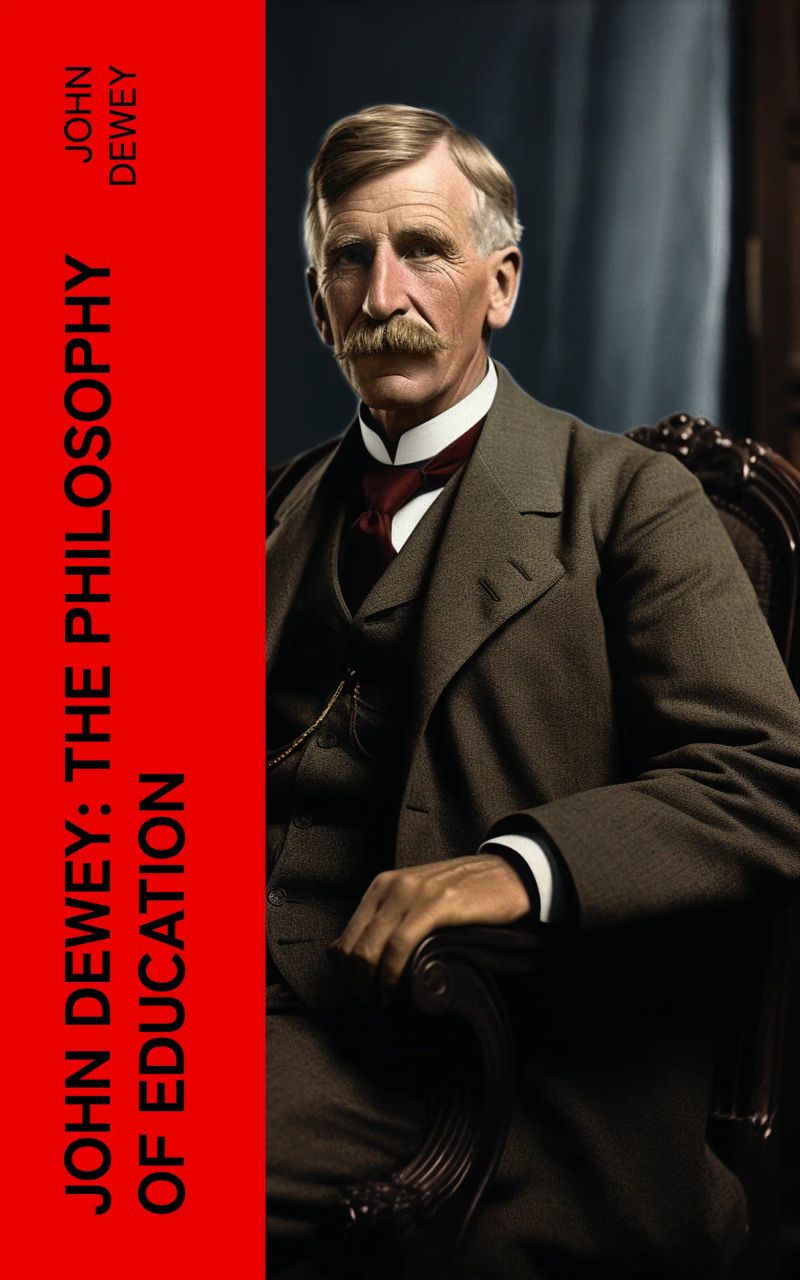
John Dewey: The Philosophy of Education
Democracy & Education in USA, Moral Principles in Education, Health and Sex in Higher Education, The Child and the CurriculumBy John Dewey


Length32h 37m
About this audiobook
In this collection, author, John Dewey, examines the goals, forms, methods, and meaning of education. Throughout his works readers will be able to find out how to develop a winning philosophy of education, increase students' motivation and improve school environment. Table of Contents: Democracy and Education The Child and the Curriculum The School and Society Schools Of To-morrow The Schools of Utopia Moral Principles in Education Interest and Effort in Education Health and Sex in Higher Education My Pedagogic Creed
Audiobook details
GenreEducation and Learning
Length32 hrs 37 mins
Narrated byListen with 1,000+ voices
FormateBook with Audio
Publish dateDec 21, 2023
LanguageEnglish
Table of contents
1John Dewey: The Philosophy of Education
36The Development of Attention
2Summary. It is the very nature of life to strive to continue in being
37The Aim of History in Elementary Education
3Summary. The development within the young of the attitudes and
38Preface
4Summary. The natural or native impulses of the young do not agree with
39Chapter I. Education As Natural Development
5Summary. Power to grow depends upon need for others and plasticity
40Chapter II. An Experiment In Education As Natural Development
Show all chaptersShow less
6Summary. The conception that the result of the educative process is
41Chapter III. Four Factors In Natural Growth
7Summary. Education may be conceived either retrospectively or
42Chapter IV. The Reorganization Of The Curriculum
8Summary. Since education is a social process, and there are many kinds
43Chapter V. Play
9Summary. An aim denotes the result of any natural process brought to
44Chapter VI. Freedom And Individuality
10Summary. General or comprehensive aims are points of view for surveying
45Chapter VII. The Relation Of The School To The Community
11Summary. Interest and discipline are correlative aspects of activity
46Chapter VIII. The School As A Social Settlement
12Summary. In determining the place of thinking in experience we first
47Chapter IX. Industry And Educational Readjustment
13Summary. Processes of instruction are unified in the degree in which
48Chapter X. Education Through Industry
14Summary. Method is a statement of the way the subject matter of an
49Chapter XI. Democracy And Education
15Summary. The subject matter of education consists primarily of the
50The Schools of Utopia
16Summary. In the previous chapter we found that the primary subject
51Introduction
17Summary. It is the nature of an experience to have implications which
52I. The Moral Purpose Of The School
18Summary. Science represents the fruition of the cognitive factors in
53II. The Moral Training Given By The School Community
19Summary. Fundamentally, the elements involved in a discussion of value
54III. The Moral Training From Methods Of Instruction
20Summary. Of the segregations of educational values discussed in the
55IV. The Social Nature Of The Course Of Study
21Summary. The Greeks were induced to philosophize by the increasing
56V. The Psychological Aspect Of Moral Education
22Summary. The philosophic dualism between man and nature is reflected in
57Outline
23Summary. True individualism is a product of the relaxation of the grip
58Introduction
24Summary. A vocation signifies any form of continuous activity which
59I. Unified Versus Divided Activity
25Summary. After a review designed to bring out the philosophic issues
60II. Interest As Direct And Indirect
26Summary. Such social divisions as interfere with free and full
61III. Effort, Thinking, And Motivation
27Summary. The most important problem of moral education in the school
62IV. Types Of Educative Interest
28The Child and the Curriculum
63V. The Place Of Interest In The Theory Of Education
29The School and Social Progress
64Outline
30The School and the Life of the Child
65Health and Sex in Higher Education
31Waste in Education
66Article One. What Education Is
32Three Years of the University Elementary School
67Article Two. What The School Is
33The Psychology of Elementary Education
68Article Three. The Subject-matter Of Education
34Froebel's Educational Principles
69Article Four. The Nature Of Method
35The Psychology of Occupations
70Article Five. The School And Social Progress
More from John Dewey

Reconstruction in PhilosophyJohn Dewey6h 43m$1 · $0.00
The Collected Works of John DeweyJohn Dewey168h 59m$1 · $0.00
The Essential John Dewey: 20+ Books in One EditionJohn Dewey88h 54m$1 · $0.00

Leibniz's New Essays Concerning the Human Understanding: A Critical ExpositionJohn Dewey8h 57m$1 · $0.00
How We Think & Other Works On LogicJohn Dewey51h 12m$2 · $0.00

John Dewey: Philosophical WorksJohn Dewey86h 57m$1 · $0.00

Schools Of To-morrow + The Schools of UtopiaJohn Dewey7h 42m$1 · $0.00
John Dewey: The Philosophy of EducationJohn Dewey33h 59m$1 · $0.00

The Collected Works of John DeweyJohn Dewey166h 52m$2 · $0.00
CREATIVE INTELLIGENCE & Other Works on the Human Thought ProcessJohn Dewey52h 19m$1 · $0.00
Democracy and Education & Experience and EducationJohn Dewey19h 11m$1 · $0.00
JOHN DEWEY Premium Collection – 40+ Books in One Single Volume: Works on Psychology, Education, Philosophy & PoliticsJohn Dewey166h 52m$2 · $0.00
The Greatest Works of John DeweyJohn Dewey169h 4m$2 · $0.00
Becoming the Superpowers: John Dewey's Reflections on U.S.A., China & JapanJohn Dewey8h 46m$2 · $0.00

John Dewey - Ultimate Collection: 40+ Works on Psychology, Education, Philosophy & PoliticsJohn Dewey166h 59m$2 · $0.00
Schools Of To-morrow & The Schools of Utopia (Illustrated Edition)John Dewey7h 43m$2 · $0.00

The Pragmatic Philosophy of John Dewey – Premium Collection: 20+ Books in One VolumeJohn Dewey86h 58m$2 · $0.00
John Dewey: The Philosophy of EducationJohn Dewey32h 38m$2 · $0.00
How We ThinkJohn Dewey8h 52m$22 · $0.00
Textured TeachingLorena Escoto Germán4h 25m$20

The State Must ProvideAdam Harris7h 15m$24 · $0.00

Parents and ChildrenCharlotte Mason9h 17m$1 · $0.00
The Freelance WayRobert Vlach19h 48m$40 · $0.00
Race to the BottomLuke Rosiak9h 20m$29 · $0.00

We Got ThisCornelius Minor6h 28m$23

They Came for the SchoolsMike Hixenbaugh9h 5m$8 · $0.00

Find Me UnafraidKennedy Odede, Jessica Posner11h 11m$29 · $0.00
A Novel ApproachKate Roberts5h 22m$20
Being the ChangeSara K. Ahmed5h 27m$20

Asking for ItKate Harding8h 55m$20 · $0.00
When Kids Can't Read—What Teachers Can DoKylene Beers12h 31m$25
Defining Moments in Black HistoryDick Gregory7h 37m$26 · $0.00

The Emerald Tablets of Thoth the AtlanteanMaurice Doreal3h 4m$6 · $0.00

May Tomorrow Be AwakeChris Martin7h 53m$26 · $0.00
The Joy of ReadingDonalyn Miller, Teri Lesesne7h 59m$23
Comprehension ConnectionsTanny McGregor3h 20m$20

The Curious ClassroomHarvey “Smokey” Daniels6h 7m$23
Challenging The StoryDavid Jereb1h 57m$18 · $0.00

Learning AmericaLuma Mufleh6h 37m$24 · $0.00
You may also like

Thanksgiving StoriesHarriet Beecher Stowe, Louisa May Alcott, Andrew Lang, George Eliot, Annie Hamilton Donnell, Eugene Field, Nathaniel Hawthorne, Hezekiah Butterworth, Edward Everett Hale, Sarah Orne Jewett, Susan Coolidge, Maud Lindsay, Olive Thorne Miller, Winthrop Packard, Kate Upson Clark, Alfred Gatty, Albert F. Blaisdell, Eleanor H. Porter, C. A. Stephens, J. T. Trowbridge, Eleanor L. Skinner, Lucy Maud Montgomery, Mary E. Wilkins Freeman, Rose Terry Cooke, Edna Payson Brett, Phila Butler Bowman, Katherine Grace Hulbert, Agnes Carr, Isabel Gordon Curtis, P. J. Stahl, Sheldon C. Stoddard, Francis K. Ball, R. K. Munkittrick, E. S. Brooks, Emily Hewitt Leland, Fannie Wilder Brown, Alice Wheildon, Pauline Shackleford Colyar, H. R. Schoolcraft, L. B. Pingree, Sophie Swet24h$2 · $0.00
The Mother DanceHarriet Lerner9h 39m$29 · $0.00

Gustav Mahler, Song SymphonistGabriel Engel3h 44m$2 · $0.00

Letters to a daughterHubert Bland4h 11m$2 · $0.00

The Works of Robert Louis Stevenson - Swanston Edition, Vol 23Robert Louis Stevenson13h 32m$2.30

Reminiscences, 1819-1899Julia Ward Howe9h 31m$1 · $0.00

The FinancierTheodore Dreiser21h 9m$2.30

The Most Influential Works of Jean-Jacques RousseauJean-Jacques Rousseau70h 2m$2 · $0.00

TurnerW. Cosmo Monkhouse3h 1m$2 · $0.00
The Getting of WisdomHenry Handel Richardson7h 19m$17
God, Grades, and GraduationIlana M. Horwitz8h 36m$20 · $0.00
Sartre in 90 MinutesPaul Strathern1h 41m$7
Some Thoughts Concerning EducationJohn Locke9h 17m$1 · $0.00

The Greatest Works of Jean-Jacques RousseauJean-Jacques Rousseau68h 49m$2 · $0.00

The Teenage BrainFrances E. Jensen, Amy Ellis Nutt9h 2m$29 · $0.00

LettermanJason Zinoman9h 39m$29 · $0.00

Linda CondonJoseph Hergesheimer6h 53m$2 · $0.00
The Rainbow (The Brangwen Family Saga)D. H. Lawrence22h 17m$2 · $0.00

Surprised by Joy. The shape of my early lifeC. S. Lewis7h 17m$2 · $0.00

The Field Guide to the North American TeenagerBen Philippe9h 12m$29 · $0.00