
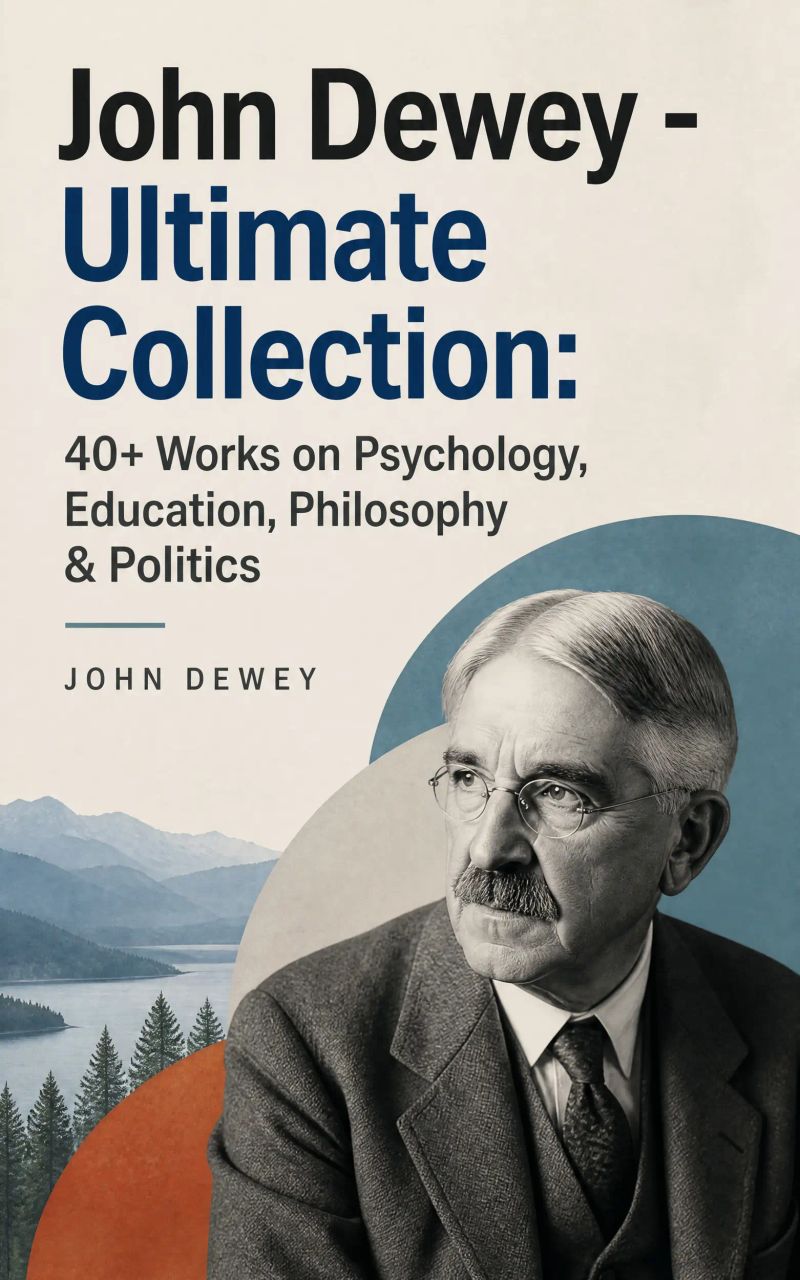
John Dewey - Ultimate Collection: 40+ Works on Psychology, Education, Philosophy & Politics
Pragmatism, Education, Democracy, and the Philosophy of ExperienceBy John Dewey


Length166h 48m
About this audiobook
John Dewey – Ultimate Collection gathers more than forty works spanning psychology, education, philosophy, ethics, and politics, presenting an extensive portrait of one of American pragmatism's defining thinkers. Across essays, lectures, and major treatises, Dewey examines experience as the ground of knowledge, inquiry as an instrument for resolving practical problems, and education as the central means of democratic renewal. His prose combines philosophical rigor with an unusually accessible, experimental style: analytic when confronting traditional metaphysics, concrete when discussing classrooms, labor, social institutions, and public life. Read as a whole, the collection illuminates the continuity between Dewey's theory of mind and his progressive vision of culture, while placing his work within the intellectual transformations of modern American thought. Born in 1859, Dewey developed his philosophy amid the rise of psychology, industrial capitalism, democratic reform, and debates over the purposes of schooling. His teaching at the University of Chicago and Columbia University, together with his engagement in public controversies, led him to reject detached speculation in favor of philosophy as an active method of social criticism. These circumstances shaped his sustained concern with learning, communication, freedom, and collective intelligence. This collection is recommended to readers seeking both an authoritative introduction to Dewey and a substantial sourcebook for advanced study. It is especially valuable for students and scholars of pragmatism, educational theory, political philosophy, psychology, and democratic culture.
Audiobook details
Rating★★★★ 3.6 (38)
Includes Goodreads, Amazon
GenrePhilosophy
Length166 hrs 48 mins
Narrated byListen with 1,000+ voices
FormateBook with Audio
Publish dateDec 21, 2023
LanguageEnglish
Table of contents
1The Complete Works of David Hume
2John Dewey - Ultimate Collection: 40+ Works on Psychology, Education, Philosophy & Politics
3On Education
4Chapter One: Education as a Necessity of Life
5Summary. It is the very nature of life to strive to continue in being
Show all chaptersShow less
6Chapter Two: Education as a Social Function
7Summary. The development within the young of the attitudes and
8Chapter Three: Education as Direction
9Summary. The natural or native impulses of the young do not agree with
10Chapter Four: Education as Growth
11Summary. Power to grow depends upon need for others and plasticity
12Chapter Five: Preparation, Unfolding, and Formal Discipline
13Summary. The conception that the result of the educative process is
14Chapter Six: Education as Conservative and Progressive
15Summary. Education may be conceived either retrospectively or
16Chapter Seven: The Democratic Conception in Education
17Summary. Since education is a social process, and there are many kinds
18Chapter Eight: Aims in Education
19Summary. An aim denotes the result of any natural process brought to
20Chapter Nine: Natural Development and Social Efficiency as Aims
21Summary. General or comprehensive aims are points of view for surveying
22Chapter Ten: Interest and Discipline
23Summary. Interest and discipline are correlative aspects of activity
24Chapter Eleven: Experience and Thinking
25Summary. In determining the place of thinking in experience we first
26Chapter Twelve: Thinking in Education
27Summary. Processes of instruction are unified in the degree in which
28Chapter Thirteen: The Nature of Method
29Summary. Method is a statement of the way the subject matter of an
30Chapter Fourteen: The Nature of Subject Matter
31Summary. The subject matter of education consists primarily of the
32Chapter Fifteen: Play and Work in the Curriculum
33Summary. In the previous chapter we found that the primary subject
34Chapter Sixteen: The Significance of Geography and History
35Summary. It is the nature of an experience to have implications which
36Chapter Seventeen: Science in the Course of Study
37Summary. Science represents the fruition of the cognitive factors in
38Chapter Eighteen: Educational Values
39Summary. Fundamentally, the elements involved in a discussion of value
40Chapter Nineteen: Labor and Leisure
41Summary. Of the segregations of educational values discussed in the
42Chapter Twenty: Intellectual and Practical Studies
43Summary. The Greeks were induced to philosophize by the increasing
44Chapter Twenty-one: Physical and Social Studies: Naturalism and Humanism
45Summary. The philosophic dualism between man and nature is reflected in
46Chapter Twenty-two: The Individual and the World
47Summary. True individualism is a product of the relaxation of the grip
48Chapter Twenty-Three: Vocational Aspects of Education
49Summary. A vocation signifies any form of continuous activity which
50Chapter Twenty-four: Philosophy of Education

Shaping Tomorrow's Education: John Dewey's Edition - 9 Books in One VolumeJohn Dewey33h 43m$1.99 · $0.00
The Schools of Utopia + Schools of To-morrow (Illustrated Edition)John Dewey8h 54m$1.99 · $0.00
The Universal Compass for EducatorsJohn Dewey19h 11m$1.99 · $0.00
The Logic of Human Mind & Other WorksJohn Dewey40h 53m$1.99 · $0.00

The Schools of Utopia & Schools of To-morrow (Illustrated)John Dewey8h 56m3.9 (167)$1.99 · $0.00

Democracy and Education & Other Writings (A Collected Edition)John Dewey25h 20m4.1 (12.5K)$1.99 · $0.00

John Dewey - Ultimate Collection: 40+ Works on Psychology, Education, Philosophy & PoliticsJohn Dewey168h 47m$1.99 · $0.00

The Principles of Education We Lack InJohn Dewey33h 45m$1.99 · $0.00

China, Japan and U.S.A: The Geopolitical AnalysisJohn Dewey8h 57m3.4 (12)$1.99 · $0.00
The Logic of ThoughtJohn Dewey52h 28m$1.99 · $0.00

China, Japan and the USA (Annotated)John Dewey8h 57m$1.99 · $0.00

The Collected Works of John Dewey (Annotated)John Dewey168h 46m4.5 (36)$2 · $0.00

Collected Writings on Education (Annotated)John Dewey24h 16m$2 · $0.00

PSYCHOLOGY & SOCIAL PRACTICE – Premium Collection (Annotated)John Dewey40h 49m$2 · $0.00

China, Japan and the U.S.A (Annotated)John Dewey8h 54m3.8 (12)$2 · $0.00

EXPERIENCE AND EDUCATION – Premium Edition (Including Democracy & Education) (Annotated)John Dewey19h 17m4.6 (1K)$2 · $0.00

Reconstruction in PhilosophyJohn Dewey6h 43m4.0 (690)$1 · $0.00

The Collected Works of John DeweyJohn Dewey168h 59m4.1 (45)$1 · $0.00

The Essential John Dewey: 20+ Books in One EditionJohn Dewey88h 54m$1 · $0.00

Leibniz's New Essays Concerning the Human Understanding: A Critical ExpositionJohn Dewey8h 57m3.9 (24)$1 · $0.00

WitnessAriel Burger8h 1m4.6 (1.3K)$20 · $0.00

The Magic PresenceGodfré Ray King10h 21m4.6 (307)$1.20 · $0.00
The Art of LivingThich Nhat Hanh5h 1m4.5 (14.2K)$24 · $0.00
Moral Letters to LuciliusLucius Annaeus Seneca24h 26m4.5 (71.7K)$1.99 · $0.00

Lessons in TruthH. Emilie Cady3h 50m4.5 (2.4K)$20 · $0.00
The Discourses of EpictetusP. E. MATHESOM12h 47m4.4 (17.7K)$1.20 · $0.00

IlluminationsWalter Benjamin10h 12m4.4 (16.2K)$20 · $0.00

That Bird Has My WingsJarvis Jay Masters9h 49m4.4 (13.7K)$29 · $0.00

Tâo Teh KingLaozi2h 34m4.4 (230.9K)$2 · $0.00

SymposiumPlato3h 26m4.4 (97.9K)$1.20 · $0.00

Buddhist Boot CampTimber Hawkeye2h 39m4.4 (8.4K)$18 · $0.00
Enchiridion & The Discourses of Epictetus (Annotated)Arrian Epictetus18h 9m4.4 (3.5K)$2 · $0.00

The Meditations of the Emperor Marcus Aurelius AntoninusEmperor of Rome Marcus Aurelius5h 41m4.4 (1.8M)$1 · $0.00

Crime and PunishmentFyodor Dostoevsky23h 11m4.4 (1.3M)$12 · $0.00

MeditationsMarcus Aurelius5h 52m4.4 (433.7K)$1 · $0.00
Everyday DharmaSuneel Gupta5h 2m4.5 (761)$20 · $0.00

The Joyful Wisdom ("La Gaya Scienza")Friedrich Wilhelm Nietzsche11h 37m4.4 (26.6K)$1 · $0.00
The Art of LivingEpictetus, Sharon Lebell3h 16m4.4 (50.1K)$18 · $0.00
MeditationsEmperor Of Rome Marcus Aurelius7h 23m4.3 (477.5K)$1.20 · $0.00

The Imitation of ChristThomas à Kempis6h 27m4.3 (84.6K)$21 · $0.00
You may also like
Democracy and Education & Other Writings (A Collected Edition)John Dewey25h 20m4.1 (12.5K)$1.99 · $0.00

Dr. Montessori's Own HandbookMaria Montessori3h 33m4.3 (1.3K)$1 · $0.00

Blowing My Way to the TopJen Atkin5h 54m4.0 (2.8K)$24 · $0.00

What is Enlightenment?Immanuel Kant18m4.1 (4.4K)$1 · $0.00
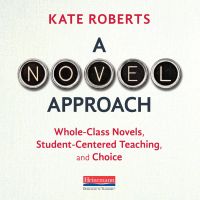
A Novel ApproachKate Roberts5h 22m4.5 (1.3K)$20
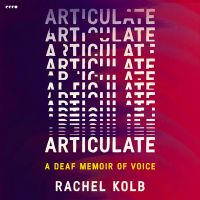
ArticulateRachel Kolb10h 35m4.3 (481)$29 · $0.00
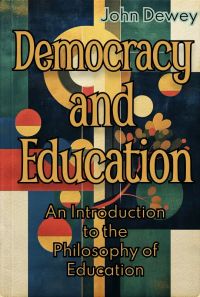
Democracy and Education: An Introduction to the Philosophy of EducationJohn Dewey15h 22m4.0 (6.6K)Free

Darkwater: Voices from Within the VeilWilliam Edward Burghardt Du Bois7h 27m4.3 (2.5K)$2 · $0.00

El sándwich de CarlaDebbie Herman16m4.4 (2.3K)$5 · $0.00

A New ModelAshley Graham, Rebecca Paley5h 44m4.1 (4.8K)$24 · $0.00
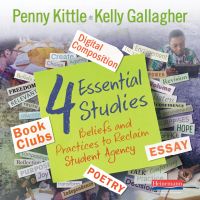
4 Essential StudiesPenny Kittle, Kelly Gallagher7h 21m4.6 (552)$23

Love MeMarianne Power11h 24m4.1 (496)$29 · $0.00

Words without MusicPhilip Glass15h 5m4.3 (7.4K)$23
The Story of My Experiments with TruthMahatma Gandhi18h 34m4.2 (103.6K)$1 · $0.00
Shaping Tomorrow's Education: John Dewey's Edition - 9 Books in One VolumeJohn Dewey33h 43m$1.99 · $0.00

Youth ScribesR. Joseph Rodríguez7h 14m$23

The Montessori Elementary Material (Annotated)Maria Montessori13h 10m$2 · $0.00

The Gentle Persuasion: Sketches of Scottish LifeAlan Gray2h 46m$2 · $0.00

Cassatt and artworksNathalia Brodskaïa1h 51m4.1 (36)$15 · $0.00

The Collected Works of John DeweyJohn Dewey166h 52m4.1 (31)$2 · $0.00