
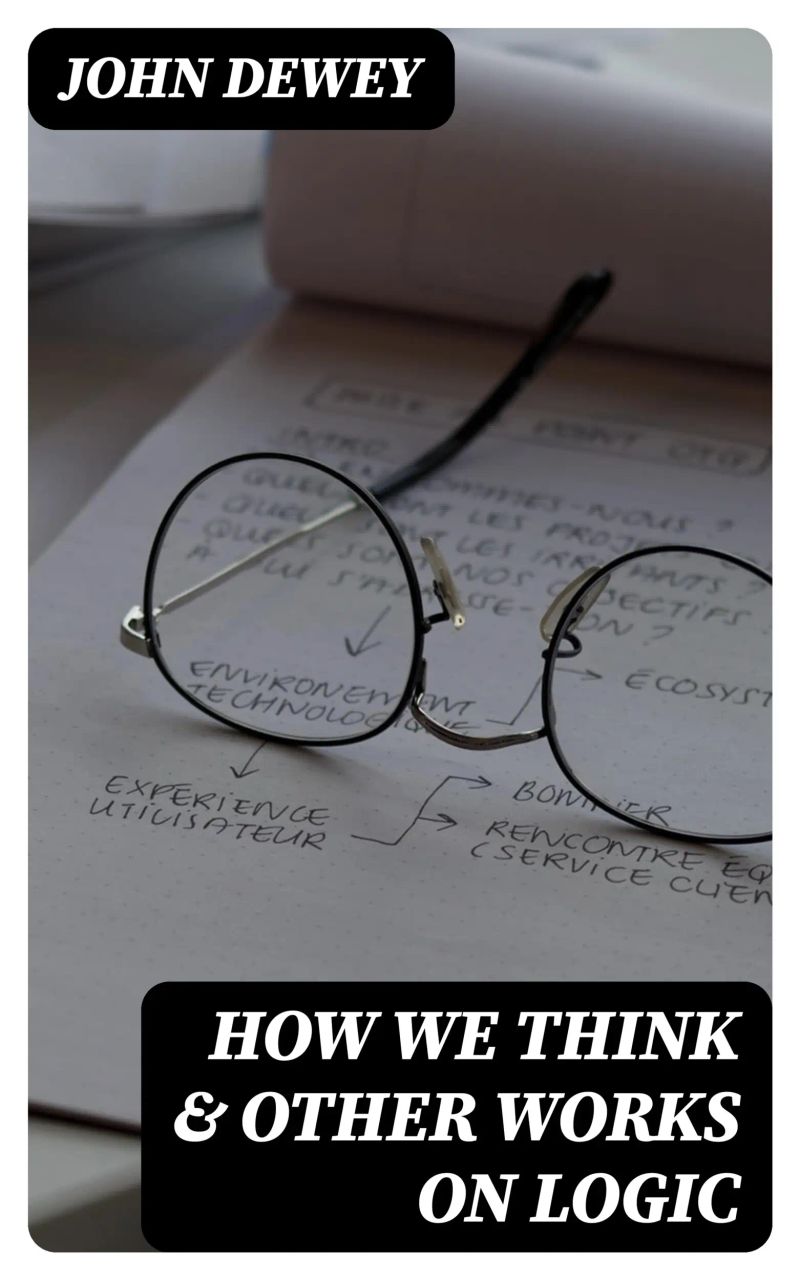
How We Think & Other Works On Logic
Leibniz's New Essays; Essays in Experimental Logic; Creative Intelligence; Human Nature & ConductBy John Dewey


Length51h 11m
About this audiobook
In "How We Think & Other Works On Logic," John Dewey presents a profound examination of the processes of thought and reflection, emphasizing their practical implications for education and democratic society. Written in a clear, accessible style, this work aligns itself within the progressive educational movement of the early 20th century. Dewey critiques traditional rote learning, advocating instead for a reflective thought process that fosters critical thinking and problem-solving skills, essential for personal and societal growth. The collection serves not only as a philosophical treatise but also as a guide for educators seeking to engage students in meaningful dialogues about knowledge and inquiry. John Dewey (1859-1952) was a prominent American philosopher, psychologist, and educational reformer whose work has significantly impacted various fields, including education, psychology, and political theory. His experiences as an educator in a rapidly changing world fueled his belief in the need for experiential learning and the application of scientific methods to nurture democratic citizenship. Dewey's commitment to pragmatism and a participatory democracy shaped his ideology, leading to this influential exploration of how we think. This book is essential for educators, philosophers, and anyone interested in the intersection of thought and action in our lives. Dewey's insights challenge readers to reflect on their cognitive processes, fostering a deeper understanding of the significance of thinking in our democratic society. A must-read for those seeking to enhance their reflective practices and contribute meaningfully to their communities.
Audiobook details
GenrePhilosophy
Length51 hrs 11 mins
Narrated byListen with 1,000+ voices
FormateBook with Audio
Publish dateMay 17, 2022
LanguageEnglish
Table of contents
1HOW WE THINK & Other Works Concerning the Logic of Human Thought
2Preface
3Part One: The Problem of Training Thought
4Chapter One. What is Thought?
5Chapter Two. The Need for Training Thought
Show all chaptersShow less
6Chapter Three. Natural Resources in the Training of Thought
7Chapter Four. School Conditions and the Training of Thought
8Chapter Five. The Means and End of Mental Training: The Psychological and the Logical
9Part Two: Logical Considerations
10Chapter Six. The Analysis of a Complete Act of Thought
11Chapter Seven. Systematic Inference: Induction and Deduction
12Chapter Eight. Judgment: The Interpretation of Facts
13Chapter Nine. Meaning: Or Conceptions and Understanding
14Chapter Ten. Concrete and Abstract Thinking
15Chapter Eleven. Empirical and Scientific Thinking
16Part Three: The Training of Thought
17Chapter Twelve. Activity and the Training of Thought
18Chapter Thirteen. Language and the Training of Thought
19Chapter Fourteen. Observation and Information in the Training of Mind
20Chapter Fifteen. The Recitation and the Training of Thought
21Chapter Sixteen. Some General Conclusions
22Preface
23Chapter I. The Man.
24Chapter II. The Sources of His Philosophy.
25Chapter III. The Problem, and its Solution.
26Chapter IV. Locke and Leibniz.—Innate Ideas.
27Chapter V. Sensation and Experience.
28Chapter VI. The Impulses and the Will.
29Chapter VII. Matter and its Relation to Spirit.
30Chapter VIII. Material Phenomena and Their Reality.
31Chapter IX. Some Fundamental Conceptions.
32Chapter X. The Nature and Extent of Knowledge.
33Chapter XI. The Theology of Leibniz.
34Chapter XII. Criticism and Conclusion.
35Essays in Experimental Logic
36I. Introduction
37II. The Relationship of Thought and its Subject-Matter
38III. The Antecedents and Stimuli of Thinking
39IV. Data and Meanings
40V. The Objects of Thought
41VI. Some Stages of Logical Thought
42VII. The Logical Character of Ideas
43VIII. The Control of Ideas by Facts
44IX. Naïve Realism vs. Presentative Realism58
45X. Epistemological Realism: The Alleged Ubiquity of the Knowledge Relation
46XI. The Existence of the World as a Logical Problem
47XII. What Pragmatism Means by Practical
48XIII. An Added Note as to the "Practical"
49XIV. The Logic of Judgments of Practice (pt. 1)
50XIV. The Logic of Judgments of Practice (pt. 2)

Shaping Tomorrow's Education: John Dewey's Edition - 9 Books in One VolumeJohn Dewey33h 43m$1.99 · $0.00
The Schools of Utopia + Schools of To-morrow (Illustrated Edition)John Dewey8h 54m$1.99 · $0.00
The Logic of Human Mind, Self-Awareness & Way We ThinkJohn Dewey40h 51m$1.99 · $0.00
The Universal Compass for EducatorsJohn Dewey19h 11m$1.99 · $0.00
The Logic of Human Mind & Other WorksJohn Dewey40h 53m$1.99 · $0.00

The Schools of Utopia & Schools of To-morrow (Illustrated)John Dewey8h 56m3.9 (167)$1.99 · $0.00

Democracy and Education & Other Writings (A Collected Edition)John Dewey25h 20m4.1 (12.5K)$1.99 · $0.00
John Dewey - Ultimate Collection: 40+ Works on Psychology, Education, Philosophy & PoliticsJohn Dewey168h 47m$1.99 · $0.00

The Principles of Education We Lack InJohn Dewey33h 45m$1.99 · $0.00

China, Japan and U.S.A: The Geopolitical AnalysisJohn Dewey8h 57m3.4 (12)$1.99 · $0.00
The Logic of ThoughtJohn Dewey52h 28m$1.99 · $0.00

China, Japan and the USA (Annotated)John Dewey8h 57m$1.99 · $0.00
The Essential John Dewey: 20+ Books in One EditionJohn Dewey87h 20m$0.99 · $0.00

The Collected Works of John Dewey (Annotated)John Dewey168h 46m4.5 (36)$2 · $0.00

Collected Writings on Education (Annotated)John Dewey24h 16m$2 · $0.00

PSYCHOLOGY & SOCIAL PRACTICE – Premium Collection (Annotated)John Dewey40h 49m$2 · $0.00

China, Japan and the U.S.A (Annotated)John Dewey8h 54m3.8 (12)$2 · $0.00
EXPERIENCE AND EDUCATION – Premium Edition (Including Democracy & Education) (Annotated)John Dewey19h 17m4.6 (1K)$2 · $0.00
Reconstruction in PhilosophyJohn Dewey6h 43m4.0 (690)$1 · $0.00

The Collected Works of John DeweyJohn Dewey168h 59m4.1 (45)$1 · $0.00

WitnessAriel Burger8h 1m4.6 (1.3K)$20 · $0.00

The Magic PresenceGodfré Ray King10h 21m4.6 (307)$1.20 · $0.00

The Art of LivingThich Nhat Hanh5h 1m4.5 (14.2K)$24 · $0.00

Moral Letters to LuciliusLucius Annaeus Seneca24h 26m4.5 (71.7K)$0.99 · $0.00

Lessons in TruthH. Emilie Cady3h 50m4.5 (2.4K)$20 · $0.00
The Discourses of EpictetusP. E. MATHESOM12h 47m4.4 (17.7K)$1.20 · $0.00

IlluminationsWalter Benjamin10h 12m4.4 (16.2K)$20 · $0.00

That Bird Has My WingsJarvis Jay Masters9h 49m4.4 (13.7K)$29 · $0.00

Tâo Teh KingLaozi2h 34m4.4 (230.9K)$2 · $0.00

SymposiumPlato3h 26m4.4 (97.9K)$1.20 · $0.00

Buddhist Boot CampTimber Hawkeye2h 39m4.4 (8.4K)$18 · $0.00
Enchiridion & The Discourses of Epictetus (Annotated)Arrian Epictetus18h 9m4.4 (3.5K)$2 · $0.00

The Meditations of the Emperor Marcus Aurelius AntoninusEmperor of Rome Marcus Aurelius5h 41m4.4 (1.8M)$1 · $0.00

Crime and PunishmentFyodor Dostoevsky23h 11m4.4 (1.3M)$12 · $0.00

MeditationsMarcus Aurelius5h 52m4.4 (433.7K)$1 · $0.00

Everyday DharmaSuneel Gupta5h 2m4.5 (761)$20 · $0.00

The Joyful Wisdom ("La Gaya Scienza")Friedrich Wilhelm Nietzsche11h 37m4.4 (26.6K)$1 · $0.00
The Art of LivingEpictetus, Sharon Lebell3h 16m4.4 (50.1K)$18 · $0.00
MeditationsEmperor Of Rome Marcus Aurelius7h 23m4.3 (477.5K)$1.20 · $0.00

The Imitation of ChristThomas à Kempis6h 27m4.3 (84.6K)$21 · $0.00
You may also like
Critique of Practical Reason (Kritik der praktischen Vernunft)Immanuel Kant6h 50m4.1 (14K)$2 · $0.00
Fundamental Principles of the Metaphysic of Morals Immanuel Kant3h 16m4.0 (48.8K)Free
The Critique of Practical ReasonImmanuel Kant6h 52m4.0 (23.5K)$3.50 · $0.00

Aspects of the novelE. M. Forster6h 1m4.0 (6.9K)$2 · $0.00

The Wealth of NationsAdam Smith30h 50m4.1 (130.7K)$20 · $0.00

Great Pianists on Piano Playing (Annotated)James Francis Cooke8h 13m4.2 (264)$2 · $0.00

The Critique of Practical ReasonImmanuel Kant6h 52m4.1 (15.2K)$1.80 · $0.00

On ColorDavid Scott Kastan5h 54m3.9 (1.1K)$20
Human Nature And ConductJohn Dewey9h 22m4.1 (1.8K)$1.20 · $0.00
The Problems of PhilosophyBertrand Russell4h 32m4.0 (25.8K)Free
Competing Against LuckClayton M. Christensen, Taddy Hall, Karen Dillon, David S. Duncan7h 25m4.3 (7.6K)$24 · $0.00
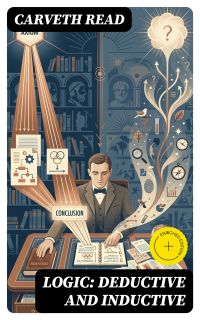
Logic: Deductive and Inductive (Annotated)Carveth Read11h 47m3.7 (110)$1.99 · $0.00

Kentucky Real Estate Licensing Exam Workbook 2026/2027Marguerite Ostrander16h 8m$30
The Critique of Practical Reason: Theory of Moral Reasoning (Annotated)Immanuel Kant8h 32m$2 · $0.00

Craftsmanship in TeachingWilliam C. Bagley7h 30m$2 · $0.00

The Bdsm Game BookJideon Francisco Marques2h 12m$9 · $0.00
The Ignorant MaestroItay Talgam5h 22m3.8 (235)$20 · $0.00

All the Brains in the BusinessPaul Brown, Kate Lanz5h 53m3.8 (29)$17
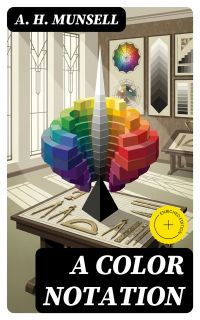
A Color NotationA. H. Munsell3h 51m3.8 (216)$2 · $0.00

A Manual of Moral PhilosophyAndrew P. Peabody6h 14m3.5 (11)$1 · $0.00