
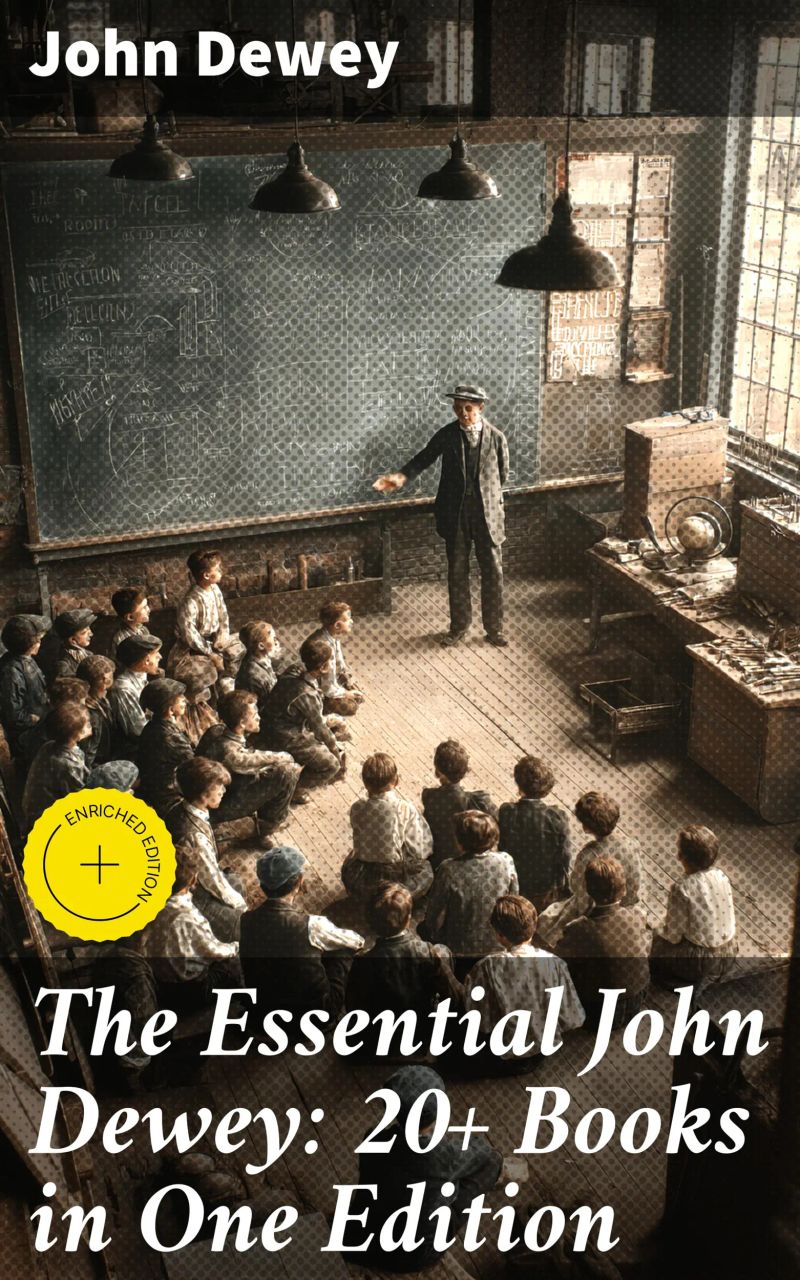
The Essential John Dewey: 20+ Books in One Edition
Enriched edition. Critical Expositions on the Nature of Truth, Ethics & MoralityBy John Dewey


Length88h 53m
About this audiobook
In "The Essential John Dewey: 20+ Books in One Edition," readers are presented with a comprehensive anthology of Dewey's seminal works, which encapsulate his profound insights into education, philosophy, and democracy. This collection showcases Dewey's pragmatic literary style, characterized by clarity, accessibility, and a deep engagement with the complexities of human experience. Such a diverse compilation allows for a rich exploration of Dewey's ideas on experience, inquiry, and the nature of democracy, contextualized within the vibrant intellectual climate of early 20th-century America, where pragmatism emerged as a critical philosophical movement. John Dewey (1859-1952), an eminent American philosopher and educator, was a pivotal figure in progressive education and a champion of the pragmatist tradition. His diverse experiences as a teacher, a psychologist, and a social reformer informed his belief in the necessity of experiential learning and the role of education in cultivating democratic citizens. Dewey's work was deeply influenced by his interactions with contemporaries, including William James and Charles Sanders Peirce, as well as his commitment to addressing social issues of his time. This invaluable collection is highly recommended for scholars, educators, and anyone interested in philosophy and social theory. It provides not only an introduction to Dewey's profound ideas but also a transformative understanding of the importance of active participation in democracy and the role of education as an instrument of social change.
In this enriched edition, we have carefully created added value for your reading experience:
- A comprehensive Introduction outlines these selected works' unifying features, themes, or stylistic evolutions.
- The Author Biography highlights personal milestones and literary influences that shape the entire body of writing.
- A Historical Context section situates the works in their broader era—social currents, cultural trends, and key events that underpin their creation.
- A concise Synopsis (Selection) offers an accessible overview of the included texts, helping readers navigate plotlines and main ideas without revealing critical twists.
- A unified Analysis examines recurring motifs and stylistic hallmarks across the collection, tying the stories together while spotlighting the different work's strengths.
- Reflection questions inspire deeper contemplation of the author's overarching message, inviting readers to draw connections among different texts and relate them to modern contexts.
- Lastly, our hand‐picked Memorable Quotes distill pivotal lines and turning points, serving as touchstones for the collection's central themes.
Audiobook details
GenrePhilosophy
Length88 hrs 53 mins
Narrated byListen with 1,000+ voices
FormateBook with Audio
Publish dateNov 27, 2023
LanguageEnglish
Table of contents
1Introduction
2Introduction
3Author Biography
4Historical Context
5Synopsis (Selection)
Show all chaptersShow less
6Philosophical Works
7German Philosophy and Politics (pt. 1)
8German Philosophy and Politics (pt. 2)
9Leibniz's New Essays Concerning the Human Understanding: A Critical Exposition (pt. 1)
10Leibniz's New Essays Concerning the Human Understanding: A Critical Exposition (pt. 2)
11Leibniz's New Essays Concerning the Human Understanding: A Critical Exposition (pt. 3)
12Leibniz's New Essays Concerning the Human Understanding: A Critical Exposition (pt. 4)
13Studies in Logical Theory (pt. 1)
14Studies in Logical Theory (pt. 2)
15Studies in Logical Theory (pt. 3)
16Studies in Logical Theory (pt. 4)
17Studies in Logical Theory (pt. 5)
18Studies in Logical Theory (pt. 6)
19Interpretation of Savage Mind
20Ethics (with James Hayden Tufts) (pt. 1)
21Ethics (with James Hayden Tufts) (pt. 2)
22Ethics (with James Hayden Tufts) (pt. 3)
23Ethics (with James Hayden Tufts) (pt. 4)
24Ethics (with James Hayden Tufts) (pt. 5)
25Ethics (with James Hayden Tufts) (pt. 6)
26Ethics (with James Hayden Tufts) (pt. 7)
27Ethics (with James Hayden Tufts) (pt. 8)
28Ethics (with James Hayden Tufts) (pt. 9)
29Ethics (with James Hayden Tufts) (pt. 10)
30The Problem of Values
31Soul and Body
32Logical Conditions of a Scientific Treatment of Morality
33The Evolutionary Method As Applied To Morality: Its Scientific Necessity & Its Significance for Conduct
34The Influence of Darwin on Philosophy
35Nature and Its Good: A conversation
36Intelligence and Morals
37The Experimental Theory of Knowledge
38The Intellectualist Criterion for Truth
39A Short Catechism Concerning Truth
40Beliefs and Existences
41Experience and Objective Idealism
42The Postulate of Immediate Empiricism
43"Consciousness" and Experience
44The Significance of the Problem of Knowledge
45Essays in Experimental Logic (pt. 1)
46Essays in Experimental Logic (pt. 2)
47Essays in Experimental Logic (pt. 3)
48Essays in Experimental Logic (pt. 4)
49Essays in Experimental Logic (pt. 5)
50Reconstruction in Philosophy (pt. 1)
The Collected Works of John Dewey (Annotated)John Dewey168h 46m4.5 (36)$2 · $0.00

Collected Writings on Education (Annotated)John Dewey24h 16m$2 · $0.00
PSYCHOLOGY & SOCIAL PRACTICE – Premium Collection (Annotated)John Dewey40h 49m$2 · $0.00

China, Japan and the U.S.A (Annotated)John Dewey8h 54m3.8 (12)$2 · $0.00
EXPERIENCE AND EDUCATION – Premium Edition (Including Democracy & Education) (Annotated)John Dewey19h 17m4.6 (1K)$2 · $0.00
Reconstruction in PhilosophyJohn Dewey6h 43m4.0 (690)$1 · $0.00

The Collected Works of John DeweyJohn Dewey168h 59m4.1 (45)$1 · $0.00

Leibniz's New Essays Concerning the Human Understanding: A Critical ExpositionJohn Dewey8h 57m3.9 (24)$1 · $0.00
How We Think & Other Works On LogicJohn Dewey51h 12m$2 · $0.00

John Dewey: Philosophical WorksJohn Dewey86h 57m$1 · $0.00

Schools Of To-morrow + The Schools of UtopiaJohn Dewey7h 42m3.9 (146)$1 · $0.00

John Dewey: The Philosophy of EducationJohn Dewey33h 59m4.0 (64)$1 · $0.00

The Collected Works of John DeweyJohn Dewey166h 52m4.1 (31)$2 · $0.00
CREATIVE INTELLIGENCE & Other Works on the Human Thought ProcessJohn Dewey52h 19m4.1 (25)$1.99 · $0.00
Democracy and Education & Experience and EducationJohn Dewey19h 11m4.3 (18)$1 · $0.00
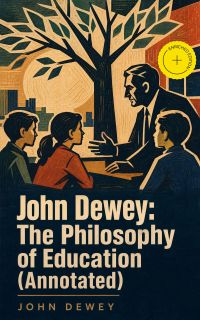
John Dewey: The Philosophy of Education (Annotated)John Dewey33h 49m$1.99 · $0.00
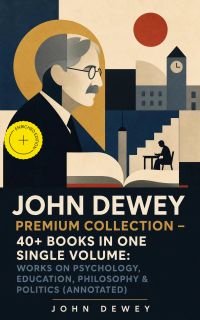
JOHN DEWEY Premium Collection – 40+ Books in One Single Volume: Works on Psychology, Education, Philosophy & Politics (Annotated)John Dewey168h 33m4.4 (44)$1.99 · $0.00
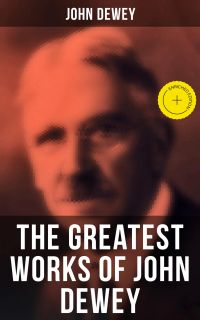
The Greatest Works of John DeweyJohn Dewey169h 4m4.5 (18)$1.99 · $0.00
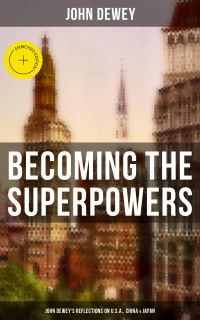
Becoming the Superpowers: John Dewey's Reflections on U.S.A., China & JapanJohn Dewey8h 46m$1.99 · $0.00
The Discourses of EpictetusP. E. MATHESOM12h 47m4.4 (17.7K)$1.20 · $0.00
IlluminationsWalter Benjamin10h 12m4.4 (16.2K)$20 · $0.00
That Bird Has My WingsJarvis Jay Masters9h 49m4.4 (13.7K)$29 · $0.00

Tâo Teh KingLaozi2h 34m4.4 (230.9K)$2 · $0.00
SymposiumPlato3h 26m4.4 (97.9K)$1.20 · $0.00

Buddhist Boot CampTimber Hawkeye2h 39m4.4 (8.4K)$18 · $0.00
Enchiridion & The Discourses of Epictetus (Annotated)Arrian Epictetus18h 9m4.4 (3.5K)$2 · $0.00

The Meditations of the Emperor Marcus Aurelius AntoninusEmperor of Rome Marcus Aurelius5h 41m4.4 (1.8M)$1 · $0.00

Crime and PunishmentFyodor Dostoevsky23h 11m4.4 (1.3M)$12 · $0.00

MeditationsMarcus Aurelius5h 52m4.4 (433.7K)$1 · $0.00

Everyday DharmaSuneel Gupta5h 2m4.5 (761)$20 · $0.00

The Joyful Wisdom ("La Gaya Scienza")Friedrich Wilhelm Nietzsche11h 37m4.4 (26.6K)$1 · $0.00
The Art of LivingEpictetus, Sharon Lebell3h 16m4.4 (50.1K)$18 · $0.00
MeditationsEmperor Of Rome Marcus Aurelius7h 23m4.3 (477.5K)$1.20 · $0.00

The Imitation of ChristThomas à Kempis6h 27m4.3 (84.6K)$21 · $0.00

Sadhana: the realisation of lifeRabindranath Tagore3h 49m4.4 (8.6K)$6 · $0.00
SapiensYuval Noah Harari15h 18m4.3 (1.4M) · 1186$33 · $0.00
You BelongSebene Selassie8h 35m4.4 (2.7K)$26 · $0.00

The Song Celestial; Or, Bhagavad-Gîtâ (from the Mahâbhârata)Anonymous2h 18m4.4 (3.2K)$2 · $0.00

The KybalionThe Three Initiates3h 47m4.3 (58.7K)$20 · $0.00
You may also like

How to Sing [Meine Gesangskunst]Lilli Lehmann4h 19m4.1 (351)$2 · $0.00
The Logic of HegelGeorg Wilhelm Friedrich Hegel13h 29m4.2 (1.8K)$1 · $0.00
The Myth of the Rational Market Revised EditionJustin Fox13h 26m4.0 (5.4K)$29 · $0.00
The Critique of Judgement Part IImmanuel Kant5h 48m4.1 (1.2K)$4.70 · $0.00
Pictorial Composition and the Critical Judgment of PicturesHenry Rankin Poore7h 12m4.1 (267)$2 · $0.00
Pragmatism: A New Name for Some Old Ways of ThinkingWilliam James6h 56m4.0 (5.6K)$1 · $0.00
The Joy of Mathematics - A Conversation with Ian StewartHoward Burton1h 28m$3 · $0.00

The Art of FlavorDaniel Patterson, Mandy Aftel4h 44m4.0 (599)$20 · $0.00

Sea and SardiniaD. H. Lawrence8h 15m3.5 (732)$2.30

The Greatest Works of Immanuel KantImmanuel Kant84h 15m4.4 (120)$1 · $0.00
Mathematical Marvels: 4 Classic Books on the Foundations and Fun of MathHenry Ernest Dudeney, Greg Fee, David Slowinski30h 56m$1.99 · $0.00
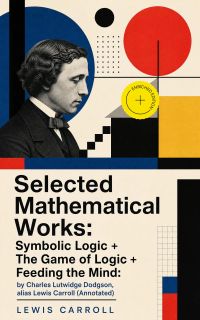
Selected Mathematical Works: Symbolic Logic + The Game of Logic + Feeding the Mind: by Charles Lutwidge Dodgson, alias Lewis Carroll (Annotated)Lewis Carroll8h 35m$2 · $0.00

The Investor's HandbookXavier I. Kingsley4h 50m$4.10 · $0.00

From sketch-book and diaryElizabeth Butler4h 24m$2 · $0.00
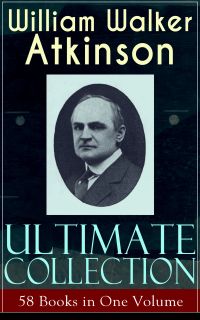
WILLIAM WALKER ATKINSON Ultimate Collection – 58 Books in One VolumeWilliam Walker Atkinson319h 5m4.6 (15)$3 · $0.00

Popular Books on Natural ScienceAaron David Bernstein5h3.7 (21)$2 · $0.00
100 Word StoriesKim Culbertson, Grant Faulkner3h 20m4.3 (24)$20

In the MomentJen Munson5h 33m4.4 (29)$20
LSAT LOGIC GAMES MASTERY GUIDE 2026/2027Adrian Hartwell12h 18m$10

Advertising OnlineNola D. Fenwright2h 39m$2.30 · $0.00