
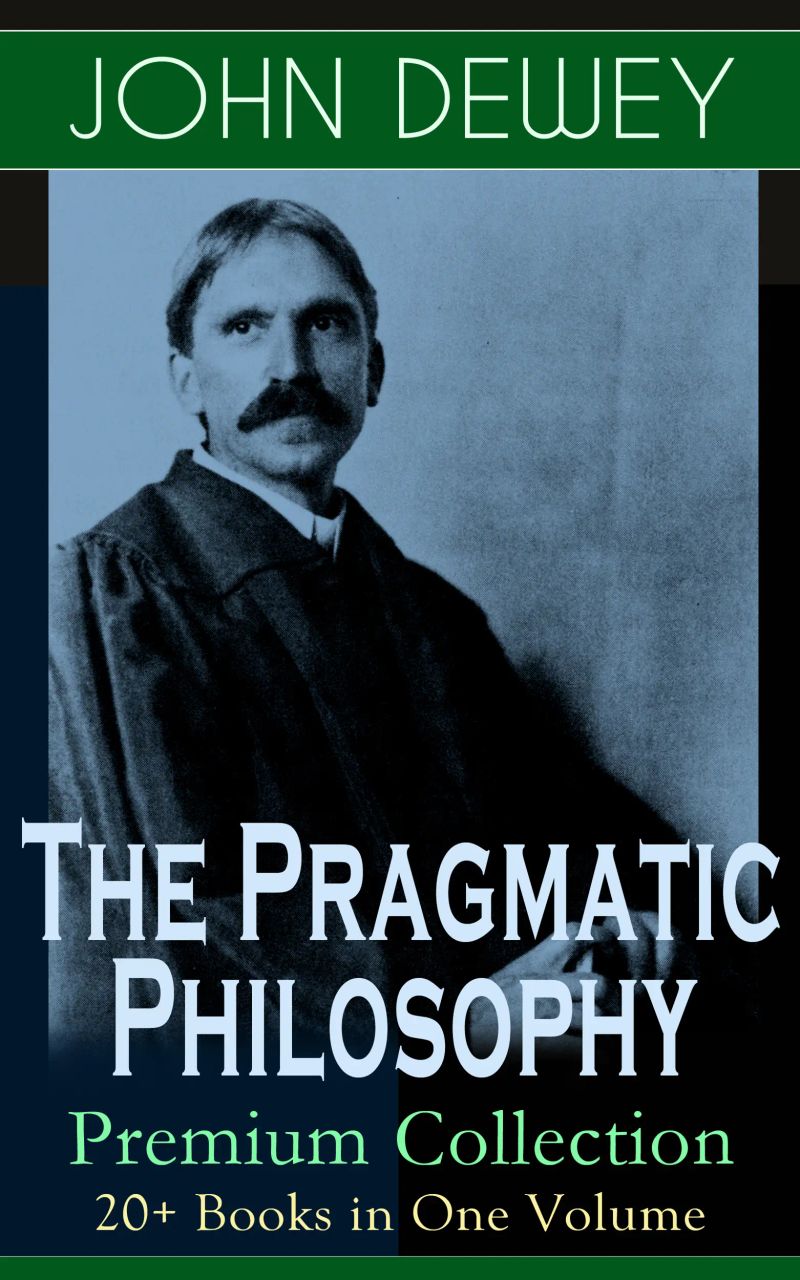
The Pragmatic Philosophy of John Dewey – Premium Collection: 20+ Books in One Volume
20+ Works on Pragmatism, Logic, Ethics, Education, and Social ReformBy John Dewey


Length86h 58m
About this audiobook
This carefully crafted ebook: "The Pragmatic Philosophy of John Dewey – Premium Collection: 20+ Books in One Volume" is formatted for your eReader with a functional and detailed table of contents:
German Philosophy and Politics
Leibniz's New Essays Concerning the Human Understanding: A Critical Exposition
Studies in Logical Theory
Interpretation of Savage Mind
Ethics
The Problem of Values
Soul and Body
Logical Conditions of a Scientific Treatment of Morality
The Evolutionary Method As Applied To Morality
The Influence of Darwin on Philosophy
Nature and Its Good: A conversation
Intelligence and Morals
The Experimental Theory of Knowledge
The Intellectualist Criterion for Truth
A Short Catechism Concerning Truth
Beliefs and Existences
Experience and Objective Idealism
The Postulate of Immediate Empiricism
"Consciousness" and Experience
The Significance of the Problem of Knowledge
Essays in Experimental Logic
Reconstruction in Philosophy
Does Reality Possess Practical Character?
Criticisms of John Dewey
The Chicago School
John Dewey's Logical Theory
The Pragmatic Theory of Truth as Developed by Peirce, James, and Dewey
John Dewey (1859-1952) is one of the primary figures associated with the philosophy of pragmatism and is considered one of the founders of functional psychology. His ideas have been influential in education and social reform.
"No one doubts that thought, at least reflective, as distinct from what is sometimes called constitutive, thought, is derivative and secondary. It comes after something and out of something, and for the sake of something. No one doubts that the thinking of everyday practical life and of science is of this reflective type. We think about; we reflect over." (Studies in Logical Theory)
Audiobook details
GenrePhilosophy
Length86 hrs 58 mins
Narrated byListen with 1,000+ voices
FormateBook with Audio
Publish dateMay 14, 2016
LanguageEnglish
Table of contents
1The Pragmatic Philosophy of John Dewey – Premium Collection: 20+ Books in One Volume
63Chapter XXIV. Unsettled Problems in the Economic Order
2Philosophical Works
64Chapter XXV. Unsettled Problems in the Economic Order (Continued)
3German Philosophy and Politics
65Chapter XXVI. The Family
4Preface
66The Problem of Values
5I. German Philosophy: The Two Worlds
67Soul and Body
Show all chaptersShow less
6II. German Moral and Political Philosophy
68Logical Conditions of a Scientific Treatment of Morality
7III. The Germanic Philosophy of History
69The Evolutionary Method As Applied To Morality: Its Scientific Necessity & Its Significance for Conduct
8Preface
70Its Scientific Necessity
9Chapter I. The Man.
71Its Significance for Conduct
10Chapter II. The Sources of His Philosophy.
72The Influence of Darwin on Philosophy1
11Chapter III. The Problem, and its Solution.
73Nature and Its Good: A conversation1
12Chapter IV. Locke and Leibniz.—Innate Ideas.
74Intelligence and Morals1
13Chapter V. Sensation and Experience.
75The Experimental Theory of Knowledge1
14Chapter VI. The Impulses and the Will.
76The Intellectualist Criterion for Truth1
15Chapter VII. Matter and its Relation to Spirit.
77A Short Catechism Concerning Truth1
16Chapter VIII. Material Phenomena and Their Reality.
78Beliefs and Existences1
17Chapter IX. Some Fundamental Conceptions.
79Experience and Objective Idealism1
18Chapter X. The Nature and Extent of Knowledge.
80The Postulate of Immediate Empiricism1
19Chapter XI. The Theology of Leibniz.
81"Consciousness" and Experience1
20Chapter XII. Criticism and Conclusion.
82The Significance of the Problem of Knowledge1
21Preface
83I. Introduction
22I. Thought and its Subject-Matter: The General Problem of Logical Theory
84II. The Relationship of Thought and its Subject-Matter
23II. Thought and its Subject-Matter: The Antecedent Conditions and Cues of the Thought-Function
85III. The Antecedents and Stimuli of Thinking
24III. Thought and its Subject-Matter: The Datum of Thinking
86IV. Data and Meanings
25IV. Thought and its Subject-Matter: The Content and Object of Thought
87V. The Objects of Thought
26V. A Critical Study of Bosanquet's Theory of Judgment44
88VI. Some Stages of Logical Thought
27VI. Typical Stages in the Development of Judgment
89VII. The Logical Character of Ideas
28VII. The Nature of Hypothesis
90VIII. The Control of Ideas by Facts
29VIII. Image and Idea in Logic
91IX. Naïve Realism vs. Presentative Realism58
30IX. The Logic of the Pre-Socratic Philosophy87
92X. Epistemological Realism: The Alleged Ubiquity of the Knowledge Relation
31X. Valuation as a Logical Process (pt. 1)
93XI. The Existence of the World as a Logical Problem
32X. Valuation as a Logical Process (pt. 2)
94XII. What Pragmatism Means by Practical
33XI. Some Logical Aspects of Purpose (pt. 1)
95XIII. An Added Note as to the "Practical"
34XI. Some Logical Aspects of Purpose (pt. 2)
96XIV. The Logic of Judgments of Practice (pt. 1)
35Interpretation of Savage Mind
97XIV. The Logic of Judgments of Practice (pt. 2)
36Preface
98Chapter I. Changing Conceptions of Philosophy
37Chapter I. Introduction
99Chapter II. Some Historical Factors in Philosophical Reconstruction
38Part I. The Beginnings and Growth of Morality
100Chapter III. The Scientific Factor in Reconstruction of Philosophy
39Chapter II. Early Group Life
101Chapter IV. Changed Conceptions of Experience and Reason
40Chapter III. The Rationalizing and Socializing Agencies in Early Society
102Chapter V. Changed Conceptions of the Ideal and the Real
41Chapter IV. Group Morality—Customs or Mores
103Chapter VI. The Significance of Logical Reconstruction
42Chapter V. From Custom to Conscience; From Group Morality to Personal Morality
104Chapter VII. Reconstruction in Moral Conceptions
43Chapter VI. The Hebrew Moral Development
105Chapter VIII. Reconstruction as Affecting Social Philosophy
44Chapter VII. The Moral Development of the Greeks
106Does Reality Possess Practical Character?
45CHAPTER VIII. The Modern Period
107Criticisms of John Dewey
46CHAPTER IX. A General Comparison of Customary and Reflective Morality
108The Chicago School1 by William James
47Part II. Theory of the Moral Life
109Preface
48Chapter X. The Moral Situation
110Chapter I. "Psychology as Philosophic Method"
49Chapter XI. Problems of Moral Theory
111Chapter II. The Development of the Psychological Standpoint
50Chapter XII. Types of Moral Theory
112Chapter III. "Moral Theory and Practice"
51Chapter XIII. Conduct and Character
113Chapter IV. Functional Psychology
52Chapter XIV. Happiness and Conduct: The Good and Desire
114Chapter V. The Evolutionary Standpoint
53Chapter XV. Happiness and Social Ends139
115Chapter VI. "Studies in Logical Theory"
54Chapter XVI. The Place of Reason in the Moral Life: Moral Knowledge
116Chapter VII. The Polemical Period
55Chapter XVII. The Place of Duty in the Moral Life: Subjection to Authority
117Chapter VIII. Later Developments
56Chapter XVIII. The Place of the Self in the Moral Life
118Chapter IX. Conclusions
57Chapter XIX. The Virtues
119Introductory
58Part III. The World of Action
120Chapter I. The Pragmatic Doctrine as Originally Proposed by Peirce.
59Chapter XX. Social Organization and the Individual
121Chapter II. The Interpretation Given to Pragmatism by James.
60Chapter XXI. Civil Society and the Political State
122Chapter III. The Pragmatic Doctrine as Set Forth by Dewey.
61Chapter XXII. The Ethics of the Economic Life
123Chapter IV. Summary and Conclusion.
62Chapter XXIII. Some Principles in the Economic Order
More from John Dewey

Reconstruction in PhilosophyJohn Dewey6h 43m$1 · $0.00

The Collected Works of John DeweyJohn Dewey168h 59m$1 · $0.00

The Essential John Dewey: 20+ Books in One EditionJohn Dewey88h 54m$1 · $0.00

Leibniz's New Essays Concerning the Human Understanding: A Critical ExpositionJohn Dewey8h 57m$1 · $0.00
How We Think & Other Works On LogicJohn Dewey51h 12m$2 · $0.00

John Dewey: Philosophical WorksJohn Dewey86h 57m$1 · $0.00

Schools Of To-morrow + The Schools of UtopiaJohn Dewey7h 42m$1 · $0.00

John Dewey: The Philosophy of EducationJohn Dewey33h 59m$1 · $0.00

The Collected Works of John DeweyJohn Dewey166h 52m$2 · $0.00
CREATIVE INTELLIGENCE & Other Works on the Human Thought ProcessJohn Dewey52h 19m$1 · $0.00

Democracy and Education & Experience and EducationJohn Dewey19h 11m$1 · $0.00

John Dewey: The Philosophy of EducationJohn Dewey32h 37m$2 · $0.00
JOHN DEWEY Premium Collection – 40+ Books in One Single Volume: Works on Psychology, Education, Philosophy & PoliticsJohn Dewey166h 52m$2 · $0.00
The Greatest Works of John DeweyJohn Dewey169h 4m$2 · $0.00

Becoming the Superpowers: John Dewey's Reflections on U.S.A., China & JapanJohn Dewey8h 46m$2 · $0.00

John Dewey - Ultimate Collection: 40+ Works on Psychology, Education, Philosophy & PoliticsJohn Dewey166h 59m$2 · $0.00

Schools Of To-morrow & The Schools of Utopia (Illustrated Edition)John Dewey7h 43m$2 · $0.00

John Dewey: The Philosophy of EducationJohn Dewey32h 38m$2 · $0.00
How We ThinkJohn Dewey8h 52m$22 · $0.00

Old Path White CloudsThich Nhat Hanh16h 39m$25

Plato: Complete WorksPlato141h 44m$2 · $0.00

WitnessAriel Burger8h 1m$20 · $0.00

Philosophy and Opinions of Marcus GarveyMarcus Mosiah Garvey3h 1m$2 · $0.00

Feeling Is The SecretNeville Goddard44m5 (1)$2 · $0.00

The Way to a Beautiful WorldJames Norbury44m$9 · $0.00

The Collected Works of Friedrich NietzscheFriedrich Nietzsche92h$2 · $0.00
The Practicing StoicWard Farnsworth9h 56m$20

Moral Letters to LuciliusLucius Annaeus Seneca25h 38m$2 · $0.00

THE THREE CRITIQUES: The Critique of Pure Reason, The Critique of Practical Reason & The Critique of JudgmentImmanuel Kant46h 10m$1 · $0.00

The Complete Essays of MontaigneMichel de Montaigne45h 30m$2 · $0.00

The Origin of OthersToni Morrison2h 25m$20
The LawFrédéric Bastiat2h 7m$10

IlluminationsWalter Benjamin10h 12m$20 · $0.00

Tâo Teh KingLaozi2h 38m$2 · $0.00

Buddhist Boot CampTimber Hawkeye2h 39m$18 · $0.00

The DhammapadaFriedrich Max Müller1h 30m$15

Change Your MindRJ Spina7h 5m$17

SUMMA THEOLOGICAThomas Aquinas282h 57m$1 · $0.00

The Meditations of the Emperor Marcus Aurelius AntoninusEmperor of Rome Marcus Aurelius6h 24m$1 · $0.00
You may also like

The Literature and History of New Testament TimesJ. Gresham Machen13h 26m$2 · $0.00

Latin LiteratureJ. W. Mackail10h 34m$3 · $0.00

The Unity of Western CivilizationVarious8h 59m$2 · $0.00

An Essay on the Antient and Modern State of IrelandHenry Brooke3h 5m$2 · $0.00

The Story of Christianity, Vol. 2, Revised and UpdatedJusto L. González18h 26m$30

Gita Press and the Making of Hindu IndiaAkshaya Mukul20h 7m$21

Our Changing ConstitutionCharles W. Pierson4h 36m$2 · $0.00

History of the Jews in Russia and Poland (Vol. 1-3)Simon Dubnow35h 38m$2 · $0.00

Andrew Jackson's Farewell AddressAndrew Jackson2h 20m$2 · $0.00

Oxford and the Rhodes ScholarshipsStanley Kuhl Hornbeck, R. F. Scholz4h 6m$1 · $0.00

1620Peter W. Wood7h 32m$17 · $0.00

The Conquest of a Continent; or, The Expansion of Races in AmericaMadison Grant10h 10m$2 · $0.00
Princeton in the Nation's ServiceWoodrow Wilson59m$2 · $0.00

DetroitScott Martelle10h 5m$20

FeminaJanina Ramirez11h 56m$8 · $0.00

The United States ConstitutionUnited States1h 57m$2 · $0.00

A History of the American PeoplePaul Johnson48h 16m$50

ClassifiedDavid E. Bernstein7h 1m$17

Experiments in Government and the Essentials of the ConstitutionElihu Root2h 1m$1 · $0.00

Races & Immigrants in USAJohn R. Commons7h 39m$2 · $0.00