

The Tears of Life
A Life-Coherent Framework for Recognizing Harm, Restoring Conditions, and Reorienting PowerBy Dr. Bichara Sahely


Length1h 7m
About this audiobook
The Tears of Life offers a life-coherent framework for recognizing harm, restoring the conditions of life, and reorienting power toward repair. It explores how religion, economics, politics, medicine, technology, and artificial intelligence can preserve symbols of love, value, progress, care, or intelligence while neglecting the real conditions through which life continues, recovers, and flourishes. Moving from symbolic performance to truthful repair, the work introduces a practical grammar: see the wound, allow the tears, name the false order, identify the missing condition, trace the conserving pattern, restore the life-relation, and make the repair real. At its heart is a simple question: does this system help life continue, recover, and flourish?
Audiobook details
GenreEducation and Learning, Spirituality and Religion
Length1 hr 7 mins
Narrated byListen with 1,000+ voices
FormateBook with Audio
Publish dateJun 7, 2026
LanguageEnglish
Table of contents
1Chapter 1
2Listener’s Orientation
3A Note on This Edition
4Chapter 1: When Symbols Replace Life
5Chapter 2: The Misrecognition of Life-Conditions
Show all chaptersShow less
6Chapter 3: The Conditions of Life
7Chapter 4: Religion, Love, and the Drift into Performance
8Chapter 5: From Outrage to Prophetic Repair
9Chapter 6: The Inner Algorithms of Capture
10Chapter 7: Direct, Structural, and Cultural Harm
11Chapter 8: The Life-Coherent Repair Framework
12Step 1: See the Wound
13Step 2: Allow the Tears
14Step 3: Name the False Order
15Step 4: Identify the Missing Condition
16Step 5: Trace the Conserving Pattern
17Step 6: Restore the Life-Relation
18Step 7: Make the Repair Real
19Chapter 9: Artificial Intelligence: Tool, Oracle, Idol, Enclosure, or Commons?
20AI as Tool
21AI as Oracle
22AI as Idol
23AI as Enclosure
24AI as Commons
25Bridge to the Full AI Inquiry
26Chapter 10: Reorienting Power to Life
27About the Author
28AI Use Note for Listeners
29Closing Reflection

Preserving Life, Transforming Power in GazaDr Bichara Sahely1h 42mFree
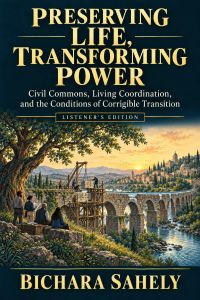
Preserving Life, Transforming PowerDr. Bichara Sahely1h 4mFree

Putting the Missing Bridge to WorkDr. Bichara Sahely2h 12mFree
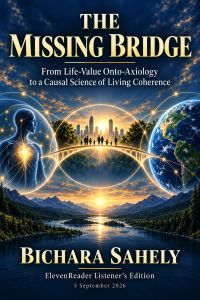
The Missing BridgeDr. Bichara Sahely1h 5mFree
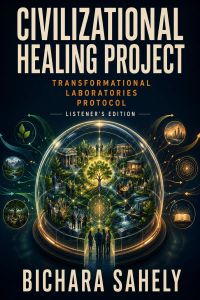
Transformational Laboratories ProtocolDr. Bichara Sahely2h 33mFree
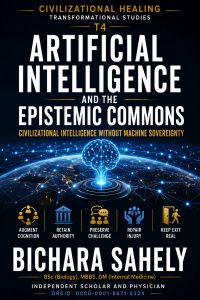
Artificial Intelligence and the Epistemic CommonsDr Bichara Sahely3h 12mFree

Conflict, Repair, and Non-DominationDr Bichara Sahely2h 21mFree

Institutions of Reflexive TransformationDr Bichara Sahely1h 51mFree
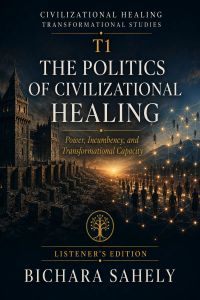
The Politics of Civilizational HealingDr. Bichara Sahely2h 13mFree

The Missing Grammar of Modern CivilizationDr. Bichara Sahely2h 8mFree
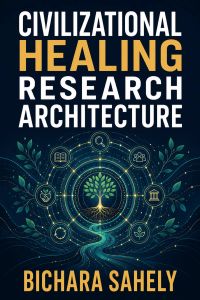
Civilizational Healing Research ArchitectureDr. Bichara Sahely1h 24mFree
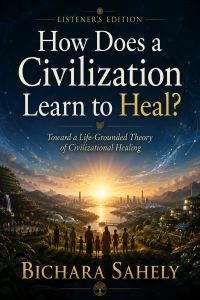
How Does a Civilization Learn to Heal?Dr. Bichara Sahely1h 16mFree

From Competent Physicians to Healing SocietiesDr. Bichara Sahely2h 20mFree

Competence Is Necessary, but Not SufficientDr. Bichara Sahely1h 15mFree

Life-Grounding CanMEDSDr. Bichara Sahely1h 13mFree
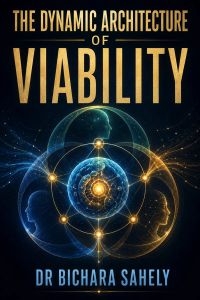
The Dynamic Architecture of ViabilityDr Bichara Sahely2h 1mFree
Completing the Life-Value Onto-Axiology ProgramDr. Bichara Sahely1h 9m5.0 (1)Free
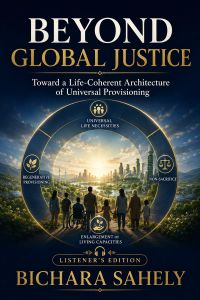
BEYOND GLOBAL JUSTICEDr. Bichara Sahely1h 25mFree

The Sweetness That Consumed the WorldBichara Sahely16h 14mFree
THE SOVEREIGNTY OF CREDITDr. Bichara Sahely3h 56mFree
A Brief History of IntelligenceMax S. Bennett12h 18m4.6 (6.6K)$29 · $0.00

HomeschooledStefan Merrill Block7h 10m3.6 (18.5K)$28 · $0.00

The State Must ProvideAdam Harris7h 15m4.5 (775)$24 · $0.00

The Call of the Wild and FreeAinsley Arment9h 7m4.4 (21.2K)$29 · $0.00
The Freelance WayRobert Vlach19h 48m4.5 (528)$40 · $0.00

Race to the BottomLuke Rosiak9h 20m4.5 (600)$29 · $0.00

They Came for the SchoolsMike Hixenbaugh9h 5m4.5 (2.6K)$8 · $0.00

Find Me UnafraidKennedy Odede, Jessica Posner11h 11m4.5 (2.7K)$29 · $0.00

Asking for ItKate Harding8h 55m4.4 (5.3K)$20 · $0.00
Defining Moments in Black HistoryDick Gregory7h 37m4.4 (6K)$26 · $0.00

The Emerald Tablets of Thoth the AtlanteanMaurice Doreal3h 4m4.4 (8.8K)$6 · $0.00

Learning AmericaLuma Mufleh6h 37m4.4 (564)$24 · $0.00
Math-ishJo Boaler7h 21m4.4 (588)$24 · $0.00

Daddy-Long-LegsJean Webster12h 18m4.2 (91K)$1.99 · $0.00
It Worked For MeColin Powell7h 42m4.3 (9.8K)$26 · $0.00

Little SoldiersLenora Chu11h 30m4.3 (3.1K)$29 · $0.00

Grammar-land; Or, Grammar in Fun for the Children of Schoolroom-shireM. L. Nesbitt2h 36m4.4 (488)$1 · $0.00

Financial FeministTori Dunlap8h 3m4.2 (22.2K)$8 · $0.00

DarkwaterWilliam Edward Burghardt Du Bois6h 40m4.3 (1.4K)$11 · $0.00

The Highway Code UKDepartment for Transport3h 33m4.2 (36.6K)$11 · $0.00
31 Decrees of Blessing for Your LifePatricia King2h 38m4.8 (1.4K)$10 · $0.00

Loved BabySarah Philpott4h 51m4.8 (1.4K)$10 · $0.00

The QuranAllah23h 7m4.7 (136.1K)$1 · $0.00

The Secret of the RosaryLouis de Montfort6h 1m4.7 (16K)$2 · $0.00

The Holy Qur-an: Text, Translation and CommentaryAbdullah Yusuf Ali22h 16m4.7 (133K)$1 · $0.00
All of Grace (Annotated)Charles Spurgeon5h 1m4.7 (1.3K)$0.99 · $0.00

Steps to ChristEllen G. White3h 12m4.7 (13.8K)$2 · $0.00

The Doctrine and Selected CovenantsJoseph Smith13h 53m4.7 (10.4K)$1.99 · $0.00

Sinners in the Hands of an Angry God & Other Sermons (Annotated)Jonathan Edwards7h 51m4.7 (1.5K)$2 · $0.00
Swayam Ki AwaazPrem Rawat8h 34m4.7 (1.1K)$26 · $0.00

Behind the BadgeAdam Davis10h 18m4.7 (2.7K)$10 · $0.00
The New Human Revolution, vol. 1Daisaku Ikeda7h 46m4.7 (669)$12 · $0.00

You Are Worth ItKyle Carpenter, Don Yaeger8h 53m4.7 (4.8K)$29 · $0.00

Praying GraceDavid A. Holland3h 2m4.7 (658)$10 · $0.00

Evidence Not SeenDarlene Deibler Rose11h 11m4.6 (11.9K)$29 · $0.00

The Christ KeyChad Bird, Chad Bird7h 33m4.7 (592)$17.40 · $0.00
He and IGabrielle Bossis10h 12m4.7 (554)$17 · $0.00

Your Body Already KnowsNidhi Pandya Bhanshali9h 7m4.7 (360)$16 · $0.00

The Complete WorksFlorence Scovel Shinn7h 59m4.6 (6.6K)$2 · $0.00
Driven by EternityJohn Bevere3h 50m4.6 (3.2K)$10 · $0.00
You may also like
The Unheard Cry for MeaningViktor E. Frankl5h 12m4.3 (1.4K)$14 · $0.00

You Can't Joke About ThatKat Timpf7h 34m3.9 (4.8K)$26 · $0.00
Attention SpanGloria Mark10h 52m3.7 (2.3K)$29 · $0.00

DrinkAnn Dowsett Johnston8h 47m3.9 (5.1K)$29 · $0.00

From Poverty to Power – The Realization of Prosperity and Peace (Annotated)James Allen4h 43m4.4 (1.3K)$2 · $0.00
Executing GraceShane Claiborne7h 48m4.5 (922)$26 · $0.00

Of TemptationJohn Owen3h 41m4.5 (896)$15
What Your Body Knows about GodRob Moll5h 57m4.0 (393)$17

From Poverty to PowerJames Allen3h 56m4.1 (2.4K)$2.30 · $0.00

Business-Englisch lernen Audio - Effektiv verhandelnSpotlight Verlag1h 13m$20

Clicks That HurtSarah D. Lee1h 53m$4.10 · $0.00
The Nightlight with Melvin VallomparambilChristopher Glyn36m$4 · $0.00

Business Englisch lernen Audio – China SpezialMelita Cameron-Wood59m$17
The Science of SuccessMia R. Wellington10h 30m$4.10 · $0.00

Demystifying Secrets of WellnessDr. Deepika Shetty2h 22m$4

More Calming Music For SleepNEOWAVES - Calming Music For Sleep14h 54m$15 · $0.00

The Automation ParadoxDorian Frinch26m$14 · $0.00
The Relationship Between Obesity & Sports ActivitiesUnknown Author56m$17 · $0.00

AfterShock to 2030Caroline Stokes10h 14m$22 · $0.00

Bad InfluenceDeborah Cohen11h 32m3.9 (349)$25