
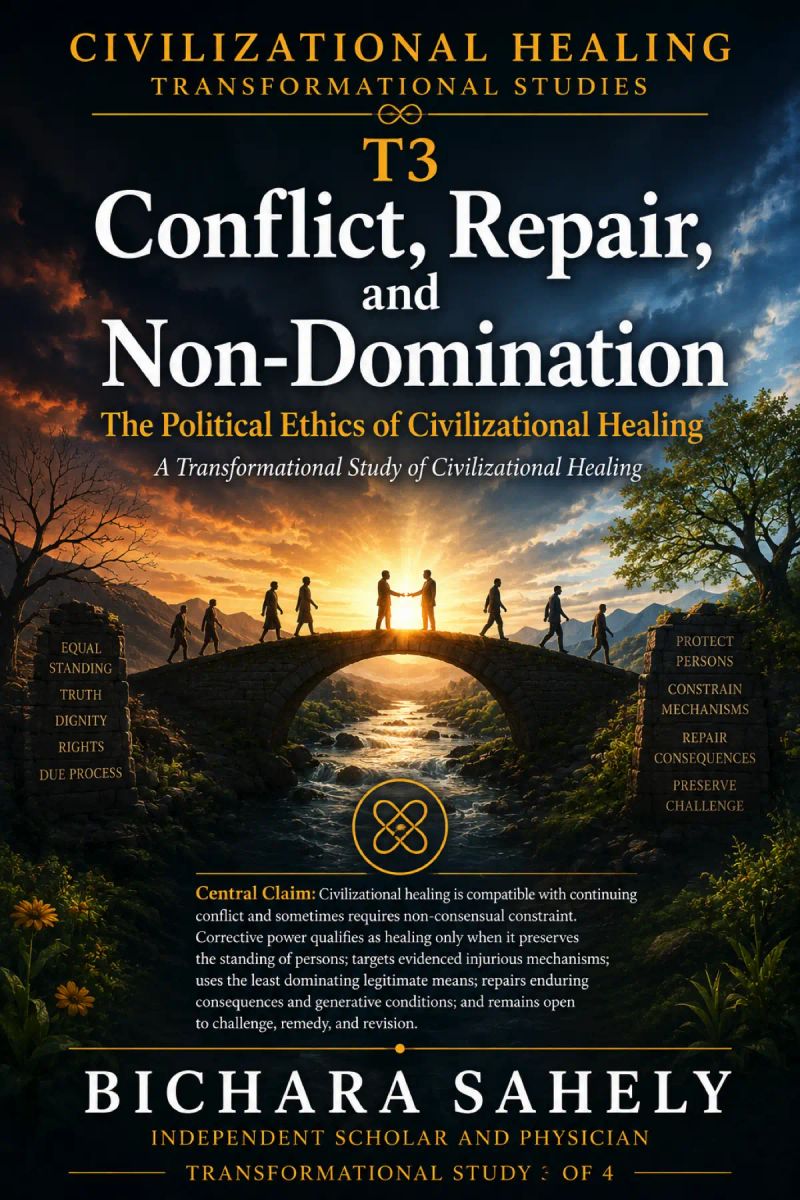
Conflict, Repair, and Non-Domination
The Political Ethics of Civilizational HealingBy Dr Bichara Sahely


Length2h 21m
About this audiobook
What happens when healing cannot be consensual? Conflict, Repair, and Non-Domination confronts the political limits of dialogue and coordination: conflicts that cannot simply be reconciled, domination that requires constraint, and injuries that persist after harmful conduct ends. T3 develops a political ethic for Civilizational Healing grounded in equal standing, non-domination, legitimate contestation, protective constraint, and repair. Through cases spanning civil rights, Indigenous refusal, tobacco governance, Minamata disease, truth and reconciliation, and the history of eugenics, it asks how power can protect without becoming therapeutic authoritarianism. Its enduring safeguard: protect persons, constrain injurious mechanisms, repair consequences, preserve challenge—and never turn the person into the pathology.
Audiobook details
GenreEducation and Learning, Politics and Government
Length2 hrs 21 mins
Narrated byListen with 1,000+ voices
FormateBook with Audio
Publish dateAug 31, 2026
LanguageEnglish
Table of contents
1Introduction
2Listener’s Note
3Listening Orientation
41. Introduction — What Happens When Healing Cannot Be Consensual?
51.1 The healing–domination dilemma
Show all chaptersShow less
61.2 Thesis
71.3 Contribution and restraint
82. From Coordination to Conflict: Handoff, Method, and Novelty
92.1 Analytical status and case strategy
102.2 Novelty audit
112.3 Normative status
123. Healing Is Not Harmony
133.1 Lawful coexistence without affective unity
143.2 Conflict as information and as injury
154. Never Turn the Person into the Pathology
164.1 Anti-Pathologization Principle
174.2 Healing and purification
184.3 Eugenics and racial hygiene as negative constitutional control
194.4 Can harmful collective ideologies be constrained?
205. What Kind of Conflict Is This?
215.1 Category-Appropriate Response Principle
225.2 Four recurring category errors
235.3 A diagnostic sequence
246. Equal Persons, Unequal Claims
256.1 Three levels of equality and asymmetry
266.2 WHO FCTC Article 5.3
276.3 Safeguards against generic exclusion
287. Non-Domination and the Substantive Floor
297.1 A disciplined working definition
307.2 What makes power arbitrary?
317.3 Why procedure is insufficient
327.4 A bounded non-domination and life-protection floor
338. Three Overlapping Regimes: Contestation, Constraint, Repair
348.1 Regime I — Legitimate contestation
358.2 Regime II — Protective constraint
368.3 Regime III — Repair
378.4 Cross-cutting rails
388.5 Settlement sufficiency
399. The Political Ethics of Coercion
409.1 Least-Dominating Effective Means Principle
419.2 Ordered comparison, not optimization
429.3 The Legitimate Constraint Test
439.4 Application to Little Rock
4410. Dual-Error Governance and Reversibility
4510.1 Five dimensions, no scalar product
4610.2 Little Rock and the error of non-intervention
4710.3 Eugenics and catastrophic over-constraint
4810.4 Risk-proportionate reflexivity
4911. Refusal, Resistance, and Counter-Power
5011.1 Refusal has no fixed moral valence

Preserving Life, Transforming Power in GazaDr Bichara Sahely1h 42mFree

Preserving Life, Transforming PowerDr. Bichara Sahely1h 4mFree

Putting the Missing Bridge to WorkDr. Bichara Sahely2h 12mFree

The Missing BridgeDr. Bichara Sahely1h 5mFree

Transformational Laboratories ProtocolDr. Bichara Sahely2h 33mFree
Artificial Intelligence and the Epistemic CommonsDr Bichara Sahely3h 12mFree

Institutions of Reflexive TransformationDr Bichara Sahely1h 51mFree

The Politics of Civilizational HealingDr. Bichara Sahely2h 13mFree

The Missing Grammar of Modern CivilizationDr. Bichara Sahely2h 8mFree

Civilizational Healing Research ArchitectureDr. Bichara Sahely1h 24mFree
How Does a Civilization Learn to Heal?Dr. Bichara Sahely1h 16mFree

From Competent Physicians to Healing SocietiesDr. Bichara Sahely2h 20mFree

Competence Is Necessary, but Not SufficientDr. Bichara Sahely1h 15mFree

Life-Grounding CanMEDSDr. Bichara Sahely1h 13mFree

The Dynamic Architecture of ViabilityDr Bichara Sahely2h 1mFree

Completing the Life-Value Onto-Axiology ProgramDr. Bichara Sahely1h 9m5.0 (1)Free

BEYOND GLOBAL JUSTICEDr. Bichara Sahely1h 25mFree

The Sweetness That Consumed the WorldBichara Sahely16h 14mFree
THE SOVEREIGNTY OF CREDITDr. Bichara Sahely3h 56mFree

A Brief History of IntelligenceMax S. Bennett12h 18m4.6 (6.6K)$29 · $0.00

HomeschooledStefan Merrill Block7h 10m3.6 (18.5K)$28 · $0.00

EXPERIENCE AND EDUCATION – Premium Edition (Including Democracy & Education) (Annotated)John Dewey19h 17m4.6 (1K)$2 · $0.00

WitnessAriel Burger8h 1m4.6 (1.3K)$20 · $0.00

EducationEllen G. White9h 41m4.6 (1.5K)$2 · $0.00

Parents and Children (Annotated)Charlotte Mason9h 23m4.6 (988)$2 · $0.00

Children Under FireJohn Woodrow Cox10h 17m4.5 (1.6K)$29 · $0.00

The State Must ProvideAdam Harris7h 15m4.5 (775)$24 · $0.00

The Call of the Wild and FreeAinsley Arment9h 7m4.4 (21.2K)$29 · $0.00

The Freelance WayRobert Vlach19h 48m4.5 (528)$40 · $0.00

Race to the BottomLuke Rosiak9h 20m4.5 (600)$29 · $0.00

They Came for the SchoolsMike Hixenbaugh9h 5m4.5 (2.6K)$8 · $0.00

Find Me UnafraidKennedy Odede, Jessica Posner11h 11m4.5 (2.7K)$29 · $0.00

Asking for ItKate Harding8h 55m4.4 (5.3K)$20 · $0.00
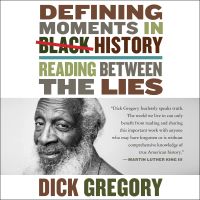
Defining Moments in Black HistoryDick Gregory7h 37m4.4 (6K)$26 · $0.00

The Emerald Tablets of Thoth the AtlanteanMaurice Doreal3h 4m4.4 (8.8K)$6 · $0.00

Learning AmericaLuma Mufleh6h 37m4.4 (564)$24 · $0.00

Math-ishJo Boaler7h 21m4.4 (588)$24 · $0.00

Daddy-Long-LegsJean Webster12h 18m4.2 (91K)$1.99 · $0.00
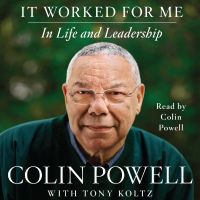
It Worked For MeColin Powell7h 42m4.3 (9.8K)$26 · $0.00

How to Test Negative for StupidJohn Kennedy8h 13m4.7 (9.7K)$28 · $0.00

Black AF HistoryMichael Harriot15h 43m4.7 (14.6K)$33 · $0.00

The Gulag Archipelago Volume 3Aleksandr I. Solzhenitsyn21h 56m4.7 (8.9K)$46 · $0.00

MotherlandJulia Ioffe17h 52m4.7 (2.5K)$40 · $0.00

HostageEli Sharabi5h 25m4.6 (10.8K)$24 · $0.00

KrantikariSanjeev Sanyal11h 44m4.6 (1.3K)$16 · $0.00

Unbroken Bonds of BattleJohnny Joey Jones8h 31m4.6 (2.6K)$8 · $0.00

On Democracies and Death CultsDouglas Murray10h 38m4.6 (6.5K)$29 · $0.00

Balcony Over Jerusalem: A Middle East Memoir - Israel, Palestine and BeyondJohn Lyons12h 37m4.6 (1.4K)$33 · $0.00

RiggedMollie Hemingway12h 48m4.6 (4.2K)$23 · $0.00

SledgehammerDavid Friedman8h 21m4.7 (589)$26 · $0.00

Citizenship in a Republic (Annotated)Theodore Roosevelt2h 44m4.6 (1.4K)$2 · $0.00

No EscapeNury Turkel9h 30m4.6 (809)$28 · $0.00

Always FaithfulThomas Schueman, Zainullah Zaki12h 12m4.6 (977)$29 · $0.00

UnthinkableJamie Raskin15h 8m4.5 (9.3K)$8 · $0.00

My Fourth Time, We DrownedSally Hayden13h 59m4.6 (2.9K)$23 · $0.00

A Revolution of Common SenseScott Jennings9h 29m4.6 (528)$29 · $0.00

Statement From the Dock at the Rivonia TrialNelson Mandela2h 18m4.6 (1.3K)$1 · $0.00

Lessons from the EdgeMarie Yovanovitch17h 11m4.5 (5.9K)$40 · $0.00

To Rescue the American SpiritBret Baier10h 12m4.5 (2.7K)$8 · $0.00
You may also like

What White People Can Do NextEmma Dabiri3h 12m4.4 (6K)$18 · $0.00

On LibertyJohn Stuart Mill5h 9m4.2 (112.9K)$20 · $0.00

Woman in the Nineteenth Century (Annotated)Sarah Margaret Fuller Ossoli12h 50m4.0 (2.9K)$2 · $0.00

White GuiltShelby Steele5h 28m4.3 (3.6K)$24 · $0.00

Grace CanceledDana Loesch6h 2m4.4 (334)$17 · $0.00

AbolitionAngela Y. Davis12h 15m4.4 (5.6K)$25

Invisible LaborRachel Somerstein10h 34m4.2 (803)$29 · $0.00
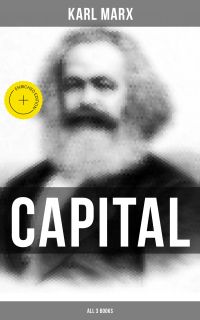
CAPITAL (All 3 Books)Karl Marx92h 37m4.5 (16.5K)$2.99 · $0.00

Nationalism & LettersRabindranath Tagore3h 18m4.2 (10.9K)$2.30

The Mis-Education of the NegroCarter Godwin Woodson5h 4m4.5 (29.4K)$1.20 · $0.00

Sensuous KnowledgeMinna Salami7h 16m4.3 (1.3K)$24 · $0.00

"The Kingdom of God Is Within You"Leo graf Tolstoy15h 8m4.2 (6.7K)$2 · $0.00

F*ck SilenceJoe Walsh6h 55m4.1 (1.4K)$24 · $0.00
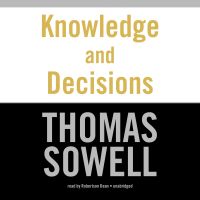
Knowledge and DecisionsThomas Sowell20h 53m4.5 (2.8K)$30

The Subjection of WomenJohn Stuart Mill4h 44m4.2 (17.5K)$0.60 · $0.00

Inverse CowgirlAlicia Roth Weigel6h 31m4.1 (1.7K)$24 · $0.00

Why Men Fight: A method of abolishing the international duelBertrand Russell6h 2m4.1 (503)$2 · $0.00
Empathy in Politics and LeadershipClaire Yorke12h 14m$25

The Greatest Happiness Principle - Utilitarianism, On Liberty & The Subjection of WomenJohn Stuart Mill13h 32m4.3 (29)$2 · $0.00

The Disuniting of AmericaArthur M. Schlesinger Jr.3h 15m3.8 (848)$12 · $0.00