
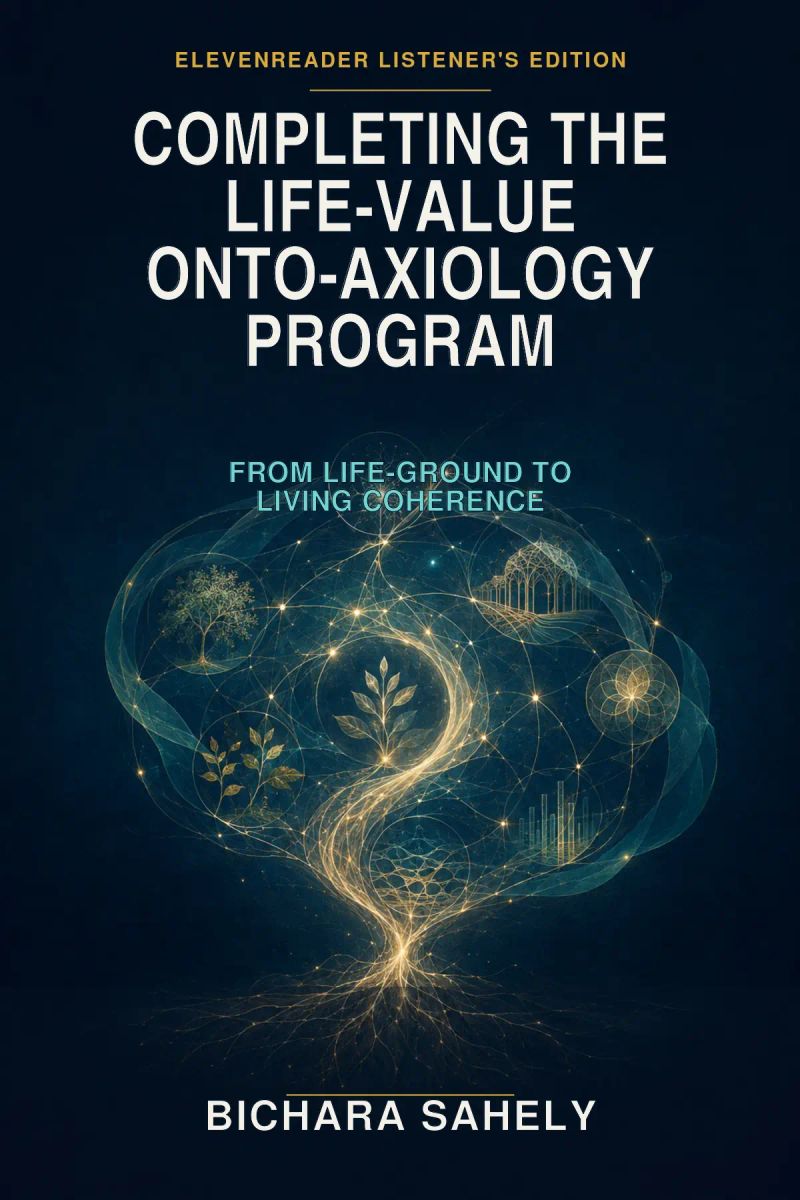
Completing the Life-Value Onto-Axiology Program
From Life-Ground to Living CoherenceBy Dr. Bichara Sahely


Length1h 9m
About this audiobook
Can Life-Value Onto-Axiology become a practical, testable framework for guiding health care, education, economics, and governance? Building on John McMurtry’s life-value philosophy, Bichara Sahely develops the missing operational middle: a dynamic account of need, satisfiers, provision, assimilation, regulation, capacity, regenerative margin, and viability through time.
This Listener’s Edition translates the white paper’s figures, tables, and mathematical scaffold into clear spoken narration. It explores the fact–value bridge, life capital, civil commons, institutional accountability, nested consequences, falsifiable hypotheses, and safeguards against reductionism, metric gaming, and doctrinal closure. The result is an open research architecture grounded in three questions: Does this protect, restore, or enlarge life? What evidence would change our minds? Can we remain more loyal to reality than to coherence?
Audiobook details
Rating★★★★★ 5.0 (1)
GenrePhilosophy
Length1 hr 9 mins
Narrated byListen with 1,000+ voices
FormateBook with Audio
Publish dateAug 2, 2026
LanguageEnglish
Table of contents
1Introduction
2Listener’s Note
3AI Transparency Note
4Disclaimer
5How to Listen
Show all chaptersShow less
6Orientation for the Listener
71. Introduction: What Would It Mean to Complete L-V-O-A?
82. Intellectual Inheritance and Contribution Boundary
92.1 McMurtry’s constitutional achievement
102.2 The proposed reconstruction
112.3 Method and sources
123. Ontological Ground: Life as Organized Dependence
133.1 Living unity, structure, and medium
143.2 Objective need
153.3 From difference to significance, valence, and meaning
163.4 The remaining hard problem
174. The Fact–Value Bridge
184.1 Why life is not merely another preference
194.2 The operational corollary
204.3 Beyond survivalism and perfectionism
215. The Minimal Operational Grammar
226. The Dynamic Need–Satisfier–Capacity–Viability Model
236.1 The causal sequence
246.2 Why flow is the missing temporal grammar
256.3 Formal scaffold
266.4 Satisfier taxonomy
276.5 State, trajectory, phase, and action
287. A Life-Value Decision Procedure
297.1 Non-compensation and proportionality
307.2 Uncertainty and precaution
317.3 Participation as epistemic infrastructure
328. Life Capital, Civil Commons, and Institutional Realization
338.1 Life capital
348.2 Civil commons
358.3 Life sequence and money sequence
368.4 The Life-Knowledge Commons
379. Nested Scale, Time, and the Anti-Displacement Test
3810. Epistemology: How Living Worlds Answer Back
3910.1 Three mutually correcting standpoints
4010.2 From coherence to causal warrant
4110.3 Falsifiable middle-range hypotheses
4211. Domain Applications
4311.1 Health care and public health
4411.2 Education
4511.3 Economics
4611.4 Governance
4712. Risks, Objections, and Safeguards
4812.1 The naturalistic-fallacy objection
4912.2 Anthropocentrism and the standing of nonhuman life
5012.3 Aggregation and incommensurability

Preserving Life, Transforming Power in GazaDr Bichara Sahely1h 42mFree

Preserving Life, Transforming PowerDr. Bichara Sahely1h 4mFree
Putting the Missing Bridge to WorkDr. Bichara Sahely2h 12mFree
The Missing BridgeDr. Bichara Sahely1h 5mFree
Transformational Laboratories ProtocolDr. Bichara Sahely2h 33mFree
Artificial Intelligence and the Epistemic CommonsDr Bichara Sahely3h 12mFree

Conflict, Repair, and Non-DominationDr Bichara Sahely2h 21mFree
Institutions of Reflexive TransformationDr Bichara Sahely1h 51mFree
The Politics of Civilizational HealingDr. Bichara Sahely2h 13mFree

The Missing Grammar of Modern CivilizationDr. Bichara Sahely2h 8mFree
Civilizational Healing Research ArchitectureDr. Bichara Sahely1h 24mFree
How Does a Civilization Learn to Heal?Dr. Bichara Sahely1h 16mFree

From Competent Physicians to Healing SocietiesDr. Bichara Sahely2h 20mFree

Competence Is Necessary, but Not SufficientDr. Bichara Sahely1h 15mFree

Life-Grounding CanMEDSDr. Bichara Sahely1h 13mFree
The Dynamic Architecture of ViabilityDr Bichara Sahely2h 1mFree
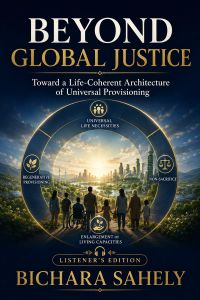
BEYOND GLOBAL JUSTICEDr. Bichara Sahely1h 25mFree

The Sweetness That Consumed the WorldBichara Sahely16h 14mFree
THE SOVEREIGNTY OF CREDITDr. Bichara Sahely3h 56mFree

Lessons in TruthH. Emilie Cady3h 50m4.5 (2.4K)$20 · $0.00
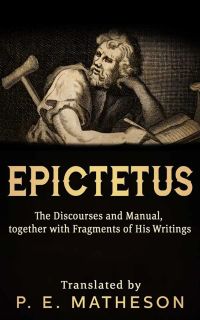
The Discourses of EpictetusP. E. MATHESOM12h 47m4.4 (17.7K)$1.20 · $0.00

IlluminationsWalter Benjamin10h 12m4.4 (16.2K)$20 · $0.00

That Bird Has My WingsJarvis Jay Masters9h 49m4.4 (13.7K)$29 · $0.00

Tâo Teh KingLaozi2h 34m4.4 (230.9K)$2 · $0.00

SymposiumPlato3h 26m4.4 (97.9K)$1.20 · $0.00

Buddhist Boot CampTimber Hawkeye2h 39m4.4 (8.4K)$18 · $0.00
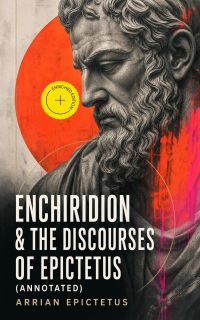
Enchiridion & The Discourses of Epictetus (Annotated)Arrian Epictetus18h 9m4.4 (3.5K)$2 · $0.00

The Meditations of the Emperor Marcus Aurelius AntoninusEmperor of Rome Marcus Aurelius5h 41m4.4 (1.8M)$1 · $0.00

Crime and PunishmentFyodor Dostoevsky23h 11m4.4 (1.3M)$12 · $0.00

MeditationsMarcus Aurelius5h 52m4.4 (433.7K)$1 · $0.00
Everyday DharmaSuneel Gupta5h 2m4.5 (761)$20 · $0.00
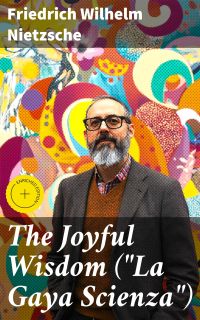
The Joyful Wisdom ("La Gaya Scienza")Friedrich Wilhelm Nietzsche11h 37m4.4 (26.6K)$1 · $0.00
The Art of LivingEpictetus, Sharon Lebell3h 16m4.4 (50.1K)$18 · $0.00
MeditationsEmperor Of Rome Marcus Aurelius7h 23m4.3 (477.5K)$1.20 · $0.00

The Imitation of ChristThomas à Kempis6h 27m4.3 (84.6K)$21 · $0.00

Sadhana: the realisation of lifeRabindranath Tagore3h 49m4.4 (8.6K)$6 · $0.00
SapiensYuval Noah Harari15h 18m4.3 (1.4M) · 1210$33 · $0.00
You BelongSebene Selassie8h 35m4.4 (2.7K)$26 · $0.00

The Song Celestial; Or, Bhagavad-Gîtâ (from the Mahâbhârata)Anonymous2h 18m4.4 (3.2K)$2 · $0.00
You may also like
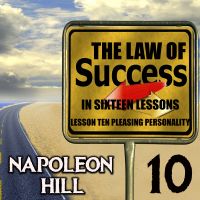
The Law of Success in Sixteen LessonsNapoleon Hill1h 14m4.4 (13.3K)$2 · $0.00

The Science of Being WellWallace D. Wattles2h 32m4.0 (3.1K)$1 · $0.00
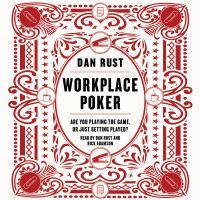
Workplace PokerDan Rust9h 7m4.2 (742)$29 · $0.00

The Essays of Arthur Schopenhauer: the Wisdom of LifeArthur Schopenhauer3h 43m4.2 (17.6K)Free

Nicomachean EthicsAristotle10h 50m4.2 (76K)$1 · $0.00

Everyday Chanakya | Stress Management S01E06Radhakrishnan Pillai50m4.4 (1.5K)$4
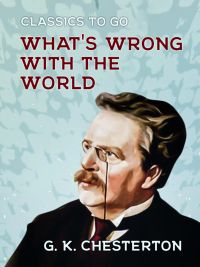
What's Wrong with the WorldG. K. Chesterton6h 16m4.2 (15.8K)$2.30
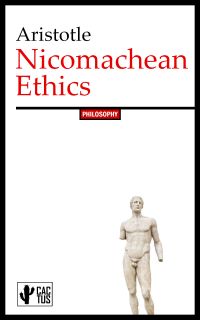
Nicomachean EthicsAristotle11h 37m4.2 (71.7K)$4 · $0.00

The Wisdom Of LifeArthur Schopenhauer4h 3m4.2 (20.2K)$2.30 · $0.00
PersuadableAl Pittampalli7h 3m4.2 (296)$24 · $0.00

Search Inside YourselfChade-Meng Tan7h 43m4.2 (12.2K)$26 · $0.00

The Master Key SystemCharles F. Haanel8h 48m4.3 (19K)$1.99 · $0.00
A Handbook for New StoicsMassimo Pigliucci, Gregory Lopez10h 45m4.2 (2.6K)$23

On the Curability of Certain Forms of Insanity, Epilepsy, Catalepsy, and Hysteria in FemalesIsaac Baker Brown3h 30m$1 · $0.00

Office Politics: A Psychological Playbook to Protect Your Career Without Manipulation (A Survival Guide to Office Politics for Introverts and Honest Workers)Gerry Ruiz1h 11m$3.40 · $0.00

The Interpersonal Skills CodebookMason U. Delaney7h 4m$4.10 · $0.00

Little Seashell 小贝壳, TheMeina Yang7m$6 · $0.00

The Cortisol Reset PlanMarina Wright7h 1m3.6 (114)$24 · $0.00
On Old Age - Cicero de Senectute (Annotated)Marcus Tullius Cicero4h 13m$2 · $0.00

The Attraction BlueprintLuz Harper48m$14 · $0.00