
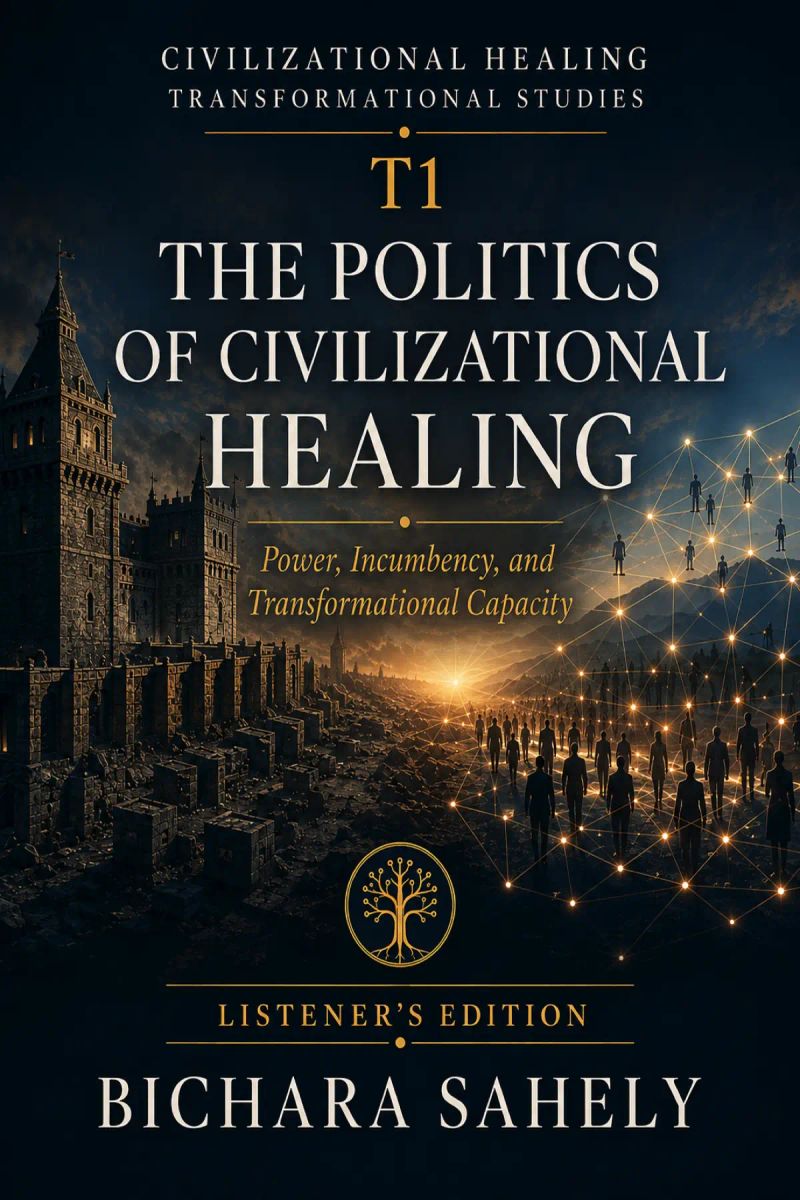
The Politics of Civilizational Healing
Power, Incumbency, and Transformational CapacityBy Dr. Bichara Sahely


Length2h 12m
About this audiobook
Why do societies continue to reproduce harms they already recognize—and what makes genuine transformation politically possible?
This Listener’s Edition examines the power structures, institutional dependencies, entrenched interests, and infrastructures that prevent civilizational healing. It argues that recognition and moral appeal are insufficient unless they are joined to lawful, legitimate, and durable transformational capacity.
Drawing on political economy, institutional theory, social-movement research, transition studies, and historical cases, Bichara Sahely develops a framework for diagnosing incumbency, building countervailing power, protecting vulnerable communities, and creating viable successor systems. The central claim is that sustainable civilizational healing requires not only resistance to harmful regimes, but the generative capacity to replace them with institutions capable of protecting and enlarging life.
Audiobook details
GenreEducation and Learning, Politics and Government
Length2 hrs 12 mins
Narrated byListen with 1,000+ voices
FormateBook with Audio
Publish dateNov 10, 2022
LanguageEnglish
Table of contents
1Introduction
2Listener's Note
3Listening Orientation
41. Introduction — When Knowing Is Not Enough
51.1 The question and thesis
Show all chaptersShow less
61.2 Analytic status and scope
71.3 What is new — and what is not: Listening map of the Civilizational Healing Enactment Circuit
82. From Civilizational Reflexivity to Transformational Capacity
92.1 Epistemic and transformational incapacity
102.2 From civilizational intelligence to enactment
112.3 A translation architecture
123. Why Harmful Regimes Persist
133.1 Reproduction mechanisms: Listening synthesis: mechanisms of regime reproduction
143.2 Coupling, compensation, and absorption
153.3 A disciplined harm claim
164. Power Beyond Command
174.1 The three-axis Power Audit: Listening synthesis: the three-axis Power Audit
184.2 Power is relational and recursively auditable
194.3 Against three reductions: Listening map of the three-axis Power Audit
205. From Injury to Agency
215.1 Recognition has four components
225.2 Actor development: Listening synthesis: capacities that turn injury recognition into agency
235.3 Coalition coherence without false unity
245.4 Opportunity, crisis, and preparation
256. Incumbency, Resistance, and Capability Conversion
266.1 Four incumbent orientations
276.2 Constraint versus conversion
286.3 Conversion is not capture
296.4 A dynamic strategy
307. Successor Viability and the Politics of Loss
31Listening synthesis: six dimensions of successor viability
327.1 Essential function versus incumbent form
337.2 Transition risk is real
347.3 Transition protection as justice and mechanism
357.4 The successor-viability paradox
368. Power–Persistence–Transformation Matrix
37Listening synthesis: the Power–Persistence–Transformation Matrix: Listening map of the Power–Persistence–Transformation Matrix
388.1 Outcome typology
398.2 Reading the matrix with the Power Audit
409. Two Thresholds and a Third Problem
419.1 Threshold One: legitimate authorization
429.2 Threshold Two: operationalization
439.3 The third problem: durability
44Listening synthesis: authorization, operationalization, and durability
45Listening map of two thresholds and a third problem
469.4 The temporality of transformation
4710. Transformation Without Domination
4810.1 Transformational legitimacy
4910.2 The four-dimensional healing test: Listening synthesis: the four-dimensional Civilizational Healing test
5010.3 The strongest objections

Preserving Life, Transforming Power in GazaDr Bichara Sahely1h 42mFree

Preserving Life, Transforming PowerDr. Bichara Sahely1h 4mFree

Putting the Missing Bridge to WorkDr. Bichara Sahely2h 12mFree

The Missing BridgeDr. Bichara Sahely1h 5mFree
Transformational Laboratories ProtocolDr. Bichara Sahely2h 33mFree
Artificial Intelligence and the Epistemic CommonsDr Bichara Sahely3h 12mFree

Conflict, Repair, and Non-DominationDr Bichara Sahely2h 21mFree

Institutions of Reflexive TransformationDr Bichara Sahely1h 51mFree

The Missing Grammar of Modern CivilizationDr. Bichara Sahely2h 8mFree
Civilizational Healing Research ArchitectureDr. Bichara Sahely1h 24mFree

How Does a Civilization Learn to Heal?Dr. Bichara Sahely1h 16mFree

From Competent Physicians to Healing SocietiesDr. Bichara Sahely2h 20mFree

Competence Is Necessary, but Not SufficientDr. Bichara Sahely1h 15mFree

Life-Grounding CanMEDSDr. Bichara Sahely1h 13mFree
The Dynamic Architecture of ViabilityDr Bichara Sahely2h 1mFree

Completing the Life-Value Onto-Axiology ProgramDr. Bichara Sahely1h 9m5.0 (1)Free
BEYOND GLOBAL JUSTICEDr. Bichara Sahely1h 25mFree

The Sweetness That Consumed the WorldBichara Sahely16h 14mFree

THE SOVEREIGNTY OF CREDITDr. Bichara Sahely3h 56mFree
A Brief History of IntelligenceMax S. Bennett12h 18m4.6 (6.6K)$29 · $0.00

HomeschooledStefan Merrill Block7h 10m3.6 (18.5K)$28 · $0.00

EXPERIENCE AND EDUCATION – Premium Edition (Including Democracy & Education) (Annotated)John Dewey19h 17m4.6 (1K)$2 · $0.00

WitnessAriel Burger8h 1m4.6 (1.3K)$20 · $0.00

EducationEllen G. White9h 41m4.6 (1.5K)$2 · $0.00

Parents and Children (Annotated)Charlotte Mason9h 23m4.6 (988)$2 · $0.00

Children Under FireJohn Woodrow Cox10h 17m4.5 (1.6K)$29 · $0.00

The State Must ProvideAdam Harris7h 15m4.5 (775)$24 · $0.00

The Call of the Wild and FreeAinsley Arment9h 7m4.4 (21.2K)$29 · $0.00

The Freelance WayRobert Vlach19h 48m4.5 (528)$40 · $0.00

Race to the BottomLuke Rosiak9h 20m4.5 (600)$29 · $0.00

They Came for the SchoolsMike Hixenbaugh9h 5m4.5 (2.6K)$8 · $0.00

Find Me UnafraidKennedy Odede, Jessica Posner11h 11m4.5 (2.7K)$29 · $0.00

Asking for ItKate Harding8h 55m4.4 (5.3K)$20 · $0.00
Defining Moments in Black HistoryDick Gregory7h 37m4.4 (6K)$26 · $0.00

The Emerald Tablets of Thoth the AtlanteanMaurice Doreal3h 4m4.4 (8.8K)$6 · $0.00

Learning AmericaLuma Mufleh6h 37m4.4 (564)$24 · $0.00

Math-ishJo Boaler7h 21m4.4 (588)$24 · $0.00

Daddy-Long-LegsJean Webster12h 18m4.2 (91K)$1.99 · $0.00
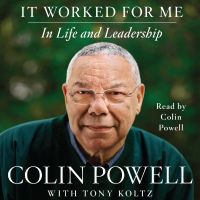
It Worked For MeColin Powell7h 42m4.3 (9.8K)$26 · $0.00

How to Test Negative for StupidJohn Kennedy8h 13m4.7 (9.7K)$28 · $0.00

Black AF HistoryMichael Harriot15h 43m4.7 (14.6K)$33 · $0.00

The Gulag Archipelago Volume 3Aleksandr I. Solzhenitsyn21h 56m4.7 (8.9K)$46 · $0.00

MotherlandJulia Ioffe17h 52m4.7 (2.5K)$40 · $0.00

HostageEli Sharabi5h 25m4.6 (10.8K)$24 · $0.00

KrantikariSanjeev Sanyal11h 44m4.6 (1.3K)$16 · $0.00

Unbroken Bonds of BattleJohnny Joey Jones8h 31m4.6 (2.6K)$8 · $0.00

On Democracies and Death CultsDouglas Murray10h 38m4.6 (6.5K)$29 · $0.00

Balcony Over Jerusalem: A Middle East Memoir - Israel, Palestine and BeyondJohn Lyons12h 37m4.6 (1.4K)$33 · $0.00

RiggedMollie Hemingway12h 48m4.6 (4.2K)$23 · $0.00

SledgehammerDavid Friedman8h 21m4.7 (589)$26 · $0.00

Citizenship in a Republic (Annotated)Theodore Roosevelt2h 44m4.6 (1.4K)$2 · $0.00

No EscapeNury Turkel9h 30m4.6 (809)$28 · $0.00

Always FaithfulThomas Schueman, Zainullah Zaki12h 12m4.6 (977)$29 · $0.00

UnthinkableJamie Raskin15h 8m4.5 (9.3K)$8 · $0.00

My Fourth Time, We DrownedSally Hayden13h 59m4.6 (2.9K)$23 · $0.00

A Revolution of Common SenseScott Jennings9h 29m4.6 (528)$29 · $0.00

Statement From the Dock at the Rivonia TrialNelson Mandela2h 18m4.6 (1.3K)$1 · $0.00

Lessons from the EdgeMarie Yovanovitch17h 11m4.5 (5.9K)$40 · $0.00

To Rescue the American SpiritBret Baier10h 12m4.5 (2.7K)$8 · $0.00
You may also like

Mission EconomyMariana Mazzucato6h 45m4.0 (4.1K)$24 · $0.00

How the Other Half BanksMehrsa Baradaran9h 35m4.2 (961)$20 · $0.00
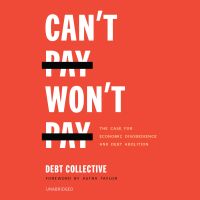
Can’t Pay, Won’t PayThe Debt Collective4h 33m4.3 (681)$15 · $0.00

Advantage India : From Challenge to OppourtunityA.P.J Abdul Kalam, Srijan Pal Singh6h 9m4.5 (252)$8

AI ValleyGary Rivlin11h 18m4.1 (452)$29 · $0.00
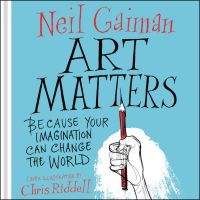
Art MattersNeil Gaiman, Chris Riddell50m4.4 (25K)$11 · $0.00

Proposed Roads to Freedom Bertrand Russell5h 34m4.1 (1.2K)Free

Planet GoogleRandall Stross7h 44m3.7 (1.8K)$17 · $0.00

The AI ConEmily M. Bender, Alex Hanna7h 51m3.7 (1.7K)$26 · $0.00

Athenian ConstitutionAristotle2h 43m4.0 (2.5K)$4 · $0.00

American Health — Who Gets PaidRobin Blackstone MD1h 31m$15

The Secrets of China's SuccessFabian Hänle11h 15m$39 · $0.00

Reflections on the Decline of Science in England, and on Some of Its CausesCharles Babbage7h 2m3.7 (40)$1 · $0.00

Doctor AI Reimagining Healthcare Rebuilding Trust Delivering Health 4.0Robin Blackstone MD11h 3m$25

Fields, Factories, and Workshops (Annotated)Petr Alekseevich kniaz Kropotkin13h 10m4.5 (107)$2 · $0.00

It Takes 5 to TangoVerena Voelter MD6h 8m$20 · $0.00
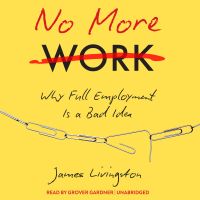
No More WorkJames Livingston3h 16m3.7 (449)$15

In the DarkJason Bawden-Smith4h 40m4.5 (11)$15

The Power In The LandFred Harrison14h 26m4.1 (15)$18 · $0.00

Saving The World At Business School (Part 2) - A Conversation with Andy HoffmanHoward Burton2h 48m$3 · $0.00