
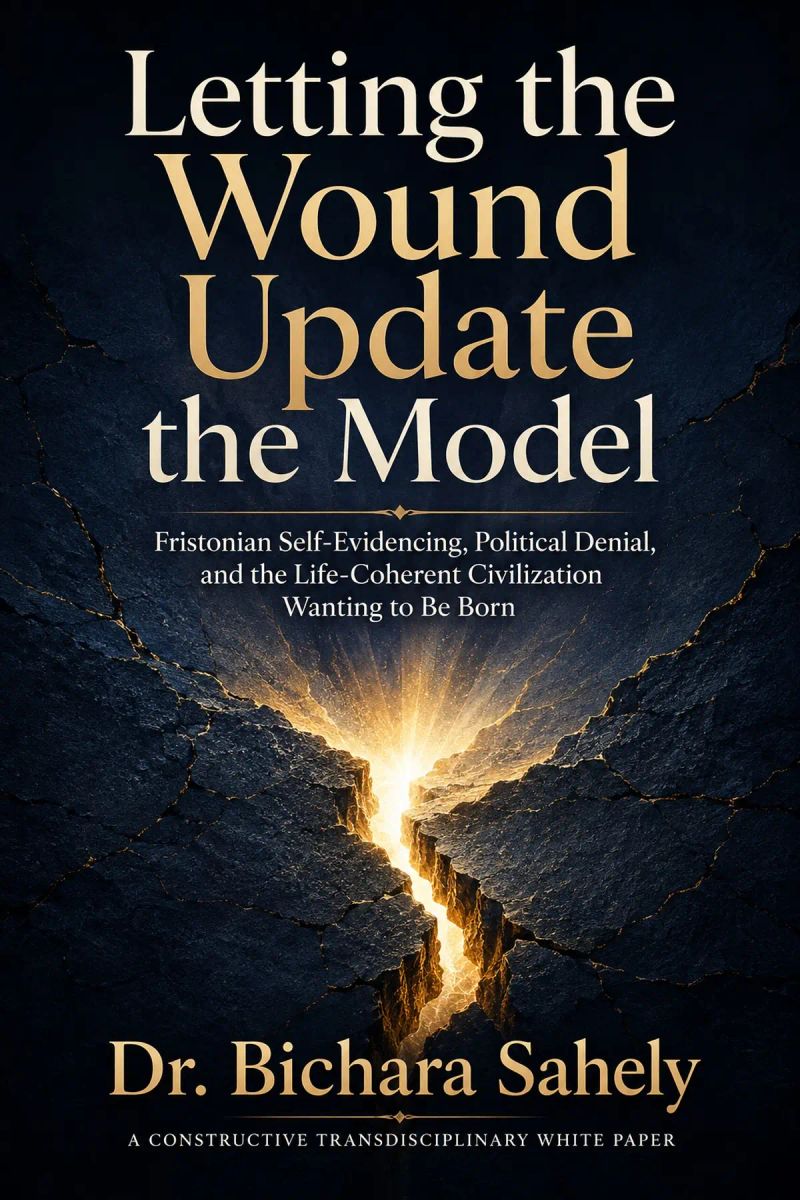
Letting the Wound Update the Model
Fristonian Self-Evidencing, Political Denial, and the Life-Coherent Civilization Wanting to Be BornBy Dr. Bichara Sahely


Length1h 27m
About this audiobook
This white paper brings Karl Friston’s Free Energy Principle into dialogue with a life-coherent framework for understanding political denial, institutional capture, and civilizational self-correction. It distinguishes pathological self-evidencing—when systems preserve their identity by suppressing evidence of life-harm—from life-coherent self-evidencing, in which suffering, ecological damage, and violated dignity become signals for repair. Through cases including Palestine/Gaza, Cuba, OECS Citizenship by Investment, Sudan, Haiti, Chagos, Western Sahara, migration, critical minerals, and climate finance, the paper asks what our institutions are pathologically conserving and what a more truthful, corrigible, life-serving world would require. Its central invitation is simple: let the wound update the model.
Audiobook details
GenreEducation and Learning, Philosophy
Length1 hr 27 mins
Narrated byListen with 1,000+ voices
FormateBook with Audio
Publish dateJul 8, 2026
LanguageEnglish
Table of contents
1Chapter 1
2A Note to the Listener
3Chapter One: Introduction: The Problem of Systems That Cannot Be Corrected
4Chapter Two: Friston's Free Energy Principle and the Meaning of Self-Evidencing
5Chapter Three: From Brains to Institutions: Regimes of Expectation, Scripts, Narratives, and Epistemic Communities
Show all chaptersShow less
6Chapter Four: The Normative Gap: Why Self-Maintenance Is Not Yet Life-Coherence
7Chapter Five: Pathological Self-Evidencing: Precision Distortion, Selective Empathy, and the Suppression of Life-Evidence
8Chapter Six: Life-Coherent Self-Evidencing: Corrigibility, Repair, and the Enlargement of Life-Capacity
9Chapter Seven: Revealing Cases I: Palestine/Gaza and the Legal-Medical-Media Collapse
10Chapter Eight: Revealing Cases II: Cuba, CBI, and Caribbean Sovereignty Under Constraint
11Cuba: Sovereignty Between Siege and Closure
12OECS CBI: Sovereignty, Mobility, and the Commodification of Belonging
13Chapter Nine: Revealing Cases III: Sudan, Haiti, Chagos, Western Sahara, Migration, Critical Minerals, and Climate Finance
14Sudan: Armed Legitimacy versus the Emergency Commons
15Haiti: Security Without Civic Repair
16Chagos: Strategic Security Built on Exile
17Western Sahara: Trade Without Consent
18Mediterranean Migration: Border Order versus Human Mobility
19Critical Minerals: The Green Transition as Extractive Self-Evidence
20Climate Finance and SIDS: Debt Discipline versus Planetary Responsibility
21Chapter Ten: A Diagnostic Grammar: What Is Each System Conserving?
22Chapter Eleven: A Practical Architecture for Self-Correcting Institutions
23Life-Evidence as a Primary Signal
24Precision Reversal and Evidentiary Justice
25Independent Correction Loops
26Protected Witnessing
27Reparative Accountability
28Life-Time Triggers
29Participatory Model Revision
30Metrics of Life-Capacity
31Anti-Capture Design
32Multi-Scale Repair
33Institutional Memory and Public Learning
34Law as a Learning System
35Media as a Public Nervous System
36Economy as Life-Capacity Provision
37Security as Conditions for Peace
38Regional and Planetary Institutions
39The Institutional Self-Correction Cycle
40From Heroic Witness to Designed Corrigibility
41Chapter Twelve: Conclusion: Letting the Wound Update the Model
42About the Author
43Closing Note
Preserving Life, Transforming Power in GazaDr Bichara Sahely1h 42mFree
Preserving Life, Transforming PowerDr. Bichara Sahely1h 4mFree
Putting the Missing Bridge to WorkDr. Bichara Sahely2h 12mFree
The Missing BridgeDr. Bichara Sahely1h 5mFree
Transformational Laboratories ProtocolDr. Bichara Sahely2h 33mFree
Artificial Intelligence and the Epistemic CommonsDr Bichara Sahely3h 12mFree
Conflict, Repair, and Non-DominationDr Bichara Sahely2h 21mFree
Institutions of Reflexive TransformationDr Bichara Sahely1h 51mFree
The Politics of Civilizational HealingDr. Bichara Sahely2h 13mFree

The Missing Grammar of Modern CivilizationDr. Bichara Sahely2h 8mFree
Civilizational Healing Research ArchitectureDr. Bichara Sahely1h 24mFree
How Does a Civilization Learn to Heal?Dr. Bichara Sahely1h 16mFree
From Competent Physicians to Healing SocietiesDr. Bichara Sahely2h 20mFree
Competence Is Necessary, but Not SufficientDr. Bichara Sahely1h 15mFree

Life-Grounding CanMEDSDr. Bichara Sahely1h 13mFree
The Dynamic Architecture of ViabilityDr Bichara Sahely2h 1mFree
Completing the Life-Value Onto-Axiology ProgramDr. Bichara Sahely1h 9m5.0 (1)Free
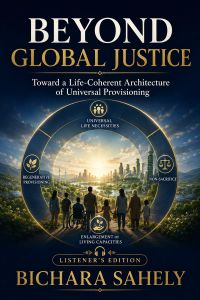
BEYOND GLOBAL JUSTICEDr. Bichara Sahely1h 25mFree

The Sweetness That Consumed the WorldBichara Sahely16h 14mFree
THE SOVEREIGNTY OF CREDITDr. Bichara Sahely3h 56mFree
A Brief History of IntelligenceMax S. Bennett12h 18m4.6 (6.6K)$29 · $0.00

HomeschooledStefan Merrill Block7h 10m3.6 (18.5K)$28 · $0.00

The State Must ProvideAdam Harris7h 15m4.5 (775)$24 · $0.00

The Call of the Wild and FreeAinsley Arment9h 7m4.4 (21.2K)$29 · $0.00
The Freelance WayRobert Vlach19h 48m4.5 (528)$40 · $0.00
Race to the BottomLuke Rosiak9h 20m4.5 (600)$29 · $0.00

They Came for the SchoolsMike Hixenbaugh9h 5m4.5 (2.6K)$8 · $0.00

Find Me UnafraidKennedy Odede, Jessica Posner11h 11m4.5 (2.7K)$29 · $0.00

Asking for ItKate Harding8h 55m4.4 (5.3K)$20 · $0.00
Defining Moments in Black HistoryDick Gregory7h 37m4.4 (6K)$26 · $0.00
The Emerald Tablets of Thoth the AtlanteanMaurice Doreal3h 4m4.4 (8.8K)$6 · $0.00

Learning AmericaLuma Mufleh6h 37m4.4 (564)$24 · $0.00
Math-ishJo Boaler7h 21m4.4 (588)$24 · $0.00

Daddy-Long-LegsJean Webster12h 18m4.2 (91K)$1.99 · $0.00
It Worked For MeColin Powell7h 42m4.3 (9.8K)$26 · $0.00

Little SoldiersLenora Chu11h 30m4.3 (3.1K)$29 · $0.00

Grammar-land; Or, Grammar in Fun for the Children of Schoolroom-shireM. L. Nesbitt2h 36m4.4 (488)$1 · $0.00

Financial FeministTori Dunlap8h 3m4.2 (22.2K)$8 · $0.00

DarkwaterWilliam Edward Burghardt Du Bois6h 40m4.3 (1.4K)$11 · $0.00

The Highway Code UKDepartment for Transport3h 33m4.2 (36.6K)$11 · $0.00
Moral Letters to LuciliusLucius Annaeus Seneca24h 26m4.5 (71.7K)$0.99 · $0.00

Lessons in TruthH. Emilie Cady3h 50m4.5 (2.4K)$20 · $0.00
Letters from a StoicSeneca6h 5m4.4 (80.4K)$6 · $0.00
The Discourses of EpictetusP. E. MATHESOM12h 47m4.4 (17.7K)$1.20 · $0.00
IlluminationsWalter Benjamin10h 12m4.4 (16.2K)$20 · $0.00
That Bird Has My WingsJarvis Jay Masters9h 49m4.4 (13.7K)$29 · $0.00

Tâo Teh KingLaozi2h 34m4.4 (230.9K)$2 · $0.00
SymposiumPlato3h 26m4.4 (97.9K)$1.20 · $0.00

Buddhist Boot CampTimber Hawkeye2h 39m4.4 (8.4K)$18 · $0.00
Enchiridion & The Discourses of Epictetus (Annotated)Arrian Epictetus18h 9m4.4 (3.5K)$2 · $0.00

The Meditations of the Emperor Marcus Aurelius AntoninusEmperor of Rome Marcus Aurelius5h 41m4.4 (1.8M)$1 · $0.00
Crime and PunishmentFyodor Dostoevsky23h 11m4.4 (1.3M)$12 · $0.00

MeditationsMarcus Aurelius5h 52m4.4 (433.7K)$1 · $0.00
Everyday DharmaSuneel Gupta5h 2m4.5 (761)$20 · $0.00

The Joyful Wisdom ("La Gaya Scienza")Friedrich Wilhelm Nietzsche11h 37m4.4 (26.6K)$1 · $0.00
The Art of LivingEpictetus, Sharon Lebell3h 16m4.4 (50.1K)$18 · $0.00
MeditationsEmperor Of Rome Marcus Aurelius7h 23m4.3 (477.5K)$1.20 · $0.00
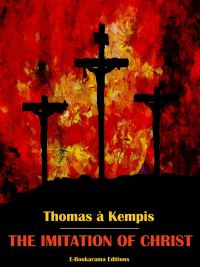
The Imitation of ChristThomas à Kempis6h 27m4.3 (84.6K)$21 · $0.00

Sadhana: the realisation of lifeRabindranath Tagore3h 49m4.4 (8.6K)$6 · $0.00
SapiensYuval Noah Harari15h 18m4.3 (1.4M) · 1312$33 · $0.00
You may also like
White GuiltShelby Steele5h 28m4.3 (3.6K)$24 · $0.00
CapitalismAyn Rand14h 16m4.0 (5.2K)$25 · $0.00

AzadiArundhati Roy6h 15m4.2 (5.1K)$17 · $0.00

StasilandAnna Funder10h 40m4.2 (23.5K)$20
This City Is Killing MeJonathan Foiles3h 12m4.2 (293)$15 · $0.00

DawnSevgi Soysal8h 25m4.3 (650)$20
They Don't Represent UsLawrence Lessig10h 32m4.2 (347)$29 · $0.00
1984George Orwell9h 34m4.3 (6M)$15 · $0.00
The Broken LadderKeith Payne7h 31m4.4 (4.9K)$20
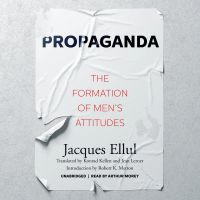
PropagandaJacques Ellul15h 36m4.3 (4.7K)$23 · $0.00

Surviving Schizophrenia, 7th EditionE. Fuller Torrey16h 15m4.2 (1.8K)$40 · $0.00
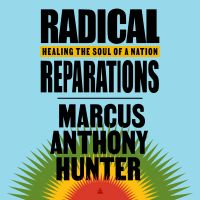
Radical ReparationsMarcus Anthony Hunter13h 7m3.9 (32)$33 · $0.00
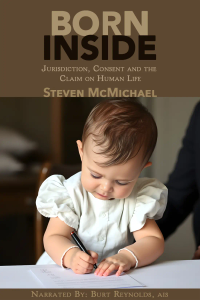
BORN INSIDESteven McMichael - Narrated by Burt Reynolds, AIS3h 23m4.6 (12)Free
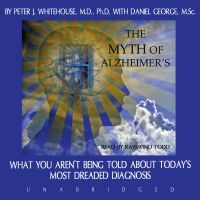
The Myth of Alzheimer’sPeter J. Whitehouse MD, PhD9h 8m3.7 (229)$20 · $0.00
Boom BustFred Harrison6h 42m$6 · $0.00

The Man Who Sold AmericaJoy-Ann Reid9h 26m$29 · $0.00
Cheng Lei: A memoir of freedomCheng Lei11h 9m4.3 (79)$29 · $0.00

The Social Media Dilemma: Awareness vs. Misinformation in the Digital AgeSaraban K. K. 51m4.9 (10) Only with Ultra

Pleroma Vol. 5 (Conviction)Jordan Mack1h 30m5.0 (3) Only with Ultra
Fear ItselfTammy Bruce9h 48m4.4 (236)$8 · $0.00