About this audiobook
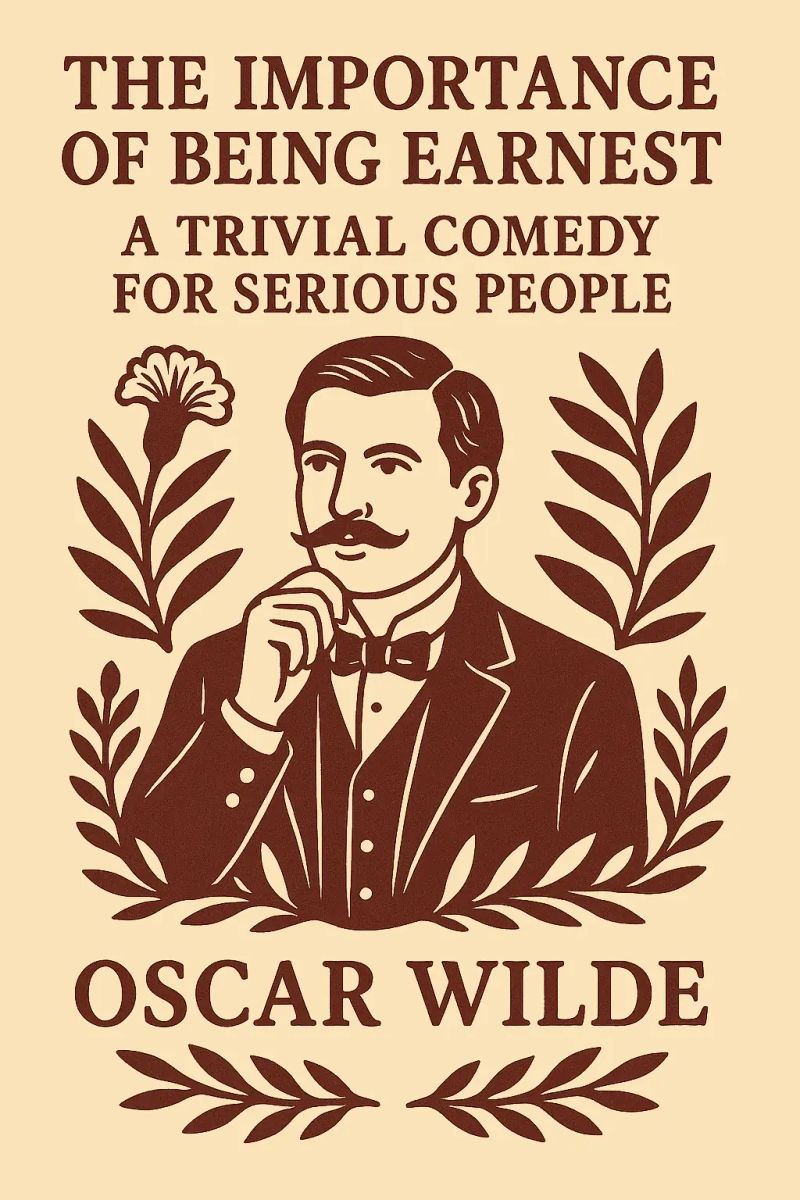
Oscar Wilde, born in 1854 in Dublin, stands as a pivotal figure in late-Victorian theatre and the Aesthetic movement, whose maxim art for art's sake manifested as a keen wit that weaponized social ritual. The Importance of Being Earnest, subtitled A Trivial Comedy for Serious People, arises from Wilde's cultivated satirical method within a London milieu of rigid propriety and rapid social performance. Premiered at the St James's Theatre in February 1895, it forged an immediate reputation as a sparkling comedy of manners in which identity is performative, marriage a social contract, and sincerity a pose rather than a moral anchor. The dialogue moves with brisk epigram and precise social observation, turning tea tables, cucumber sandwiches, and flirtations into instruments of critique. The excerpt exhibits Wilde's technique: language as game, social ritual as theatre, and a world that prizes wit over virtue. Conceptually, the work sits within the fin de siècle climate, where ornament and social codes are scrutinized, and its reception in 1895 reflects both appetite for gaiety and unease at moral seriousness.
From this surface of gaiety emerges a pointed critique of marriage, class, and gender performance. Earnest treats earnestness itself as a social costume: romance is commodified, betrothal a matter of social calculation, and the most injurious truth may be the one that disrupts decorum. The central conceit—Ernest in town, Jack in the country, and Cecily as a governess’s ward—renders identity elastic, contingent, and negotiated through deception, linguistic play, and appetite. The play’s most famous paradox—"the truth is rarely pure and never simple"—epitomizes Wilde’s challenge to moral absolutism and his conviction that social life depends on paradox, wit, and theatrical self-awareness. Its influence extends beyond its era: it helped codify a modern English comedy of manners, providing a template for meta-theatrical humor and verbal virtuosity that shaped later dramatists such as Noël Coward and informed contemporary language-driven comedy. The result is a work whose polish, intelligence, and relish for social critique continue to illuminate the history of English drama and sustain the play’s status as a cornerstone of witty theatrical tradition.