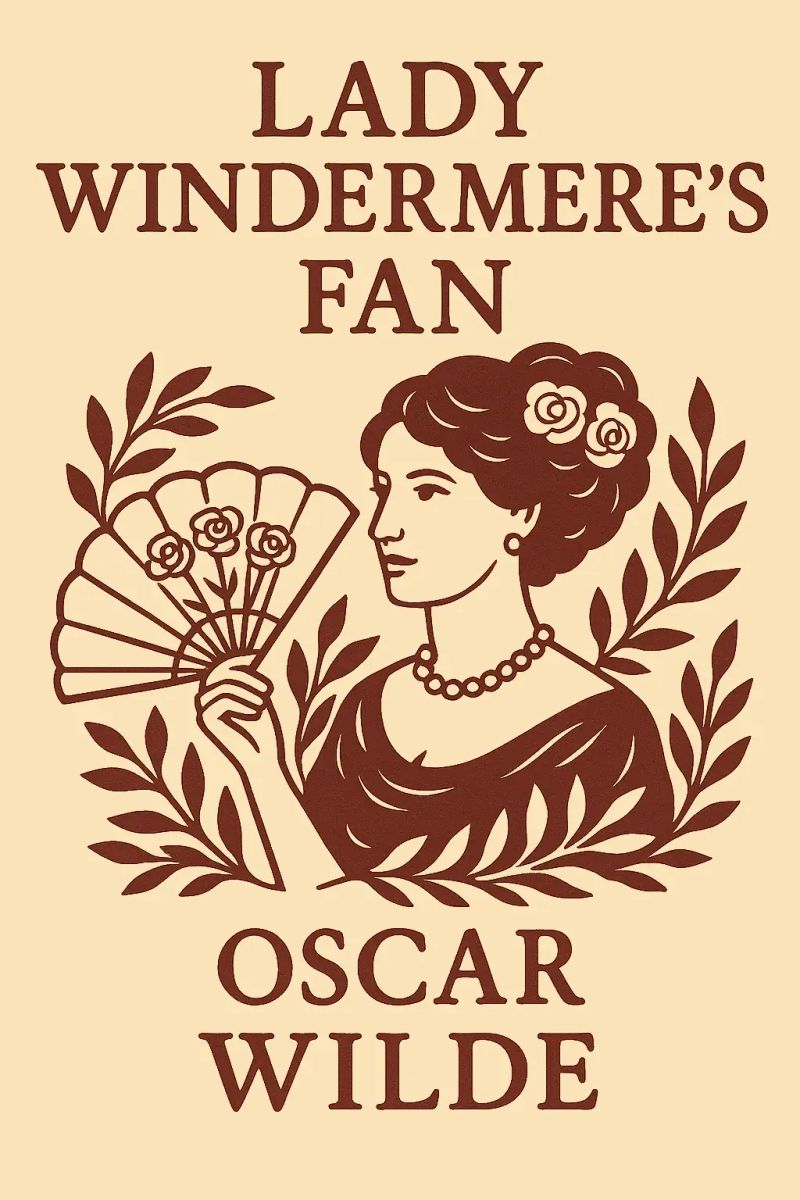
Oscar Wilde’s Lady Windermere’s Fan is an English society comedy first performed in London in 1892 at the St James’s Theatre, at a moment when Wilde was consolidating his reputation as one of the most brilliant dramatists of the late Victorian stage. Written for the commercial theatre yet sharpened by Wilde’s paradoxical wit and cosmopolitan sensibility, the play emerged from a culture preoccupied with respectability, gossip, and the policing of women’s sexual reputations. Its dialogue and stage business reflect the conventions of the well-made play and drawing-room comedy while also displaying Wilde’s distinctive epigrammatic style, developed alongside his work as a critic, aesthete, and public intellectual in 1890s Britain.
The drama anatomizes the fragility of moral absolutes within an aristocratic milieu that confuses virtue with social acceptability, staging a conflict between puritanical ideals and the messy realities of desire, marriage, and compassion. Through misunderstandings, calculated performances of propriety, and the circulation of scandal, Wilde exposes how “Society” manufactures transgression even as it feasts upon it, and he grants particular complexity to female figures caught between condemnation and self-sacrifice. The play’s enduring influence lies in its fusion of high comedy with ethical pressure: it helped define the modern comedy of manners, demonstrating how sparkling surface talk can serve as an instrument of social critique and a vehicle for surprisingly serious reflections on judgment, forgiveness, and the costs of reputation.