About this audiobook
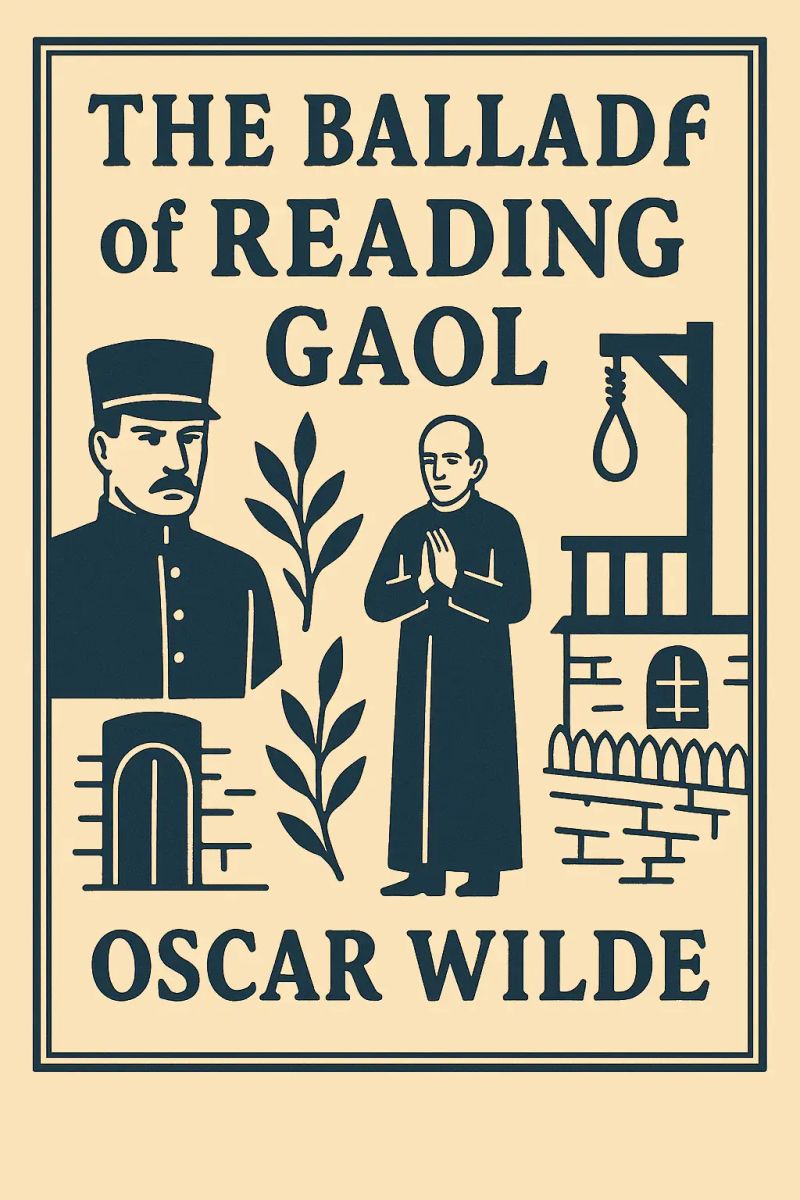
Written in the wake of Oscar Wilde's imprisonment for gross indecency (1895–1897) and published in 1898, The Ballad of Reading Gaol emerges from Wilde's most publicly controversial period. Wilde, a central figure of the late Victorian Aesthetic Movement, endured social ostracism and legal persecution under a regime that conflated art, sexuality, and morality. The poem's language and form—an expanded ballad that traverses the prison yard through a sequence of scenes and refrains—reflect its publication context as a moral meditation rather than a mere lyric; it is composed in Reading Gaol, with stark imagery of guards, chaplains, the governor, and the gallows that indicts the penal system as much as the individual criminal. Reliant on English, it peppers biblical and sacramental allusions such as Caiaphas and the Burial Office, situating Wilde within a Protestant-inflected moral world while testing its certainties. Its reception, initially divided, has since cemented its status as a humane, politically charged epitaph to Wilde's late career and as a pointed critique of the English justice system in the fin de siécle.
At its thematic center the poem opposes the glamor of punishment, presenting the condemned as a figure of shared humanity rather than a mere subject of crime. The refrain that the thing he loves is killed regulates the moral argument, while the successive perspectives of guards, doctors, chaplains, and onlookers expose how institutional power manufactures fear and discipline rather than empathy or repentance. The imagery of sky and air above the gaol, contrasted with the grotesquerie of the hangman and the iron routines of prison life, reframes death as both a social calamity and a deeply personal ordeal, interrogating the ethics of capital punishment. The ballad’s formal devices—the steady cadence, the cumulative refrain, and the ritualized progression through the yard and the scaffold—anticipate later modernist and social-realist poetry in its fusion of documentary detail with psychological depth. In its insistence that the condemned retains moments of longing, dignity, and humanity, the Ballad contributed to a broader critique of punitive justice and a shift in literary attention toward the human costs of imprisonment that would resonate through 20th-century poetry and reform discourse.