About this audiobook
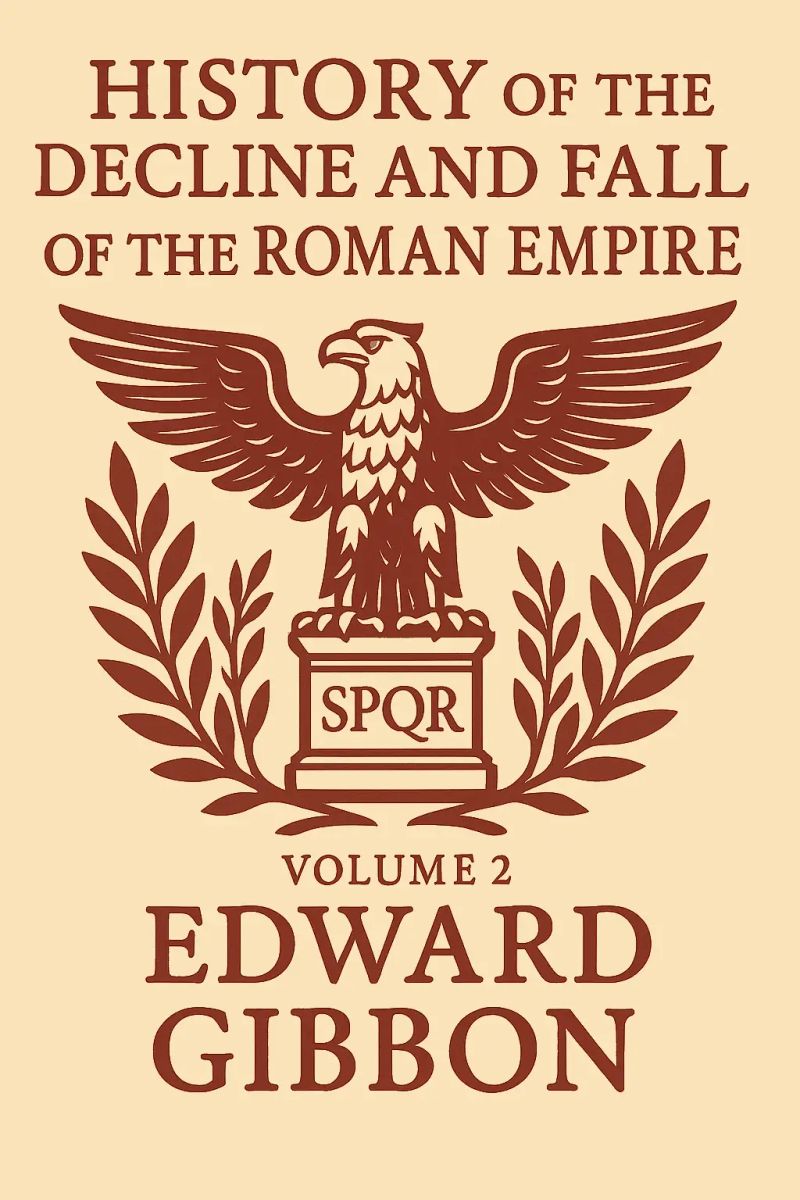
Edward Gibbon, British historian (1737–1794), wrote History of the Decline and Fall of the Roman Empire during the late eighteenth century, a period when Enlightenment critical methods were reshaping English letters and public discourse on empire, religion, and history. Composed in English, the work originated as a deliberately panoramic, systematized history of Rome from Trajan to the fall of Constantinople, with Volume II issued in 1781 as part of the six-volume suite that unfolded through the 1780s. Gibbon's education and milieu—self-directed study punctuated by exposure to Continental classical scholarship and the political culture of Georgian Britain—imbued his narrative with a rigorous philology, a broad classical apparatus, and a sceptical temper toward ecclesiastical authority. The opening excerpt from this volume places his enterprise within ongoing debates about the treatment of Christians in the Roman world, while his prefatory notes and footnoted asides reveal his engagement with contemporaries such as Robertson, Mackintosh, and other interpreters of Christian antiquity. Written for a educated, reading public and published by Imprint in London, the work embodies a transition from traditional medieval and ecclesiastical histories to a modern secular historiography that emphasizes causal analysis, political context, and moral consequences.
Within this frame, the excerpt probes not only events—the persecution under Nero and subsequent emperors—but also the interpretive problems of narrating early Christianity from a secular vantage. The argument proceeds through a Gibbonian blend of critical inquiry, irony, and worldly prudence: he questions the motives of persecutors, scrutinizes apologetic accounts, and stresses the limits of antique testimony, all while weaving a larger melancholy about the fragility of empire and the long arc of civilizational decline. The prose embodies a distinctive historical style that combines lucid exegesis with rhetorical grievance, using polemical asides to challenge received pieties while preserving a humane sympathy for victims of tyranny. Thematically, the chapter crystallizes core concerns of the work: the tension between empire and creed, the fragility of religious unity under political pressure, and the capacity of law, tolerance, and governance to accommodate difference without dissolving civic order. Gibbon’s method, austere yet richly ironic, helped inaugurate a secular, critical canon for later histories of Rome and the Christian past, exerting enduring influence on scholarly norms, narrative strategy, and the interpretation of religion as a factor in imperial politics.