About this audiobook
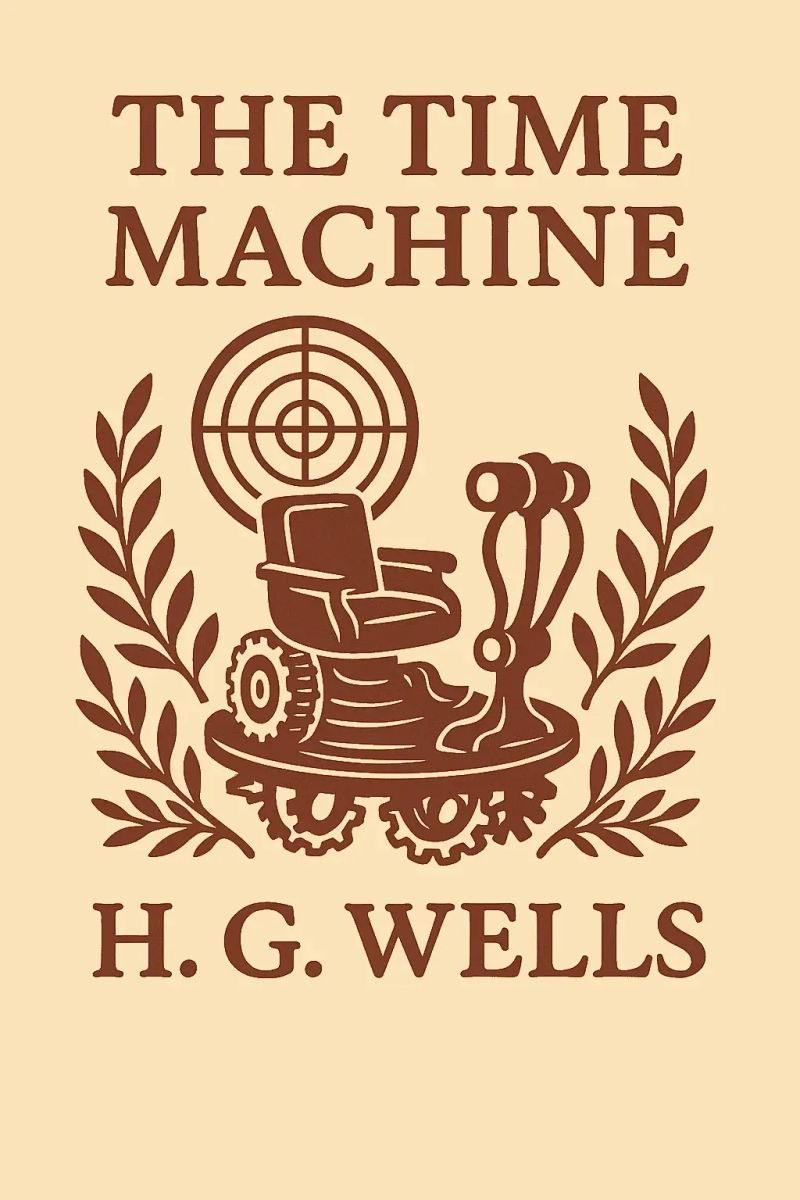
H. G. Wells’s The Time Machine emerged from the intellectual ferment of late-Victorian Britain, when rapid industrialization, evolutionary theory, and popularized scientific discourse were reshaping conceptions of history and human nature. Wells, trained in science and influenced by contemporary debates in biology and social reform, developed the novella from earlier magazine versions before its book publication in 1895. Written in English and framed as an after-dinner conversation among educated men, the narrative adopts the idiom of scientific demonstration and gentlemanly skepticism characteristic of the period’s “scientific romance,” situating speculative invention within a recognizable bourgeois milieu.
The work uses time travel not as mere adventure mechanism but as a critical instrument for estranging the present: the distant future becomes a distorted mirror in which class division, evolutionary adaptation, and the fragility of civilization are examined with satiric force. Wells juxtaposes the apparent utopian ease of the Eloi with the subterranean menace of the Morlocks to dramatize anxieties about capitalism, degeneration, and the long-term consequences of social stratification, while the novel’s entropic vistas and cosmic pessimism expand its scope to geological and astronomical time. Widely regarded as foundational to modern science fiction, The Time Machine helped codify time travel as a narrative technology and established a model for using speculative premises to conduct social critique and philosophical inquiry about progress, responsibility, and humanity’s place in deep time.