
Gnosticism
A Note on the Philosophical SchoolBy Pons Malleus


Length3h 4m
About this audiobook
In an age flooded with information and noise, where the material and measurable often overshadow the inner and ineffable, a rediscovery of Gnosticism offers a strikingly modern relevance. This book is an invitation to journey into a philosophical worldview that defied the orthodoxies of its time—and perhaps still defies those of our own. Gnosticism, often misunderstood or dismissed as a heretical fragment of early Christian history, is far more than a set of outlawed scriptures or esoteric rituals. It is a mode of thought, a way of being, and a profound challenge to the prevailing paradigms of existence, knowledge, and salvation.
At its heart, Gnosticism confronts a perennial human condition: the deep sense that the world, as we experience it, is somehow not as it should be—that we are exiles in a cosmos that conceals more than it reveals. Gnostics dared to name this unease, to mythologize it, and to systematize it into a metaphysical framework that combined ancient mythology, Platonic philosophy, and radical introspection. For the Gnostics, the material world was not merely flawed but fundamentally alien—a creation of lesser powers, a prison of the soul. Salvation, they claimed, comes not from belief or obedience, but through gnōsis: direct, transformative knowledge of the divine spark within.
This book does not aim to romanticize Gnosticism, nor to reduce it to a single, unified doctrine. It is neither a defense of Gnosticism nor an attack on its critics. Rather, it is an attempt to understand it as a living, breathing philosophical tradition—complex, diverse, and internally contested. The reader will encounter the major themes of Gnostic thought: the demiurge and the pleroma, the fall of Sophia, the cosmic drama of entrapment and awakening, and the radical anthropology that sees the human being not as a sinner to be redeemed but as a divine fragment to be remembered.
We will examine Gnosticism in its historical context—arising in the melting pot of Hellenistic religious ferment, drawing from Jewish mysticism, Persian dualism, and Greek metaphysics. We will explore the writings of key Gnostic texts, from the Apocryphon of John to the Gospel of Thomas, and consider the philosophical implications of their often cryptic and poetic insights. At the same time, we will trace the influence of Gnostic ideas through the centuries: in the mystics of medieval Europe, the dissenting sects of the Renaissance, and even in modern existential and psychological thought.
Why does Gnosticism endure? Perhaps because it speaks to a timeless intuition: that the path to truth lies not in submission to external authority, but in awakening to something buried within. In a world increasingly dominated by systems that reduce human beings to data points and citizens to consumers, the Gnostic refusal to accept appearances at face value is not just subversive—it is necessary.
I invite you to suspend your assumptions, to read not only with your intellect but with your inner ear. Gnosticism may not offer clear answers, but it poses questions that remain uncannily alive. It calls us to remember, to seek, and above all, to know.
Audiobook details
GenreSpirituality and Religion, Philosophy
Length3 hrs 4 mins
Narrated byListen with 1,000+ voices
FormateBook with Audio
Publish dateNov 18, 2025
LanguageEnglish
Table of contents
1GNOSTICISM
2Introduction to Gnosticism
3Key Gnostic Scriptures
4Core Philosophical Concepts
5Dualism in Gnostic Thought
Show all chaptersShow less
6The Role of Knowledge and Enlightenment
7Prominent Figures in Gnosticism
8Creation Myths and the Nature of the Divine
9Critiques of Gnostic Philosophy
10Gnosticism and Other Philosophical Traditions
Series

TranscendentalismPons Malleus2h 57m$6
ScholasticismPons Malleus3h$6
SkepticismPons Malleus3h 16m$6
RationalismPons Malleus2h 47m$6
EmpiricismPons Malleus2h 49m$6
StructuralismPons Malleus2h 57m$6
CoherentismPons Malleus3h 1m$6
FoundationalismPons Malleus3h 17m$6

DeterminismPons Malleus3h 29m$6
NaturalismPons Malleus3h 26m$6
PragmatismPons Malleus3h 7m$6
ConstructivismPons Malleus3h 16m$6
Milesian SchoolPons Malleus3h 17m$6
ObjectivismPons Malleus3h 31m$6
EpicureanismPons Malleus3h 17m$6
EleaticismPons Malleus2h 51m$6
NominalismPons Malleus2h 59m$6
Dialectical MaterialismPons Malleus3h 6m$6

French NietzscheanismPons Malleus3h 4m$6
Ionian SchoolPons Malleus3h 1m$6
31 Decrees of Blessing for Your LifePatricia King2h 38m4.8 (1.4K)$10 · $0.00

Loved BabySarah Philpott4h 51m4.8 (1.4K)$10 · $0.00

The QuranAllah23h 7m4.7 (136.1K)$1 · $0.00

The Secret of the RosaryLouis de Montfort6h 1m4.7 (16K)$2 · $0.00

The Holy Qur-an: Text, Translation and CommentaryAbdullah Yusuf Ali22h 16m4.7 (133K)$1 · $0.00

All of Grace (Annotated)Charles Spurgeon5h 1m4.7 (1.3K)$1.99 · $0.00

Steps to ChristEllen G. White3h 12m4.7 (13.8K)$2 · $0.00

The Doctrine and Covenants of the Church of Jesus Christ of Latter Day Saints (Annotated)Joseph Smith13h 57m4.7 (575)$2 · $0.00

Sinners in the Hands of an Angry God & Other Sermons (Annotated)Jonathan Edwards7h 51m4.7 (1.5K)$2 · $0.00

Swayam Ki AwaazPrem Rawat8h 34m4.7 (1.1K)$26 · $0.00

Behind the BadgeAdam Davis10h 18m4.7 (2.7K)$10 · $0.00

The New Human Revolution, vol. 1Daisaku Ikeda7h 46m4.7 (669)$12 · $0.00

You Are Worth ItKyle Carpenter, Don Yaeger8h 53m4.7 (4.8K)$29 · $0.00

Praying GraceDavid A. Holland3h 2m4.7 (658)$10 · $0.00

Evidence Not SeenDarlene Deibler Rose11h 11m4.6 (11.9K)$29 · $0.00

The Christ KeyChad Bird, Chad Bird7h 33m4.7 (592)$17.40 · $0.00

Your Body Already KnowsNidhi Pandya Bhanshali9h 7m4.7 (360)$16 · $0.00

The Complete WorksFlorence Scovel Shinn7h 59m4.6 (6.6K)$2 · $0.00
Driven by EternityJohn Bevere3h 50m4.6 (3.2K)$10 · $0.00

Spiritual AnatomyDaaji Kamlesh D. Patel9h 47m4.7 (319)$29 · $0.00

IlluminationsWalter Benjamin10h 12m4.4 (16.2K)$20 · $0.00

That Bird Has My WingsJarvis Jay Masters9h 49m4.4 (13.7K)$29 · $0.00

Tâo Teh KingLaozi2h 34m4.4 (230.9K)$2 · $0.00

Buddhist Boot CampTimber Hawkeye2h 39m4.4 (8.4K)$18 · $0.00
Enchiridion & The Discourses of Epictetus (Annotated)Arrian Epictetus18h 9m4.4 (3.5K)$2 · $0.00

The Meditations of the Emperor Marcus Aurelius AntoninusEmperor of Rome Marcus Aurelius5h 41m4.4 (1.8M)$1 · $0.00

Crime and PunishmentFyodor Dostoevsky23h 11m4.4 (1.3M)$12 · $0.00

MeditationsMarcus Aurelius5h 52m4.4 (433.7K)$1 · $0.00

Everyday DharmaSuneel Gupta5h 2m4.5 (761)$20 · $0.00

The Joyful Wisdom ("La Gaya Scienza")Friedrich Wilhelm Nietzsche11h 37m4.4 (26.6K)$1 · $0.00
The Art of LivingEpictetus, Sharon Lebell3h 16m4.4 (50.1K)$18 · $0.00

Sadhana: the realisation of lifeRabindranath Tagore3h 49m4.4 (8.6K)$6 · $0.00

SapiensYuval Noah Harari15h 18m4.3 (1.4M)$33 · $0.00

You BelongSebene Selassie8h 35m4.4 (2.7K)$26 · $0.00

The Song Celestial; Or, Bhagavad-Gîtâ (from the Mahâbhârata)Anonymous2h 18m4.4 (3.2K)$2 · $0.00

Chuang Tzu: Mystic, Moralist, and Social ReformerZhuangzi14h 42m4.4 (1.2K)$1 · $0.00

High-RisersBen Austen13h 33m4.4 (2.8K)$33 · $0.00

The Great OmissionDallas Willard7h 45m4.4 (4K)$26 · $0.00

The Grand InquisitorFyodor Dostoyevsky2h 24m4.3 (10.7K)$1 · $0.00
Praying with the PsalmsEugene H. Peterson7h 20m4.5 (312)$24 · $0.00
You may also like
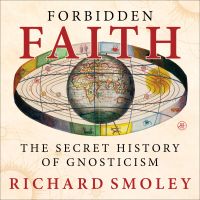
Forbidden FaithRichard Smoley8h 59m4.1 (914)$29 · $0.00
Why Science Does Not Disprove GodAmir Aczel6h 52m3.9 (1.2K)$24 · $0.00

BandersnatchErika Morrison6h 11m4.1 (303)$17 · $0.00

Pandora's JarNatalie Haynes9h 25m4.3 (32.9K)$29 · $0.00
Five Stages of Greek Religion (Annotated)Gilbert Murray8h 35m4.2 (317)$2 · $0.00

The Great DivorceC. S. Lewis3h 23m4.4 (230.4K)$18 · $0.00

Love WinsRob Bell3h 39m3.8 (82.7K)$18 · $0.00
The Essence of ChristianityLudwig Feuerbach14h 20m3.9 (2.2K)$12 · $0.00

Systematic Theology (Vol. 1-3) (Annotated)Augustus Hopkins Strong93h 3m4.5 (1K)$1.99 · $0.00

The Everlasting Man (Annotated)G. K. Chesterton12h 46m4.3 (14.3K)$2 · $0.00
God Is Not OneStephen Prothero14h 38m4.0 (4.9K)$33 · $0.00
The Gnostics and Their RemainsC. W. King16h 47m4.1 (81)$4.70 · $0.00

Fragments of a Faith ForgottenGeorge Robert Stow Mead18h 11m4.4 (149)$21 · $0.00

From the Caves and Jungles of HindostanH. P. Blavatsky10h 27m4.1 (247)$2.30

Archetype Of The Awakened SoulViolet Ross/ Luiz Santos5h 22m$7 · $0.00

The Origin of Paul's ReligionJohn Gresham Machen9h 35m4.2 (97)$2 · $0.00

The History of the Devil and the Idea of Evil From the Earliest Times to the Present Day (Annotated)Paul Carus12h 42m3.9 (724)$1.99 · $0.00

Bible Mystery and Bible Meaning (Annotated)Thomas Troward9h 8m4.5 (99)$2 · $0.00
The Gnôsis of the LightF. Lamplugh1h 32m3.8 (10)$1 · $0.00

Morality Without GodM. M. Mangasarian1h 36m$1 · $0.00