
Ionian School
A Note on the Philosophical MovementBy Pons Malleus


Length3h
About this audiobook
The Ionian School of philosophy, born in the ancient city-states of Asia Minor, marks the dawn of rational inquiry and the search for natural explanations of the world. Before this intellectual revolution, myths and gods were often invoked to explain natural phenomena. The Ionian thinkers, however, dared to look beyond the mythological narratives to explore the fundamental nature of reality. This shift, away from the divine to the natural, laid the groundwork for much of Western philosophy, providing a foundation that would influence the course of intellectual history for millennia.
The city of Miletus, located along the Ionian coast in present-day Turkey, stands as the birthplace of this philosophical awakening. It was here that figures such as Thales, Anaximander, and Anaximenes would challenge prevailing understandings of the world, turning their attention to the cosmos, nature, and the origin of all things. These early philosophers were not content to simply accept traditional religious or mythological explanations. Instead, they sought to understand the world in terms of natural causes and principles. They were the first to attempt a rational description of the universe, breaking away from the imaginative fables that had previously suffused Greek thought.
Thales of Miletus, often regarded as the first philosopher, posited that water was the fundamental substance from which everything emerged. For Thales, water was the arche—a Greek word meaning "origin" or "first principle." In doing so, Thales became the first to suggest that there is a unifying substance underlying all existence, a notion that would become central to later philosophical thought. His inquiry into the nature of reality was revolutionary, for it initiated a long tradition of materialistic and naturalistic explanations of the universe.
Thales’ successors, Anaximander and Anaximenes, further developed these ideas. Anaximander, perhaps the most speculative of the Ionians, introduced the concept of the apeiron—the boundless or infinite. For Anaximander, the arche was not a specific substance but an indeterminate, infinite principle from which all things arise and to which they return. This abstract notion of the origin of the cosmos reflects a shift toward a more philosophical and metaphysical understanding of the world. Anaximenes, on the other hand, returned to a more materialistic view, arguing that air, rather than water, was the primary substance. His idea that the transformation of one substance into another could account for the diversity of the natural world would resonate through future generations of philosophers.
What binds the Ionian thinkers together is their commitment to a rational, systematic exploration of the cosmos. They were not content with mythological stories or religious dogma. They sought to uncover the principles and causes behind the phenomena they observed, laying the foundation for later scientific thought. Their pursuit of knowledge was motivated by a profound belief in the order and intelligibility of the universe. This was an intellectual revolution, for it was the first time in human history that the world was seen as a place governed by natural laws, not capricious gods.
Despite their groundbreaking contributions, the Ionian philosophers were not without their critics. Plato, for instance, would later argue that their emphasis on physical explanations of the cosmos neglected the more abstract, metaphysical dimensions of reality. Yet, the Ionian School's contributions cannot be overstated. They set the stage for the development of both philosophy and science, not only in ancient Greece but throughout the Western intellectual tradition. Their exploration of nature, logic, and the cosmos paved the way for later thinkers like Pythagoras, Heraclitus, and even Aristotle.
Audiobook details
GenrePhilosophy, Politics and Government
Length3 hrs
Narrated byListen with 1,000+ voices
FormateBook with Audio
Publish dateDec 3, 2025
LanguageEnglish
Table of contents
1IONIAN SCHOOL
2Introduction to the Ionian School
3Historical Context and Origins
4Thales of Miletus - The Water Postulate
5Anaximander's Apeiron
Show all chaptersShow less
6Anaximenes - Air as the Primary Substance
7Heraclitus – Change and The Dynamic Logos
8Anaxagoras - Nous and Cosmic Order
9Archelaus - Expansion of Anaxagorean Thought
10Philosophical Methodologies of the School
11Impact of Ionian Thought on Modern Philosophy
Series

TranscendentalismPons Malleus2h 57m$6
ScholasticismPons Malleus3h$6
SkepticismPons Malleus3h 16m$6
RationalismPons Malleus2h 47m$6
EmpiricismPons Malleus2h 49m$6
StructuralismPons Malleus2h 57m$6
CoherentismPons Malleus3h 1m$6
FoundationalismPons Malleus3h 17m$6
DeterminismPons Malleus3h 29m$6
NaturalismPons Malleus3h 26m$6
PragmatismPons Malleus3h 7m$6
ConstructivismPons Malleus3h 16m$6
Milesian SchoolPons Malleus3h 17m$6
ObjectivismPons Malleus3h 31m$6
EpicureanismPons Malleus3h 17m$6
EleaticismPons Malleus2h 51m$6
NominalismPons Malleus2h 59m$6
Dialectical MaterialismPons Malleus3h 6m$6
French NietzscheanismPons Malleus3h 4m$6
IlluminationsWalter Benjamin10h 12m4.4 (16.2K)$20 · $0.00
That Bird Has My WingsJarvis Jay Masters9h 49m4.4 (13.7K)$29 · $0.00

Tâo Teh KingLaozi2h 34m4.4 (230.9K)$2 · $0.00

Buddhist Boot CampTimber Hawkeye2h 39m4.4 (8.4K)$18 · $0.00
Enchiridion & The Discourses of Epictetus (Annotated)Arrian Epictetus18h 9m4.4 (3.5K)$2 · $0.00
The Meditations of the Emperor Marcus Aurelius AntoninusEmperor of Rome Marcus Aurelius5h 41m4.4 (1.8M)$1 · $0.00

Crime and PunishmentFyodor Dostoevsky23h 11m4.4 (1.3M)$12 · $0.00
MeditationsMarcus Aurelius5h 52m4.4 (433.7K)$1 · $0.00

Everyday DharmaSuneel Gupta5h 2m4.5 (761)$20 · $0.00
The Joyful Wisdom ("La Gaya Scienza")Friedrich Wilhelm Nietzsche11h 37m4.4 (26.6K)$1 · $0.00
The Art of LivingEpictetus, Sharon Lebell3h 16m4.4 (50.1K)$18 · $0.00

Sadhana: the realisation of lifeRabindranath Tagore3h 49m4.4 (8.6K)$6 · $0.00
SapiensYuval Noah Harari15h 18m4.3 (1.4M)$33 · $0.00
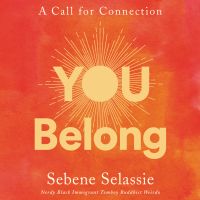
You BelongSebene Selassie8h 35m4.4 (2.7K)$26 · $0.00

The Song Celestial; Or, Bhagavad-Gîtâ (from the Mahâbhârata)Anonymous2h 18m4.4 (3.2K)$2 · $0.00

Chuang Tzu: Mystic, Moralist, and Social ReformerZhuangzi14h 42m4.4 (1.2K)$1 · $0.00

High-RisersBen Austen13h 33m4.4 (2.8K)$33 · $0.00

The Great OmissionDallas Willard7h 45m4.4 (4K)$26 · $0.00

The Grand InquisitorFyodor Dostoyevsky2h 24m4.3 (10.7K)$1 · $0.00
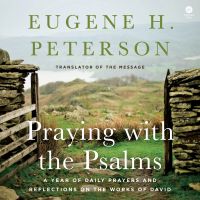
Praying with the PsalmsEugene H. Peterson7h 20m4.5 (312)$24 · $0.00

KrantikariSanjeev Sanyal11h 44m4.6 (1.3K)$16 · $0.00

Unbroken Bonds of BattleJohnny Joey Jones8h 31m4.6 (2.6K)$8 · $0.00

On Democracies and Death CultsDouglas Murray10h 38m4.6 (6.5K)$29 · $0.00
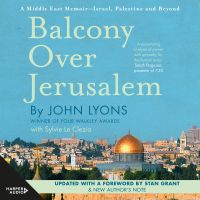
Balcony Over Jerusalem: A Middle East Memoir - Israel, Palestine and BeyondJohn Lyons12h 37m4.6 (1.4K)$33 · $0.00

RiggedMollie Hemingway12h 48m4.6 (4.2K)$23 · $0.00

SledgehammerDavid Friedman8h 21m4.7 (589)$26 · $0.00

Citizenship in a Republic (Annotated)Theodore Roosevelt2h 44m4.6 (1.4K)$2 · $0.00

No EscapeNury Turkel9h 30m4.6 (809)$28 · $0.00

Always FaithfulThomas Schueman, Zainullah Zaki12h 12m4.6 (977)$29 · $0.00

UnthinkableJamie Raskin15h 8m4.5 (9.3K)$8 · $0.00

My Fourth Time, We DrownedSally Hayden13h 59m4.6 (2.9K)$23 · $0.00

A Revolution of Common SenseScott Jennings9h 29m4.6 (528)$29 · $0.00

Statement From the Dock at the Rivonia TrialNelson Mandela2h 18m4.6 (1.3K)$1 · $0.00

Lessons from the EdgeMarie Yovanovitch17h 11m4.5 (5.9K)$40 · $0.00

To Rescue the American SpiritBret Baier10h 12m4.5 (2.7K)$8 · $0.00

StonewalledSharyl Attkisson15h 19m4.5 (4.3K)$33 · $0.00
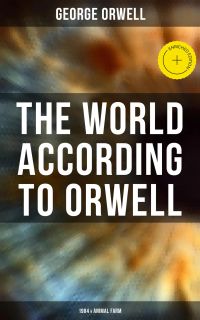
The World According to Orwell: 1984 & Animal FarmGeorge Orwell15h 42m4.6 (1.1K)$1 · $0.00

Basic EconomicsThomas Sowell18h 32m4.5 (29.3K)$28 · $0.00
To Rescue the RepublicBret Baier, Catherine Whitney11h 42m4.5 (8.6K)$29 · $0.00

Modern WarriorsPete Hegseth7h 10m4.5 (4.7K)$24 · $0.00
You may also like

Sadhana, The Realisation of LifeRabindranath Tagore3h 51m4.4 (1K)$21 · $0.00

The Chemical History of a CandleMichael Faraday5h 4m4.1 (2K)$2 · $0.00

Leonardo da Vinci: Thoughts on Art & Life (Annotated)Leonardo da Vinci6h 32m4.1 (823)$1.99 · $0.00

Walking, Autumnal Tints & Wild ApplesHenry David Thoreau3h 46m4.2 (284)$15
On the HeavensAristotle4h 5m4.0 (431)$1.80 · $0.00

Evolution Gone WrongAlex Bezzerides9h 13m4.3 (1.5K)$29 · $0.00

Wonders of Creation: A Descriptive Account of Volcanoes and Their PhenomenaAnonymous2h 52m$2 · $0.00

ElectricityW. H. McCormick9h 3m$2 · $0.00
Pleasant Ways in ScienceRichard A. Proctor15h 1m$2 · $0.00
Astronomy with an Opera-glassGarrett Putman Serviss4h 57m$2.30

British ButterfliesWilliam S. Coleman4h 28m$2 · $0.00
The Orbis PictusJohann Amos Comenius4h 17m4.2 (221)$2 · $0.00

Outlines of the Earth's History: A Popular Study in PhysiographyNathaniel Southgate Shaler12h 22m$1 · $0.00
Evolution in Art: As Illustrated by the Life-histories of DesignsAlfred C. Haddon9h 41m$2 · $0.00

Syria, The Land of LebanonLewis Gaston Leary5h 34m$2.30

The Book of the National ParksRobert Sterling Yard9h 11m4.1 (51)$2 · $0.00
The Story of EvolutionJoseph McCabe11h 6m$2 · $0.00

The Great LakesJames Oliver Curwood6h 11m3.9 (68)$2.30

New Zealand Moths and Butterflies (Macro-Lepidoptera)G. V. Hudson12h 42m$2 · $0.00

Landscape PaintingLovell Birge Harrison3h 52m4.6 (11)$1 · $0.00