
Empiricism
A Note on the Philosophical SchoolBy Pons Malleus


Length2h 49m
About this audiobook
This book is an exploration of empiricism—one of the most enduring and influential schools of philosophical thought. Rooted in the conviction that knowledge arises primarily from sensory experience, empiricism has shaped not only philosophy, but also science, education, psychology, and modern political thought. Its lineage includes some of the most pivotal figures in intellectual history: John Locke, George Berkeley, David Hume, and later, thinkers like John Stuart Mill and the logical empiricists of the 20th century. Their writings, arguments, and ideas form the core of the inquiry that unfolds in these pages.
Empiricism stands in contrast to rationalism, its perennial counterpart, which emphasizes reason and innate ideas as the primary sources of knowledge. Rather than viewing the mind as a repository of pre-existing truths or as guided by pure reason alone, empiricists assert that the mind begins as a blank slate—tabula rasa—gradually filled through observation, sensation, and reflection. From this foundational premise, empiricism questions the scope and limits of human understanding, the nature of reality, and the basis of truth itself.
This book aims to offer a thorough yet accessible account of empiricism's development, its internal debates, and its relevance today. It begins by tracing empiricism’s classical roots in ancient thought, noting how early inklings of empiricist attitudes appear in the works of Aristotle and the medical traditions of antiquity. From there, it moves to the early modern period, where empiricism found its most potent expression in the Enlightenment—a time when observation and experimentation began to supplant tradition and dogma.
Each chapter explores a central figure or theme: Locke's theory of knowledge and his political implications of empiricism; Berkeley’s immaterialism and the radical consequences of sensory reliance; Hume’s skepticism and the problem of causation; and Mill’s refinement of empiricism into a comprehensive framework for logic, science, and morality. Alongside these historical analyses, the book also examines empiricism’s influence on later scientific philosophy, particularly in the form of logical positivism and contemporary philosophy of science.
But this is not merely a historical or academic exercise. Today, the empiricist impulse—skeptical, evidence-based, experience-driven—resonates strongly in a world grappling with misinformation, ideological polarization, and challenges to scientific authority. Revisiting the foundational ideas of empiricism helps us better understand the epistemic values that undergird liberal democracies, the sciences, and the pursuit of knowledge itself.
This book is written for the curious reader, the student of philosophy, and the thoughtful skeptic. No prior expertise is assumed, though some chapters delve deeply into abstract and complex ideas. Where technical terms appear, they are defined and contextualized. My aim has been to combine intellectual rigor with clarity, always keeping in view the practical and human stakes behind philosophical disputes.
Audiobook details
GenrePhilosophy, Politics and Government
Length2 hrs 49 mins
Narrated byListen with 1,000+ voices
FormateBook with Audio
Publish dateNov 11, 2025
LanguageEnglish
Table of contents
1EMPIRICISM
2Introduction to Empiricism
3Historical Foundations
4Major Empiricists and their Contributions
5Knowledge through Experience
Show all chaptersShow less
6The Scientific Method
7Empiricist Arguments - Evidence & Observation
8Counterarguments
9Future Directions
Series

TranscendentalismPons Malleus2h 57m$6
ScholasticismPons Malleus3h$6
SkepticismPons Malleus3h 16m$6
RationalismPons Malleus2h 47m$6
StructuralismPons Malleus2h 57m$6
CoherentismPons Malleus3h 1m$6
FoundationalismPons Malleus3h 17m$6
DeterminismPons Malleus3h 29m$6
NaturalismPons Malleus3h 26m$6
PragmatismPons Malleus3h 7m$6
ConstructivismPons Malleus3h 16m$6
Milesian SchoolPons Malleus3h 17m$6
ObjectivismPons Malleus3h 31m$6
EpicureanismPons Malleus3h 17m$6
EleaticismPons Malleus2h 51m$6
NominalismPons Malleus2h 59m$6
Dialectical MaterialismPons Malleus3h 6m$6
French NietzscheanismPons Malleus3h 4m$6
Ionian SchoolPons Malleus3h 1m$6
IlluminationsWalter Benjamin10h 12m4.4 (16.2K)$20 · $0.00
That Bird Has My WingsJarvis Jay Masters9h 49m4.4 (13.7K)$29 · $0.00

Tâo Teh KingLaozi2h 34m4.4 (230.9K)$2 · $0.00

Buddhist Boot CampTimber Hawkeye2h 39m4.4 (8.4K)$18 · $0.00
Enchiridion & The Discourses of Epictetus (Annotated)Arrian Epictetus18h 9m4.4 (3.5K)$2 · $0.00
The Meditations of the Emperor Marcus Aurelius AntoninusEmperor of Rome Marcus Aurelius5h 41m4.4 (1.8M)$1 · $0.00
Crime and PunishmentFyodor Dostoevsky23h 11m4.4 (1.3M)$12 · $0.00

MeditationsMarcus Aurelius5h 52m4.4 (433.7K)$1 · $0.00
Everyday DharmaSuneel Gupta5h 2m4.5 (761)$20 · $0.00

The Joyful Wisdom ("La Gaya Scienza")Friedrich Wilhelm Nietzsche11h 37m4.4 (26.6K)$1 · $0.00
The Art of LivingEpictetus, Sharon Lebell3h 16m4.4 (50.1K)$18 · $0.00

Sadhana: the realisation of lifeRabindranath Tagore3h 49m4.4 (8.6K)$6 · $0.00
SapiensYuval Noah Harari15h 18m4.3 (1.4M)$33 · $0.00
You BelongSebene Selassie8h 35m4.4 (2.7K)$26 · $0.00

The Song Celestial; Or, Bhagavad-Gîtâ (from the Mahâbhârata)Anonymous2h 18m4.4 (3.2K)$2 · $0.00

Chuang Tzu: Mystic, Moralist, and Social ReformerZhuangzi14h 42m4.4 (1.2K)$1 · $0.00
High-RisersBen Austen13h 33m4.4 (2.8K)$33 · $0.00
The Great OmissionDallas Willard7h 45m4.4 (4K)$26 · $0.00

The Grand InquisitorFyodor Dostoyevsky2h 24m4.3 (10.7K)$1 · $0.00
Praying with the PsalmsEugene H. Peterson7h 20m4.5 (312)$24 · $0.00

KrantikariSanjeev Sanyal11h 44m4.6 (1.3K)$16 · $0.00

Unbroken Bonds of BattleJohnny Joey Jones8h 31m4.6 (2.6K)$8 · $0.00
On Democracies and Death CultsDouglas Murray10h 38m4.6 (6.5K)$29 · $0.00

Balcony Over Jerusalem: A Middle East Memoir - Israel, Palestine and BeyondJohn Lyons12h 37m4.6 (1.4K)$33 · $0.00
RiggedMollie Hemingway12h 48m4.6 (4.2K)$23 · $0.00

SledgehammerDavid Friedman8h 21m4.7 (589)$26 · $0.00

Citizenship in a Republic (Annotated)Theodore Roosevelt2h 44m4.6 (1.4K)$2 · $0.00

No EscapeNury Turkel9h 30m4.6 (809)$28 · $0.00

Always FaithfulThomas Schueman, Zainullah Zaki12h 12m4.6 (977)$29 · $0.00

UnthinkableJamie Raskin15h 8m4.5 (9.3K)$8 · $0.00

My Fourth Time, We DrownedSally Hayden13h 59m4.6 (2.9K)$23 · $0.00

A Revolution of Common SenseScott Jennings9h 29m4.6 (528)$29 · $0.00

Statement From the Dock at the Rivonia TrialNelson Mandela2h 18m4.6 (1.3K)$1 · $0.00

Lessons from the EdgeMarie Yovanovitch17h 11m4.5 (5.9K)$40 · $0.00

To Rescue the American SpiritBret Baier10h 12m4.5 (2.7K)$8 · $0.00

StonewalledSharyl Attkisson15h 19m4.5 (4.3K)$33 · $0.00
The World According to Orwell: 1984 & Animal FarmGeorge Orwell15h 42m4.6 (1.1K)$1 · $0.00
Basic EconomicsThomas Sowell18h 32m4.5 (29.3K)$28 · $0.00
To Rescue the RepublicBret Baier, Catherine Whitney11h 42m4.5 (8.6K)$29 · $0.00

Modern WarriorsPete Hegseth7h 10m4.5 (4.7K)$24 · $0.00
You may also like
An Essay Concerning Humane UnderstandingJohn Locke15h 22m4.0 (19.5K)Free
The Practice and Science of DrawingHarold Speed7h 48m4.2 (6.5K)Free
The Art of FictionAyn Rand6h 51m4.0 (917)$17 · $0.00

David Hume: The Collected WorksDavid Hume37h 13m4.5 (261)$1 · $0.00
An Essay Concerning Humane UnderstandingJohn Locke29h 19m4.0 (13.6K)$2 · $0.00
Against Interpretation, and Other EssaysSusan Sontag12h 6m4.2 (14.3K)$20
The Natural State (Annotated)U. G. Krishnamurti8h 55m4.3 (364)$2 · $0.00
Lyrical Ballads and other Poems by Samuel Taylor Coleridge and William Wordsworth (Also contains Their Thoughts On Poetry Principles and Secrets) (Annotated)Samuel Taylor Coleridge, William Wordsworth22h 29m4.0 (13.4K)$1.99 · $0.00
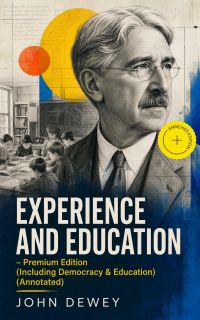
EXPERIENCE AND EDUCATION – Premium Edition (Including Democracy & Education) (Annotated)John Dewey19h 17m4.6 (1K)$2 · $0.00
BounceMatthew Syed7h 51m4.2 (21.8K)$26 · $0.00
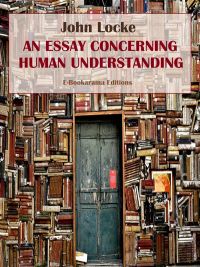
An Essay Concerning Human UnderstandingJohn Locke30h 12m4.0 (18K)$1.20 · $0.00
Tremendous TriflesG. K. Chesterton5h 49m4.2 (1.4K)$2.30 · $0.00
On the SoulAristotle3h 25m4.1 (8K)$1.20 · $0.00
Creative EvolutionHenri Bergson14h 50m4.3 (1.6K)$2 · $0.00
The Essential Works of U. G. Krishnamurti (Annotated)U. G. Krishnamurti37h 11m$2 · $0.00
The Essential Rousseau: Confessions, Emile & The Social Contract (Annotated)Jean-Jacques Rousseau62h 54m4.3 (27)$2.99 · $0.00
The Natural StateU. G. Krishnamurti8h 53m4.5 (38)$1 · $0.00
The Essence of Hume's PhilosophyDavid Hume36h 17m4.2 (19)$2 · $0.00
U. G. Krishnamurti: Collected WorksU. G. Krishnamurti37h 1m4.5 (24)$2 · $0.00
Mind is a Myth (Annotated)U.G. Krishnamurti5h 59m4.3 (218)$2 · $0.00