
Foundationalism
A Note on the Philosophical SchoolBy Pons Malleus


Length3h 16m
About this audiobook
Philosophy, at its core, is a quest for knowledge and understanding—a rigorous endeavor to explore the nature, scope, and justification of human belief. Among the myriad traditions and schools that have shaped philosophical inquiry, Foundationalism holds a particularly pivotal place. This school of thought, which seeks to ground knowledge on a secure and indubitable basis, has profoundly influenced epistemology—the study of knowledge itself. The present book embarks on a detailed exploration of Foundationalism, aiming to provide both newcomers and seasoned thinkers with a comprehensive account of its principles, challenges, and enduring significance.
At first glance, Foundationalism might appear straightforward: it posits that our beliefs must rest upon certain foundational beliefs that are themselves self-evident, indubitable, or otherwise beyond doubt. These foundational beliefs act as the bedrock upon which all other knowledge is constructed. This metaphor of a building or structure is often employed to illustrate the idea—just as a building requires a solid foundation to stand firm, so too must our system of beliefs rest on secure grounds. Yet, beneath this seemingly simple image lies a rich and complex philosophical tradition with a vibrant history and nuanced arguments.
The roots of Foundationalism trace back to ancient philosophy, but it rose to prominence in the modern era with figures such as René Descartes, who famously sought a firm foundation for knowledge by doubting all that could be doubted until he reached the indubitable truth of the cogito—“I think, therefore I am.” This foundational belief, in Descartes’ view, was self-evident and beyond question, serving as the anchor for rebuilding knowledge. Descartes’ project inspired generations of philosophers to grapple with the nature of justification and certainty.
Yet, Foundationalism has never been without controversy. The challenge lies in identifying which beliefs qualify as foundational and defending their supposed certainty. Critics argue that the quest for indubitable beliefs is either impossible or unnecessary, giving rise to alternative epistemological frameworks such as Coherentism and Reliabilism. Foundationalism’s critics often highlight the so-called "regress problem," which demands justification for every belief: without a foundational belief, justification would regress infinitely; with one, it must be convincingly unassailable. Navigating these objections and responses forms a crucial part of the contemporary debate.
This book offers an extensive survey of Foundationalism’s development—from its classical formulations to its modern adaptations and criticisms. It examines how the school has been interpreted in various philosophical traditions and its intersections with related fields such as psychology, cognitive science, and even artificial intelligence. Through this examination, the reader will appreciate both the enduring appeal of Foundationalism and the dynamic debates that continue to shape its trajectory.
Beyond the technical philosophical discussions, Foundationalism invites us to reflect on a deeply human concern: How do we know what we know? What justifies our confidence in our beliefs? And ultimately, can we achieve a stable and secure understanding of the world? These questions are not merely academic; they resonate in everyday life, influencing how we navigate the complexity of information, uncertainty, and trust.
The chapters that follow are structured to guide the reader from the foundational concepts and historical origins, through the main arguments and criticisms, to contemporary perspectives and applications. Along the way, we engage with seminal texts and key philosophers, encouraging critical reflection and dialogue. The aim is to not only inform but also inspire readers to grapple with the profound issues at the heart of epistemology.
Audiobook details
GenrePhilosophy, Politics and Government
Length3 hrs 16 mins
Narrated byListen with 1,000+ voices
FormateBook with Audio
Publish dateDec 16, 2025
LanguageEnglish
Table of contents
1FOUNDATIONALISM
2Introduction to Foundationalism
3Historical Context and Origins
4Core Principles and Key Postulates
5Classical Foundationalist Theories
Show all chaptersShow less
6Contemporary Developments
7Prominent Foundationalist Thinkers
8Arguments Supporting Foundationalism
9Criticisms and Counterarguments
10Practical Applications of Foundationalism
11Future Directions and Research
Series

TranscendentalismPons Malleus2h 57m$6
ScholasticismPons Malleus3h$6
SkepticismPons Malleus3h 16m$6
RationalismPons Malleus2h 47m$6
EmpiricismPons Malleus2h 49m$6
StructuralismPons Malleus2h 57m$6
CoherentismPons Malleus3h 1m$6
DeterminismPons Malleus3h 29m$6
NaturalismPons Malleus3h 26m$6
PragmatismPons Malleus3h 7m$6
ConstructivismPons Malleus3h 16m$6
Milesian SchoolPons Malleus3h 17m$6
ObjectivismPons Malleus3h 31m$6
EpicureanismPons Malleus3h 17m$6
EleaticismPons Malleus2h 51m$6
NominalismPons Malleus2h 59m$6
Dialectical MaterialismPons Malleus3h 6m$6
French NietzscheanismPons Malleus3h 4m$6
Ionian SchoolPons Malleus3h 1m$6
IlluminationsWalter Benjamin10h 12m4.4 (16.2K)$20 · $0.00
That Bird Has My WingsJarvis Jay Masters9h 49m4.4 (13.7K)$29 · $0.00

Tâo Teh KingLaozi2h 34m4.4 (230.9K)$2 · $0.00

Buddhist Boot CampTimber Hawkeye2h 39m4.4 (8.4K)$18 · $0.00
Enchiridion & The Discourses of Epictetus (Annotated)Arrian Epictetus18h 9m4.4 (3.5K)$2 · $0.00

The Meditations of the Emperor Marcus Aurelius AntoninusEmperor of Rome Marcus Aurelius5h 41m4.4 (1.8M)$1 · $0.00

Crime and PunishmentFyodor Dostoevsky23h 11m4.4 (1.3M)$12 · $0.00

MeditationsMarcus Aurelius5h 52m4.4 (433.7K)$1 · $0.00
Everyday DharmaSuneel Gupta5h 2m4.5 (761)$20 · $0.00

The Joyful Wisdom ("La Gaya Scienza")Friedrich Wilhelm Nietzsche11h 37m4.4 (26.6K)$1 · $0.00
The Art of LivingEpictetus, Sharon Lebell3h 16m4.4 (50.1K)$18 · $0.00

Sadhana: the realisation of lifeRabindranath Tagore3h 49m4.4 (8.6K)$6 · $0.00
SapiensYuval Noah Harari15h 18m4.3 (1.4M)$33 · $0.00
You BelongSebene Selassie8h 35m4.4 (2.7K)$26 · $0.00

The Song Celestial; Or, Bhagavad-Gîtâ (from the Mahâbhârata)Anonymous2h 18m4.4 (3.2K)$2 · $0.00

Chuang Tzu: Mystic, Moralist, and Social ReformerZhuangzi14h 42m4.4 (1.2K)$1 · $0.00

High-RisersBen Austen13h 33m4.4 (2.8K)$33 · $0.00

The Great OmissionDallas Willard7h 45m4.4 (4K)$26 · $0.00

The Grand InquisitorFyodor Dostoyevsky2h 24m4.3 (10.7K)$1 · $0.00

Praying with the PsalmsEugene H. Peterson7h 20m4.5 (312)$24 · $0.00

KrantikariSanjeev Sanyal11h 44m4.6 (1.3K)$16 · $0.00

Unbroken Bonds of BattleJohnny Joey Jones8h 31m4.6 (2.6K)$8 · $0.00

On Democracies and Death CultsDouglas Murray10h 38m4.6 (6.5K)$29 · $0.00

Balcony Over Jerusalem: A Middle East Memoir - Israel, Palestine and BeyondJohn Lyons12h 37m4.6 (1.4K)$33 · $0.00

RiggedMollie Hemingway12h 48m4.6 (4.2K)$23 · $0.00

SledgehammerDavid Friedman8h 21m4.7 (589)$26 · $0.00

Citizenship in a Republic (Annotated)Theodore Roosevelt2h 44m4.6 (1.4K)$2 · $0.00

No EscapeNury Turkel9h 30m4.6 (809)$28 · $0.00

Always FaithfulThomas Schueman, Zainullah Zaki12h 12m4.6 (977)$29 · $0.00

UnthinkableJamie Raskin15h 8m4.5 (9.3K)$8 · $0.00

My Fourth Time, We DrownedSally Hayden13h 59m4.6 (2.9K)$23 · $0.00

A Revolution of Common SenseScott Jennings9h 29m4.6 (528)$29 · $0.00

Statement From the Dock at the Rivonia TrialNelson Mandela2h 18m4.6 (1.3K)$1 · $0.00

Lessons from the EdgeMarie Yovanovitch17h 11m4.5 (5.9K)$40 · $0.00

To Rescue the American SpiritBret Baier10h 12m4.5 (2.7K)$8 · $0.00

StonewalledSharyl Attkisson15h 19m4.5 (4.3K)$33 · $0.00
The World According to Orwell: 1984 & Animal FarmGeorge Orwell15h 42m4.6 (1.1K)$1 · $0.00

Basic EconomicsThomas Sowell18h 32m4.5 (29.3K)$28 · $0.00
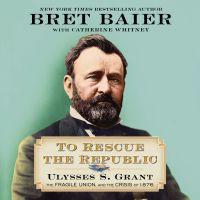
To Rescue the RepublicBret Baier, Catherine Whitney11h 42m4.5 (8.6K)$29 · $0.00

Modern WarriorsPete Hegseth7h 10m4.5 (4.7K)$24 · $0.00
You may also like

The Art of FictionHenry James2h 17m3.8 (1.5K)$2.30 · $0.00
Brain BugsDean Buonomano8h 38m3.9 (3.5K)$20
Men and WomenRobert Browning3h 44m4.2 (1.8K)$2.30

ANNA KARENINA – Two Unabridged Translations in One Premium Edition (World Classics Series) (Annotated)Leo Tolstoy86h 35m4.2 (779.7K)$2 · $0.00
How You Say ItKatherine D. Kinzler7h 17m3.9 (1.6K)$24 · $0.00
Human Nature and ConductJohn Dewey9h 22m4.2 (1.5K)$0.60 · $0.00
A TREATISE OF HUMAN NATURE ABCD24h 51m4.1 (19.3K)Free
The art of public speaking (translated)DALE CARNEGIE17h 52m4.0 (9.2K)$4.60 · $0.00

The Art and Science of Personal MagnetismWilliam Walker4h 3m4.1 (2.5K)$3.50 · $0.00

The Science of Getting RichWallace D. Wattles2h 4m4.2 (64.7K)$1 · $0.00
Executive Presence 2.0Sylvia Ann Hewlett9h 10m3.5 (2.6K)$29 · $0.00
ADHD & FocusEric Holt3h 36m4.1 (18) Only with Ultra
Pragmatism and idealismWilliam Caldwell7h 7m$1 · $0.00
An Inquiry into the Human Mind: On the Principles of Common Sense (Annotated)Thomas Reid11h 13m4.2 (92)$2 · $0.00
Two MindsTheo Whessler11h 25m$15 · $0.00

Timeless Career Tips for the Modern MillennialCara Lane4h 24m3.3 (16)$20

The Real Mad Men of SellingJ. Douglas Edwards4h 39m3.9 (308)$35
The Art of Body TalkGregory Hartley, Maryann Karinch8h 30m3.9 (66)$20
Be a Great Leader by FridayDr. Kevin Leman5h 23m$10 · $0.00

Brief Amicus Curiae of the American Psychological AssociationSupreme Court of the State of California1h 53m$2 · $0.00