
Dialectical Materialism
A Note on the Philosophical SchoolBy Pons Malleus


Length3h 6m
About this audiobook
This book is an inquiry into one of the most influential and controversial schools of philosophy in modern history: Dialectical Materialism. Rooted in the intellectual traditions of Hegelian dialectics and Marxist materialism, dialectical materialism represents not merely a philosophical method, but a worldview—one that seeks to understand and change the world through the lens of contradiction, motion, and material conditions.
Dialectical materialism emerged in the 19th century, shaped most decisively by Karl Marx and Friedrich Engels, who reconfigured Hegel’s idealist dialectic into a materialist framework. They argued that ideas do not drive history independently of the material world; rather, human consciousness is shaped by the social and economic structures within which it develops. From this standpoint, thought is not abstracted from life but is inseparable from the lived, concrete reality of human labor, production, and social relations.
The dialectical method, as developed by Hegel, emphasized that reality is not static but dynamic, composed of contradictions whose tensions and resolutions drive development. Marx and Engels preserved this kernel but inverted its idealist foundation. In doing so, they established a materialist dialectic: a method of understanding historical and natural phenomena as processes—interconnected, constantly changing, and shaped by internal contradictions.
For dialectical materialism, change is not accidental but necessary; it arises from the conflicts inherent within systems. Whether in the natural world, in society, or in the realm of thought, contradictions are not anomalies but the very engine of transformation. Thus, history is not a random series of events, nor a steady progress guided by divine or moral teleology, but a process driven by the struggle between opposing forces—class against class, old against new, base against superstructure.
Yet dialectical materialism is not only a theory of how things change. It is also a theory of praxis—of informed, purposeful action in the world. It offers not just a way to interpret the world, but, as Marx famously insisted, a way to change it. It serves as the philosophical foundation for Marxist political theory, revolutionary strategy, and critical analysis of capitalism, imperialism, and ideology.
Throughout the 20th century, dialectical materialism became the official philosophical doctrine of many socialist states. Its institutionalization led to both developments and distortions. At times rigidly dogmatized, at other times creatively applied, dialectical materialism was variously embraced, critiqued, and reformulated by thinkers across the globe—from Lenin, Mao, and Lukács to contemporary philosophers still wrestling with its implications in the wake of global capitalism’s evolution.
This book seeks to do justice to the complexity and richness of dialectical materialism—its origins, its development, its power, and its limitations. It is neither a hagiography nor a polemic. Instead, it is a philosophical exploration: of a method that refuses to accept the world as it is, and insists instead on uncovering how and why it came to be, and what it might yet become.
In an era marked by ecological collapse, growing inequality, and crises of meaning, the questions posed by dialectical materialism remain urgently relevant: What drives social change? What are the roots of suffering and exploitation? And how can we act, consciously and collectively, to reshape our world?
These pages are offered in the spirit of critical engagement. May they serve both those newly encountering dialectical materialism and those already steeped in its tradition. Above all, may they stimulate thought—and action.
Audiobook details
GenreScience and Nature, Education and Learning
Length3 hrs 6 mins
Narrated byListen with 1,000+ voices
FormateBook with Audio
Publish dateDec 9, 2025
LanguageEnglish
Table of contents
1DIALECTICAL MATERIALISM
2Introduction to Dialectical Materialism
3Historical Context and Development
4Dialectics - The Core Methodology
5Materialist Conception of History
Show all chaptersShow less
6Key Thinkers – Karl Marx and Friedrich Engels
7Conceptual Evolution – Vladimir Lenin
8Contrasts with Idealism and Other Philosophies
9Contemporary Interpretations and Critiques
10The Relevance of Dialectical Materialism Today
Series

TranscendentalismPons Malleus2h 57m$6
ScholasticismPons Malleus3h$6
SkepticismPons Malleus3h 16m$6
RationalismPons Malleus2h 47m$6
EmpiricismPons Malleus2h 49m$6
StructuralismPons Malleus2h 57m$6
CoherentismPons Malleus3h 1m$6
FoundationalismPons Malleus3h 17m$6

DeterminismPons Malleus3h 29m$6
NaturalismPons Malleus3h 26m$6
PragmatismPons Malleus3h 7m$6
ConstructivismPons Malleus3h 16m$6
Milesian SchoolPons Malleus3h 17m$6
ObjectivismPons Malleus3h 31m$6
EpicureanismPons Malleus3h 17m$6
EleaticismPons Malleus2h 51m$6
NominalismPons Malleus2h 59m$6

French NietzscheanismPons Malleus3h 4m$6
Ionian SchoolPons Malleus3h 1m$6

A Brief History of IntelligenceMax S. Bennett12h 18m4.6 (6.6K)$29 · $0.00
The Story of BirdsSteve Brusatte11h 49m4.6 (401)$29 · $0.00

What It Takes to Save a LifeKwane Stewart6h4.6 (556)$24 · $0.00

Pastoral SongJames Rebanks8h 35m4.5 (12K)$26 · $0.00
How Stella Learned to TalkChristina Hunger7h4.5 (10.9K)$24 · $0.00

Craig & FredCraig Grossi8h 6m4.5 (9.6K)$26 · $0.00

Celebrating BirdsNatalia Rojas, Ana Maria Martinez6h 47m4.6 (330)$24 · $0.00

Saving JemimaJulie Zickefoose4h 59m4.5 (749)$20 · $0.00

Will's Red CoatTom Ryan8h 23m4.5 (2.3K)$26 · $0.00

Of Time and TurtlesSy Montgomery10h 34m4.5 (5K)$29 · $0.00

Zen and the Art of Saving the PlanetThich Nhat Hanh9h 20m4.5 (3.9K)$29 · $0.00

Bottle of LiesKatherine Eban14h 25m4.4 (12K)$33 · $0.00
IngrainedCallum Robinson8h 10m4.5 (1.1K)$26 · $0.00

The Lion Tracker's Guide To LifeBoyd Varty3h 1m4.4 (4.8K)$18 · $0.00

Born for LoveBruce D. Perry, Maia Szalavitz11h 42m4.4 (4K)$29 · $0.00

The Mountains of California (With Original Drawings & Photographs) (Annotated)John Muir11h 35m4.5 (1.1K)$2 · $0.00

The New GuysMeredith Bagby16h 50m4.4 (1.2K)$40 · $0.00

Blue PasturesMary Oliver3h 23m4.4 (3.8K)$18 · $0.00
The Rise and Reign of the MammalsSteve Brusatte13h 26m4.4 (11.1K)$33 · $0.00

VaccinatedPaul A. Offit8h 30m4.4 (3.7K)$26 · $0.00
A Brief History of IntelligenceMax S. Bennett12h 18m4.6 (6.6K)$29 · $0.00

HomeschooledStefan Merrill Block7h 10m3.6 (18.5K)$28 · $0.00

How We ThinkJohn Dewey7h 6m4.0 (1.1K)Free

EducationEllen G. White9h 41m4.6 (1.5K)$2 · $0.00

Parents and Children (Annotated)Charlotte Mason9h 23m4.6 (988)$2 · $0.00

Children Under FireJohn Woodrow Cox10h 17m4.5 (1.6K)$29 · $0.00

The State Must ProvideAdam Harris7h 15m4.5 (775)$24 · $0.00

The Call of the Wild and FreeAinsley Arment9h 7m4.4 (21.2K)$29 · $0.00
The Freelance WayRobert Vlach19h 48m4.5 (528)$40 · $0.00

Race to the BottomLuke Rosiak9h 20m4.5 (600)$29 · $0.00

They Came for the SchoolsMike Hixenbaugh9h 5m4.5 (2.6K)$8 · $0.00

Find Me UnafraidKennedy Odede, Jessica Posner11h 11m4.5 (2.7K)$29 · $0.00

Asking for ItKate Harding8h 55m4.4 (5.3K)$20 · $0.00
Defining Moments in Black HistoryDick Gregory7h 37m4.4 (6K)$26 · $0.00

The Emerald Tablets of Thoth the AtlanteanMaurice Doreal3h 4m4.4 (8.8K)$6 · $0.00

Learning AmericaLuma Mufleh6h 37m4.4 (564)$24 · $0.00
Math-ishJo Boaler7h 21m4.4 (588)$24 · $0.00
It Worked For MeColin Powell7h 42m4.3 (9.8K)$26 · $0.00

Little SoldiersLenora Chu11h 30m4.3 (3.1K)$29 · $0.00

Financial FeministTori Dunlap8h 3m4.2 (22.2K)$8 · $0.00
You may also like
Scientism and SecularismJ. P. Moreland6h 18m4.3 (781)$20 · $0.00

A Contribution to The Critique Of The Political Economy (Annotated)Karl Marx11h 7m4.0 (480)$1.99 · $0.00

Letters on EnglandVoltaire4h 2m3.9 (3.6K)$0.60 · $0.00

WordslutAmanda Montell6h 56m4.2 (36.1K)$24 · $0.00
Race and CultureThomas Sowell10h 56m4.5 (1.5K)$21

Philosophy of OsteopathyA. T. Still5h 47m4.2 (366)$1 · $0.00

Dickens by Chesterton (Annotated)G. K. Chesterton16h 53m4.2 (2.5K)$2 · $0.00

The Politically Incorrect Guide to American HistoryWoods, Thomas E.8h 49m4.0 (4K)Free

Sacred CowDiana Rodgers RD, Robb Wolf8h 28m4.4 (4.3K)$20

Hippie FoodJonathan Kauffman9h 13m4.1 (1.4K)$29 · $0.00

All It Takes Is GutsWalter E. Williams5h 53m4.3 (282)$14 · $0.00
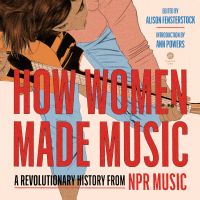
How Women Made MusicNational Public Radio, Inc, Alison Fensterstock10h 50m4.0 (395)$29 · $0.00

The American Language: Development of English in the United StatesH. L. Mencken18h 31m4.3 (597)$2 · $0.00

On LibertyJohn Stuart Mill5h 9m4.2 (112.9K)$20 · $0.00

A Treatise on Christian LibertyMartin Luther3h 43m4.3 (4.5K)$1 · $0.00

What White People Can Do NextEmma Dabiri3h 12m4.4 (6K)$18 · $0.00
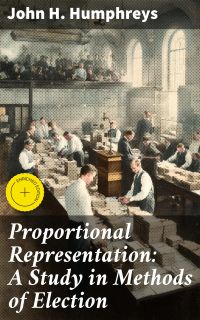
Proportional Representation: A Study in Methods of ElectionJohn H. Humphreys11h 53m$2 · $0.00
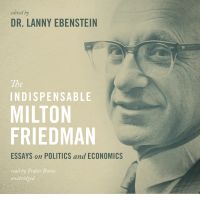
The Indispensable Milton FriedmanDr. Lanny Ebenstein8h 51m$20 · $0.00

Essays (Annotated)W. E. B. Du Bois6h 45m4.1 (21)$2 · $0.00
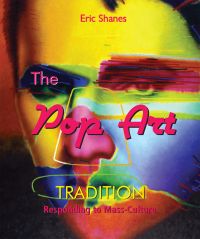
The Pop Art Tradition - Responding to Mass-CultureEric Shanes7h 36m4.1 (21)$18 · $0.00