
Structuralism
A Note on the Philosophical SchoolBy Pons Malleus


Length2h 57m
About this audiobook
This book is an exploration into one of the most influential, yet often misunderstood, movements in 20th-century philosophy and human sciences: structuralism. Born from the crossroads of linguistics, anthropology, psychoanalysis, and literary theory, structuralism is less a rigid doctrine than a mode of inquiry—a way of seeing the world that privileges systems, relationships, and structures over isolated elements. Its central premise is deceptively simple: the meanings we assign to things, ideas, and experiences do not arise from their intrinsic nature, but from their position within a larger system. Whether that system is language, myth, culture, or society, structuralism urges us to shift our focus from the individual unit to the network of relations that make that unit intelligible.
This shift has far-reaching consequences. It compels us to reconsider what it means to understand a text, a ritual, or even a self. It challenges the romantic ideal of the autonomous subject, calling into question the notion of individual creativity or originality as the ultimate source of meaning. It proposes that human thought itself is shaped—and perhaps constrained—by the deep structures that underlie culture and language. Structuralism, in this way, is both a method and a worldview. It is a lens through which we can interpret the complexity of human life, not by tracing origins or intentions, but by revealing the hidden architectures that organize experience.
The roots of structuralism are most often traced to the work of Swiss linguist Ferdinand de Saussure, who revolutionized the study of language by proposing that meaning arises not from a direct relationship between words and things, but from the differential relations between signs within a system. This insight would be adopted and expanded by thinkers such as Claude Lévi-Strauss in anthropology, Roland Barthes in literary theory, Jacques Lacan in psychoanalysis, and Michel Foucault in epistemology. Each of these figures, in their own domain, demonstrated how human phenomena—be they kinship systems, narratives, unconscious desires, or systems of knowledge—could be understood as structured wholes governed by underlying rules and oppositions.
Yet structuralism is not without its critics. From its very inception, it sparked debates about determinism, agency, and the possibility of change. The rise of post-structuralism in the late 20th century marked both a continuation and a critique of structuralist thought, emphasizing instability, multiplicity, and the limits of totalizing systems. Still, many of the questions raised by structuralism remain vital today. In an era of big data, algorithmic logic, and global networks, structuralist approaches offer valuable tools for interpreting complex systems and patterns that shape contemporary life.
This book does not aim to be an exhaustive history of structuralism, nor does it present a unified theory. Instead, it offers a guided tour through its central concepts, thinkers, and debates. Each chapter focuses on a key domain—language, culture, mind, literature, and power—showing how structuralist methods have reshaped our understanding of each. Along the way, the reader will encounter both foundational texts and critical reassessments, encouraging a balanced view of structuralism’s legacy.
Ultimately, this book is intended for readers curious about how we make meaning and how that meaning is structured—by language, by culture, by unconscious processes, and by systems larger than ourselves. Structuralism asks us to see the familiar in unfamiliar ways, to find order where we assumed chaos, and to question the givenness of the world around us. In that spirit, this preface serves not as a conclusion, but as an invitation: to think structurally, to read deeply, and to see what lies beneath the surface.
Audiobook details
GenrePhilosophy, Politics and Government
Length2 hrs 57 mins
Narrated byListen with 1,000+ voices
FormateBook with Audio
Publish dateNov 12, 2025
LanguageEnglish
Table of contents
1STRUCTURALISM
2Introduction to Structuralism
3Evolution of Structuralist Thought
4Key Concepts and Theoretical Underpinnings
5Structuralism in Linguistics - De Saussure
Show all chaptersShow less
6Anthropology of Structure - Lévi-Strauss
7Literary Theory - Barthes and Foucault
8Cognitive Structures - Piaget
9Critiques and Counterarguments
Series

TranscendentalismPons Malleus2h 57m$6
ScholasticismPons Malleus3h$6
SkepticismPons Malleus3h 16m$6
RationalismPons Malleus2h 47m$6
EmpiricismPons Malleus2h 49m$6
CoherentismPons Malleus3h 1m$6
FoundationalismPons Malleus3h 17m$6

DeterminismPons Malleus3h 29m$6
NaturalismPons Malleus3h 26m$6
PragmatismPons Malleus3h 7m$6
ConstructivismPons Malleus3h 16m$6
Milesian SchoolPons Malleus3h 17m$6
ObjectivismPons Malleus3h 31m$6
EpicureanismPons Malleus3h 17m$6
EleaticismPons Malleus2h 51m$6
NominalismPons Malleus2h 59m$6
Dialectical MaterialismPons Malleus3h 6m$6
French NietzscheanismPons Malleus3h 4m$6
Ionian SchoolPons Malleus3h 1m$6

IlluminationsWalter Benjamin10h 12m4.4 (16.2K)$20 · $0.00

That Bird Has My WingsJarvis Jay Masters9h 49m4.4 (13.7K)$29 · $0.00

Tâo Teh KingLaozi2h 34m4.4 (230.9K)$2 · $0.00

Buddhist Boot CampTimber Hawkeye2h 39m4.4 (8.4K)$18 · $0.00
Enchiridion & The Discourses of Epictetus (Annotated)Arrian Epictetus18h 9m4.4 (3.5K)$2 · $0.00

The Meditations of the Emperor Marcus Aurelius AntoninusEmperor of Rome Marcus Aurelius5h 41m4.4 (1.8M)$1 · $0.00

Crime and PunishmentFyodor Dostoevsky23h 11m4.4 (1.3M)$12 · $0.00

MeditationsMarcus Aurelius5h 52m4.4 (433.7K)$1 · $0.00

Everyday DharmaSuneel Gupta5h 2m4.5 (761)$20 · $0.00

The Joyful Wisdom ("La Gaya Scienza")Friedrich Wilhelm Nietzsche11h 37m4.4 (26.6K)$1 · $0.00
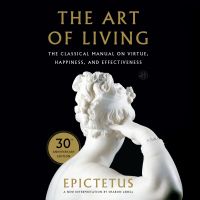
The Art of LivingEpictetus, Sharon Lebell3h 16m4.4 (50.1K)$18 · $0.00

Sadhana: the realisation of lifeRabindranath Tagore3h 49m4.4 (8.6K)$6 · $0.00
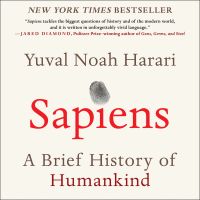
SapiensYuval Noah Harari15h 18m4.3 (1.4M)$33 · $0.00
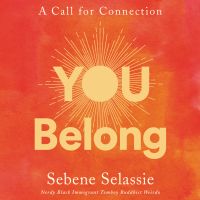
You BelongSebene Selassie8h 35m4.4 (2.7K)$26 · $0.00

The Song Celestial; Or, Bhagavad-Gîtâ (from the Mahâbhârata)Anonymous2h 18m4.4 (3.2K)$2 · $0.00

Chuang Tzu: Mystic, Moralist, and Social ReformerZhuangzi14h 42m4.4 (1.2K)$1 · $0.00

High-RisersBen Austen13h 33m4.4 (2.8K)$33 · $0.00

The Great OmissionDallas Willard7h 45m4.4 (4K)$26 · $0.00

The Grand InquisitorFyodor Dostoyevsky2h 24m4.3 (10.7K)$1 · $0.00

Praying with the PsalmsEugene H. Peterson7h 20m4.5 (312)$24 · $0.00

KrantikariSanjeev Sanyal11h 44m4.6 (1.3K)$16 · $0.00

Unbroken Bonds of BattleJohnny Joey Jones8h 31m4.6 (2.6K)$8 · $0.00

On Democracies and Death CultsDouglas Murray10h 38m4.6 (6.5K)$29 · $0.00

Balcony Over Jerusalem: A Middle East Memoir - Israel, Palestine and BeyondJohn Lyons12h 37m4.6 (1.4K)$33 · $0.00

RiggedMollie Hemingway12h 48m4.6 (4.2K)$23 · $0.00

SledgehammerDavid Friedman8h 21m4.7 (589)$26 · $0.00

Citizenship in a Republic (Annotated)Theodore Roosevelt2h 44m4.6 (1.4K)$2 · $0.00

No EscapeNury Turkel9h 30m4.6 (809)$28 · $0.00

Always FaithfulThomas Schueman, Zainullah Zaki12h 12m4.6 (977)$29 · $0.00

UnthinkableJamie Raskin15h 8m4.5 (9.3K)$8 · $0.00

My Fourth Time, We DrownedSally Hayden13h 59m4.6 (2.9K)$23 · $0.00

A Revolution of Common SenseScott Jennings9h 29m4.6 (528)$29 · $0.00

Statement From the Dock at the Rivonia TrialNelson Mandela2h 18m4.6 (1.3K)$1 · $0.00

Lessons from the EdgeMarie Yovanovitch17h 11m4.5 (5.9K)$40 · $0.00

To Rescue the American SpiritBret Baier10h 12m4.5 (2.7K)$8 · $0.00

StonewalledSharyl Attkisson15h 19m4.5 (4.3K)$33 · $0.00
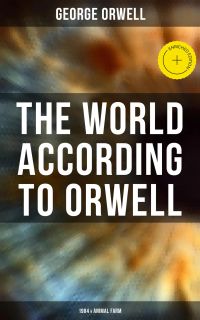
The World According to Orwell: 1984 & Animal FarmGeorge Orwell15h 42m4.6 (1.1K)$1 · $0.00

Basic EconomicsThomas Sowell18h 32m4.5 (29.3K)$28 · $0.00

To Rescue the RepublicBret Baier, Catherine Whitney11h 42m4.5 (8.6K)$29 · $0.00

Modern WarriorsPete Hegseth7h 10m4.5 (4.7K)$24 · $0.00
You may also like
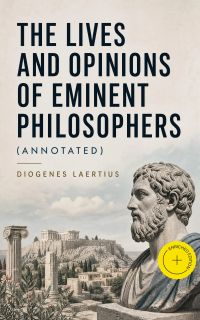
The Lives and Opinions of Eminent Philosophers (Annotated)Diogenes Laertius21h 28m4.1 (801)$2 · $0.00

The Everlasting ManG. K. Chesterton10h 39m4.4 (17.1K)$20

Blues PeopleLeRoi Jones8h 53m4.3 (4.4K)$20

The Symbolism of FreemasonryAlbert Mackey12h 33m4.2 (751)$1 · $0.00
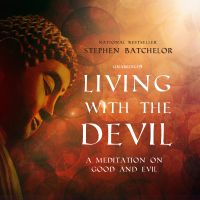
Living with the DevilStephen Batchelor6h 20m4.2 (1.3K)$20 · $0.00

The Right Hand: Left-HandednessSir Daniel Wilson4h 50m$2.30

A Sidecar Named DesireGreg Clarke, Monte Beauchamp4h 2m3.9 (165)$18 · $0.00
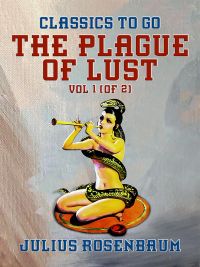
The Plague of Lust, Vol 1 (of 2)Julius Rosenbaum13h 16m$2.30

The Pocket Lavater; or, The Science of PhysiognomyJohann Caspar Lavater, Giambattista della Porta2h 1m$2 · $0.00

The Gundungurra Language (Annotated)R. H. Mathews32m$1.99 · $0.00

Aesop's Fables - New TranslationAesop4h 25m3.8 (47)$9 · $0.00

The Art of the ShoeMarie-Josèphe Bossan7h 28m4.1 (86)$18 · $0.00
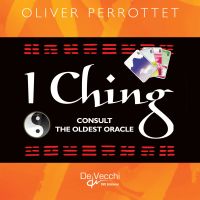
I Ching. Consult the oldest oracleOliver Perrottet1h 36m3.8 (11)$17 · $0.00

Mexican PaintingJean Charlot3h 22m$18 · $0.00
Phrases and Names, Their Origins and MeaningsTrench H. Johnson10h 49m$2 · $0.00

Phallic WorshipRobert Allen Campbell5h 23m4.3 (16)$1.20 · $0.00
Stray Leaves from Strange Literature, and, Fantastics and Other FanciesLafcadio Hearn9h 9m$2.30

Notice of Runic Inscriptions Discovered during Recent Excavations in the OrkneysJames Farrer1h 7m$1 · $0.00

The Life of Jesus Critically Examined (Annotated)David Friedrich Strauss55h 8m4.5 (12)$2 · $0.00

London Before the ConquestW. R. Lethaby2h 54m$2 · $0.00