
Epicureanism
A Note on the Philosophical SchoolBy Pons Malleus


Length3h 17m
About this audiobook
In an age defined by constant stimulation, rising anxiety, and the ceaseless pursuit of more—more wealth, more achievement, more connection—few ancient philosophies feel as startlingly relevant as Epicureanism. Often misunderstood, misrepresented, or reduced to a caricature of hedonistic indulgence, the philosophy of Epicurus offers a rigorous, clear-eyed path toward peace of mind, self-sufficiency, and lasting contentment. It is not a call to pleasure for pleasure’s sake, but rather a practical guide to living well, thinking clearly, and freeing ourselves from the fears that quietly rule our lives.
Epicureanism emerged in the Hellenistic period, a time not unlike our own—marked by political upheaval, the collapse of older certainties, and a growing sense of existential dislocation. Against this backdrop, Epicurus (341–270 BCE) founded his school in Athens, known as “The Garden,” where men and women, slaves and citizens, gathered to engage in philosophical inquiry and to live according to a shared ideal of tranquility (ataraxia) and freedom from bodily distress (aponia). His philosophy, grounded in atomistic physics and ethical minimalism, challenged both the superstitions of religion and the dogmas of rival schools, especially the Stoics and Platonists. Yet his influence endured, quietly shaping later thinkers from Lucretius to Jefferson, despite the suppression of his ideas by Christian orthodoxy.
This book is not a historical treatise, though it draws deeply from the ancient sources. Nor is it a modern self-help guide, though its principles offer practical wisdom for daily living. Rather, it is a philosophical exploration of Epicureanism as a coherent worldview—a way of understanding nature, human desire, death, friendship, and the meaning of a good life. It seeks to reclaim Epicurean thought from centuries of distortion and neglect, and to present it as a living philosophy, capable of speaking to modern anxieties without resorting to dogma or denial.
At the heart of Epicureanism lies a paradox: true pleasure is found not in excess but in restraint, not in luxury but in simplicity. The greatest pleasures, Epicurus taught, are not those that overwhelm the senses but those that restore balance to the soul. Friendship, contemplation, gratitude, and the cultivation of modest desires—these are not only the means to happiness but the substance of it. To live wisely, therefore, is to understand the limits of our nature and the structure of our needs, to discern which desires are natural and necessary, and to let go of those that lead only to suffering.
In these pages, you will find not just an account of Epicurean doctrines, but a dialogue with them. Each chapter unfolds around central themes—pleasure, fear, death, desire, nature, justice, friendship—with attention paid both to the original context and to contemporary relevance. Where Epicurus offers clarity, we listen; where questions remain, we probe further. The aim is not to follow a master uncritically, but to think alongside a tradition that dares to make happiness its central concern—and to do so with both intellectual rigor and human compassion.
If Epicureanism has a single lesson for us today, it is this: life can be enough, if we learn to see it clearly. In a world clouded by illusion, distraction, and restless striving, perhaps that is the most radical message of all.
Audiobook details
GenrePhilosophy, Politics and Government
Length3 hrs 17 mins
Narrated byListen with 1,000+ voices
FormateBook with Audio
Publish dateDec 10, 2025
LanguageEnglish
Table of contents
1EPICUREANISM
2Introduction to Epicureanism
3Historical Context and Origins
4Core Principles of Epicurean Philosophy
5Epicurus – The Father of the School
Show all chaptersShow less
6Metrodorus, Hermarchus, and Polyaenus
7Lucretius and Epicureanism’s Poetic Expression
8Metaphysical Basis - Atomism and Determinism
9Ethics and Happiness - The Concept of Ataraxia
10The Role of Pleasure and Pain in Epicureanism
11Critiques and Counterarguments
Series

TranscendentalismPons Malleus2h 57m$6
ScholasticismPons Malleus3h$6
SkepticismPons Malleus3h 16m$6
RationalismPons Malleus2h 47m$6
EmpiricismPons Malleus2h 49m$6
StructuralismPons Malleus2h 57m$6
CoherentismPons Malleus3h 1m$6
FoundationalismPons Malleus3h 17m$6
DeterminismPons Malleus3h 29m$6
NaturalismPons Malleus3h 26m$6
PragmatismPons Malleus3h 7m$6
ConstructivismPons Malleus3h 16m$6
Milesian SchoolPons Malleus3h 17m$6
ObjectivismPons Malleus3h 31m$6
EleaticismPons Malleus2h 51m$6
NominalismPons Malleus2h 59m$6
Dialectical MaterialismPons Malleus3h 6m$6
French NietzscheanismPons Malleus3h 4m$6
Ionian SchoolPons Malleus3h 1m$6

IlluminationsWalter Benjamin10h 12m4.4 (16.2K)$20 · $0.00
That Bird Has My WingsJarvis Jay Masters9h 49m4.4 (13.7K)$29 · $0.00

Tâo Teh KingLaozi2h 34m4.4 (230.9K)$2 · $0.00

Buddhist Boot CampTimber Hawkeye2h 39m4.4 (8.4K)$18 · $0.00
Enchiridion & The Discourses of Epictetus (Annotated)Arrian Epictetus18h 9m4.4 (3.5K)$2 · $0.00

The Meditations of the Emperor Marcus Aurelius AntoninusEmperor of Rome Marcus Aurelius5h 41m4.4 (1.8M)$1 · $0.00

Crime and PunishmentFyodor Dostoevsky23h 11m4.4 (1.3M)$12 · $0.00

MeditationsMarcus Aurelius5h 52m4.4 (433.7K)$1 · $0.00

Everyday DharmaSuneel Gupta5h 2m4.5 (761)$20 · $0.00
The Joyful Wisdom ("La Gaya Scienza")Friedrich Wilhelm Nietzsche11h 37m4.4 (26.6K)$1 · $0.00
The Art of LivingEpictetus, Sharon Lebell3h 16m4.4 (50.1K)$18 · $0.00

Sadhana: the realisation of lifeRabindranath Tagore3h 49m4.4 (8.6K)$6 · $0.00
SapiensYuval Noah Harari15h 18m4.3 (1.4M)$33 · $0.00

You BelongSebene Selassie8h 35m4.4 (2.7K)$26 · $0.00

The Song Celestial; Or, Bhagavad-Gîtâ (from the Mahâbhârata)Anonymous2h 18m4.4 (3.2K)$2 · $0.00

Chuang Tzu: Mystic, Moralist, and Social ReformerZhuangzi14h 42m4.4 (1.2K)$1 · $0.00

High-RisersBen Austen13h 33m4.4 (2.8K)$33 · $0.00

The Great OmissionDallas Willard7h 45m4.4 (4K)$26 · $0.00

The Grand InquisitorFyodor Dostoyevsky2h 24m4.3 (10.7K)$1 · $0.00

Praying with the PsalmsEugene H. Peterson7h 20m4.5 (312)$24 · $0.00

KrantikariSanjeev Sanyal11h 44m4.6 (1.3K)$16 · $0.00

Unbroken Bonds of BattleJohnny Joey Jones8h 31m4.6 (2.6K)$8 · $0.00

On Democracies and Death CultsDouglas Murray10h 38m4.6 (6.5K)$29 · $0.00

Balcony Over Jerusalem: A Middle East Memoir - Israel, Palestine and BeyondJohn Lyons12h 37m4.6 (1.4K)$33 · $0.00

RiggedMollie Hemingway12h 48m4.6 (4.2K)$23 · $0.00

SledgehammerDavid Friedman8h 21m4.7 (589)$26 · $0.00

Citizenship in a Republic (Annotated)Theodore Roosevelt2h 44m4.6 (1.4K)$2 · $0.00

No EscapeNury Turkel9h 30m4.6 (809)$28 · $0.00

Always FaithfulThomas Schueman, Zainullah Zaki12h 12m4.6 (977)$29 · $0.00

UnthinkableJamie Raskin15h 8m4.5 (9.3K)$8 · $0.00

My Fourth Time, We DrownedSally Hayden13h 59m4.6 (2.9K)$23 · $0.00

A Revolution of Common SenseScott Jennings9h 29m4.6 (528)$29 · $0.00

Statement From the Dock at the Rivonia TrialNelson Mandela2h 18m4.6 (1.3K)$1 · $0.00

Lessons from the EdgeMarie Yovanovitch17h 11m4.5 (5.9K)$40 · $0.00

To Rescue the American SpiritBret Baier10h 12m4.5 (2.7K)$8 · $0.00

StonewalledSharyl Attkisson15h 19m4.5 (4.3K)$33 · $0.00

The World According to Orwell: 1984 & Animal FarmGeorge Orwell15h 42m4.6 (1.1K)$1 · $0.00

Basic EconomicsThomas Sowell18h 32m4.5 (29.3K)$28 · $0.00

To Rescue the RepublicBret Baier, Catherine Whitney11h 42m4.5 (8.6K)$29 · $0.00

Modern WarriorsPete Hegseth7h 10m4.5 (4.7K)$24 · $0.00
You may also like

Winnie-the-Pooh and Eeyore's Lost TailA. A. Milne11m4.3 (342)$2

Fox versus WinterCorey R. Tabor5m4.1 (413)$4 · $0.00

Hatha YogaWilliam Walker6h 56m4.0 (286)$4.60 · $0.00
The Art of LivingThich Nhat Hanh5h 1m4.5 (14.2K)$24 · $0.00

A Selection from the Discourses of Epictetus with the EncheiridionEpictetus5h 12m4.2 (599)$2 · $0.00
Manifest Your DestinyWayne W. Dyer2h 34m4.4 (4.4K)$18 · $0.00

DialoguesSeneca22h 48m4.4 (2.1K)$0.60 · $0.00
On the Nature of ThingsTitus Lucretius Carus7h 42m4.3 (17.1K)$2.30

Open WideMelissa Ambrosini10h 46m4.0 (763)$29 · $0.00
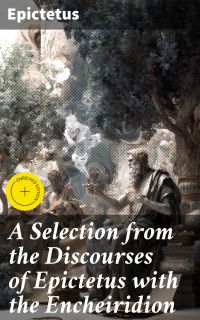
A Selection from the Discourses of Epictetus with the EncheiridionEpictetus7h 12m4.2 (599)$1 · $0.00

The Dreaming PathPaul Callaghan, Uncle Paul Gordon9h 6m4.4 (652)$29 · $0.00

The Science of Being WellWallace D. Wattles2h 34m3.9 (2.3K)$2 · $0.00
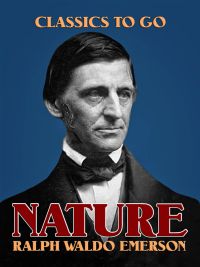
NatureRalph Waldo Emerson1h 38m4.0 (9K)$2.30

The Doors of PerceptionAldous Huxley2h 16m4.1 (85.9K)$15

The Hidden PowerThomas Troward5h 36m4.3 (1.8K)$1.20 · $0.00

Change Your Schedule, Change Your LifeSuhas Kshirsagar, Michelle D. Seaton7h 49m4.2 (5.5K)$26 · $0.00
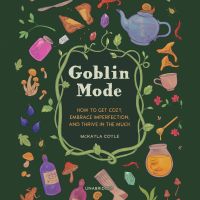
Goblin ModeMcKayla Coyle4h 59m3.6 (3.3K)$15

The Cross Stands Firm: A Light from the Carthusian MonksTALLI50m4.6 (43)$0.00 · $0.00

Essays: First Series. PrudenceRalph Waldo Emerson29m4.2 (56)$2 · $0.00

Hatha YogaWilliam Walker6h 56m4.4 (188)$3.50 · $0.00