
Skepticism
A Note on the Philosophical SchoolBy Pons Malleus


Length3h 15m
About this audiobook
Skepticism, as a philosophical school of thought, has endured for over two millennia not by offering certainties, but by persistently questioning them. This book is an exploration of skepticism—not as a rejection of knowledge, but as a method of inquiry, a disciplined doubt, and a guide for navigating the boundaries of belief and understanding.
From its roots in ancient Greece to its reverberations in modern epistemology and science, skepticism has played a crucial role in shaping the intellectual history of the West. Figures like Pyrrho, Sextus Empiricus, and later René Descartes and David Hume, each in their own way, questioned the reliability of perception, the trustworthiness of reason, and the foundations of knowledge itself. But skepticism is not monolithic. There are radical skeptics, who doubt the possibility of knowledge altogether, and mitigated or academic skeptics, who temper doubt with practical engagement in the world.
This book does not aim to champion skepticism as the final philosophical stance, nor to dismiss it as an intellectual dead end. Instead, it presents skepticism as a vital tradition that serves an indispensable role in philosophy: it compels us to re-examine our assumptions, to clarify our justifications, and to resist the seduction of easy answers. In a world increasingly saturated with information and opinion, skepticism reminds us that the mere possession of data does not equate to wisdom—and that humility in the face of uncertainty is a virtue, not a weakness.
The structure of this book reflects the breadth and evolution of skeptical thought. It begins with the historical foundations—tracing the origins of skepticism in ancient Greek philosophy, particularly in Pyrrhonism and the Academic Skeptics. It then explores how skepticism was received and reinterpreted by medieval thinkers and transformed during the Enlightenment. Particular attention is given to Descartes’ methodological doubt, which paradoxically used skepticism to seek indubitable truths, and Hume’s empiricist skepticism, which challenged the very coherence of causality and the self.
The book then shifts to contemporary engagements with skepticism, especially in the realms of epistemology, science, ethics, and even technology. Here, we confront questions that are as pressing today as they were in antiquity: What can we know? How do we know it? And what should we do when certainty is out of reach? These questions are not just abstract puzzles for philosophers; they underlie our political discourse, scientific progress, and personal decisions.
Skepticism is often misunderstood as cynicism or nihilism. But genuine philosophical skepticism is neither despairing nor paralyzing. It is an attitude of critical vigilance. It refuses to accept belief without adequate justification and demands that truth be earned, not assumed. It is uncomfortable, often inconvenient—but profoundly necessary.
As you read through these pages, I invite you not merely to observe the skeptical tradition from a distance, but to engage with it actively. Allow yourself to doubt, to question, and to reconsider what you think you know. Whether you emerge from this book more skeptical or more confident in your beliefs is less important than whether you have learned to examine them more carefully.
Philosophy begins in wonder, but it survives through skepticism. This book is a journey into that skeptical spirit—a spirit that challenges us not to settle for certainty, but to strive, always, for understanding.
Audiobook details
GenrePhilosophy, Politics and Government
Length3 hrs 15 mins
Narrated byListen with 1,000+ voices
FormateBook with Audio
Publish dateNov 11, 2025
LanguageEnglish
Table of contents
1SKEPTICISM
2Introduction to Skepticism
3Historical Origins
4Key Concepts and Theories
5Ancient Skepticism
Show all chaptersShow less
6Medieval and Renaissance Skepticism
7Modern Skepticism
8Arguments for Skepticism
9Counterarguments
10Impact on other Philosophical Discourses
Series

TranscendentalismPons Malleus2h 57m$6
ScholasticismPons Malleus3h$6
RationalismPons Malleus2h 47m$6
EmpiricismPons Malleus2h 49m$6
StructuralismPons Malleus2h 57m$6
CoherentismPons Malleus3h 1m$6
FoundationalismPons Malleus3h 17m$6
DeterminismPons Malleus3h 29m$6
NaturalismPons Malleus3h 26m$6
PragmatismPons Malleus3h 7m$6
ConstructivismPons Malleus3h 16m$6
Milesian SchoolPons Malleus3h 17m$6
ObjectivismPons Malleus3h 31m$6
EpicureanismPons Malleus3h 17m$6
EleaticismPons Malleus2h 51m$6
NominalismPons Malleus2h 59m$6
Dialectical MaterialismPons Malleus3h 6m$6
French NietzscheanismPons Malleus3h 4m$6
Ionian SchoolPons Malleus3h 1m$6
IlluminationsWalter Benjamin10h 12m4.4 (16.2K)$20 · $0.00
That Bird Has My WingsJarvis Jay Masters9h 49m4.4 (13.7K)$29 · $0.00

Tâo Teh KingLaozi2h 34m4.4 (230.9K)$2 · $0.00

Buddhist Boot CampTimber Hawkeye2h 39m4.4 (8.4K)$18 · $0.00
Enchiridion & The Discourses of Epictetus (Annotated)Arrian Epictetus18h 9m4.4 (3.5K)$2 · $0.00

The Meditations of the Emperor Marcus Aurelius AntoninusEmperor of Rome Marcus Aurelius5h 41m4.4 (1.8M)$1 · $0.00

Crime and PunishmentFyodor Dostoevsky23h 11m4.4 (1.3M)$12 · $0.00

MeditationsMarcus Aurelius5h 52m4.4 (433.7K)$1 · $0.00
Everyday DharmaSuneel Gupta5h 2m4.5 (761)$20 · $0.00

The Joyful Wisdom ("La Gaya Scienza")Friedrich Wilhelm Nietzsche11h 37m4.4 (26.6K)$1 · $0.00
The Art of LivingEpictetus, Sharon Lebell3h 16m4.4 (50.1K)$18 · $0.00

Sadhana: the realisation of lifeRabindranath Tagore3h 49m4.4 (8.6K)$6 · $0.00
SapiensYuval Noah Harari15h 18m4.3 (1.4M)$33 · $0.00
You BelongSebene Selassie8h 35m4.4 (2.7K)$26 · $0.00

The Song Celestial; Or, Bhagavad-Gîtâ (from the Mahâbhârata)Anonymous2h 18m4.4 (3.2K)$2 · $0.00

Chuang Tzu: Mystic, Moralist, and Social ReformerZhuangzi14h 42m4.4 (1.2K)$1 · $0.00

High-RisersBen Austen13h 33m4.4 (2.8K)$33 · $0.00

The Great OmissionDallas Willard7h 45m4.4 (4K)$26 · $0.00

The Grand InquisitorFyodor Dostoyevsky2h 24m4.3 (10.7K)$1 · $0.00
Praying with the PsalmsEugene H. Peterson7h 20m4.5 (312)$24 · $0.00

KrantikariSanjeev Sanyal11h 44m4.6 (1.3K)$16 · $0.00

Unbroken Bonds of BattleJohnny Joey Jones8h 31m4.6 (2.6K)$8 · $0.00

On Democracies and Death CultsDouglas Murray10h 38m4.6 (6.5K)$29 · $0.00

Balcony Over Jerusalem: A Middle East Memoir - Israel, Palestine and BeyondJohn Lyons12h 37m4.6 (1.4K)$33 · $0.00

RiggedMollie Hemingway12h 48m4.6 (4.2K)$23 · $0.00

SledgehammerDavid Friedman8h 21m4.7 (589)$26 · $0.00

Citizenship in a Republic (Annotated)Theodore Roosevelt2h 44m4.6 (1.4K)$2 · $0.00

No EscapeNury Turkel9h 30m4.6 (809)$28 · $0.00

Always FaithfulThomas Schueman, Zainullah Zaki12h 12m4.6 (977)$29 · $0.00

UnthinkableJamie Raskin15h 8m4.5 (9.3K)$8 · $0.00

My Fourth Time, We DrownedSally Hayden13h 59m4.6 (2.9K)$23 · $0.00

A Revolution of Common SenseScott Jennings9h 29m4.6 (528)$29 · $0.00

Statement From the Dock at the Rivonia TrialNelson Mandela2h 18m4.6 (1.3K)$1 · $0.00

Lessons from the EdgeMarie Yovanovitch17h 11m4.5 (5.9K)$40 · $0.00

To Rescue the American SpiritBret Baier10h 12m4.5 (2.7K)$8 · $0.00

StonewalledSharyl Attkisson15h 19m4.5 (4.3K)$33 · $0.00
The World According to Orwell: 1984 & Animal FarmGeorge Orwell15h 42m4.6 (1.1K)$1 · $0.00
Basic EconomicsThomas Sowell18h 32m4.5 (29.3K)$28 · $0.00

To Rescue the RepublicBret Baier, Catherine Whitney11h 42m4.5 (8.6K)$29 · $0.00

Modern WarriorsPete Hegseth7h 10m4.5 (4.7K)$24 · $0.00
You may also like
An Essay Concerning Humane UnderstandingJohn Locke15h 22m4.0 (19.5K)Free
An Essay Concerning Humane UnderstandingJohn Locke29h 19m4.0 (13.6K)$2 · $0.00

EXPERIENCE AND EDUCATION – Premium Edition (Including Democracy & Education) (Annotated)John Dewey19h 17m4.6 (1K)$2 · $0.00
An Essay Concerning Human UnderstandingJohn Locke30h 12m4.0 (18K)$1.20 · $0.00

David Hume: The Collected WorksDavid Hume37h 13m4.5 (261)$1 · $0.00
The Natural State (Annotated)U. G. Krishnamurti8h 55m4.3 (364)$2 · $0.00
BounceMatthew Syed7h 51m4.2 (21.8K)$26 · $0.00

UnthinkableHelen Thomson7h 19m4.1 (6.4K)$24 · $0.00
A Treatise of Human NatureDavid Hume24h 50m4.1 (20.1K)$2.30
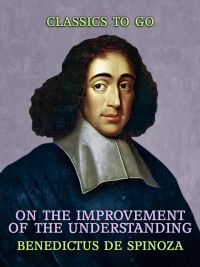
On the Improvement of the UnderstandingBenedictus de Spinoza1m4.0 (1.1K)$2.30

Growing OldElizabeth Marshall Thomas5h 52m4.1 (751)$24 · $0.00

How to Talk about Books You Haven’t ReadPierre Bayard4h 29m3.5 (6.9K)$12 · $0.00
The Essential Works of U. G. Krishnamurti (Annotated)U. G. Krishnamurti37h 11m$2 · $0.00

U. G. Krishnamurti: Collected WorksU. G. Krishnamurti37h 1m4.5 (24)$2 · $0.00
Mind is a Myth (Annotated)U.G. Krishnamurti5h 59m4.3 (218)$2 · $0.00
The Mystique of Enlightenment (Annotated)U. G. Krishnamurti8h 6m4.3 (207)$3 · $0.00

Time and Free Will (Annotated Edition) (Annotated)Henri Bergson8h 34m4.4 (13)$2 · $0.00

Thomas Reid (Annotated)Alexander Campbell Fraser4h 11m$1.99 · $0.00

A Philosophicall Essay for the Reunion of the LanguagesPierre Besnier1h 9m$2 · $0.00
DressedShahidha Bari10h 33m3.4 (166)$20 · $0.00