About this audiobook
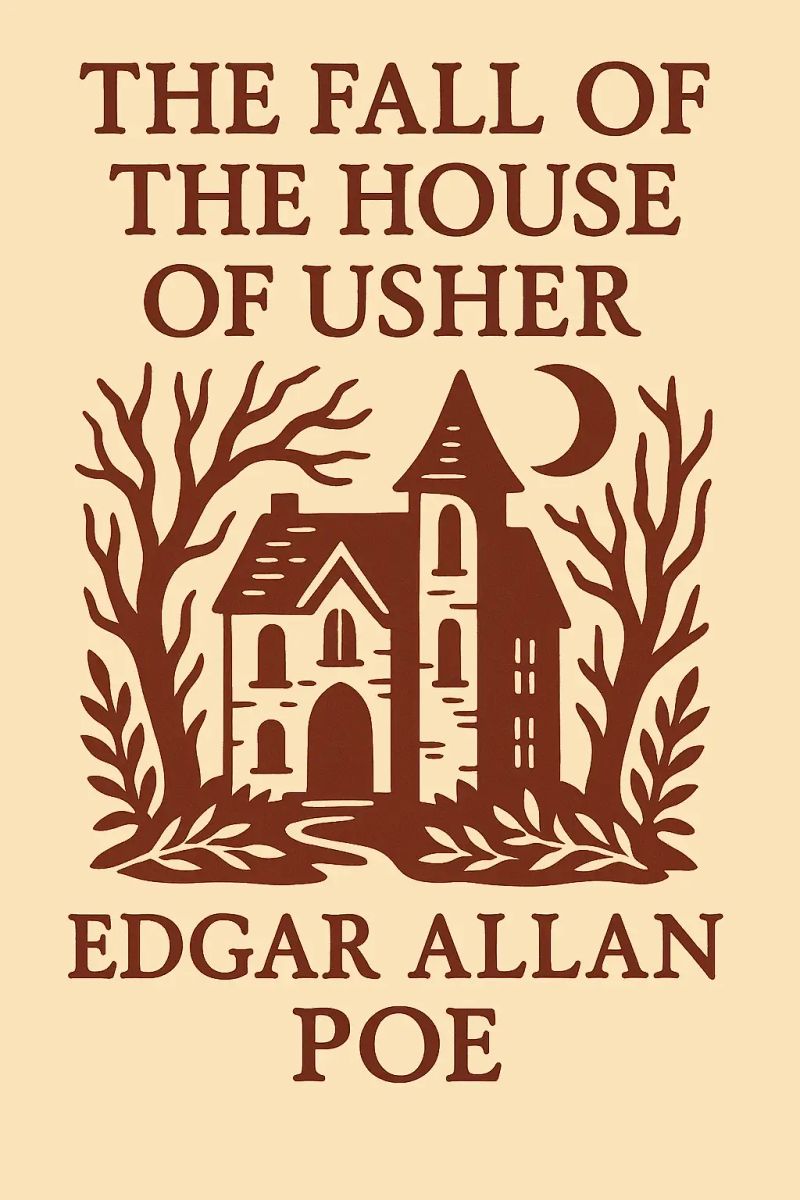
Edgar Allan Poe (1809–1849) stands as a central figure in American Romanticism and the early development of the short story as a formal art. An American writer, critic, and editor, Poe crafted tales that fuse Gothic terror with psychological insight, often foregrounding atmosphere, form, and the malleability of perception. The Fall of the House of Usher, first published in 1839 in Burton's Gentleman’s Magazine and subsequently collected in Tales of the Grotesque and Arabesque (1840), embodies his conception of a single effect, a single emotional impression that governs all elements of a tale. Composed in English in a period when American letters sought to establish a distinct voice alongside European traditions, the story participates in the era's fascination with ruins, decay, and haunted lineage, transmuting architectural space into a palpable psychic condition. Its opening moves—first person narration, a bleak autumn landscape, and the mirroring of house and narrator’s mood—situate it firmly within the Gothic habitus while also projecting American settings and concerns into a continental tradition. The prose style, insinuating, sensuous, and densely imagistic, reflects Poe’s broader program to exert disciplined control over mood, symbolism, and narrative perspective.
It is, however, more than atmosphere: the tale treats hereditary taint and psychological fracture as intimate within the body and its surroundings. Roderick Usher’s cadaverous countenance, his feverish intellect, and the diseased lineage of the Usher line enact a totalizing fusion of subject and site, wherein the mansion functions as a living symbol of family fate. The narrator’s skepticism yields to shock and complicity, and the story’s progression—an ellipse of entombment, collapse, and contagion—renders terror as a function of mind and environment rather than explicit gore. In critical reception and influence, Usher helped codify the modern short story’s investment in mood over melodrama, the unreliable vantage point, and the idea that architecture can articulate the psyche. Its legacy extends to later American and international Gothic—from Hawthorne’s moralized gloom to Lovecraftian landscapes and filmic adaptations—where the house, the ruin, and the double threaten to erase boundaries between self and world, art and decay.