
Phenomenology
A Note on the Philosophical SchoolBy Pons Malleus


Length3h 7m
About this audiobook
The history of philosophy is marked by repeated attempts to return to what is most fundamental—what is given before all interpretation, theory, or abstraction. Phenomenology is one of the most ambitious and enduring of these attempts. Born in the early 20th century out of a dissatisfaction with both the dogmatism of traditional metaphysics and the abstraction of scientific positivism, phenomenology proposed a radical new beginning: to return “to the things themselves.” This phrase, made famous by Edmund Husserl, captures the spirit of a movement that sought to suspend presuppositions and examine conscious experience in its purest form.
This book is an invitation to explore the philosophical school of thought known as phenomenology—not merely as a historical curiosity, but as a living and evolving tradition. From Husserl’s rigorous investigations into intentionality and the structures of consciousness, to Heidegger’s existential interpretation of Being, to the embodied turn found in Merleau-Ponty and the ethical dimension in Levinas, phenomenology has expanded the scope of philosophy. It has touched disciplines as diverse as psychology, literature, cognitive science, architecture, and theology.
Phenomenology is often misunderstood. To some, it appears obscure, overly technical, or too abstract to bear relevance to ordinary life. Yet at its heart lies a simple yet profound intuition: that our conscious engagement with the world is not incidental to knowledge but foundational to it. Phenomenology does not aim to describe the world from an external vantage point, but rather seeks to understand how the world is revealed through lived experience. In doing so, it offers a method for investigating meaning as it arises in the first-person perspective—an approach that has proven to be both fertile and transformative.
This book does not assume prior familiarity with phenomenology. It is written for students, thinkers, and seekers who are drawn to fundamental questions: What is consciousness? How does the world appear to us? What does it mean to experience time, space, the body, or the other? Each chapter offers a careful and accessible treatment of key thinkers, concepts, and debates, while remaining sensitive to the historical and philosophical context in which they emerged.
Of course, no single volume can capture the full richness and complexity of phenomenology. Rather than offering a definitive account, this book seeks to serve as a guide—a map to orient the reader through a challenging but rewarding terrain. While phenomenology begins in the rigor of descriptive analysis, it does not remain there. It continually opens outward: to questions of existence, ethics, intersubjectivity, language, and ultimately, to the question of Being itself.
As you turn the pages ahead, I encourage you to read not only with analytical curiosity but with a willingness to be affected—to let your assumptions be questioned, and your familiar ways of seeing the world be brought into new relief. Phenomenology is not merely a school of thought; it is a way of attending to life. If this book succeeds in conveying even a measure of that transformative attention, then it will have served its purpose.
Let us begin.
Audiobook details
GenrePhilosophy, Politics and Government
Length3 hrs 7 mins
Narrated byListen with 1,000+ voices
FormateBook with Audio
Publish dateNov 7, 2025
LanguageEnglish
Table of contents
1PHENOMENOLOGY
2Introduction to Phenomenology
3Edmund Husserl – Phenomenology’s Genesis
4Heideggerian Ontology & Being-in-the-World
5Merleau-Ponty - Embodiment and Perception
Show all chaptersShow less
6Sartrean Existentialism and Consciousness
7Husserl and the Theory of Intentionality
8The Phenomenological Method
9Arguments and Counterarguments
10Phenomenology & Other Schools of Thought
Series

TranscendentalismPons Malleus2h 57m$6
ScholasticismPons Malleus3h$6
SkepticismPons Malleus3h 16m$6
RationalismPons Malleus2h 47m$6
EmpiricismPons Malleus2h 49m$6
StructuralismPons Malleus2h 57m$6
CoherentismPons Malleus3h 1m$6
FoundationalismPons Malleus3h 17m$6
DeterminismPons Malleus3h 29m$6
NaturalismPons Malleus3h 26m$6
PragmatismPons Malleus3h 7m$6
ConstructivismPons Malleus3h 16m$6
Milesian SchoolPons Malleus3h 17m$6
ObjectivismPons Malleus3h 31m$6
EpicureanismPons Malleus3h 17m$6
EleaticismPons Malleus2h 51m$6
NominalismPons Malleus2h 59m$6
Dialectical MaterialismPons Malleus3h 6m$6
French NietzscheanismPons Malleus3h 4m$6
Ionian SchoolPons Malleus3h 1m$6
IlluminationsWalter Benjamin10h 12m4.4 (16.2K)$20 · $0.00
That Bird Has My WingsJarvis Jay Masters9h 49m4.4 (13.7K)$29 · $0.00

Tâo Teh KingLaozi2h 34m4.4 (230.9K)$2 · $0.00

Buddhist Boot CampTimber Hawkeye2h 39m4.4 (8.4K)$18 · $0.00
Enchiridion & The Discourses of Epictetus (Annotated)Arrian Epictetus18h 9m4.4 (3.5K)$2 · $0.00

The Meditations of the Emperor Marcus Aurelius AntoninusEmperor of Rome Marcus Aurelius5h 41m4.4 (1.8M)$1 · $0.00

Crime and PunishmentFyodor Dostoevsky23h 11m4.4 (1.3M)$12 · $0.00

MeditationsMarcus Aurelius5h 52m4.4 (433.7K)$1 · $0.00
Everyday DharmaSuneel Gupta5h 2m4.5 (761)$20 · $0.00
The Joyful Wisdom ("La Gaya Scienza")Friedrich Wilhelm Nietzsche11h 37m4.4 (26.6K)$1 · $0.00
The Art of LivingEpictetus, Sharon Lebell3h 16m4.4 (50.1K)$18 · $0.00

Sadhana: the realisation of lifeRabindranath Tagore3h 49m4.4 (8.6K)$6 · $0.00
SapiensYuval Noah Harari15h 18m4.3 (1.4M)$33 · $0.00
You BelongSebene Selassie8h 35m4.4 (2.7K)$26 · $0.00

The Song Celestial; Or, Bhagavad-Gîtâ (from the Mahâbhârata)Anonymous2h 18m4.4 (3.2K)$2 · $0.00

Chuang Tzu: Mystic, Moralist, and Social ReformerZhuangzi14h 42m4.4 (1.2K)$1 · $0.00
High-RisersBen Austen13h 33m4.4 (2.8K)$33 · $0.00
The Great OmissionDallas Willard7h 45m4.4 (4K)$26 · $0.00

The Grand InquisitorFyodor Dostoyevsky2h 24m4.3 (10.7K)$1 · $0.00
Praying with the PsalmsEugene H. Peterson7h 20m4.5 (312)$24 · $0.00

KrantikariSanjeev Sanyal11h 44m4.6 (1.3K)$16 · $0.00

Unbroken Bonds of BattleJohnny Joey Jones8h 31m4.6 (2.6K)$8 · $0.00

On Democracies and Death CultsDouglas Murray10h 38m4.6 (6.5K)$29 · $0.00

Balcony Over Jerusalem: A Middle East Memoir - Israel, Palestine and BeyondJohn Lyons12h 37m4.6 (1.4K)$33 · $0.00

RiggedMollie Hemingway12h 48m4.6 (4.2K)$23 · $0.00

SledgehammerDavid Friedman8h 21m4.7 (589)$26 · $0.00

Citizenship in a Republic (Annotated)Theodore Roosevelt2h 44m4.6 (1.4K)$2 · $0.00

No EscapeNury Turkel9h 30m4.6 (809)$28 · $0.00

Always FaithfulThomas Schueman, Zainullah Zaki12h 12m4.6 (977)$29 · $0.00

UnthinkableJamie Raskin15h 8m4.5 (9.3K)$8 · $0.00

My Fourth Time, We DrownedSally Hayden13h 59m4.6 (2.9K)$23 · $0.00

A Revolution of Common SenseScott Jennings9h 29m4.6 (528)$29 · $0.00

Statement From the Dock at the Rivonia TrialNelson Mandela2h 18m4.6 (1.3K)$1 · $0.00

Lessons from the EdgeMarie Yovanovitch17h 11m4.5 (5.9K)$40 · $0.00

To Rescue the American SpiritBret Baier10h 12m4.5 (2.7K)$8 · $0.00

StonewalledSharyl Attkisson15h 19m4.5 (4.3K)$33 · $0.00
The World According to Orwell: 1984 & Animal FarmGeorge Orwell15h 42m4.6 (1.1K)$1 · $0.00
Basic EconomicsThomas Sowell18h 32m4.5 (29.3K)$28 · $0.00
To Rescue the RepublicBret Baier, Catherine Whitney11h 42m4.5 (8.6K)$29 · $0.00

Modern WarriorsPete Hegseth7h 10m4.5 (4.7K)$24 · $0.00
You may also like

Kant's Three CritiquesImmanuel Kant47h 6m4.3 (1.3K)$2 · $0.00

Styles of Radical WillSusan Sontag10h4.1 (4.8K)$20 · $0.00

The Genealogy of MoralsFriedrich Nietzsche5h 43m4.3 (84.3K)$12
Human, All Too Human: A Book for Free Spirits (Annotated)Friedrich Wilhelm Nietzsche5h 45m4.2 (29.4K)$2 · $0.00

The World as Will and Idea (Vol. 1-3)Arthur Schopenhauer56h 21m4.3 (2K)$2 · $0.00
BounceMatthew Syed7h 51m4.2 (21.8K)$26 · $0.00
The Critique of Practical ReasonImmanuel Kant8h 18m4.1 (13.8K)$2 · $0.00
Beyond Good and EvilFriedrich Nietzsche8h 10m4.2 (136.2K)$17

Beyond Good and EvilFriedrich Nietzsche7h 5m4.2 (137.8K)$2 · $0.00
After BuddhismStephen Batchelor17h 39m4.3 (1.5K)$23
Liminal ThinkingDave Gray3h 10m4.1 (3.9K)$17

Fascinate, Revised and UpdatedSally Hogshead7h 40m4.1 (1.1K)$26 · $0.00
An Essay Concerning Humane UnderstandingJohn Locke29h 19m4.0 (13.6K)$2 · $0.00
EXPERIENCE AND EDUCATION – Premium Edition (Including Democracy & Education) (Annotated)John Dewey19h 17m4.6 (1K)$2 · $0.00
Becoming CliterateLaurie Mintz7h 48m4.3 (4.3K)$26 · $0.00

Mr. Bennett and Mrs. BrownVirginia Woolf50m4.2 (850)$2 · $0.00
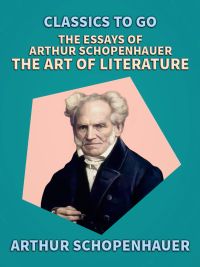
The Essays of Arthur Schopenhauer; The Art of LiteratureArthur Schopenhauer4h 1m4.1 (1.6K)$2.30
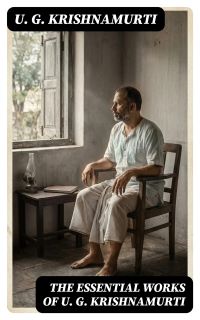
The Essential Works of U. G. KrishnamurtiU. G. Krishnamurti37h 7m$2 · $0.00

Rules for the Direction of the MindRené Descartes1h 15m3.9 (904)$1 · $0.00
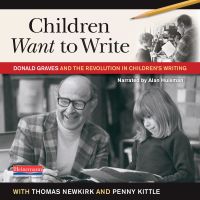
Children Want to WriteThomas Newkirk, Penny Kittle8h 14m4.5 (141)$23