



Length7h 5m
About this audiobook
Friedrich Nietzsche's "Beyond Good and Evil" offers a provocative examination of morality, truth, and the limitations of philosophical thought. Written in 1886, the work is characterized by its aphoristic style, employing sharp wit and incisive arguments that challenge conventional ethical frameworks. Nietzsche critiques the dogmatic nature of traditional philosophy, proposing a re-evaluation of values that transcends binary notions of good and evil. In the context of Enlightenment thought, Nietzsche sets the stage for existentialism and postmodernism, urging readers to embrace a more nuanced understanding of morality that recognizes the complexity of human motives and societal constructs. Nietzsche, a 19th-century German philosopher known for his radical ideas, was steeped in the currents of Romanticism and German Idealism. His personal struggles with health and his deep interest in art, culture, and individualism profoundly influenced his philosophical inquiries. "Beyond Good and Evil" can be seen as a culmination of these interests, reflecting Nietzsche's desire to provoke his contemporaries to think critically about their values in an increasingly nihilistic society. For readers seeking a transformative intellectual experience, "Beyond Good and Evil" is an essential read. It challenges us to confront our own moral assumptions and encourages a courageous rethinking of life's foundational tenets, making it a vital piece of literature for anyone interested in philosophy, ethics, and the complexities of the human experience.
Audiobook details
Rating★★★★ 4.2 (137.8K)
Includes Goodreads, LibraryThing, Amazon, StoryGraph
GenrePhilosophy
Length7 hrs 5 mins
Narrated byListen with 1,000+ voices
FormateBook with Audio
Publish dateNov 13, 2022
LanguageEnglish
Table of contents
1Introduction
2Preface
3Chapter I. Prejudices of Philosophers
4Chapter II. The Free Spirit
5Chapter III. The Religious Mood
Show all chaptersShow less
6Chapter IV. Apophthegms and Interludes
7Chapter V. The Natural History of Morals
8Chapter VI. We Scholars
9Chapter VII. Our Virtues
10Chapter VIII. Peoples and Countries
11Chapter IX. What is Noble?

Jenseits von Gut und BöseFriedrich Nietzsche7h 35m4.2 (184.4K)$10 · $0.00

Also sprach ZarathustraFriedrich Nietzsche10h 20m4.2 (214.8K)$24 · $0.00

Zur Genealogie der MoralFriedrich Nietzsche6h 10m4.3 (84.8K)$10 · $0.00
The Gay ScienceFriedrich Nietzsche11h 16m4.3 (25.7K)$1.99 · $0.00

EL ANTICRISTOFriedrich Nietzsche3h 17m4.1 (40.2K)$1.99 · $0.00

The Essential Works of Friedrich NietzscheFriedrich Nietzsche93h 31m4.4 (2K)$1.99 · $0.00

THUS SPOKE ZARATHUSTRA (Unabridged)Friedrich Nietzsche11h 38m4.1 (204.6K)$1.99 · $0.00
NIETZSCHE: Beyond Good and Evil, Thus Spoke Zarathustra and Hellenism & PessimismFriedrich Nietzsche27h 37m4.5 (18)$1.99 · $0.00
BEYOND GOOD AND EVIL (Unabridged)Friedrich Nietzsche8h 43m4.2 (139.5K)$1.99 · $0.00

Le Gai SavoirFriedrich Nietzsche11h 4m4.3 (26.5K)$1.99 · $0.00

Sehnsucht nach Italien: Die 60 schönsten Italien-GedichteFriedrich Nietzsche, Georg Trakl, J.W. Goethe, Rainer Maria Rilke, Stefan Zweig, Adolf Friedrich von Schack, Alfred de Musset, Alfred Henschke, Anastasius Grün, Franz Grillparzer, Francesco Petrarca2h 2m$1 · $0.00

Ejercicios Resueltos De Sistemas DigitalesFriedrich Nietzsche5h 10m$15 · $0.00

Die Geburt der Tragödie (Kommentiert)Friedrich Nietzsche7h 20m4.4 (133)$1 · $0.00

Le Gai Savoir (Annoté)Friedrich Nietzsche12h 20m$1.99 · $0.00
Thus Spoke Zarathustra, Beyond Good and Evil, Hellenism & Pessimism (Annotated)Friedrich Nietzsche27h 36m$2 · $0.00
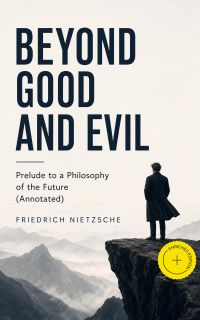
BEYOND GOOD AND EVIL - Prelude to a Philosophy of the Future (Annotated)Friedrich Nietzsche8h 46m4.2 (197.2K)$2 · $0.00
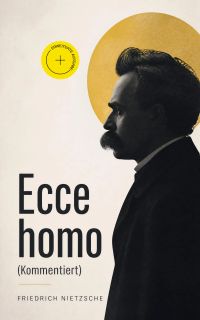
Ecce homo (Kommentiert)Friedrich Nietzsche5h 34m4.3 (44.5K)$1 · $0.00

Jenseits von Gut und Böse (Kommentiert)Friedrich Nietzsche9h 28m4.2 (134.6K)$1 · $0.00

Menschliches, Allzumenschliches (Band 1&2) (Kommentiert)Friedrich Nietzsche22h 46m4.3 (11.1K)$1 · $0.00

The Antichrist & The Twilight of the Idols (Modern Philosophy Series) (Annotated)Friedrich Nietzsche19h 45m$2 · $0.00
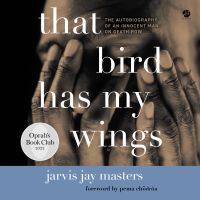
That Bird Has My WingsJarvis Jay Masters9h 49m4.4 (13.7K)$29 · $0.00

Tâo Teh KingLaozi2h 34m4.4 (230.9K)$2 · $0.00

SymposiumPlato3h 26m4.4 (97.9K)$1.20 · $0.00

Buddhist Boot CampTimber Hawkeye2h 39m4.4 (8.4K)$18 · $0.00
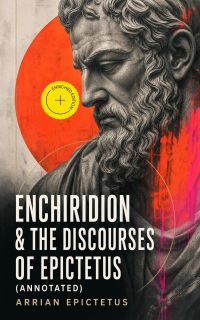
Enchiridion & The Discourses of Epictetus (Annotated)Arrian Epictetus18h 9m4.4 (3.5K)$2 · $0.00

The Meditations of the Emperor Marcus Aurelius AntoninusEmperor of Rome Marcus Aurelius5h 41m4.4 (1.8M)$1 · $0.00

Crime and PunishmentFyodor Dostoevsky23h 11m4.4 (1.3M)$12 · $0.00

MeditationsMarcus Aurelius5h 52m4.4 (433.7K)$1 · $0.00
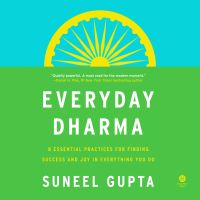
Everyday DharmaSuneel Gupta5h 2m4.5 (761)$20 · $0.00

The Joyful Wisdom ("La Gaya Scienza")Friedrich Wilhelm Nietzsche11h 37m4.4 (26.6K)$1 · $0.00
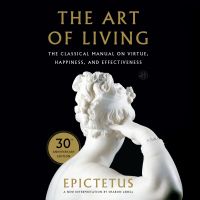
The Art of LivingEpictetus, Sharon Lebell3h 16m4.4 (50.1K)$18 · $0.00
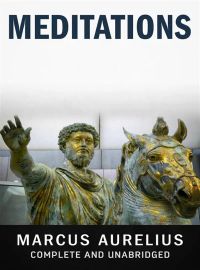
MeditationsEmperor Of Rome Marcus Aurelius7h 23m4.3 (477.5K)$1.20 · $0.00

The Imitation of ChristThomas à Kempis6h 27m4.3 (84.6K)$21 · $0.00

Sadhana: the realisation of lifeRabindranath Tagore3h 49m4.4 (8.6K)$6 · $0.00
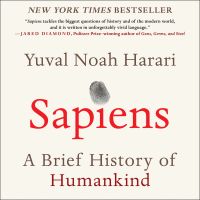
SapiensYuval Noah Harari15h 18m4.3 (1.4M) · 1215$33 · $0.00
You BelongSebene Selassie8h 35m4.4 (2.7K)$26 · $0.00

The Song Celestial; Or, Bhagavad-Gîtâ (from the Mahâbhârata)Anonymous2h 18m4.4 (3.2K)$2 · $0.00

The KybalionThe Three Initiates3h 47m4.3 (58.7K)$20 · $0.00

Chuang Tzu: Mystic, Moralist, and Social ReformerZhuangzi14h 42m4.4 (1.2K)$1 · $0.00

High-RisersBen Austen13h 33m4.4 (2.8K)$33 · $0.00
You may also like
Beyond Good and EvilFriedrich Nietzsche8h 10m4.2 (136.2K)$17

The World as Will and Idea (Vol. 1-3)Arthur Schopenhauer56h 21m4.3 (2K)$2 · $0.00
Several Short Sentences about WritingVerlyn Klinkenborg4h 26m4.0 (6.6K)$15

Styles of Radical WillSusan Sontag10h4.1 (4.8K)$20 · $0.00

The Genealogy of MoralsFriedrich Nietzsche5h 43m4.3 (84.3K)$12
The Halo EffectPhil Rosenzweig6h 58m4.0 (6.5K)$20 · $0.00

Fascinate, Revised and UpdatedSally Hogshead7h 40m4.1 (1.1K)$26 · $0.00

Mr. Bennett and Mrs. BrownVirginia Woolf50m4.2 (850)$2 · $0.00

Kant's Three CritiquesImmanuel Kant47h 6m4.3 (1.3K)$2 · $0.00
Human, All Too Human: A Book for Free Spirits (Annotated)Friedrich Wilhelm Nietzsche5h 45m4.2 (29.4K)$2 · $0.00

EXPERIENCE AND EDUCATION – Premium Edition (Including Democracy & Education) (Annotated)John Dewey19h 17m4.6 (1K)$2 · $0.00

The Essays of Arthur Schopenhauer; The Art of LiteratureArthur Schopenhauer4h 1m4.1 (1.6K)$2.30

How to Talk about Books You Haven’t ReadPierre Bayard4h 29m3.5 (6.9K)$12 · $0.00
Groundwork of the Metaphysics of MoralsImmanuel Kant4h 28m4.0 (28.5K)$1 · $0.00

The World as Will and IdeaArthur Schopenhauer56h 15m4.4 (14.5K)$2 · $0.00

Beyond Good and EvilFriedrich Nietzsche8h 23m4.1 (149.7K)$1 · $0.00
The Mystique of Enlightenment (Summarized Edition)U. G. Krishnamurti3h 11m4.4 (349)$2
After BuddhismStephen Batchelor17h 39m4.3 (1.5K)$23

Rules for the Direction of the MindRené Descartes1h 34m3.9 (1K)$2 · $0.00
The World as Will and Idea (Vol. 2 of 3)Arthur Schopenhauer18h 16m4.4 (240)$2.30