
Peripateticism
A Note on the Philosophical SchoolBy Pons Malleus

Length2h 52m
About this audiobook
Peripateticism—derived from the Greek word peripatos, meaning "to walk about"—was more than a method of teaching or a historical footnote in the life of Aristotle; it was a dynamic philosophical tradition that sought knowledge in motion, discussion in open air, and wisdom grounded in both reason and experience. The Peripatetic school, founded by Aristotle in the Lyceum of Athens around 335 BCE, represents one of the most enduring and multifaceted philosophical movements of antiquity. This book is an invitation to walk alongside these thinkers, tracing the paths they carved through logic, ethics, metaphysics, politics, and the natural sciences.
Unlike other ancient philosophical schools that often clung tightly to doctrinal purity or metaphysical abstraction, the Peripatetics pursued a philosophy deeply engaged with the empirical world. At its heart lay Aristotle’s conviction that all knowledge begins with the senses and moves through careful reasoning toward understanding. Whether studying the patterns of the heavens, the behavior of animals, the structure of the polis, or the virtues of the soul, the Peripatetics sought unity between theory and observation. Their intellectual style favored dialogue over dogma, evidence over speculation.
This book does not merely recount the teachings of Aristotle, though he remains the towering figure of the school. It also explores the contributions of his successors—Theophrastus, Strato of Lampsacus, and later commentators like Alexander of Aphrodisias—who each extended and revised the school’s doctrines in light of new discoveries and shifting cultural contexts. The Peripatetic tradition was never static; it evolved across centuries, influencing Islamic, Jewish, and Christian thinkers in the medieval world and echoing even into the foundations of modern science and logic.
The structure of the book mirrors the method of the Peripatetics themselves: systematic yet exploratory, rigorous yet open to the living texture of inquiry. Beginning with the life of Aristotle and the establishment of the Lyceum, the chapters guide readers through the major domains of Peripatetic thought—ethics, logic, metaphysics, politics, poetics, and natural philosophy—before tracing its transformation and transmission across time.
Why revisit Peripateticism today? In an age of accelerating information, fractured discourse, and ideological rigidity, the Peripatetic commitment to careful reasoning, empirical observation, and ethical reflection offers a model for philosophical engagement rooted in humility and intellectual courage. This is a tradition that reminds us that philosophy is not merely a set of doctrines to be memorized but a way of life to be lived—one that grows in walking, in dialogue, and in the unending search for understanding.
It is with this spirit that I present this book—not as a final word, but as a continuation of the walk. May it prompt your own reflections, your own questions, and perhaps even your own philosophical wanderings.
Audiobook details
GenrePhilosophy, Politics and Government
Length2 hrs 52 mins
Narrated byListen with 1,000+ voices
FormateBook with Audio
Publish dateNov 14, 2025
LanguageEnglish
Table of contents
1PERIPATETICISM
2Introduction to the Peripatetic School
3Historical Context and School's Founding
4Aristotle - The Father of the School
5Key Philosophical Ideas and Postulates
Show all chaptersShow less
6Metaphysics and Epistemology
7Ethics and Politics
8Rhetoric and Logic
9Key Thinkers of the Peripatetic School
10Arguments, Counterarguments, and Debates
Series

TranscendentalismPons Malleus2h 57m$6
ScholasticismPons Malleus3h$6
SkepticismPons Malleus3h 16m$6
RationalismPons Malleus2h 47m$6
EmpiricismPons Malleus2h 49m$6
StructuralismPons Malleus2h 57m$6
CoherentismPons Malleus3h 1m$6
FoundationalismPons Malleus3h 17m$6
DeterminismPons Malleus3h 29m$6
NaturalismPons Malleus3h 26m$6
PragmatismPons Malleus3h 7m$6
ConstructivismPons Malleus3h 16m$6
Milesian SchoolPons Malleus3h 17m$6
ObjectivismPons Malleus3h 31m$6
EpicureanismPons Malleus3h 17m$6
EleaticismPons Malleus2h 51m$6
NominalismPons Malleus2h 59m$6
Dialectical MaterialismPons Malleus3h 6m$6
French NietzscheanismPons Malleus3h 4m$6
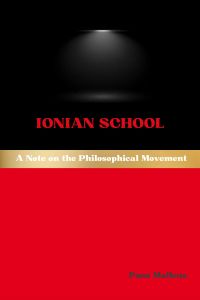
Ionian SchoolPons Malleus3h 1m$6
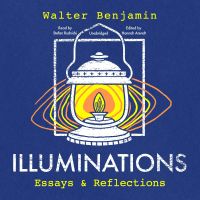
IlluminationsWalter Benjamin10h 12m4.4 (16.2K)$20 · $0.00
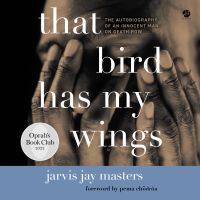
That Bird Has My WingsJarvis Jay Masters9h 49m4.4 (13.7K)$29 · $0.00

Tâo Teh KingLaozi2h 34m4.4 (230.9K)$2 · $0.00

Buddhist Boot CampTimber Hawkeye2h 39m4.4 (8.4K)$18 · $0.00
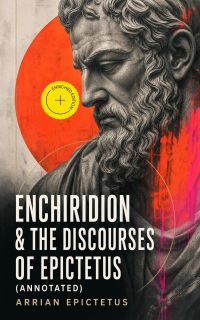
Enchiridion & The Discourses of Epictetus (Annotated)Arrian Epictetus18h 9m4.4 (3.5K)$2 · $0.00
The Meditations of the Emperor Marcus Aurelius AntoninusEmperor of Rome Marcus Aurelius5h 41m4.4 (1.8M)$1 · $0.00

Crime and PunishmentFyodor Dostoevsky23h 11m4.4 (1.3M)$12 · $0.00

MeditationsMarcus Aurelius5h 52m4.4 (433.7K)$1 · $0.00
Everyday DharmaSuneel Gupta5h 2m4.5 (761)$20 · $0.00
The Joyful Wisdom ("La Gaya Scienza")Friedrich Wilhelm Nietzsche11h 37m4.4 (26.6K)$1 · $0.00
The Art of LivingEpictetus, Sharon Lebell3h 16m4.4 (50.1K)$18 · $0.00

Sadhana: the realisation of lifeRabindranath Tagore3h 49m4.4 (8.6K)$6 · $0.00
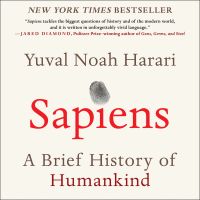
SapiensYuval Noah Harari15h 18m4.3 (1.4M)$33 · $0.00
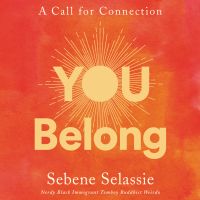
You BelongSebene Selassie8h 35m4.4 (2.7K)$26 · $0.00

The Song Celestial; Or, Bhagavad-Gîtâ (from the Mahâbhârata)Anonymous2h 18m4.4 (3.2K)$2 · $0.00

Chuang Tzu: Mystic, Moralist, and Social ReformerZhuangzi14h 42m4.4 (1.2K)$1 · $0.00

High-RisersBen Austen13h 33m4.4 (2.8K)$33 · $0.00
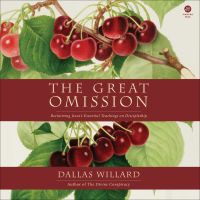
The Great OmissionDallas Willard7h 45m4.4 (4K)$26 · $0.00

The Grand InquisitorFyodor Dostoyevsky2h 24m4.3 (10.7K)$1 · $0.00
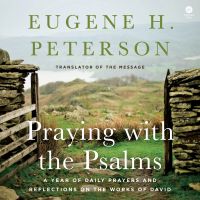
Praying with the PsalmsEugene H. Peterson7h 20m4.5 (312)$24 · $0.00

KrantikariSanjeev Sanyal11h 44m4.6 (1.3K)$16 · $0.00

Unbroken Bonds of BattleJohnny Joey Jones8h 31m4.6 (2.6K)$8 · $0.00

On Democracies and Death CultsDouglas Murray10h 38m4.6 (6.5K)$29 · $0.00
Balcony Over Jerusalem: A Middle East Memoir - Israel, Palestine and BeyondJohn Lyons12h 37m4.6 (1.4K)$33 · $0.00

RiggedMollie Hemingway12h 48m4.6 (4.2K)$23 · $0.00

SledgehammerDavid Friedman8h 21m4.7 (589)$26 · $0.00

Citizenship in a Republic (Annotated)Theodore Roosevelt2h 44m4.6 (1.4K)$2 · $0.00

No EscapeNury Turkel9h 30m4.6 (809)$28 · $0.00

Always FaithfulThomas Schueman, Zainullah Zaki12h 12m4.6 (977)$29 · $0.00

UnthinkableJamie Raskin15h 8m4.5 (9.3K)$8 · $0.00

My Fourth Time, We DrownedSally Hayden13h 59m4.6 (2.9K)$23 · $0.00

A Revolution of Common SenseScott Jennings9h 29m4.6 (528)$29 · $0.00
Statement From the Dock at the Rivonia TrialNelson Mandela2h 18m4.6 (1.3K)$1 · $0.00

Lessons from the EdgeMarie Yovanovitch17h 11m4.5 (5.9K)$40 · $0.00

To Rescue the American SpiritBret Baier10h 12m4.5 (2.7K)$8 · $0.00

StonewalledSharyl Attkisson15h 19m4.5 (4.3K)$33 · $0.00
The World According to Orwell: 1984 & Animal FarmGeorge Orwell15h 42m4.6 (1.1K)$1 · $0.00
Basic EconomicsThomas Sowell18h 32m4.5 (29.3K)$28 · $0.00
To Rescue the RepublicBret Baier, Catherine Whitney11h 42m4.5 (8.6K)$29 · $0.00

Modern WarriorsPete Hegseth7h 10m4.5 (4.7K)$24 · $0.00
You may also like

My life on the plains : or, personal experiences with IndiansGeorge A. Custer17h 36m4.2 (470)$1 · $0.00

The Influence of Sea Power upon HistoryAlfred Thayer Mahan23h 51m4.1 (2.8K)$1 · $0.00

France and England in North America (Vol. 1-7)Francis Parkman119h 28m4.4 (378)$1 · $0.00
Leonardo da Vinci: Thoughts on Art & Life (Annotated)Leonardo da Vinci6h 32m4.1 (823)$1.99 · $0.00

Natural RivalsJohn Clayton9h 45m4.1 (476)$20

The Last ResortSarah Stodola11h 51m3.7 (1.4K)$29 · $0.00

Warwickshire: The Land of ShakespeareClive Holland7h 17m$1 · $0.00

Progressive ChileRobert E. Mansfield7h 12m$2.30
Notes on Stable Management in India and the ColoniesJoshua A. Nunn2h 31m$2 · $0.00

Cork: Its Origin and Industrial UsesGilbert Erwin Stecher1h 16m$2 · $0.00

Tobacco; Its History, Varieties, Culture, Manufacture and CommerceE. R. Billings14h 42m4.4 (11)$1 · $0.00

The Yellowstone National Park: Historical and DescriptiveHiram Martin Chittenden11h 39m4.2 (217)$1 · $0.00
Commercial GeographyJacques W. Redway9h 52m$2 · $0.00
Memory of Empires: Ancient Egypt - Ancient Greece - Persian Empire - Roman Empire - Byzantine EmpireElie Faure, Victoria Charles7h 12m$19 · $0.00
Principles of City Land ValuesRichard M. Hurd4h 19m$2 · $0.00

GibraltarHenry M. Field3h 14m$1 · $0.00

Condiments, Spices and FlavorsMary Elizabeth Green1h 5m$2 · $0.00

A Briefe and True Report of the New Found Land of VirginiaThomas Harriot2h 9m3.2 (133)$1 · $0.00

Offshore Energy and Jobs Act (H. R. 2231; 113th Congress)Doc Hastings43m$1 · $0.00

Englisch lernen Audio – London on a budgetOwen Connors1h$17