
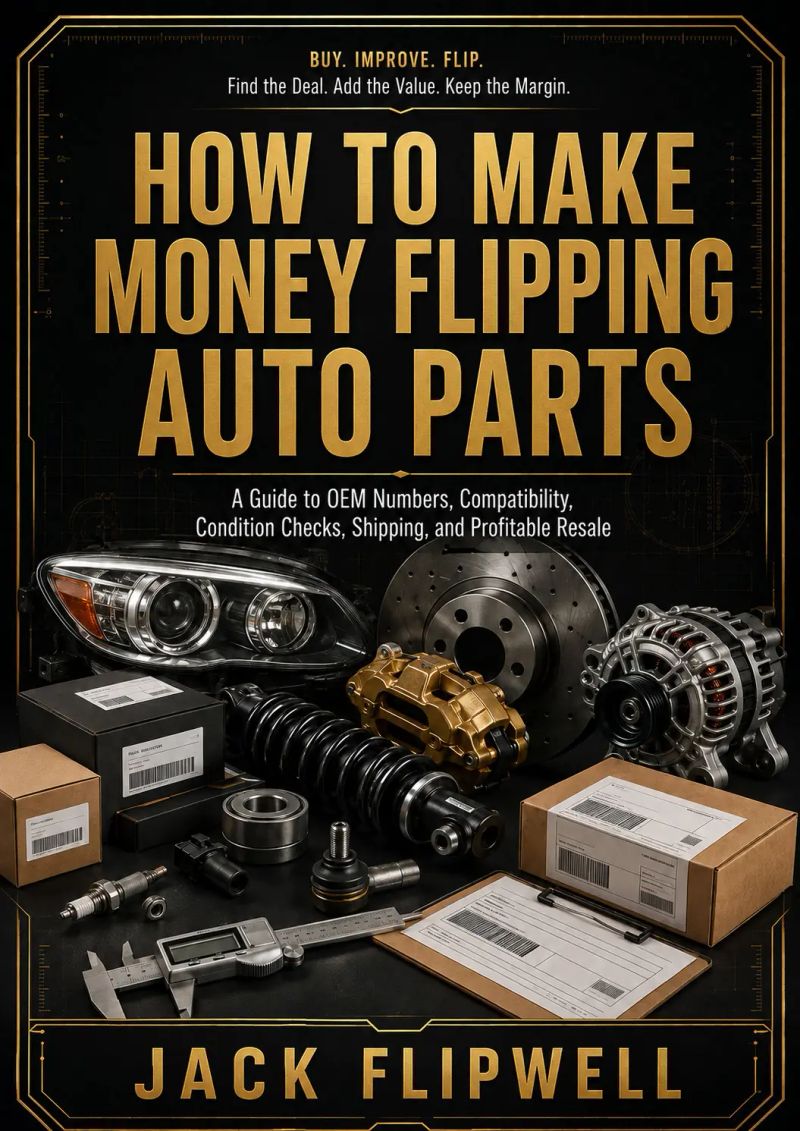
How to Make Money Flipping Auto Parts - A Guide to OEM Numbers, Compatibility, Condition Checks, Shipping, and Profitable Resale
By JACK FLIPWELL


Length7h 32m
About this audiobook
The used auto parts market can offer excellent resale opportunities, but margin does not appear simply because you find a cheap headlight, module, mirror, or interior panel. The real advantage belongs to the seller who can identify the part correctly, verify the OEM number, understand compatibility, evaluate condition, calculate the full transaction, and recognize real demand before tying up money in inventory.
How to Make Money Flipping Auto Parts is a practical guide to building a systematic resale process for used and underpriced automotive components. JACK FLIPWELL takes the reader from choosing a first niche and researching the market through OEM numbers, fitment verification, condition checks, pricing, sourcing, photography, listings, shipping, returns, inventory management, cash flow, and scaling.
You will learn why two nearly identical parts can have completely different applications and why vehicle model and year are often not enough to confirm compatibility. The book explains how to work with OEM numbers, supplier numbers, casting marks, connector types, equipment versions, donor vehicle information, and reliable parts catalogs without pretending that every visible code tells the whole story.
The pricing sections show how to move beyond active listings and estimate a realistic selling price. You will learn how to compare genuinely similar products, evaluate supply and demand, recognize slow inventory, check new aftermarket alternatives, and establish target, fast-sale, and minimum prices.
A major part of the book focuses on buying discipline. You will learn how to calculate a maximum purchase price after marketplace fees, testing, packaging, shipping, preparation, return risk, and required profit. The goal is to stop treating the simple gap between buying price and selling price as profit.
The sourcing chapters explain how to build repeatable inventory channels through private sellers, workshops, professional dismantlers, specialist suppliers, liquidations, auctions, and enthusiast communities. You will also learn why a cheap supplier is not automatically a good supplier and how to rank sources based on the quality of inventory they actually produce.
Condition assessment is treated as a commercial skill rather than guesswork. The book explains how to inspect mounting points, connectors, corrosion, moisture, previous repairs, lenses, trim, electronics, wheels, and mechanical parts while clearly separating visual inspection from testing that should be performed by a qualified professional.
You will also learn how to add value without unnecessary technical intervention. In many cases, the best improvement is not a repair. It is accurate identification, safe cleaning, proper completeness, clear photographs, a better listing, and professional packaging.
The photography and listing chapters show how to document OEM labels, connectors, mounting tabs, scratches, cracks, repairs, and missing components so that buyers can make better decisions. You will learn how to write titles and descriptions that are easier to find while avoiding exaggerated compatibility claims that create expensive returns.
The pricing and negotiation chapters explain how to manage listings after publication. You will learn when to hold price, when to reduce it, how to respond to buyer offers, how to use fast-sale pricing, and why capital turnover can matter more than maximizing the margin on every individual unit.
Shipping is treated as a core part of the business. Headlights, mirrors, electronics, wheels, heavy mechanical parts, and oversized body panels all require different logistics. You will learn how to think about vulnerable mounting points, internal movement, packaging strength, carrier restrictions, documentation, and the real financial cost of shipping damage.
Returns and complaints are not treated as random bad luck. The book shows how to categorize return reasons, distinguish fitment errors from transport damage or technical uncertainty, quarantine returned inventory, verify product identity, and use return data to improve future listings and purchasing decisions.
The warehouse section explains how to assign unique IDs to physical units, separate product identification from storage location, create receiving and quarantine zones, control aging inventory, and reduce lost or ghost inventory. You will learn why a warehouse full of parts can still be financially weak if the inventory is poorly controlled.
This publication was prepared with the assistance of tools that support the creative process, including artificial intelligence-based solutions. The final concept, structure, and editing belong to the author.
Audiobook details
GenreBusiness and Economics
Length7 hrs 32 mins
Narrated byListen with 1,000+ voices
FormateBook with Audio
Publish dateSep 26, 2026
LanguageEnglish
Table of contents
1INTRO
2Chapter 1 - How the Used Auto Parts Market Really Works
3Chapter 2 - How to Choose Your First Auto Parts Flipping Category
4Chapter 3 - OEM Numbers, Supplier Numbers, and Part Markings
5Chapter 4 - How to Verify Compatibility Without Guessing
Show all chaptersShow less
6Chapter 5 - How to Analyze Demand, Supply, and the Realistic Selling Price
7Chapter 6 - How to Calculate Your Maximum Purchase Price and Protect Margin
8Chapter 7 - Where to Buy Auto Parts and How to Build Repeatable Sources of Inventory
9Chapter 8 - How to Inspect Parts Before Buying and Document Condition Professionally
10Chapter 9 - How to Prepare a Part for Sale Without Risky "Improvement"
11Chapter 10 - Auto Parts Photography That Reduces Questions and Returns
12Chapter 11 - How to Create Listings That Are Easy to Find and Hard to Misunderstand
13Chapter 12 - How to Price, Negotiate, and Increase Selling Speed
14Chapter 13 - Customer Communication, Closing the Sale, and Preventing Errors Before Shipping
15Chapter 14 - How to Package and Ship Auto Parts Without Destroying Your Margin
16Chapter 15 - Returns, Complaints, and Post-Sale Problems as Part of the Business Model
17Chapter 16 - Inventory Storage, Location Codes, and Stock Control
18Chapter 17 - How to Scale Sales Without Scaling Chaos
19Chapter 18 - Capital, Cash Flow, and Building an Inventory Portfolio That Actually Works
20Chapter 19 - Risk, Legal Compliance, and Seller Reputation
21Chapter 20 - From Your First Part to a Repeatable Auto Parts Flipping Business

How to Make Money Flipping Sneakers - A Guide to Sourcing, Authentication, Pricing, and Profitable ResellingJACK FLIPWELL4h 29m$7.70 · $0.00

How to Make Money Reselling Clothes - How to Source, Photograph, Price, and Sell Secondhand Fashion OnlineJACK FLIPWELL5h 4m$7.70 · $0.00

How to Make Money Flipping Houses - How to Find Undervalued Properties, Control Renovation Costs, and Sell at the Right PriceJACK FLIPWELL4h 31m$7.70 · $0.00

Jak zarabiać na samochodach używanych - Jak znajdować okazje, szacować koszty i bezpiecznie sprzedawać auta z zyskiemJACK FLIPWELL4h 45m$7.70 · $0.00

Jak zarabiać na odsprzedaży iPhone’ów - Jak kupować poniżej ceny rynkowej, wykrywać wady i sprzedawać z zyskiemJACK FLIPWELL5h 30m$7.70 · $0.00

Jak zarabiać na flipach mieszkaniowych - Jak znajdować niedoszacowane nieruchomości, kontrolować koszty remontu i sprzedawać we właściwej cenieJACK FLIPWELL4h 54m$7.70 · $0.00

Jak zarabiać na używanej elektronice - Jak kupować, testować, wyceniać i sprzedawać smartfony, laptopy, tablety oraz konsoleJACK FLIPWELL5h4.7 (12)$7.70 · $0.00

How to Make Money Flipping Furniture - Turn Cheap and Forgotten Pieces into Products Buyers WantJACK FLIPWELL4h 26m$7.70 · $0.00

How to Make Money Flipping Almost Anything - A Complete System for Finding Deals, Calculating Margins, and Building Repeatable IncomeJACK FLIPWELL5h 57m$7.70 · $0.00

Jak zarabiać na odsprzedaży sneakersów - Przewodnik po wyszukiwaniu okazji, sprawdzaniu autentyczności i dochodowej sprzedażyJACK FLIPWELL4h 32m$7.70 · $0.00

How to Make Money Flipping Used Electronics - How to Buy, Test, Price, and Resell Phones, Laptops, Tablets, and Game ConsolesJACK FLIPWELL4h 22m$7.70 · $0.00

Jak zarabiać na odsprzedaży niemal wszystkiego - Kompletny system wyszukiwania okazji, obliczania marży i budowania powtarzalnego dochoduJACK FLIPWELL5h 29m$7.70 · $0.00

Jak zarabiać na odnawianiu i sprzedaży mebli - Jak zamieniać tanie i zapomniane przedmioty w produkty, które ludzie chcą kupowaćJACK FLIPWELL4h 49m$7.70 · $0.00

How to Make Money Flipping Watches - How to Spot Valuable Models, Avoid Fakes, and Resell with ConfidenceJACK FLIPWELL5h 45m$7.70 · $0.00

How to Make Money Flipping Used Cars - A Beginner's Guide to Finding Deals, Estimating Costs, and Selling Safely for ProfitJACK FLIPWELL4h 24m$7.70 · $0.00

Jak zarabiać na ubraniach z drugiej ręki - Jak wyszukiwać, fotografować, wyceniać i sprzedawać używaną modę w internecieJACK FLIPWELL4h 49m$7.70 · $0.00
How to Make Money Flipping Collectibles - How to Find Undervalued Toys, Sets, Cards, and Limited-Edition ItemsJACK FLIPWELL6h 30m$7.70 · $0.00

Jak zarabiać na przedmiotach kolekcjonerskich - Jak znajdować niedoszacowane zabawki, zestawy, karty i limitowane przedmiotyJACK FLIPWELL5h 5m$7.70 · $0.00

Jak zarabiać na kupowaniu i sprzedaży zegarków - Jak rozpoznawać wartościowe modele, unikać podróbek i sprzedawać z odpowiednią marżąJACK FLIPWELL4h 56m$7.70 · $0.00

How to Make Money Flipping iPhones - A Practical Guide to Buying Below Market Value, Spotting Defects, and Reselling for ProfitJACK FLIPWELL5h 17m$7.70 · $0.00
Never Split the DifferenceChris Voss, Tahl Raz8h 7m4.4 (277.7K)$26 · $0.00
The Intelligent Investor Rev Ed.Benjamin Graham17h 48m4.3 (191.5K)$40 · $0.00
The Hard Thing About Hard ThingsBen Horowitz7h 57m4.2 (134.3K)$26 · $0.00

Boundaries for LeadersHenry Cloud7h 36m4.3 (3.6K)$26 · $0.00
Basic EconomicsThomas Sowell18h 32m4.5 (29.3K)$28 · $0.00

Poor Charlie’s AlmanackGrover Gardener, Charles T. Munger13h 9m4.5 (24.7K)$18 · $0.00

The Ambuja StoryNarotam Sekhsaria13h 59m4.5 (830)$33 · $0.00

The Secret Door to SuccessFlorence Scovel Shinn2h 25m4.5 (2.1K)$1.20 · $0.00

This Is Going to HurtAdam Kay5h 47m4.4 (444.7K)$24 · $0.00

Big TrustShadé Zahrai, Fayçal Sekkouah8h 36m4.6 (406)$26 · $0.00
The Intelligent Investor Third EditionBenjamin Graham, Jason Zweig20h4.4 (156.6K)$46 · $0.00

Bottle of LiesKatherine Eban14h 25m4.4 (12K)$33 · $0.00

The Antiracist Business BookTrudi Lebrón6h 10m4.6 (275)$17 · $0.00

The FormulaJoshua Robinson, Jonathan Clegg10h 41m4.4 (6.9K)$29 · $0.00

Let Them LeadJohn U. Bacon7h 10m4.5 (1.4K)$24 · $0.00

Secrets of the Millionaire MindT. Harv Eker5h 11m4.4 (301.4K)$24 · $0.00

The Person You Mean to BeDolly Chugh9h 6m4.4 (7.2K)$29 · $0.00

BoundlessNick Kostov, Sean McLain9h 17m4.5 (1.1K)$29 · $0.00

Everyday DharmaSuneel Gupta5h 2m4.5 (761)$20 · $0.00

Let's Talk Mutual FundsMonika Halan7h 5m4.4 (2.4K)$16 · $0.00
You may also like

MetaphysicsAristotle11h 38m4.4 (1.5K)$2.30 · $0.00

Hormones and HeredityJ. T. Cunningham3h 56m$2 · $0.00
The Money Pit, Vol. 4Tom Kraeutler, Leslie Segrete9h 42m$20

An Introductory Course of Quantitative Chemical Analysis (Annotated)Henry Paul Talbot6h 57m$1.99 · $0.00

Paint Technology and TestsHenry A. Gardner5h 32m$1 · $0.00

Histology of the Blood, Normal and PathologicalPaul Ehrlich, Adolf Lazarus5h 59m$3 · $0.00

AP Statistics Exam Study GuideMarie Peterson9h 23m$10
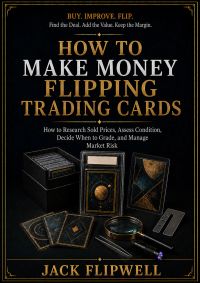
How to Make Money Flipping Trading Cards - How to Research Sold Prices, Assess Condition, Decide When to Grade, and Manage Market RiskJACK FLIPWELL8h 33m$7.90 · $0.00

The Origin of VertebratesWalter Holbrook Gaskell21h 35m$1 · $0.00

Electric Bells and All About Them: A Practical Book for Practical MenSelimo Romeo Bottone2h 42m4.3 (11)$2 · $0.00
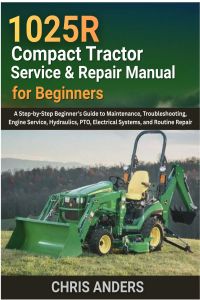
1025R Compact Tractor Service & Repair Manual for BeginnersChris Anders4h 16m$9.50 · $0.00

A Concise Dictionary of Middle English from A.D. 1150 to 1580Walter W. Skeat, A. L. Mayhew24h 48m3.2 (28)$1 · $0.00

Gout, with a section on ocular disease in the goutyLlewellyn J. Llewellyn20h 5m$2 · $0.00

On a Dynamical Top, for exhibiting the phenomena of the motion of a system of invariable form about a fixed point, with some suggestions as to the Earth's motionJames Clerk Maxwell36m$2 · $0.00
Primes to One TrillionVarious11m4.3 (23)$1 · $0.00
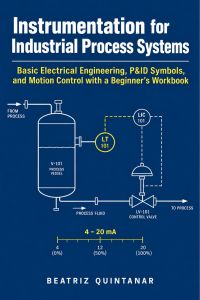
Instrumentation for Industrial Process SystemsBeatriz Quintanar13h 2m$75

Flexible Budgeting EssentialsLuna Z. Rainstorm7h 20m$6.30 · $0.00

Capital: The Process of Circulation of Capital (Annotated)Karl Marx23h 39m4.3 (18)$2 · $0.00

Simple Physical And ObjectivePaulo Byron Oliveira Soares Neto4h 30m$5 · $0.00

The Source and Mode of Solar Energy Throughout the UniverseIsaac W. Heysinger10h 11m$1 · $0.00