
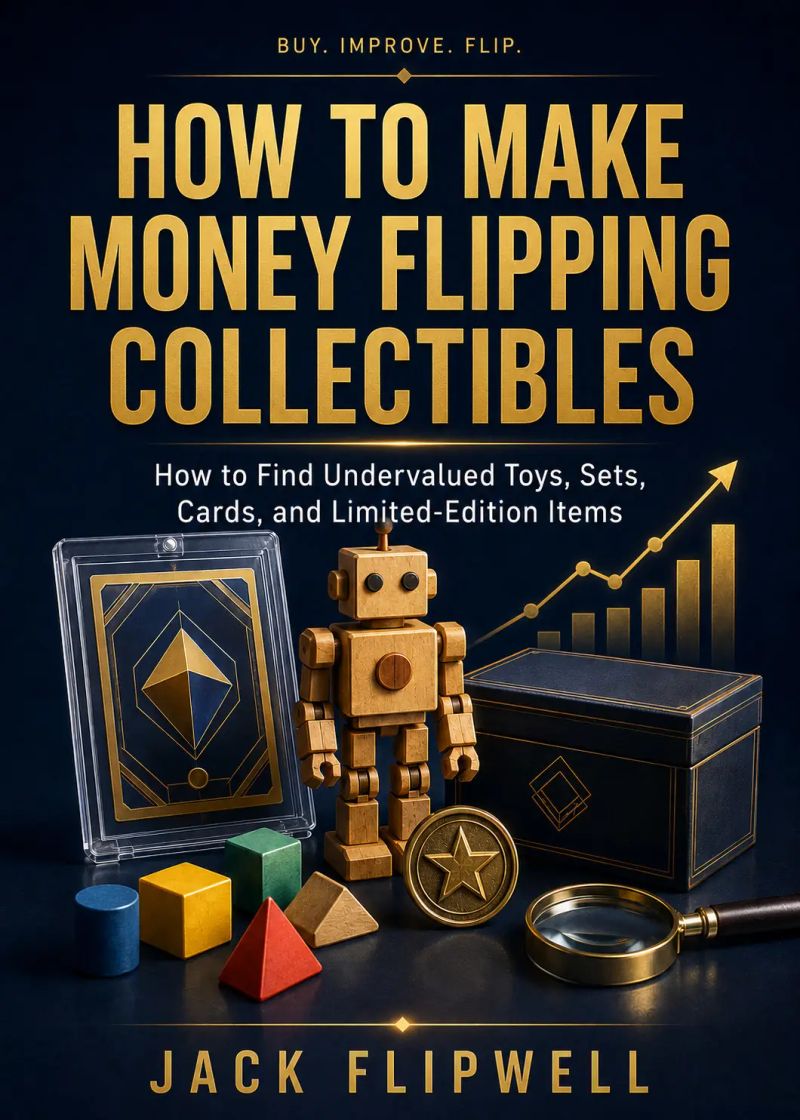
How to Make Money Flipping Collectibles - How to Find Undervalued Toys, Sets, Cards, and Limited-Edition Items
By JACK FLIPWELL

Length6h 29m
About this audiobook
A forgotten figure, old construction set, trading card, comic, game, or limited-edition item can sometimes be worth far more than the seller realizes. The difficult part is knowing when you have found a real opportunity and when you are simply looking at an overpriced, incomplete, counterfeit, or slow-moving collectible. How to Make Money Flipping Collectibles is a practical guide to buying undervalued collectible items and reselling them with a margin based on research, discipline, and process rather than hype.
Jack Flipwell explains how to choose a niche without trying to become an expert in every collectible category at once. The book covers toys, construction sets, trading cards, sports cards, figures, games, comics, promotional products, and limited releases while showing how each market creates different risks and pricing factors. You will learn why specialization makes identification faster, how to recognize the details buyers actually pay for, and why rarity alone is never enough to create value.
A major part of the book focuses on valuation. Asking prices can create a false impression of opportunity, especially when sellers copy unrealistic numbers from one another. You will learn to use actual completed transactions, compare truly similar examples, separate quick-sale value from patient retail value, and account for condition, packaging, variants, completeness, and sale frequency. The goal is to stop buying simply because something looks cheap and start buying because the numbers support a realistic exit.
Authenticity receives the attention it deserves because valuable collectible markets attract counterfeits, replacement components, copied labels, resealed packaging, fake certificates, and altered products. The book explains how to use reliable reference material, evaluate provenance, identify warning signs, and understand when professional authentication may make economic sense. It does not teach methods for defeating anti-counterfeit systems, recreating factory seals, falsifying provenance, or disguising altered products.
You will also learn how condition changes value. A small accessory can represent a meaningful percentage of a figure's price, one rare minifigure can transform the economics of a construction set, and minor card or comic defects can create large price differences. The book shows how to separate product condition from packaging condition, verify completeness, identify variants, and avoid paying premium prices for the wrong edition.
Sourcing goes far beyond obvious marketplace searches. You will learn how online platforms, local classifieds, specialist groups, conventions, auctions, garage sales, flea markets, estate clearances, and direct collection purchases create different opportunities. The book explains why weakly described listings can contain value, how to search broadly without guessing, and how relationships with repeat sellers can eventually become more valuable than one-off bargains.
Large collection purchases receive a dedicated treatment because their economics differ from individual flips. You will learn how to separate high-value items, mid-tier inventory, bulk, and weak stock instead of adding optimistic retail prices together. The book explains how to estimate labor, storage, liquidity, and capital recovery before committing to a large purchase and how to decide when parting out, bundling, or wholesale liquidation produces the stronger result.
Adding value in collectibles often means doing less, not more. Aggressive restoration, polishing, sticker removal, chemical cleaning, or attempts to reverse natural aging can reduce collector value permanently. The book covers conservative cleaning, preservation, and storage, including protection from light, humidity, pressure, odors, pests, and unnecessary handling. Proper preservation protects the condition you paid for while inventory waits to sell.
The selling process is equally practical. You will learn how to photograph collectibles as evidence as well as advertising, document flaws, show packaging and accessories, write accurate titles, and create descriptions that reduce uncertainty. Instead of relying on words such as "rare" or "perfect," the book shows how to communicate the facts that experienced buyers actually use when deciding whether a product deserves its price.
This publication was prepared with the assistance of tools that support the creative process, including artificial intelligence-based solutions. The final concept, structure, and editing belong to the author.
Audiobook details
GenreBusiness and Economics
Length6 hrs 29 mins
Narrated byListen with 1,000+ voices
FormateBook with Audio
Publish dateSep 24, 2026
LanguageEnglish
Table of contents
1INTRO
2Chapter 1 - Choose a Niche Before You Start Buying
3Chapter 2 - How to Determine What a Collectible Is Really Worth
4Chapter 3 - Authenticity, Provenance, and Counterfeits
5Chapter 4 - Condition, Completeness, Packaging, and Variants
Show all chaptersShow less
6Chapter 5 - Where to Find Real Buying Opportunities
7Chapter 6 - Buying Entire Collections, Sets, and Large Lots
8Chapter 7 - Cleaning, Preservation, and Storage Without Destroying Value
9Chapter 8 - Photos and Descriptions That Build Trust and Sell
10Chapter 9 - Seasonality, Pop Culture, Reprints, and Timing the Sale
11Chapter 10 - Full Transaction Cost and the Margin You Actually Keep
12Chapter 11 - Packing, Shipping, and Insuring Valuable Collectibles
13Chapter 12 - Returns, Claims, Disputes, and Protecting the Business From Expensive Problems
14Chapter 13 - Red Flags When Buying and Selling
15Chapter 14 - Aging Inventory and Knowing When to Exit a Bad Purchase
16Chapter 15 - Metrics That Show Whether You Are Actually Making Money
17Chapter 16 - Scaling Without Losing Control
18Chapter 17 - Negotiation That Protects Margin and Relationships
19Chapter 18 - Risk Management and Building a Resilient Inventory Portfolio
20Chapter 19 - From Individual Deals to a Repeatable System
21Chapter 20 - Your First 30 Days

Jak zarabiać na odnawianiu i sprzedaży mebli - Jak zamieniać tanie i zapomniane przedmioty w produkty, które ludzie chcą kupowaćJACK FLIPWELL4h 49m$7.70 · $0.00
How to Make Money Flipping Watches - How to Spot Valuable Models, Avoid Fakes, and Resell with ConfidenceJACK FLIPWELL5h 45m$7.70 · $0.00
How to Make Money Flipping Used Cars - A Beginner's Guide to Finding Deals, Estimating Costs, and Selling Safely for ProfitJACK FLIPWELL4h 24m$7.70 · $0.00

Jak zarabiać na ubraniach z drugiej ręki - Jak wyszukiwać, fotografować, wyceniać i sprzedawać używaną modę w internecieJACK FLIPWELL4h 49m$7.70 · $0.00

Jak zarabiać na przedmiotach kolekcjonerskich - Jak znajdować niedoszacowane zabawki, zestawy, karty i limitowane przedmiotyJACK FLIPWELL5h 5m$7.70 · $0.00

Jak zarabiać na kupowaniu i sprzedaży zegarków - Jak rozpoznawać wartościowe modele, unikać podróbek i sprzedawać z odpowiednią marżąJACK FLIPWELL4h 56m$7.70 · $0.00
How to Make Money Flipping iPhones - A Practical Guide to Buying Below Market Value, Spotting Defects, and Reselling for ProfitJACK FLIPWELL5h 17m$7.70 · $0.00

Jak zarabiać na kupnie, odnawianiu i sprzedaży łodzi - Jak oceniać kadłub, silnik i instalacje, kontrolować koszty renowacji oraz sprzedawać w sezonieJACK FLIPWELL2h 7m$7.70 · $0.00

How to Make Money Flipping Boats - How to Assess Hulls, Engines, and Systems, Control Renovation Costs, and Sell in SeasonJACK FLIPWELL2h 1m$7.70 · $0.00

Jak zarabiać na kupnie, odnawianiu i sprzedaży kamperów oraz przyczep kempingowych - Jak oceniać konstrukcję i instalacje, planować opłacalne renowacje oraz bezpiecznie sprzedawaćJACK FLIPWELL2h 5m$7.70 · $0.00

How to Make Money Flipping Motorhomes and Travel Trailers - How to Assess Structure and Systems, Plan Profitable Renovations, and Resell SafelyJACK FLIPWELL2h 2m$7.70 · $0.00
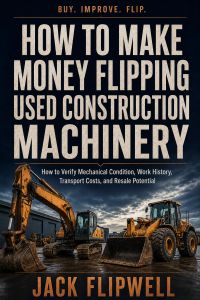
How to Make Money Flipping Used Construction Machinery - How to Verify Mechanical Condition, Work History, Transport Costs, and Resale PotentialJACK FLIPWELL2h 5m$7.70 · $0.00

How to Make Money Flipping Motorcycles and Scooters - How to Assess Mechanical Condition, Estimate Repair Costs, Manage Risk, and Resell for ProfitJACK FLIPWELL8h 9m$7.70 · $0.00

Jak zarabiać na kupnie, naprawie i sprzedaży motocykli oraz skuterów - Jak oceniać stan techniczny, szacować koszty napraw, ograniczać ryzyko i sprzedawać z zyskiemJACK FLIPWELL7h 58m$7.70 · $0.00

Jak zarabiać na kupnie i sprzedaży używanych maszyn budowlanych - Jak weryfikować stan techniczny, historię pracy, koszty transportu i potencjał odsprzedażyJACK FLIPWELL2h 5m$7.70 · $0.00

Jak zarabiać na kupnie i sprzedaży używanych książek - Jak rozpoznawać wartościowe wydania, oceniać stan, tworzyć opłacalne zestawy i sprzedawać właściwym czytelnikomJACK FLIPWELL8h 32m$7.70 · $0.00
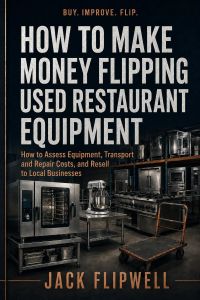
How to Make Money Flipping Used Restaurant Equipment - How to Assess Equipment, Transport and Repair Costs, and Resell to Local BusinessesJACK FLIPWELL1h 57m$7.70 · $0.00

Jak zarabiać na kupnie i sprzedaży używanego wyposażenia gastronomicznego - Jak oceniać urządzenia, koszty transportu i napraw oraz sprzedawać wyposażenie lokalnym firmomJACK FLIPWELL2h$7.70 · $0.00

Jak zarabiać na kupnie i sprzedaży sprzętu turystycznego oraz kempingowego - Jak wybierać markowy ekwipunek, sprawdzać jego stan, kompletować zestawy i wykorzystywać sezonowy popytJACK FLIPWELL8h 24m$7.80 · $0.00
Never Split the DifferenceChris Voss, Tahl Raz8h 7m4.4 (277.7K)$26 · $0.00
The Intelligent Investor Rev Ed.Benjamin Graham17h 48m4.3 (191.5K)$40 · $0.00
The Hard Thing About Hard ThingsBen Horowitz7h 57m4.2 (134.3K)$26 · $0.00
Boundaries for LeadersHenry Cloud7h 36m4.3 (3.6K)$26 · $0.00

Not Everything Counts but Everything Matters: The powerful and inspirational new book about leadership and achieving success from the visionary multi-premiership winning Panthers coachIvan Cleary6h 1m4.6 (680)$24 · $0.00
BuildTony Fadell11h 5m4.5 (14.3K)$8 · $0.00

The Joys Of CompoundingGautam Baid17h 34m4.5 (2.5K)$18 · $0.00
Basic EconomicsThomas Sowell18h 32m4.5 (29.3K)$28 · $0.00

Poor Charlie’s AlmanackGrover Gardener, Charles T. Munger13h 9m4.5 (24.7K)$18 · $0.00

The Ambuja StoryNarotam Sekhsaria13h 59m4.5 (830)$33 · $0.00

The Secret Door to SuccessFlorence Scovel Shinn2h 25m4.5 (2.1K)$1.20 · $0.00

This Is Going to HurtAdam Kay5h 47m4.4 (444.7K)$24 · $0.00

Big TrustShadé Zahrai, Fayçal Sekkouah8h 36m4.6 (406)$26 · $0.00
The Intelligent Investor Third EditionBenjamin Graham, Jason Zweig20h4.4 (156.6K)$46 · $0.00

Bottle of LiesKatherine Eban14h 25m4.4 (12K)$33 · $0.00

The Antiracist Business BookTrudi Lebrón6h 10m4.6 (275)$17 · $0.00
The FormulaJoshua Robinson, Jonathan Clegg10h 41m4.4 (6.9K)$29 · $0.00
Let Them LeadJohn U. Bacon7h 10m4.5 (1.4K)$24 · $0.00

Secrets of the Millionaire MindT. Harv Eker5h 11m4.4 (301.4K)$24 · $0.00

The Person You Mean to BeDolly Chugh9h 6m4.4 (7.2K)$29 · $0.00
You may also like
THE THEORY OF THE LEISURE CLASS: An Economic Study of American Institutions and a Social Critique of Conspicuous Consumption (Annotated)Thorstein Veblen12h 58m4.4 (1K)$1.99 · $0.00

The World as Will and Idea (Vol. 1 of 3)Arthur Schopenhauer20h 17m4.4 (519)$2.30

An Enquiry Concerning Human UnderstandingDavid Hume5h 59m4.1 (29.2K)$2.30

An Enquiry Concerning Human UnderstandingDavid Hume7h 23m4.1 (24.2K)$1 · $0.00
Democracy and Education An Introduction to the Philosophy of EducationJohn Dewey15h 33m4.1 (4K)$2.30
The Art of Logical Thinking, or, The Laws of ReasoningWilliam Walker Atkinson3h 50m4.0 (287)$2.30

Blackboard DrawingFrederick Whitney25m4.2 (51)$2 · $0.00

Ultimate Customer ServiceMade for Success8h 9m4.2 (46)$20
Business & Economics Collection: Thorstein Veblen Edition (30+ Works in One Volume)Thorstein Veblen91h 26m4.5 (11)$2 · $0.00

Sell to Anyone!Zig Ziglar, Brian Tracy3h 13m4.2 (20)$20

A Book of PrefacesH. L. Mencken7h 33m3.8 (67)$2 · $0.00

Leibniz's New Essays Concerning the Human Understanding: A Critical ExpositionJohn Dewey8h 57m3.9 (24)$1 · $0.00

How to Write a Novel: A Practical Guide to the Art of FictionAnonymous3h 5m3.6 (65)$2 · $0.00
Public Speaking SuperstarMade for Success7h 25m3.6 (72)$30

CEO Communication SkillsMade for Success8h 59m3.8 (28)$20

Why Women BuyDawn Jones3h 54m3.5 (62)$20

The Return-to-Office PlaybookImad Muratspahic4h 6m$13 · $0.00
Profits, Prophets, Coaches, and KingsJared Diamond9h 59m$29 · $0.00

Navigating Towards Professional SuccessEdivaldo Ascaneo34m$6 · $0.00

Mediation in state courtsFlávia Maria Aires Freire Allemão5h 20m$12 · $0.00