
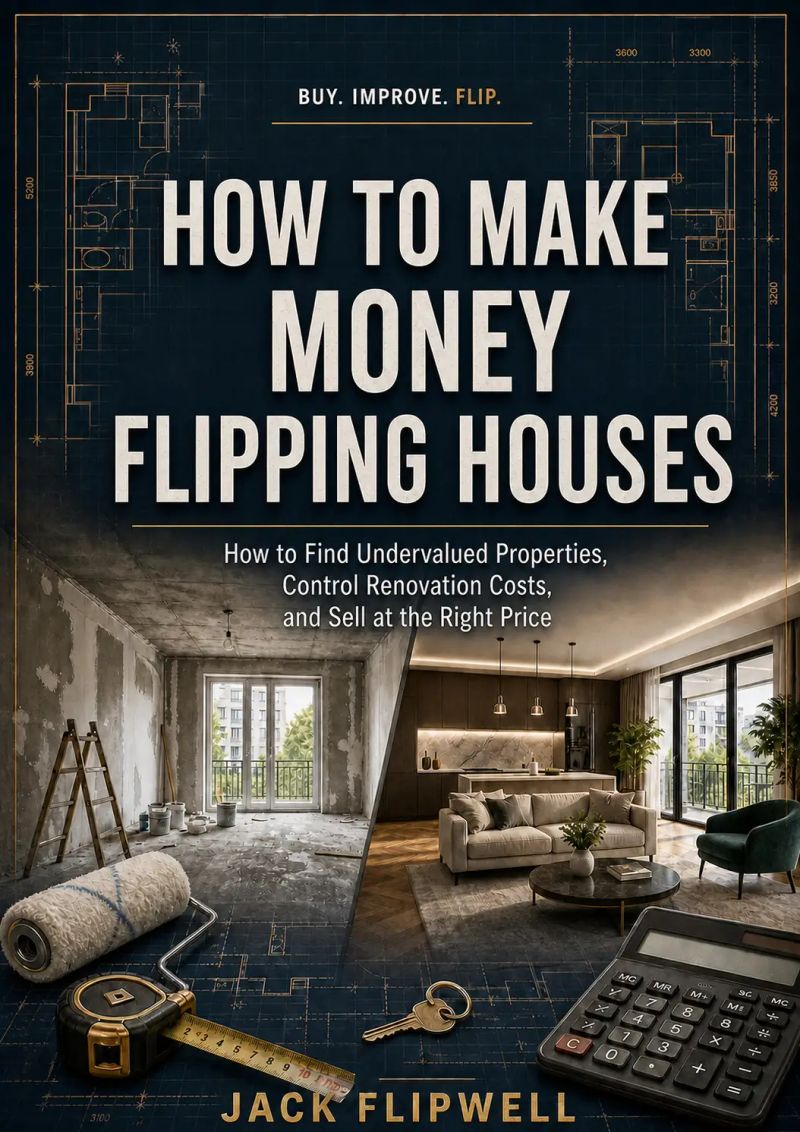
How to Make Money Flipping Houses - How to Find Undervalued Properties, Control Renovation Costs, and Sell at the Right Price
By JACK FLIPWELL


Length4h 30m
About this audiobook
House flipping looks simple when reduced to three numbers: buy price, renovation cost, and resale price. Real profit is rarely that simple.
A property can look like a great deal and still become a poor investment after closing costs, financing, contractor overruns, taxes, insurance, utilities, selling expenses, and months of holding costs are included. A beautiful renovation cannot rescue an acquisition that was too expensive from the beginning.
How to Make Money Flipping Houses is a practical guide to approaching property flips as an investment business rather than a gamble on rising prices.
JACK FLIPWELL takes you through the complete process, from finding an undervalued property and calculating the maximum price you can safely pay to controlling renovation costs, preparing the finished property for market, negotiating with buyers, and measuring the real return after the deal closes.
You will learn why the profit on a flip is often created at the moment of purchase. Instead of asking whether a property looks cheap, you will learn to ask whether the purchase price leaves enough room for renovation, financing, transaction costs, contingencies, selling costs, and an acceptable profit.
The book explains how to build realistic resale estimates using comparable properties, local demand, building quality, layout, buyer behavior, and total price. You will learn to create base, cautious, and downside scenarios rather than relying on one optimistic resale number.
You will also learn how to distinguish a genuinely undervalued property from one that is simply cheap for a good reason. Poor photographs, dated interiors, inefficient layouts, seller timing, and fixable cosmetic problems can create opportunities. Legal complications, permanent location weaknesses, structural issues, and difficult financing can create expensive traps.
Renovation is treated as capital allocation, not interior decoration.
The book shows you how to break renovation costs into labor, materials, demolition, disposal, kitchens, bathrooms, mechanical work, flooring, lighting, cleaning, staging, and contingency. You will learn why a cost-per-square-foot estimate is useful for early screening but dangerous as a final budget, how to control change orders, and how to calculate the forecast cost to complete while work is still underway.
You will also learn how to choose the right finish level for the target buyer without over-improving the property. The most expensive materials do not automatically produce the highest return. A successful flip needs the right combination of appearance, durability, functionality, buyer expectations, and cost.
The sales process receives the same level of attention. You will learn how to prepare the property for photography and viewings, create an effective listing, establish an asking price and realistic transaction target, and calculate the cost of waiting for a higher offer.
Instead of treating every buyer request as a reason to discount, you will learn to evaluate offers as complete economic packages. Price, financing, conditions, closing probability, possession timing, included items, and holding costs all affect the real result.
The book also addresses areas that are often ignored until something goes wrong: liquidity, leverage, documentation, taxes, legal risk, financing terms, and contingency planning. You will learn why a profitable project can still fail if you run out of cash, how to maintain separate renovation and liquidity reserves, and how to stress-test the deal for a lower sale price, higher construction cost, and longer holding period.
Legal and tax guidance is presented as a decision framework rather than individualized advice. The book explains which issues should trigger professional review, why current local rules must always be verified, and how proper documentation protects both the economics and defensibility of the project.
You will also learn what to do when the original plan stops working. Contractor failure, hidden defects, renovation overruns, weak buyer demand, delayed financing, and falling market prices do not automatically destroy a flip. They become dangerous when the investor has no reserve, no alternative, and no predefined decision process.
Artificial intelligence tools were used as part of the editorial development process, including support with organization, structure, and refinement of the manuscript. The material was developed and prepared to provide practical educational value to readers. Legal, tax, financing, and real estate market information is general in nature and should not be treated as individualized professional advice. Readers should verify current laws, taxes, lending conditions, market practices, and regulatory requirements in the relevant jurisdiction and consult qualified professionals when appropriate.
Audiobook details
GenreBusiness and Economics
Length4 hrs 30 mins
Narrated byListen with 1,000+ voices
FormateBook with Audio
Publish dateSep 24, 2026
LanguageEnglish
Table of contents
1How to Make Money Flipping Houses
2INTRO
3Chapter 1 - Where the Profit in a Flip Is Really Made
4Chapter 2 - How to Read a Local Market and Find Undervalued Properties
5Chapter 3 - How to Inspect a Property Before You Buy and Avoid Inheriting Someone Else's Problem
Show all chaptersShow less
6Chapter 4 - How to Estimate Renovation Costs Before the Renovation Starts Estimating You
7Chapter 5 - How to Negotiate the Purchase Without Giving Away Your Margin
8Chapter 6 - How to Run the Renovation Without Losing Control of Time or Budget
9Chapter 7 - How to Choose the Right Finish Level for the Buyer Without Overspending
10Chapter 8 - How to Prepare the Property for Sale Without Wasting a Good Renovation
11Chapter 9 - How to Set the Sale Price Without Getting Stuck on the Market
12Chapter 10 - How to Run Viewings and Negotiate With Buyers Without Giving Away the Profit
13Chapter 11 - How to Control Legal, Tax, and Documentation Risk Without Pretending to Be a Lawyer
14Chapter 12 - How to Finance a Flip Without Running Out of Cash Before the Sale
15Chapter 13 - How to Measure the Real Profit on a Flip
16Chapter 14 - What to Do When the Flip Stops Going According to Plan
17Chapter 15 - How to Build a Repeatable System for Finding and Screening Flips
18Chapter 16 - How to Scale Flips Without Turning the Business Into Chaos
19Chapter 17 - How to Build an Advantage That Cannot Be Copied With One Renovation
20Chapter 18 - How to Prepare for a Weaker Market and Still Buy Intelligently
21Chapter 19 - How to Build Your Own Decision Model and Buy Only When the Numbers Work
22Chapter 20 - From the First Flip to a Repeatable Business
How to Make Money Reselling Clothes - How to Source, Photograph, Price, and Sell Secondhand Fashion OnlineJACK FLIPWELL5h 4m$7.70 · $0.00

Jak zarabiać na samochodach używanych - Jak znajdować okazje, szacować koszty i bezpiecznie sprzedawać auta z zyskiemJACK FLIPWELL4h 45m$7.70 · $0.00

Jak zarabiać na odsprzedaży iPhone’ów - Jak kupować poniżej ceny rynkowej, wykrywać wady i sprzedawać z zyskiemJACK FLIPWELL5h 30m$7.70 · $0.00

Jak zarabiać na flipach mieszkaniowych - Jak znajdować niedoszacowane nieruchomości, kontrolować koszty remontu i sprzedawać we właściwej cenieJACK FLIPWELL4h 54m$7.70 · $0.00

Jak zarabiać na używanej elektronice - Jak kupować, testować, wyceniać i sprzedawać smartfony, laptopy, tablety oraz konsoleJACK FLIPWELL5h4.7 (12)$7.70 · $0.00
How to Make Money Flipping Furniture - Turn Cheap and Forgotten Pieces into Products Buyers WantJACK FLIPWELL4h 26m$7.70 · $0.00
How to Make Money Flipping Almost Anything - A Complete System for Finding Deals, Calculating Margins, and Building Repeatable IncomeJACK FLIPWELL5h 57m$7.70 · $0.00

Jak zarabiać na odsprzedaży sneakersów - Przewodnik po wyszukiwaniu okazji, sprawdzaniu autentyczności i dochodowej sprzedażyJACK FLIPWELL4h 32m$7.70 · $0.00

How to Make Money Flipping Used Electronics - How to Buy, Test, Price, and Resell Phones, Laptops, Tablets, and Game ConsolesJACK FLIPWELL4h 22m$7.70 · $0.00

Jak zarabiać na odsprzedaży niemal wszystkiego - Kompletny system wyszukiwania okazji, obliczania marży i budowania powtarzalnego dochoduJACK FLIPWELL5h 29m$7.70 · $0.00

Jak zarabiać na odnawianiu i sprzedaży mebli - Jak zamieniać tanie i zapomniane przedmioty w produkty, które ludzie chcą kupowaćJACK FLIPWELL4h 49m$7.70 · $0.00

How to Make Money Flipping Watches - How to Spot Valuable Models, Avoid Fakes, and Resell with ConfidenceJACK FLIPWELL5h 45m$7.70 · $0.00
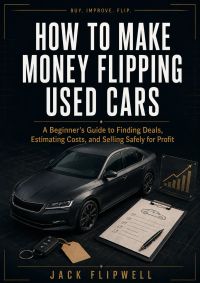
How to Make Money Flipping Used Cars - A Beginner's Guide to Finding Deals, Estimating Costs, and Selling Safely for ProfitJACK FLIPWELL4h 24m$7.70 · $0.00

Jak zarabiać na ubraniach z drugiej ręki - Jak wyszukiwać, fotografować, wyceniać i sprzedawać używaną modę w internecieJACK FLIPWELL4h 49m$7.70 · $0.00

How to Make Money Flipping Collectibles - How to Find Undervalued Toys, Sets, Cards, and Limited-Edition ItemsJACK FLIPWELL6h 30m$7.70 · $0.00

Jak zarabiać na przedmiotach kolekcjonerskich - Jak znajdować niedoszacowane zabawki, zestawy, karty i limitowane przedmiotyJACK FLIPWELL5h 5m$7.70 · $0.00

Jak zarabiać na kupowaniu i sprzedaży zegarków - Jak rozpoznawać wartościowe modele, unikać podróbek i sprzedawać z odpowiednią marżąJACK FLIPWELL4h 56m$7.70 · $0.00
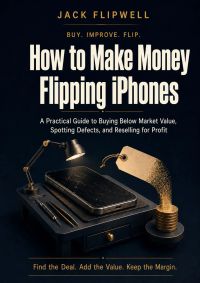
How to Make Money Flipping iPhones - A Practical Guide to Buying Below Market Value, Spotting Defects, and Reselling for ProfitJACK FLIPWELL5h 17m$7.70 · $0.00

Jak zarabiać na kupnie, odnawianiu i sprzedaży łodzi - Jak oceniać kadłub, silnik i instalacje, kontrolować koszty renowacji oraz sprzedawać w sezonieJACK FLIPWELL2h 7m$7.70 · $0.00
Never Split the DifferenceChris Voss, Tahl Raz8h 7m4.4 (277.7K)$26 · $0.00
The Intelligent Investor Rev Ed.Benjamin Graham17h 48m4.3 (191.5K)$40 · $0.00
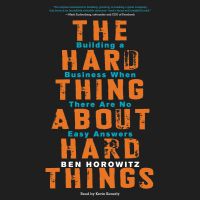
The Hard Thing About Hard ThingsBen Horowitz7h 57m4.2 (134.3K)$26 · $0.00

Boundaries for LeadersHenry Cloud7h 36m4.3 (3.6K)$26 · $0.00

Not Everything Counts but Everything Matters: The powerful and inspirational new book about leadership and achieving success from the visionary multi-premiership winning Panthers coachIvan Cleary6h 1m4.6 (680)$24 · $0.00
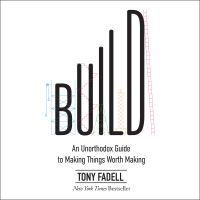
BuildTony Fadell11h 5m4.5 (14.3K)$8 · $0.00
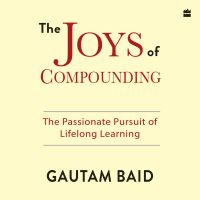
The Joys Of CompoundingGautam Baid17h 34m4.5 (2.5K)$18 · $0.00
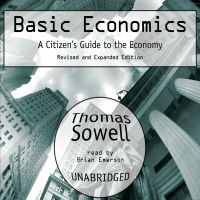
Basic EconomicsThomas Sowell18h 32m4.5 (29.3K)$28 · $0.00

Poor Charlie’s AlmanackGrover Gardener, Charles T. Munger13h 9m4.5 (24.7K)$18 · $0.00

The Ambuja StoryNarotam Sekhsaria13h 59m4.5 (830)$33 · $0.00

The Secret Door to SuccessFlorence Scovel Shinn2h 25m4.5 (2.1K)$1.20 · $0.00

This Is Going to HurtAdam Kay5h 47m4.4 (444.7K)$24 · $0.00

Big TrustShadé Zahrai, Fayçal Sekkouah8h 36m4.6 (406)$26 · $0.00
The Intelligent Investor Third EditionBenjamin Graham, Jason Zweig20h4.4 (156.6K)$46 · $0.00

Bottle of LiesKatherine Eban14h 25m4.4 (12K)$33 · $0.00

The Antiracist Business BookTrudi Lebrón6h 10m4.6 (275)$17 · $0.00

The FormulaJoshua Robinson, Jonathan Clegg10h 41m4.4 (6.9K)$29 · $0.00

Let Them LeadJohn U. Bacon7h 10m4.5 (1.4K)$24 · $0.00

Secrets of the Millionaire MindT. Harv Eker5h 11m4.4 (301.4K)$24 · $0.00

The Person You Mean to BeDolly Chugh9h 6m4.4 (7.2K)$29 · $0.00
You may also like

The CategoriesAristotle1h 36m4.0 (2.2K)$1.80 · $0.00

The Art of Horse-Shoeing: A Manual for FarriersWilliam Hunting2h 58m4.6 (33)$1.50 · $0.00
Drawing Dogs. Practical guide to drawing dogsRoberto Fabbretti14m4.4 (12)$10 · $0.00

The Value of MoneyBenjamin M. Anderson18h 6m4.1 (21)$1 · $0.00

Ohio RBT Certification Exam Prep 2026/2027Mireille Oyelaran16h 5m$22
How to Make Money Flipping Almost Anything - A Complete System for Finding Deals, Calculating Margins, and Building Repeatable IncomeJACK FLIPWELL5h 57m$7.70 · $0.00

Tax Strategies for High-Income Earners 2027Imad Muratspahic3h 37m$9 · $0.00
Bookkeeping for BeginnersImad Muratspahic4h 36m$7.90 · $0.00

Silk Road: The Complete History of the Ancient Trade Route That Connected East and West (A Historical Adventure for Kids Exploring Ancient Trade Routes, Cultures, and Civilizations)Douglas Boehm3h 45m$3.40 · $0.00
List Building BasicsAnthony Ekanem19m$4 · $0.00

Inventions of the Past: 44 Books Reflecting on Centuries of Technological InnovationsJames P. Boyd, Henry White Warren, A. Russell Bond, Hattie E. Macomber, Ray Stannard Baker, S. E. Forman, Willis Duff Piercy, M. Grace Fickett, Gertrude L. Stone, Archibald Williams, Derek J. de Solla Price, Russell Doubleday, Henry Bore, John H. White, American Railway Association, John Kimberly Mumford, Edwin A. Battison, Samuel Smiles, Harry E. Maule, Arthur May Mowry, William A. Mowry, Henry E. Baker, Rupert Sargent Holland, Abraham Lincoln, H. W. L. Hime, Henry Robinson, Edward W. Byrn, Grace Rogers Cooper, George Iles, Henry Dircks, Robert Routledge, Helen C. Knight, Theodore Low De Vinne, H. C. Forster, Harry Chase Brearley, Alfred Vail, George Grant, Elmer Ellsworth Burns, Thomas W. Corbin, Paul Severing339h 39m$1.99 · $0.00

Mapping the World: 3 Classic Books on Cartographic TechniquesJoseph Harris, Ida Cassa Heffron, G. R. Putnam12h 15m$1.99 · $0.00

Astronomy: The Universe, Solar System & Earth (A Beginner's Guide to Telescopes, Eyepieces and Accessories for Visual Astronomy)Kelvin Hernandez2h 28m$3.50 · $0.00

Disc GolfHarper B. Montgomery3h 21m$2.30 · $0.00

Whiskey WondersChef Emilia Santos5h 11m$6.40 · $0.00

The Fireless Cook Book (Annotated)Margaret Johnes Mitchell7h 35m$2 · $0.00

Understanding Soccer: A Guide to Playing, Watching, and Enjoying the Beautiful GameTavin D. Spicer4h 10m$3.50 · $0.00

AP Computer Science A Exam Study GuideMarie Peterson7h 6m$10

Art in EuropeVictoria Charles5h 18m$15 · $0.00

What Even Is an APIFlorence Larkin7h$5 · $0.00