
Existentialism
A Note on the Philosophical SchoolBy Pons Malleus

Length3h 32m
About this audiobook
Existentialism is not merely a philosophical doctrine but a living, breathing confrontation with what it means to be human. It is a call to face the raw realities of existence—freedom, responsibility, anxiety, alienation, and ultimately, death—without retreating into comforting illusions. This book is born out of that call: to explore, unpack, and wrestle with the core ideas of existentialist thought, not from the distance of academic abstraction, but from within the very questions that define our lives.
The existentialist tradition is broad, diverse, and sometimes internally contradictory. It includes thinkers as different in style and emphasis as Søren Kierkegaard, Friedrich Nietzsche, Jean-Paul Sartre, Simone de Beauvoir, Albert Camus, Martin Heidegger, and Maurice Merleau-Ponty. Some rooted their reflections in theology; others were staunch atheists. Some spoke of absurdity, others of transcendence. But what unites them is a shared concern: the centrality of individual existence in an often indifferent or unknowable universe.
Existentialism arose in a modern world disoriented by the collapse of traditional values, the disintegration of religious authority, the trauma of war, and the alienation of industrial society. It gave voice to a generation asking not "What should I believe?" but "How should I live?" and "Who am I when all the roles and certainties fall away?" These are not questions with definitive answers. They are lived questions—answers are provisional, contingent, and must be earned through experience, not received by doctrine.
This book does not pretend to provide the final word on existentialism. Instead, it aims to guide readers through its major themes and figures, to offer a map for navigating its often challenging terrain. From Kierkegaard's leap of faith and Nietzsche’s proclamation of the death of God, to Sartre’s radical freedom and Camus’s myth of Sisyphus, we will examine how existentialists have approached the problem of meaning in a world where meaning is not given.
Existentialism is sometimes caricatured as dark, nihilistic, or pessimistic. Certainly, it does not flinch from despair. But at its heart, existentialism is profoundly liberating. It tells us that though we are thrown into a world not of our choosing, we are not defined by our circumstances. We are free—and with that freedom comes the burden and the beauty of shaping a life that is authentically our own. In this sense, existentialism is not a philosophy of defeat but one of courage.
As you read, you may find that existentialism doesn’t offer comfort—but it does offer clarity. It asks you to look honestly at yourself and your condition, to resist the seductions of evasion and bad faith, and to take responsibility for the shape of your life. That is its enduring power and its enduring challenge.
Whether you are encountering these ideas for the first time or returning to them with new eyes, I invite you to read this book not only with the intellect but with the whole of your being. Existentialism is not just something to be studied; it is something to be lived.
Audiobook details
GenrePhilosophy, Politics and Government
Length3 hrs 32 mins
Narrated byListen with 1,000+ voices
FormateBook with Audio
Publish dateNov 6, 2025
LanguageEnglish
Table of contents
1EXISTENTIALISM
2Introduction to Existentialism
3Historical Roots and Evolution
4Existence Precedes Essence
5Freedom and Responsibility
Show all chaptersShow less
6Authenticity and Individualism
7Alienation and Absurdity
8The Role of Anxiety and Despair
9Intersections with Other Disciplines
10Critiques and Counterarguments
11Implications and Future Directions
Series

TranscendentalismPons Malleus2h 57m$6
ScholasticismPons Malleus3h$6
SkepticismPons Malleus3h 16m$6
RationalismPons Malleus2h 47m$6
EmpiricismPons Malleus2h 49m$6
StructuralismPons Malleus2h 57m$6
CoherentismPons Malleus3h 1m$6
FoundationalismPons Malleus3h 17m$6
DeterminismPons Malleus3h 29m$6
NaturalismPons Malleus3h 26m$6
PragmatismPons Malleus3h 7m$6
ConstructivismPons Malleus3h 16m$6
Milesian SchoolPons Malleus3h 17m$6
ObjectivismPons Malleus3h 31m$6
EpicureanismPons Malleus3h 17m$6
EleaticismPons Malleus2h 51m$6
NominalismPons Malleus2h 59m$6
Dialectical MaterialismPons Malleus3h 6m$6
French NietzscheanismPons Malleus3h 4m$6
Ionian SchoolPons Malleus3h 1m$6
IlluminationsWalter Benjamin10h 12m4.4 (16.2K)$20 · $0.00
That Bird Has My WingsJarvis Jay Masters9h 49m4.4 (13.7K)$29 · $0.00

Tâo Teh KingLaozi2h 34m4.4 (230.9K)$2 · $0.00

Buddhist Boot CampTimber Hawkeye2h 39m4.4 (8.4K)$18 · $0.00
Enchiridion & The Discourses of Epictetus (Annotated)Arrian Epictetus18h 9m4.4 (3.5K)$2 · $0.00
The Meditations of the Emperor Marcus Aurelius AntoninusEmperor of Rome Marcus Aurelius5h 41m4.4 (1.8M)$1 · $0.00
Crime and PunishmentFyodor Dostoevsky23h 11m4.4 (1.3M)$12 · $0.00

MeditationsMarcus Aurelius5h 52m4.4 (433.7K)$1 · $0.00
Everyday DharmaSuneel Gupta5h 2m4.5 (761)$20 · $0.00
The Joyful Wisdom ("La Gaya Scienza")Friedrich Wilhelm Nietzsche11h 37m4.4 (26.6K)$1 · $0.00
The Art of LivingEpictetus, Sharon Lebell3h 16m4.4 (50.1K)$18 · $0.00

Sadhana: the realisation of lifeRabindranath Tagore3h 49m4.4 (8.6K)$6 · $0.00
SapiensYuval Noah Harari15h 18m4.3 (1.4M)$33 · $0.00
You BelongSebene Selassie8h 35m4.4 (2.7K)$26 · $0.00

The Song Celestial; Or, Bhagavad-Gîtâ (from the Mahâbhârata)Anonymous2h 18m4.4 (3.2K)$2 · $0.00

Chuang Tzu: Mystic, Moralist, and Social ReformerZhuangzi14h 42m4.4 (1.2K)$1 · $0.00

High-RisersBen Austen13h 33m4.4 (2.8K)$33 · $0.00

The Great OmissionDallas Willard7h 45m4.4 (4K)$26 · $0.00

The Grand InquisitorFyodor Dostoyevsky2h 24m4.3 (10.7K)$1 · $0.00
Praying with the PsalmsEugene H. Peterson7h 20m4.5 (312)$24 · $0.00

KrantikariSanjeev Sanyal11h 44m4.6 (1.3K)$16 · $0.00

Unbroken Bonds of BattleJohnny Joey Jones8h 31m4.6 (2.6K)$8 · $0.00

On Democracies and Death CultsDouglas Murray10h 38m4.6 (6.5K)$29 · $0.00

Balcony Over Jerusalem: A Middle East Memoir - Israel, Palestine and BeyondJohn Lyons12h 37m4.6 (1.4K)$33 · $0.00

RiggedMollie Hemingway12h 48m4.6 (4.2K)$23 · $0.00

SledgehammerDavid Friedman8h 21m4.7 (589)$26 · $0.00

Citizenship in a Republic (Annotated)Theodore Roosevelt2h 44m4.6 (1.4K)$2 · $0.00

No EscapeNury Turkel9h 30m4.6 (809)$28 · $0.00

Always FaithfulThomas Schueman, Zainullah Zaki12h 12m4.6 (977)$29 · $0.00

UnthinkableJamie Raskin15h 8m4.5 (9.3K)$8 · $0.00

My Fourth Time, We DrownedSally Hayden13h 59m4.6 (2.9K)$23 · $0.00

A Revolution of Common SenseScott Jennings9h 29m4.6 (528)$29 · $0.00

Statement From the Dock at the Rivonia TrialNelson Mandela2h 18m4.6 (1.3K)$1 · $0.00

Lessons from the EdgeMarie Yovanovitch17h 11m4.5 (5.9K)$40 · $0.00

To Rescue the American SpiritBret Baier10h 12m4.5 (2.7K)$8 · $0.00

StonewalledSharyl Attkisson15h 19m4.5 (4.3K)$33 · $0.00
The World According to Orwell: 1984 & Animal FarmGeorge Orwell15h 42m4.6 (1.1K)$1 · $0.00
Basic EconomicsThomas Sowell18h 32m4.5 (29.3K)$28 · $0.00
To Rescue the RepublicBret Baier, Catherine Whitney11h 42m4.5 (8.6K)$29 · $0.00

Modern WarriorsPete Hegseth7h 10m4.5 (4.7K)$24 · $0.00
You may also like

The Genealogy of MoralsFriedrich Nietzsche5h 43m4.3 (84.3K)$12
The Mystique of Enlightenment (Summarized Edition)U. G. Krishnamurti3h 11m4.4 (349)$2

The World as Will and Idea (Vol. 1-3)Arthur Schopenhauer56h 21m4.3 (2K)$2 · $0.00
Beyond Good and EvilFriedrich Nietzsche8h 10m4.2 (136.2K)$17

Beyond Good and EvilFriedrich Nietzsche7h 5m4.2 (137.8K)$2 · $0.00
All Things are Possible (Annotated)Lev Shestov5h 48m4.1 (325)$2 · $0.00
Fascinate, Revised and UpdatedSally Hogshead7h 40m4.1 (1.1K)$26 · $0.00
EXPERIENCE AND EDUCATION – Premium Edition (Including Democracy & Education) (Annotated)John Dewey19h 17m4.6 (1K)$2 · $0.00
The Critique of Practical ReasonImmanuel Kant8h 18m4.1 (13.8K)$2 · $0.00
An Essay Concerning Humane UnderstandingJohn Locke29h 19m4.0 (13.6K)$2 · $0.00

Mr. Bennett and Mrs. BrownVirginia Woolf50m4.2 (850)$2 · $0.00

Kant's Three CritiquesImmanuel Kant47h 6m4.3 (1.3K)$2 · $0.00

Styles of Radical WillSusan Sontag10h4.1 (4.8K)$20 · $0.00
The Essays of Arthur Schopenhauer; The Art of LiteratureArthur Schopenhauer4h 1m4.1 (1.6K)$2.30
OrthodoxyG. K. Chesterton5h 42m4.3 (55.7K)$2.30 · $0.00
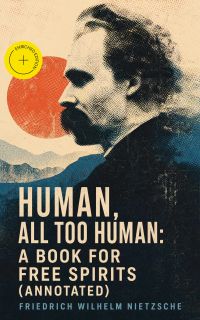
Human, All Too Human: A Book for Free Spirits (Annotated)Friedrich Wilhelm Nietzsche5h 45m4.2 (29.4K)$2 · $0.00
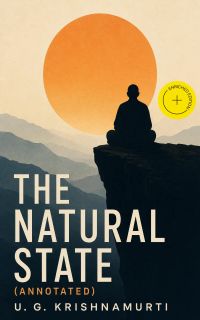
The Natural State (Annotated)U. G. Krishnamurti8h 55m4.3 (364)$2 · $0.00

How to Talk about Books You Haven’t ReadPierre Bayard4h 29m3.5 (6.9K)$12 · $0.00

EssaysGeorge Orwell26h 38m4.5 (8.4K)$4 · $0.00
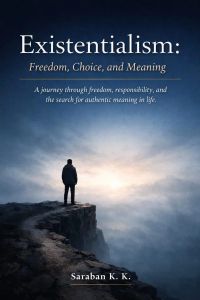
Existentialism: Freedom, Choice, and MeaningSaraban K. K.1h 44m5.0 (7) Only with Ultra