About this audiobook
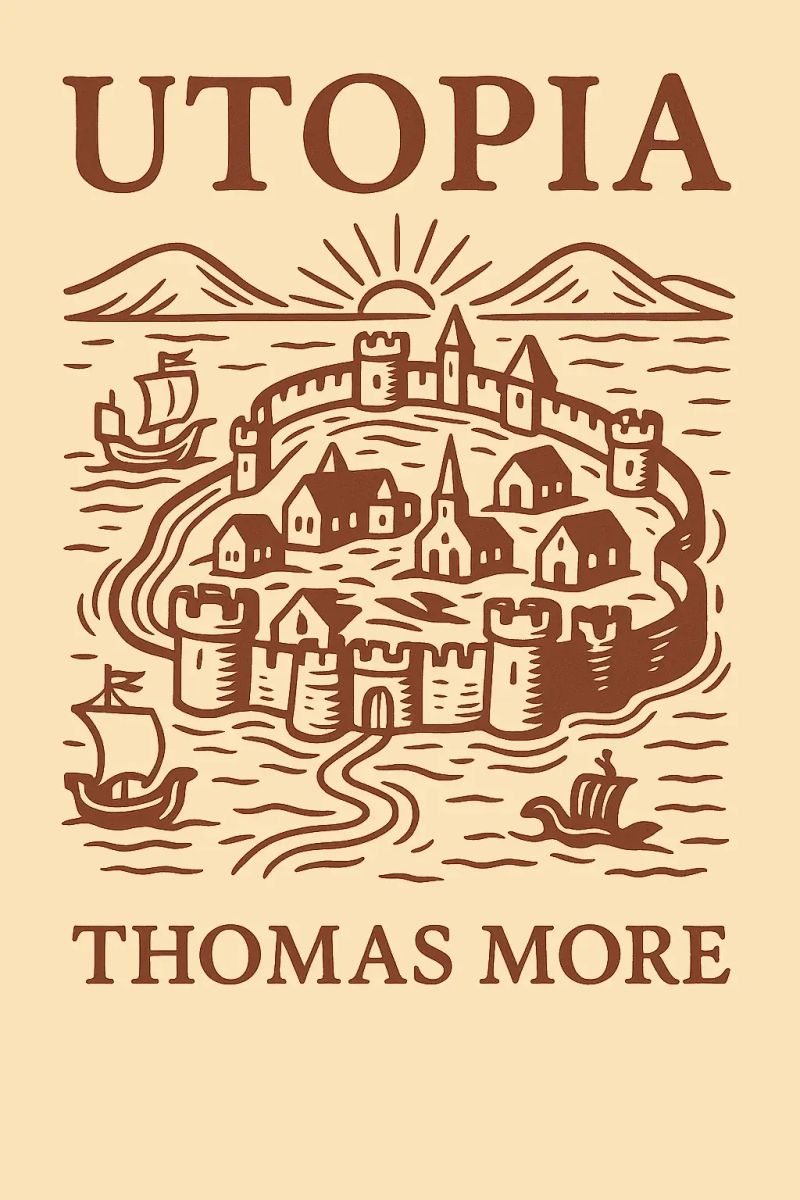
Thomas More’s Utopia, first published in Latin in 1516, emerged during the height of the European Renaissance, a period marked by humanist scholarship, exploration, and debates over political and religious reform. More, an English lawyer, statesman, and noted humanist, was engaged with the intellectual currents of his time, drawing inspiration from classical writers such as Plato while responding to the political realities of early sixteenth-century Europe. The work reflects the era’s fascination with newly discovered lands and the potential they represented for reimagining social and political structures. Written against the backdrop of the turbulent reign of Henry VIII, Utopia also engages with contemporary issues such as the enclosure movement, poverty, and governance, situating More at the intersection of political service and literary-humanist inquiry.
Thematically, Utopia explores ideals of communal life, justice, and the organization of society, employing the framework of a fictional dialogue to contrast the flaws of European states with the imagined practices of an alternative polity. More uses this device both to critique the inequalities and moral failings he observed and to provoke reflection on the feasibility and desirability of radical reform. The book’s influence has been profound, coining the term “utopia” to describe visionary but often unattainable ideals, and inspiring centuries of philosophical, political, and literary thought. More’s life, marked by his eventual opposition to Henry VIII’s break with the Catholic Church and his execution in 1535, has further cemented his reputation as a figure willing to grapple with the tension between moral conviction and political authority.