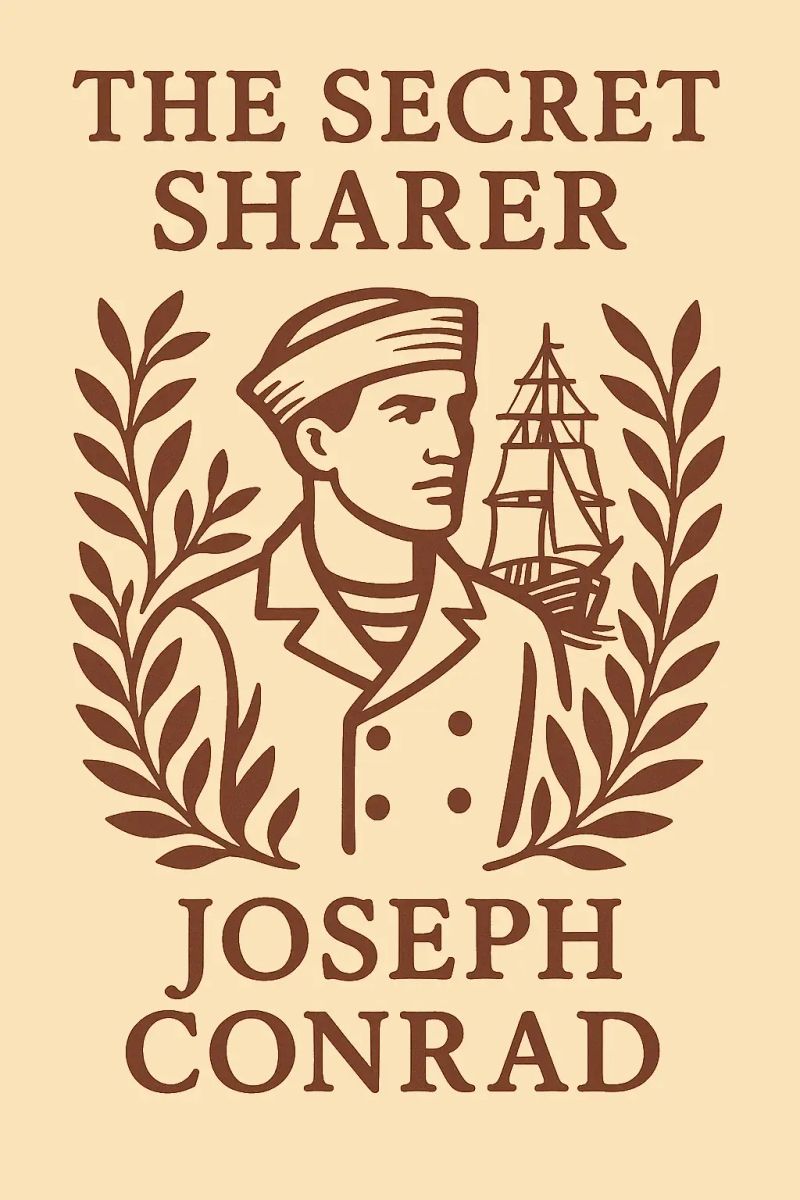
About this audiobook
Joseph Conrad’s The Secret Sharer is a seafaring tale written in English and first published in 1910, during the mature phase of Conrad’s career when his reputation as a major stylist and moral psychologist of fiction was consolidating. Conrad (born Józef Teodor Konrad Korzeniowski in the Polish-speaking borderlands of the Russian Empire) brought to his literary work a professional mariner’s experience in the British merchant service and a multilingual, expatriate sensibility that shaped his distinctive narrative methods. Appearing initially in magazine form before later book publication, the story belongs to the early twentieth-century moment when British modernism was emerging and when the sea narrative, long associated with imperial commerce and adventure, was being refashioned into a vehicle for interiority, ethical ambiguity, and formal experimentation.
Set aboard a ship poised at the outset of a voyage in Southeast Asian waters, the novella stages a concentrated drama of command, self-knowledge, and clandestine complicity as a young captain confronts a double or “secret sharer” who materializes as both practical crisis and psychic mirror. Conrad uses the confined maritime setting to intensify themes of divided identity, the unstable foundations of authority, and the tension between institutional discipline and private moral intuition; the first-person narration, with its oscillation between meticulous observation and troubled self-scrutiny, makes the sea a testing ground for consciousness rather than merely a theater of action. The work has been influential for its haunting articulation of the doppelgänger motif in modern fiction and for its contribution to Conrad’s broader project of probing the darkness within ostensibly orderly social roles, anticipating later modernist explorations of fractured subjectivity and ethical uncertainty.