About this audiobook
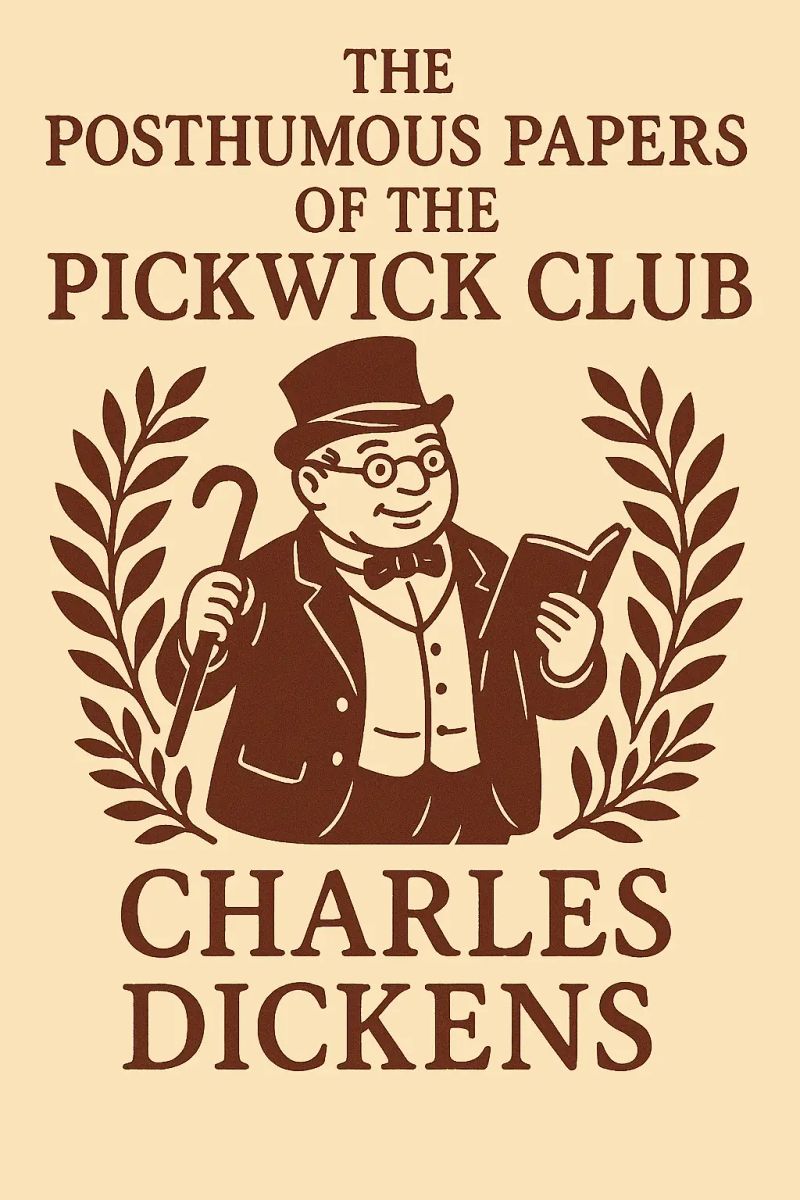
Charles Dickens’s The Posthumous Papers of the Pickwick Club first appeared in monthly serial parts in London between 1836 and 1837, at the outset of the author’s career and at a moment when the periodical press and illustrated fiction were reshaping the Victorian literary marketplace. Written in English for a broad urban readership, the work emerged from a collaborative publishing model in which text and illustration were jointly marketed; its early conception as a sequence of comic “papers” and excursions helped establish Dickens’s public persona as a journalist-novelist with an acute ear for metropolitan speech and contemporary manners. The novel’s framing conceit—an editor arranging club “transactions,” letters, and documents—also reflects the era’s fascination with associational culture, amateur science, and the self-importance of civic institutions, all filtered through Dickens’s exuberant satirical energy.
Although episodic in structure, the book develops a coherent comic vision by pairing picaresque travel with sustained social observation, turning mishaps, misunderstandings, and courtroom entanglements into instruments for moral and cultural critique. Its humor ranges from farce and caricature to linguistic play (the famous “Pickwickian sense”), yet it is underwritten by an enlarging sympathy that contrasts genteel pretension with the vitality of working-class characters, most notably Sam Weller, whose idiom helped define Dickensian comic realism. The novel’s immense popularity helped cement serialization as a dominant form, influenced later Victorian narrative pacing and character typology, and established a model of social comedy in which a seemingly light travel tale becomes a capacious survey of class, institutions, and everyday life.