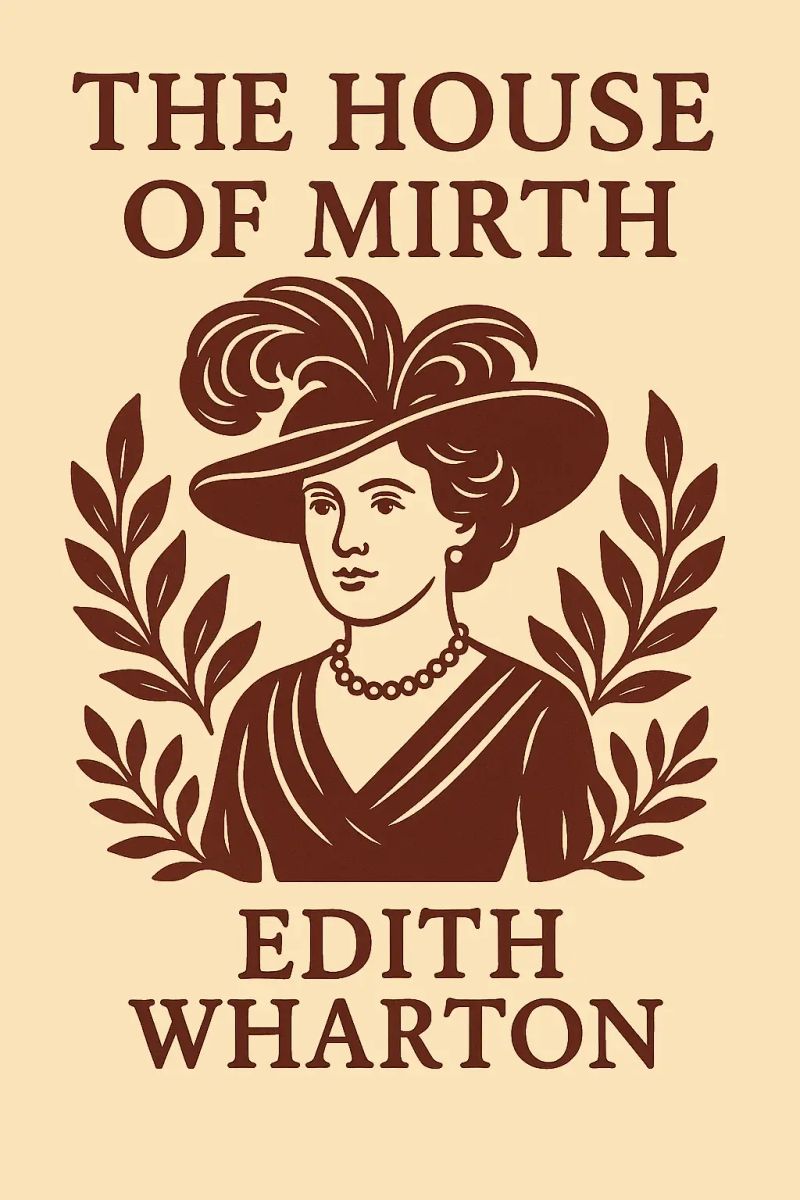
About this audiobook
Edith Wharton, born into a prominent New York family in 1862, wrote The House of Mirth amid the closing years of the Gilded Age. Drawing on her intimate familiarity with New York's social circles, Newport's houses, and the evolving tensions between old-money prestige and a modernizing culture, she crafts a novel that attends closely to ritual, reputation, and the economics of marriage. Written in English and first published in 1905 by Charles Scribner's Sons, The House of Mirth marks Wharton's mature realist phase, situating her beside contemporaries who scrutinize the ethics of high society with cool irony. Its appearance in the early Progressive Era—when debates about gender, class, and consumer culture were intensifying—placed a scrutinizing mirror before a society that prized image over interior life. Wharton's prose combines precision, restraint, and a measured moral gaze, yielding a work that is at once a social panorama and a probing psychological study of a society that prizes refinement even as it corrodes inward freedom.
Thematically, the novel interrogates the currency of beauty, lineage, and social standing in the formation—and manipulation—of female subjectivity. Lily Bart embodies a precarious balance between longing for autonomy and captivation by the rewards and penalties of social performance; social rules render marriage a transaction, reputation a measure of worth, and happiness contingent upon conformity to appearance. Wharton uses the close, often ironic narration to reveal that glittering surfaces conceal coercive structures: economic dependence, surveillance by a rigid code, and the perpetual negotiation between private desire and public duty. Stylistically, The House of Mirth anticipates later modernist experiments in free indirect discourse and moral ambiguity, while maintaining a lucid, realist clarity that influenced later novel-of-manners writers and feminist critique. Its enduring influence lies in shaping how American fiction treats urban modernity, gendered expectations, and the precariousness of personal freedom within a hierarchical social order.