
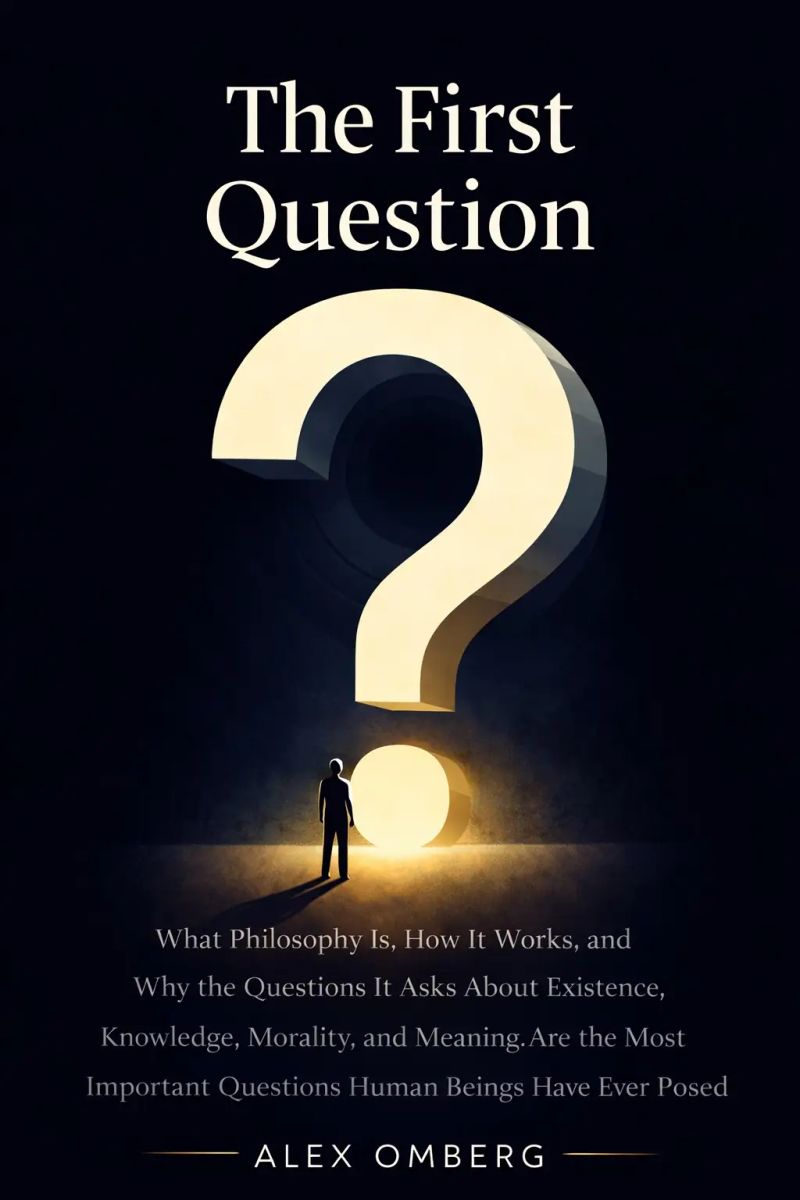
The First Question
What Philosophy Is, How It Works, and Why the Questions It Asks About Existence, Knowledge, Morality, and Meaning Are the Most Important Questions Human Beings Have Ever PosedBy Alex Omberg


Length3h 30m
About this audiobook
You are already a philosopher. It is time to awaken.
A child asks why the sky is blue, and three questions later, you are questioning the very fabric of reality. This is the moment ordinary curiosity transforms into philosophical wonder.
Every human being confronts the fundamental questions of existence. You have wondered if your choices are truly free. You have debated what makes an action right or wrong. You have stared into the night sky and asked if any of this has a point. You do not need a university degree to be a philosopher—you only need the courage to ask why.
In The First Question, Alex Omberg offers a profound, accessible, and life-changing introduction to philosophy. Stripping away the dry academic jargon, this book treats philosophy not as a timeline of dead thinkers, but as a practical, urgent discipline for living well.
Audiobook details
GenrePhilosophy, Education and Learning
Length3 hrs 30 mins
Narrated byListen with 1,000+ voices
FormateBook with Audio
Publish dateApr 2, 2026
LanguageEnglish
Table of contents
1Title Page
26Developing Moral Capacity
2Introduction: The Examined Life
27Chapter 5: What Is Fair?
3Chapter 1: The Moment of Wonder
28The Social Contract
4The Birth of Philosophical Thinking
29Freedom and Equality
5The Universal Impulse
30Justice as Fairness
Show all chaptersShow less
6Wonder Versus Curiosity
31Rights and the Common Good
7The Courage of Questions
32Legitimacy and Consent
8The Questions That Remain
33Beyond the State
9Chapter 2: What Is Real?
34Philosophy Versus Politics
10The Cave and the Forms
35Chapter 6: What Is Beautiful?
11Permanence and Change
36The Objectivity Question
12The Modern Question
37The Experience of the Sublime
13Why Metaphysics Matters
38What Is Art?
14The Limits of Metaphysics
39Why Art Matters
15Chapter 3: How Do We Know?
40Taste and Cultivation
16Belief, Opinion, and Knowledge
41The Question of Value
17The Skeptical Challenge
42Chapter 7: What Can We Prove?
18Responses to Skepticism
43Arguments and Validity
19The Sources of Knowledge
44Common Fallacies
20Why Epistemology Matters
45Deductive and Inductive Reasoning
21The Persistence of Uncertainty
46Formal Logic
22Chapter 4: What Should We Do?
47Logic and Truth
23Three Traditions
48Why Logic Matters
24Objective or Relative?
49Chapter 8: What Am I?
25Morality and Religion
50The Mind-Body Problem
Series

Pensar como um FilósofoAlex Omberg3h 35m$9.99 · $0.00
Pensar como un filósofoAlex Omberg3h 46m$9.99 · $0.00
What Is Consciousness?Alex Omberg3h 36m$9.99 · $0.00
Free Will and DeterminismAlex Omberg3h 53m$9.99 · $0.00
MetaphysicsAlex Omberg3h 44m$9.99 · $0.00
Philosophy of ScienceAlex Omberg4h 32m$9.99 · $0.00
Marcus AureliusAlex Omberg3h 20m$9.99 · $0.00
LogicAlex Omberg3h 37m$9.99 · $0.00
Philosophy of ReligionAlex Omberg3h 12m$9.99 · $0.00
William FaulknerAlex Omberg55m5.0 (1) Only with Ultra

Mary ShelleyAlex Omberg1h 9m5.0 (1) Only with Ultra
Gustave FlaubertAlex Omberg1h 9m5.0 (1) Only with Ultra

Victor HugoAlex Omberg1h 2m5.0 (1) Only with Ultra
F. Scott FitzgeraldAlex Omberg57m5.0 (1) Only with Ultra
Herman MelvilleAlex Omberg1h 43m5.0 (1) Only with Ultra

John SteinbeckAlex Omberg1h 10m5.0 (1) Only with Ultra

Toni MorrisonAlex Omberg57m5.0 (2) Only with Ultra
EstoicismoAlex Omberg2h 49m4.4 (2.7K) Only with Ultra
EstoicismoAlex Omberg2h 49m4.2 (128) Only with Ultra
The Tao of Joy Every DayDerek Lin10h 24m4.6 (762)$20 · $0.00

Old Path White CloudsThich Nhat Hanh16h 39m4.6 (15K)$25
Metaphysics (Annotated)Aristotle13h 30m4.6 (1.2K)$2 · $0.00
Sceptical Essays (Annotated)Bertrand Russell9h 16m4.6 (1K)$2 · $0.00

WitnessAriel Burger8h 1m4.6 (1.3K)$20 · $0.00
The Magic PresenceGodfré Ray King10h 21m4.6 (307)$1.20 · $0.00
The Practicing StoicWard Farnsworth9h 56m4.5 (9.2K)$20
Moral Letters to LuciliusLucius Annaeus Seneca24h 35m4.4 (71.8K)$0.99 · $0.00
Lessons in TruthH. Emilie Cady3h 50m4.5 (2.4K)$20 · $0.00
The LawFrédéric Bastiat2h 7m4.4 (17K)$10
IlluminationsWalter Benjamin10h 12m4.4 (16.2K)$20 · $0.00
That Bird Has My WingsJarvis Jay Masters9h 49m4.4 (13.7K)$29 · $0.00

Tâo Teh KingLaozi2h 34m4.4 (230.9K)$2 · $0.00
SymposiumPlato3h 26m4.4 (97.9K)$1.20 · $0.00

Buddhist Boot CampTimber Hawkeye2h 39m4.4 (8.4K)$18 · $0.00
Change Your MindRJ Spina7h 5m4.6 (288)$17
Enchiridion & The Discourses of Epictetus (Annotated)Arrian Epictetus18h 9m4.4 (3.5K)$2 · $0.00

The Meditations of the Emperor Marcus Aurelius AntoninusEmperor of Rome Marcus Aurelius5h 41m4.4 (1.8M)$1 · $0.00
Crime and PunishmentFyodor Dostoevsky23h 11m4.4 (1.3M)$12 · $0.00

MeditationsMarcus Aurelius5h 52m4.4 (433.7K)$1 · $0.00
180 DaysPenny Kittle, Kelly Gallagher5h 39m4.6 (3.6K)$20

Testtrainer Logisches DenkenGRETA CRENSHAW10h 11m4.8 (121)$12.50 · $0.00
A Brief History of IntelligenceMax S. Bennett12h 18m4.6 (6.6K)$29 · $0.00
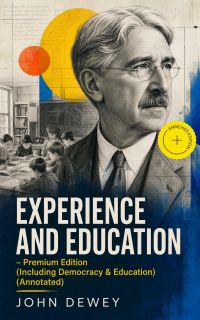
EXPERIENCE AND EDUCATION – Premium Edition (Including Democracy & Education) (Annotated)John Dewey19h 17m4.6 (1K)$2 · $0.00
WitnessAriel Burger8h 1m4.6 (1.3K)$20 · $0.00

EducationEllen G. White9h 41m4.6 (1.5K)$2 · $0.00

Parents and Children (Annotated)Charlotte Mason9h 23m4.6 (988)$2 · $0.00

Start Here Start NowLiz Kleinrock4h 20m4.6 (1K)$20

Children Under FireJohn Woodrow Cox10h 17m4.5 (1.6K)$29 · $0.00
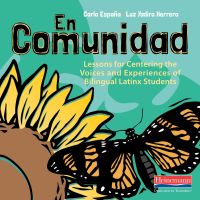
En ComunidadCarla España, Luz Yadira Herrera6h 10m4.6 (309)$23
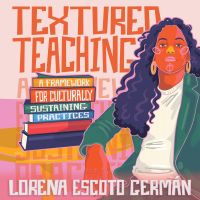
Textured TeachingLorena Escoto Germán4h 25m4.6 (559)$20

The State Must ProvideAdam Harris7h 15m4.5 (775)$24 · $0.00

The Call of the Wild and FreeAinsley Arment9h 7m4.4 (21.2K)$29 · $0.00
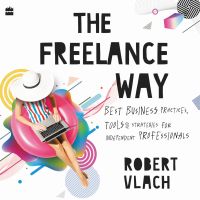
The Freelance WayRobert Vlach19h 48m4.5 (528)$40 · $0.00
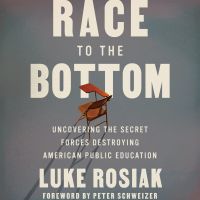
Race to the BottomLuke Rosiak9h 20m4.5 (600)$29 · $0.00

We Got ThisCornelius Minor6h 28m4.5 (2.7K)$23

They Came for the SchoolsMike Hixenbaugh9h 5m4.5 (2.6K)$8 · $0.00

Find Me UnafraidKennedy Odede, Jessica Posner11h 11m4.5 (2.7K)$29 · $0.00
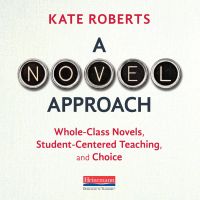
A Novel ApproachKate Roberts5h 22m4.5 (1.3K)$20
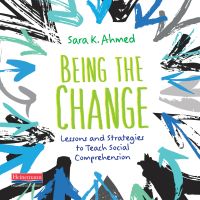
Being the ChangeSara K. Ahmed5h 27m4.5 (1.4K)$20
You may also like

Human, All Too Human: A Book For Free Spirits, Part IFriedrich Nietzsche10h4.3 (11.2K)$12
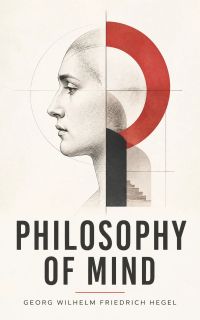
Philosophy of MindGeorg Wilhelm Friedrich Hegel13h 19m4.1 (469)$0.99 · $0.00
Talk to MeDean Nelson10h 9m4.3 (646)$29 · $0.00
THE THREE CRITIQUES: The Critique of Pure Reason, The Critique of Practical Reason & The Critique of JudgmentImmanuel Kant46h 10m4.5 (1.4K)$1 · $0.00
The Dream of EnlightenmentAnthony Gottlieb10h 38m4.1 (2K)$20 · $0.00
OrthodoxyG. K. Chesterton5h 42m4.3 (55.7K)$2.30 · $0.00
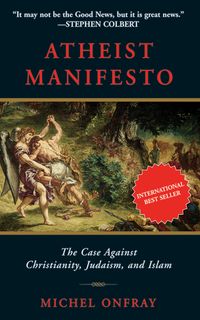
Atheist ManifestoOnfray, Michel7h 53m3.8 (5.2K)Free
The Critique of Practical ReasonImmanuel Kant6h 45m4.1 (15K)Free
Meditations on First PhilosophyRené Descartes3h 8m4.0 (43.8K)$2 · $0.00
The Civilization of the Renaissance in ItalyJacob Burckhardt14h 10m4.0 (6.2K)$25
THE COMPLETE WORKS OF PLATOPlato141h 25m4.5 (15.3K)$1 · $0.00
G.W.F. HEGEL - Ultimate Collection (Annotated)Georg Wilhelm Friedrich Hegel244h 13m4.4 (33)$0.99 · $0.00
A Beginner's History of Philosophy (Vol. 1&2) (Annotated)Herbert Ernest Cushman23h 42m4.3 (16)$2 · $0.00
Plato and the Other Companions of Sokrates (Vol. 1-4) (Annotated)George Grote92h 57m4.3 (28)$2 · $0.00
Facts of ConsciousnessJohann Gottlieb Fichte6h 52m$1 · $0.00
The Essence of Hegel's PhilosophyGeorg Wilhelm Friedrich Hegel243h 17m$2 · $0.00
The Restoration of ManMichael D. Aeschliman4h 49m4.2 (136)$15 · $0.00

Gay ArtJames Smalls7h 17m3.7 (46)$18 · $0.00
Modern Foundations of Ethics and Reason – 6 Classic Moral Philosophy EssaysBenedictus de Spinoza, Adam Smith, David Hume, Immanuel Kant, Arthur Schopenhauer, Friedrich Wilhelm Nietzsche66h 55m$1
A Brief History of Modern Philosophy (Annotated)Harald Høffding11h 23m$2 · $0.00