
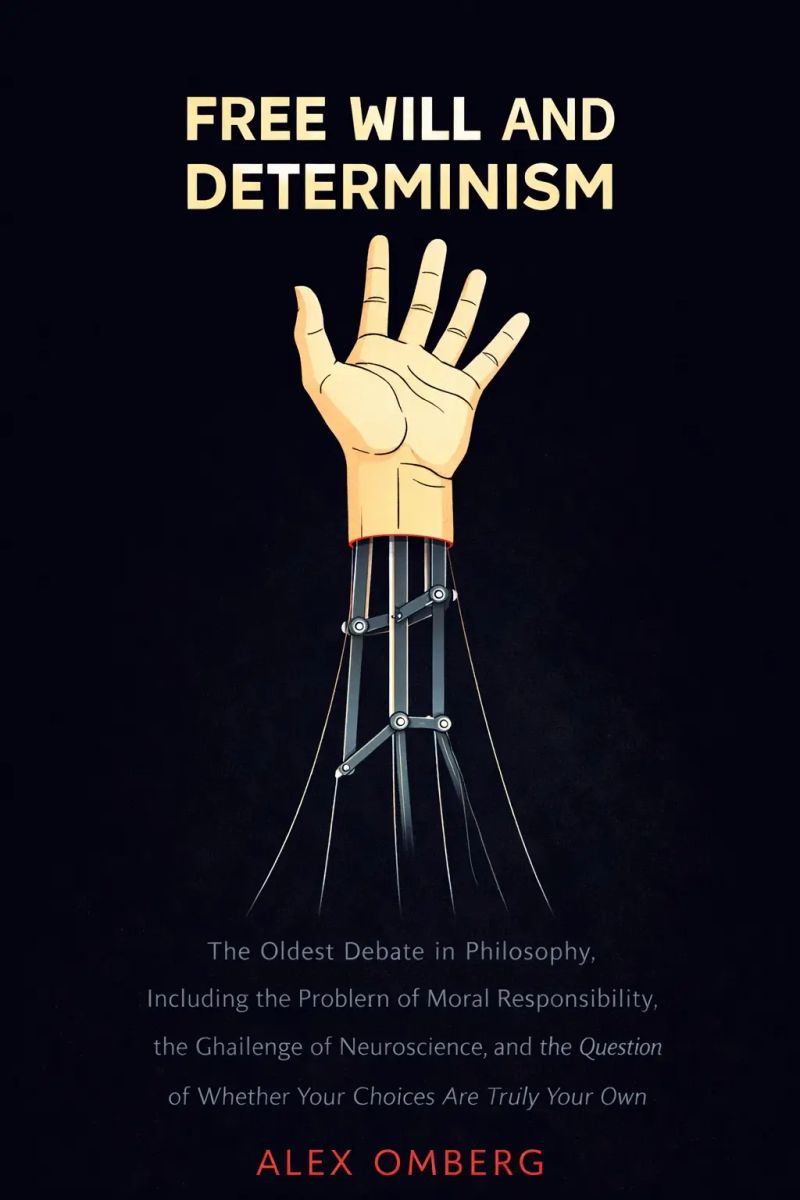
Free Will and Determinism
The Oldest Debate in Philosophy, Including the Problem of Moral Responsibility, the Challenge of Neuroscience, and the Question of Whether Your Choices Are Truly Your OwnBy Alex Omberg

Length3h 53m
About this audiobook
Are your choices truly your own, or is free will the mind's greatest illusion?
You chose to read this sentence. At least, it feels that way. But what if every decision you have ever made was predetermined before you were even born?
For more than two millennia, the debate between free will and determinism has haunted the greatest minds in history. If our actions are simply the inevitable consequences of prior causes—genetics, environment, and the laws of physics—then the entire architecture of human morality, justice, and personal achievement threatens to collapse. How can we punish the guilty or praise the virtuous if everyone is merely acting out a biological script?
In Free Will and Determinism, Alex Omberg delivers a gripping, highly accessible exploration of philosophy's oldest and most consequential debate. From the ancient insights of Aristotle to the startling modern discoveries of brain-imaging technology, this book unpacks the paradox of human agency with unparalleled clarity.
Audiobook details
GenrePhilosophy, Science and Nature
Length3 hrs 53 mins
Narrated byListen with 1,000+ voices
FormateBook with Audio
Publish dateApr 12, 2026
LanguageEnglish
Table of contents
1Title Page
2Introduction: The Feeling That May Be an Illusion
3Chapter 1: The Ancient Roots
4The Conditions of Responsibility
5Fate and the Stoic Solution
Show all chaptersShow less
6The Epicurean Swerve
7Augustine and the Bondage of the Will
8The Ancient Legacy
9Chapter 2: The Clockwork Universe
10Hobbes and the Mechanism of Will
11Spinoza's Radical Necessity
12The Demon of Perfect Prediction
13Liberty as Absence of Impediment
14The Price of Mechanism
15Chapter 3: The Categorical Imperative Requires Freedom
16The Fact of Moral Obligation
17Two Standpoints, Two Worlds
18The Two Perspectives Argument
19Transcendental Freedom
20The Paradox of Noumenal Causation
21The Sacrificial Move
22Chapter 4: The Soft Path
23Liberty as Acting According to Will
24Necessity as Constant Conjunction
25Mill's Refinement
26The Source of Action
27The Conditional Analysis
28The Appeal to Consequence
29The Persistent Doubt
30Chapter 5: The Consequence Argument
31The Structure of Necessity
32The Transfer Principle
33Where Does It Fail?
34The Modal Challenge
35The Fixity of the Past
36The Persistence of the Argument
37The Terms of Engagement
38Chapter 6: The Rollback Argument
39The Libertarian Commitment
40The Classical Formulation
41The Problem of Luck
42Indeterminism in Nature
43Could Have Done Otherwise
44Kane's Effort
45The Impossibility Argument
46The Dialectical Situation
47Chapter 7: The Frankfurt Cases
48The Original Scenario
49The Dialectical Impact
50The Flicker of Freedom

Pensar como um FilósofoAlex Omberg3h 35m$9.99 · $0.00

Pensar como un filósofoAlex Omberg3h 46m$9.99 · $0.00
What Is Consciousness?Alex Omberg3h 36m$9.99 · $0.00
MetaphysicsAlex Omberg3h 44m$9.99 · $0.00
Philosophy of ScienceAlex Omberg4h 32m$9.99 · $0.00
Marcus AureliusAlex Omberg3h 20m$9.99 · $0.00
LogicAlex Omberg3h 37m$9.99 · $0.00
The First QuestionAlex Omberg3h 31m$9.99 · $0.00
Philosophy of ReligionAlex Omberg3h 12m$9.99 · $0.00
William FaulknerAlex Omberg55m5.0 (1) Only with Ultra

Mary ShelleyAlex Omberg1h 9m5.0 (1) Only with Ultra

Gustave FlaubertAlex Omberg1h 9m5.0 (1) Only with Ultra

Victor HugoAlex Omberg1h 2m5.0 (1) Only with Ultra

F. Scott FitzgeraldAlex Omberg57m5.0 (1) Only with Ultra

Herman MelvilleAlex Omberg1h 43m5.0 (1) Only with Ultra

John SteinbeckAlex Omberg1h 10m5.0 (1) Only with Ultra

Toni MorrisonAlex Omberg57m5.0 (2) Only with Ultra
EstoicismoAlex Omberg2h 49m4.4 (2.7K) Only with Ultra
EstoicismoAlex Omberg2h 49m4.2 (128) Only with Ultra
The Tao of Joy Every DayDerek Lin10h 24m4.6 (762)$20 · $0.00

Old Path White CloudsThich Nhat Hanh16h 39m4.6 (15K)$25
Metaphysics (Annotated)Aristotle13h 30m4.6 (1.2K)$2 · $0.00
Sceptical Essays (Annotated)Bertrand Russell9h 16m4.6 (1K)$2 · $0.00

WitnessAriel Burger8h 1m4.6 (1.3K)$20 · $0.00
The Magic PresenceGodfré Ray King10h 21m4.6 (307)$1.20 · $0.00
The Practicing StoicWard Farnsworth9h 56m4.5 (9.2K)$20
Moral Letters to LuciliusLucius Annaeus Seneca24h 35m4.4 (71.8K)$0.99 · $0.00
Lessons in TruthH. Emilie Cady3h 50m4.5 (2.4K)$20 · $0.00
The LawFrédéric Bastiat2h 7m4.4 (17K)$10
IlluminationsWalter Benjamin10h 12m4.4 (16.2K)$20 · $0.00
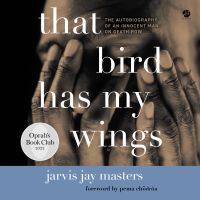
That Bird Has My WingsJarvis Jay Masters9h 49m4.4 (13.7K)$29 · $0.00

Tâo Teh KingLaozi2h 34m4.4 (230.9K)$2 · $0.00
SymposiumPlato3h 26m4.4 (97.9K)$1.20 · $0.00

Buddhist Boot CampTimber Hawkeye2h 39m4.4 (8.4K)$18 · $0.00
Change Your MindRJ Spina7h 5m4.6 (288)$17
Enchiridion & The Discourses of Epictetus (Annotated)Arrian Epictetus18h 9m4.4 (3.5K)$2 · $0.00

The Meditations of the Emperor Marcus Aurelius AntoninusEmperor of Rome Marcus Aurelius5h 41m4.4 (1.8M)$1 · $0.00
Crime and PunishmentFyodor Dostoevsky23h 11m4.4 (1.3M)$12 · $0.00

MeditationsMarcus Aurelius5h 52m4.4 (433.7K)$1 · $0.00

Life On Earth 40th Anniversary EditionSir David Attenborough12h 27m4.6 (6.5K)$29 · $0.00
BeyondStephen Walker15h 39m4.6 (3.2K)$33 · $0.00
A Brief History of IntelligenceMax S. Bennett12h 18m4.6 (6.6K)$29 · $0.00

LiftoffEric Berger9h 4m4.6 (9.5K)$29 · $0.00

Distant SkiesMelissa A. Priblo Chapman12h 39m4.7 (379)$23

ApolloCharles Murray, Catherine Bly Cox18h 15m4.6 (3.9K)$30
The Story of BirdsSteve Brusatte11h 49m4.6 (401)$29 · $0.00

Black Earth WisdomLeah Penniman11h 54m4.6 (577)$8 · $0.00

Crystals for BeginnersKaren Frazier3h 49m4.5 (45.6K)$20
What If? 10th Anniversary EditionRandall Munroe7h 29m4.5 (41.4K)$23

Total Cat MojoJackson Galaxy10h 13m4.5 (8.4K)$23 · $0.00

Earth at NightNational Aeronautics and Space Administration2h 26m4.7 (196)$1 · $0.00

My Life Among the UnderdogsTia Torres5h 51m4.5 (4K)$24 · $0.00

What It Takes to Save a LifeKwane Stewart6h4.6 (556)$24 · $0.00

Pastoral SongJames Rebanks8h 35m4.5 (12K)$26 · $0.00
How Stella Learned to TalkChristina Hunger7h4.5 (10.9K)$24 · $0.00

Craig & FredCraig Grossi8h 6m4.5 (9.6K)$26 · $0.00
Celebrating BirdsNatalia Rojas, Ana Maria Martinez6h 47m4.6 (330)$24 · $0.00

WildingIsabella Tree12h 22m4.5 (13.4K)$23

Saving JemimaJulie Zickefoose4h 59m4.5 (749)$20 · $0.00
You may also like
I and ThouMartin Buber5h 18m4.3 (31.6K)$14
Mere ChristianityC. S. Lewis7h 7m4.4 (519.7K)$24 · $0.00
The Critique of Practical ReasonImmanuel Kant6h 45m4.1 (15K)Free
The Practice of Piety (Annotated)Lewis Bayly14h 40m4.4 (428)$0.99 · $0.00

A Plain Account of Christian PerfectionJohn Wesley3h 27m4.1 (822)$2 · $0.00

PragmatismWilliam James5h 41m4.0 (6.6K)$1.20 · $0.00

EthicsBenedictus de Spinoza10h 58m4.3 (27.1K)$2 · $0.00

The Pursuit of GodA. W. Tozer3h 2m4.6 (96.3K)$2.30
The Genealogy of MoralsFriedrich Wilhelm Nietzsche6h 12m4.2 (41.5K)$2.30
MERE CHRISTIANITY (Including The Case for Christianity, Christian Behaviour and Beyond Personality)C. S. Lewis6h 45m4.5 (571.2K)$2 · $0.00
Questioning Evangelism, Second EditionRandy Newman8h 25m4.3 (3.2K)$20 · $0.00
Creative Mind and SuccessErnest S. Holmes2h 42m4.4 (2.4K)$21 · $0.00

The Science of Wallace D. Wattles (Complete Trilogy)Wallace D. Wattles8h 1m4.4 (2K)$2 · $0.00
Hegel's Philosophy of MindGeorg Wilhelm Friedrich Hegel14h 28m4.0 (717)$1 · $0.00

A Short And Easy Method of PrayerJeanne Marie Bouvier de la Motte Guyon2h 39m4.3 (1.7K)$1 · $0.00
The Practice of the Presence of GodBrother Lawrence1h 9m4.4 (81.5K)$10

The Atheist's MassHonoré de Balzac44m3.9 (2.3K)$2 · $0.00
OrthodoxyG. K. Chesterton5h 42m4.3 (55.7K)$2.30 · $0.00
The Fear of GodJohn Bunyan5h 59m4.4 (730)$15

Living for the BestJames G. K. McClure3h 9m$1 · $0.00