
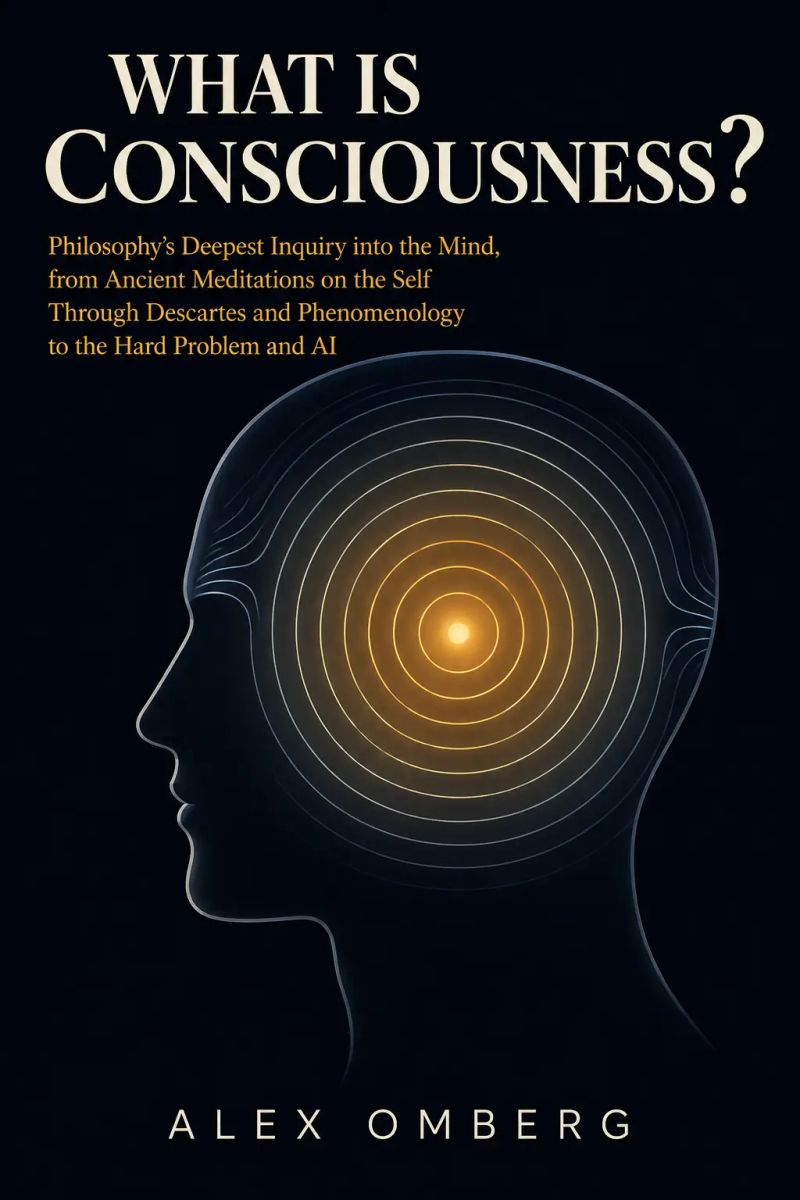
What Is Consciousness?
Philosophy's Deepest Inquiry into the Mind, from Ancient Meditations on the Self Through Descartes and Phenomenology to the Hard Problem and AIBy Alex Omberg

Length3h 36m
About this audiobook
The greatest mystery in the universe isn't out there. It is inside your head.
You are conscious right now. You are reading these words, and there is a specific feeling of what it is like to be you doing so. But how does wet, physical brain matter create vivid, subjective experience?
This single question—the Hard Problem of Consciousness—remains the most baffling puzzle in both science and philosophy.
In What Is Consciousness?, Alex Omberg takes you on an exhilarating, 2,500-year journey through the ultimate labyrinth: the human mind. From the ancient temples of Greece and the deep meditation traditions of India, to the mind-bending theories of modern phenomenology and the cutting-edge frontiers of Artificial Intelligence, this book bridges the gap between ancient wisdom and modern neuroscience.
You will never look at yourself—or the world around you—the same way again.
Audiobook details
GenrePhilosophy, Science and Nature
Length3 hrs 36 mins
Narrated byListen with 1,000+ voices
FormateBook with Audio
Publish dateMay 10, 2026
LanguageEnglish
Table of contents
1Introduction: The Mystery You Are
26Chapter 5: The Problem of Other Minds
2Chapter 1: Know Thyself
27The Argument from Analogy
3The Divided Soul
28Philosophical Zombies
4Form and Function
29Behaviorism's Response
5The Ruling Faculty
30Wittgenstein's Private Language Argument
Show all chaptersShow less
6Atoms of the Soul
31The Inference to Best Explanation
7The Self Examined
32Living with Uncertainty
8Chapter 2: The Inner Light
33Chapter 6: Mind Equals Brain?
9The Self Beyond Experience
34The Identity Theory
10No Self to Be Found
35Functionalism
11Maps of the Mind
36Eliminative Materialism
12The Argument from Introspection
37The Explanatory Gap
13The Living Laboratory
38Property Dualism
14Chapter 3: The Ghost in the Machine
39The Persistence of Mystery
15Two Substances
40Chapter 7: The Return to Experience
16The Interaction Problem
41The Method of Epoché
17Occasionalism and Parallelism
42Being-in-the-World
18The Legacy of Dualism
43Embodied Consciousness
19The Problem Evolves
44The Lived Body
20Chapter 4: The Identity Puzzle
45Consciousness and Freedom
21Memory and the Self
46The First-Person Perspective
22The Bundle Theory
47Chapter 8: The Hard Problem
23Thought Experiments
48Easy Problems and Hard Problem
24What Are We?
49The Knowledge Argument
25What Really Matters
50The Zombie Argument
Series

Pensar como um FilósofoAlex Omberg3h 35m$9.99 · $0.00
Pensar como un filósofoAlex Omberg3h 46m$9.99 · $0.00
Free Will and DeterminismAlex Omberg3h 53m$9.99 · $0.00
MetaphysicsAlex Omberg3h 44m$9.99 · $0.00
Philosophy of ScienceAlex Omberg4h 32m$9.99 · $0.00
Marcus AureliusAlex Omberg3h 20m$9.99 · $0.00
LogicAlex Omberg3h 37m$9.99 · $0.00
The First QuestionAlex Omberg3h 31m$9.99 · $0.00
Philosophy of ReligionAlex Omberg3h 12m$9.99 · $0.00
William FaulknerAlex Omberg55m5.0 (1) Only with Ultra

Mary ShelleyAlex Omberg1h 9m5.0 (1) Only with Ultra
Gustave FlaubertAlex Omberg1h 9m5.0 (1) Only with Ultra
Victor HugoAlex Omberg1h 2m5.0 (1) Only with Ultra
F. Scott FitzgeraldAlex Omberg57m5.0 (1) Only with Ultra
Herman MelvilleAlex Omberg1h 43m5.0 (1) Only with Ultra

John SteinbeckAlex Omberg1h 10m5.0 (1) Only with Ultra

Toni MorrisonAlex Omberg57m5.0 (2) Only with Ultra
EstoicismoAlex Omberg2h 49m Only with Ultra
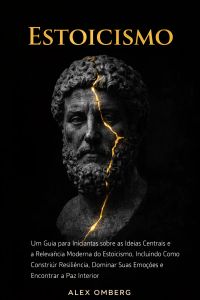
EstoicismoAlex Omberg2h 49m5.0 (1) Only with Ultra
The Boy, the Mole, the Fox and the HorseCharlie Mackesy58m$11 · $0.00
The Tao of Joy Every DayDerek Lin10h 24m$20 · $0.00

Old Path White CloudsThich Nhat Hanh16h 39m$25
Metaphysics (Annotated)Aristotle13h 30m$2 · $0.00
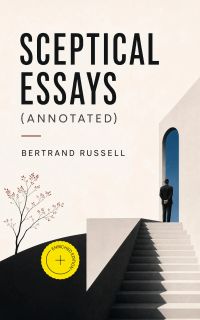
Sceptical Essays (Annotated)Bertrand Russell9h 16m$2 · $0.00
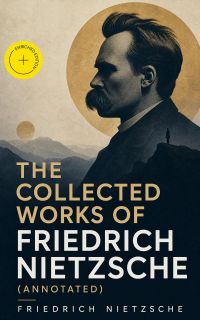
The Collected Works of Friedrich Nietzsche (Annotated)Friedrich Nietzsche93h 6m$2 · $0.00
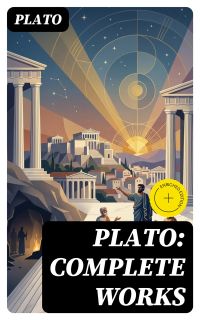
Plato: Complete WorksPlato141h 38m$2 · $0.00

WitnessAriel Burger8h 1m$20 · $0.00
Feeling Is The SecretNeville Goddard44m5.0 (1)$2 · $0.00
The Way to a Beautiful WorldJames Norbury44m$9 · $0.00
The Practicing StoicWard Farnsworth9h 56m$20
The Complete Essays of Montaigne (Annotated)Michel de Montaigne46h 52m$2 · $0.00
Moral Letters to LuciliusLucius Annaeus Seneca25h 24m$2 · $0.00
THE THREE CRITIQUES: The Critique of Pure Reason, The Critique of Practical Reason & The Critique of JudgmentImmanuel Kant46h 10m$1 · $0.00
The LawFrédéric Bastiat2h 7m$10
IlluminationsWalter Benjamin10h 12m$20 · $0.00

Tâo Teh KingLaozi2h 34m$2 · $0.00

Buddhist Boot CampTimber Hawkeye2h 39m$18 · $0.00
The DhammapadaFriedrich Max Müller1h 30m$15
Change Your MindRJ Spina7h 5m$17

Vax FactsPaul Thomas MD, Deedee Hoover10h 26m$25
Life On Earth 40th Anniversary EditionSir David Attenborough12h 27m$29 · $0.00
BeyondStephen Walker15h 39m$33 · $0.00
A Brief History of IntelligenceMax S. Bennett12h 18m5.0 (1)$29 · $0.00
The Collected Works of John MuirJohn Muir95h 45m$2 · $0.00

LiftoffEric Berger9h 4m$29 · $0.00

Distant SkiesMelissa A. Priblo Chapman12h 39m$23
ApolloCharles Murray, Catherine Bly Cox18h 15m$30
The Story of BirdsSteve Brusatte11h 49m$29 · $0.00
Black Earth WisdomLeah Penniman11h 54m5.0 (1)$8 · $0.00
Crystals for BeginnersKaren Frazier3h 49m$20
What If? 10th Anniversary EditionRandall Munroe7h 29m$23
Nikola Tesla - Ultimate Collection: 70+ Scientific Works, Lectures & EssaysNikola Tesla48h 43m$2 · $0.00

Total Cat MojoJackson Galaxy10h 13m$23 · $0.00
Earth at NightNational Aeronautics and Space Administration2h 26m$1 · $0.00

My Life Among the UnderdogsTia Torres5h 51m$24 · $0.00

What It Takes to Save a LifeKwane Stewart6h$24 · $0.00

Pastoral SongJames Rebanks8h 35m$26 · $0.00
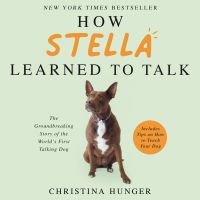
How Stella Learned to TalkChristina Hunger7h$24 · $0.00

Craig & FredCraig Grossi8h 6m$26 · $0.00
You may also like
Roget's Thesaurus (Annotated)Peter Mark Roget29h 35m$2 · $0.00

Filosofía de la mente y psicologíaPablo López-Silva, Francisco Osorio9h 24m$8 · $0.00
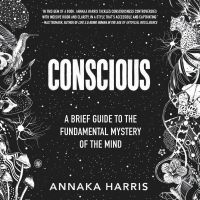
ConsciousAnnaka Harris2h 23m$16 · $0.00
A Question Of Identity and two more storiesFrank Riley4h 26m$2.30
The Mystery of the MindWilder Penfield3h 20m$20
How to Build an AndroidDavid F. Dufty7h 38m$17 · $0.00
God's TheoremOsrit Otnas5h 55m$6 · $0.00
The Creativity CodeMarcus du Sautoy9h 54m$20 · $0.00

Psychopathology of Everyday Life (Annotated)Sigmund Freud9h 35m$2 · $0.00
BlindsightMatt Johnson PhD, Prince Ghuman9h$20 · $0.00
Brain BugsDean Buonomano8h 38m$20

Business-Englisch lernen Audio - Motivieren Sie Ihr Team!Spotlight Verlag1h 14m$23

True To TypeArthur T. Harris11m$2.30
The Amazing Sci-Fi Tales of Philip K. Dick - 34 Titles in One EditionPhilip K. Dick29h 29m$1 · $0.00
Searching for ClonesEve Morton57m$2 · $0.00
Making SenseSam Harris22h 27m$46 · $0.00
Assemble Artifacts Short Story Magazine: Fall 2022 (Issue #3)various authors, Artifacts Magazine5h 47m$17

The Story of LingerieMuriel Barbier5h 7m$18 · $0.00
A Brief History of IntelligenceMax S. Bennett12h 18m5.0 (1)$29 · $0.00
The True Creator of EverythingMiguel Nicolelis14h 41m$23 · $0.00