
Relativism
A Note on the Philosophical SchoolBy Pons Malleus


Length3h 2m
About this audiobook
Often dismissed, frequently misunderstood, and occasionally celebrated, relativism stands at the crossroads of ethics, epistemology, culture, and truth. It challenges the assumption that there are absolute, universal principles—whether in morality, knowledge, or meaning—and instead contends that what we know, value, and believe is always situated: within a context, a perspective, a language, a tradition.
To many, relativism is a threat. It is accused of eroding certainty, undermining objectivity, and opening the gates to moral permissiveness or intellectual chaos. To others, it is liberating—an honest recognition of the complexity of human experience, a stance against dogmatism, and an invitation to humility and tolerance in the face of diversity.
Relativism, however, is not a monolith. Over the centuries, it has taken various forms and sparked intense debate across disciplines. In ancient Greece, Protagoras famously declared, “Man is the measure of all things,” laying an early foundation for relativistic thought. In modern philosophy, thinkers from Nietzsche to Wittgenstein, from Foucault to Rorty, have grappled with the implications of relativism for truth, power, and language. In anthropology, cultural relativism has become a key principle in understanding and respecting the practices of different societies. In ethics, moral relativism continues to divide scholars over whether there can be any universal standard of right and wrong.
This book is not a polemic for or against relativism. Rather, it aims to clarify what relativism is, where it arises, and how it has shaped—and been shaped by—philosophical reflection. It seeks to distinguish between the varieties of relativism, and to examine the arguments that support or challenge each. It asks: Is all knowledge truly relative to the knower? Can we maintain a commitment to cultural understanding without surrendering to moral paralysis? Does relativism necessarily lead to nihilism, or can it coexist with conviction?
Our approach is both historical and analytical. Each chapter delves into a different aspect or manifestation of relativism, placing key thinkers and debates in context. We explore epistemic relativism (the view that truth or justification is relative to a framework), moral relativism (which holds that moral judgments depend on cultural or individual perspectives), and linguistic relativism (the idea that the structure of language affects cognition and worldviews). We also look at the critiques—from realism, objectivism, and universalist ethics—that seek to reassert the possibility of shared standards.
In writing this book, the aim has been clarity over jargon, critical thought over mere description, and dialogue over dogma. The hope is to provide readers—students, scholars, and curious minds alike—with the tools to engage more thoughtfully with relativism, not as a buzzword or a caricature, but as a serious and evolving philosophical position.
Whether you read this book with skepticism, interest, or ambivalence, may it help illuminate the questions that relativism forces us to ask—and the ways in which our answers shape how we live, relate, and understand the world.
Audiobook details
GenrePhilosophy, Politics and Government
Length3 hrs 2 mins
Narrated byListen with 1,000+ voices
FormateBook with Audio
Publish dateNov 28, 2025
LanguageEnglish
Table of contents
1RELATIVISM
2Introduction to Relativism
3Key Concepts and Theoretical Foundations
4Epistemological Relativism
5Moral and Ethical Relativism
Show all chaptersShow less
6Cultural Relativism
7Scientific Relativism
8Prominent Thinkers and Their Contributions
9Critiques to Relativism
10Legacy and Future Directions of Relativism
Series

TranscendentalismPons Malleus2h 57m$6
ScholasticismPons Malleus3h$6
SkepticismPons Malleus3h 16m$6
RationalismPons Malleus2h 47m$6
EmpiricismPons Malleus2h 49m$6
StructuralismPons Malleus2h 57m$6
CoherentismPons Malleus3h 1m$6
FoundationalismPons Malleus3h 17m$6
DeterminismPons Malleus3h 29m$6
NaturalismPons Malleus3h 26m$6
PragmatismPons Malleus3h 7m$6
ConstructivismPons Malleus3h 16m$6
Milesian SchoolPons Malleus3h 17m$6
ObjectivismPons Malleus3h 31m$6
EpicureanismPons Malleus3h 17m$6
EleaticismPons Malleus2h 51m$6
NominalismPons Malleus2h 59m$6
Dialectical MaterialismPons Malleus3h 6m$6
French NietzscheanismPons Malleus3h 4m$6
Ionian SchoolPons Malleus3h 1m$6
IlluminationsWalter Benjamin10h 12m4.4 (16.2K)$20 · $0.00

That Bird Has My WingsJarvis Jay Masters9h 49m4.4 (13.7K)$29 · $0.00

Tâo Teh KingLaozi2h 34m4.4 (230.9K)$2 · $0.00

Buddhist Boot CampTimber Hawkeye2h 39m4.4 (8.4K)$18 · $0.00
Enchiridion & The Discourses of Epictetus (Annotated)Arrian Epictetus18h 9m4.4 (3.5K)$2 · $0.00

The Meditations of the Emperor Marcus Aurelius AntoninusEmperor of Rome Marcus Aurelius5h 41m4.4 (1.8M)$1 · $0.00

Crime and PunishmentFyodor Dostoevsky23h 11m4.4 (1.3M)$12 · $0.00

MeditationsMarcus Aurelius5h 52m4.4 (433.7K)$1 · $0.00
Everyday DharmaSuneel Gupta5h 2m4.5 (761)$20 · $0.00

The Joyful Wisdom ("La Gaya Scienza")Friedrich Wilhelm Nietzsche11h 37m4.4 (26.6K)$1 · $0.00
The Art of LivingEpictetus, Sharon Lebell3h 16m4.4 (50.1K)$18 · $0.00

Sadhana: the realisation of lifeRabindranath Tagore3h 49m4.4 (8.6K)$6 · $0.00
SapiensYuval Noah Harari15h 18m4.3 (1.4M)$33 · $0.00
You BelongSebene Selassie8h 35m4.4 (2.7K)$26 · $0.00

The Song Celestial; Or, Bhagavad-Gîtâ (from the Mahâbhârata)Anonymous2h 18m4.4 (3.2K)$2 · $0.00

Chuang Tzu: Mystic, Moralist, and Social ReformerZhuangzi14h 42m4.4 (1.2K)$1 · $0.00

High-RisersBen Austen13h 33m4.4 (2.8K)$33 · $0.00

The Great OmissionDallas Willard7h 45m4.4 (4K)$26 · $0.00

The Grand InquisitorFyodor Dostoyevsky2h 24m4.3 (10.7K)$1 · $0.00

Praying with the PsalmsEugene H. Peterson7h 20m4.5 (312)$24 · $0.00

KrantikariSanjeev Sanyal11h 44m4.6 (1.3K)$16 · $0.00

Unbroken Bonds of BattleJohnny Joey Jones8h 31m4.6 (2.6K)$8 · $0.00

On Democracies and Death CultsDouglas Murray10h 38m4.6 (6.5K)$29 · $0.00

Balcony Over Jerusalem: A Middle East Memoir - Israel, Palestine and BeyondJohn Lyons12h 37m4.6 (1.4K)$33 · $0.00

RiggedMollie Hemingway12h 48m4.6 (4.2K)$23 · $0.00

SledgehammerDavid Friedman8h 21m4.7 (589)$26 · $0.00

Citizenship in a Republic (Annotated)Theodore Roosevelt2h 44m4.6 (1.4K)$2 · $0.00

No EscapeNury Turkel9h 30m4.6 (809)$28 · $0.00

Always FaithfulThomas Schueman, Zainullah Zaki12h 12m4.6 (977)$29 · $0.00

UnthinkableJamie Raskin15h 8m4.5 (9.3K)$8 · $0.00

My Fourth Time, We DrownedSally Hayden13h 59m4.6 (2.9K)$23 · $0.00

A Revolution of Common SenseScott Jennings9h 29m4.6 (528)$29 · $0.00

Statement From the Dock at the Rivonia TrialNelson Mandela2h 18m4.6 (1.3K)$1 · $0.00

Lessons from the EdgeMarie Yovanovitch17h 11m4.5 (5.9K)$40 · $0.00

To Rescue the American SpiritBret Baier10h 12m4.5 (2.7K)$8 · $0.00

StonewalledSharyl Attkisson15h 19m4.5 (4.3K)$33 · $0.00
The World According to Orwell: 1984 & Animal FarmGeorge Orwell15h 42m4.6 (1.1K)$1 · $0.00
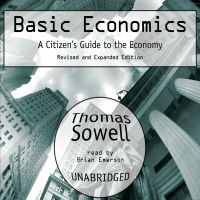
Basic EconomicsThomas Sowell18h 32m4.5 (29.3K)$28 · $0.00

To Rescue the RepublicBret Baier, Catherine Whitney11h 42m4.5 (8.6K)$29 · $0.00

Modern WarriorsPete Hegseth7h 10m4.5 (4.7K)$24 · $0.00
You may also like
Ditch the PitchSteve Yastrow3h 41m4.1 (265)$30

Rules for the Direction of the MindRené Descartes1h 34m3.9 (1K)$2 · $0.00

Pragmatism: A New Name for Some Old Ways of ThinkingWilliam James6h 56m4.0 (5.6K)$1 · $0.00
The Dream of EnlightenmentAnthony Gottlieb10h 38m4.1 (2K)$20 · $0.00

The World as Will and Idea (Vol. 1-3)Arthur Schopenhauer56h 21m4.3 (2K)$2 · $0.00

Hegel: The Science of LogicGeorg Wilhelm Friedrich Hegel17h 39m4.3 (1.8K)$1 · $0.00

Beyond Good and EvilFriedrich Nietzsche7h 5m4.2 (137.8K)$2 · $0.00
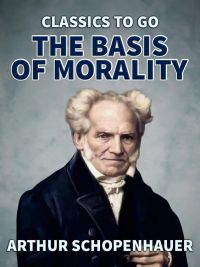
The Basis of MoralityArthur Schopenhauer8h 28m4.2 (2.6K)$2.30

The New OrganonFrancis Bacon9h 3m3.9 (2.3K)$3.50 · $0.00
Barking Up the Wrong TreeEric Barker9h 1m4.3 (24.2K)$29 · $0.00
The Halo EffectPhil Rosenzweig6h 58m4.0 (6.5K)$20 · $0.00
The Life of Reason: The Phases of Human ProgressGeorge Santayana23h 18m4.3 (340)$1 · $0.00
The EnlightenmentRitchie Robertson40h 10m4.4 (1.2K)$53 · $0.00
RationalismJ. M. Robertson2h 42m$1 · $0.00
Ethical RelativityEdward Westermarck11h 44m4.0 (55)$2 · $0.00

The Strategy of ChessEdward Lasker9h 25m3.9 (330)$1 · $0.00

Mr. Bennett and Mrs. BrownVirginia Woolf50m3.9 (615)$2.30

ArtClive Bell6h 54m3.7 (280)$2 · $0.00
Cubists and Post-impressionismArthur Jerome Eddy7h 22m4.1 (17)$2.30

Yasnaya Polyana SchoolLeo Tolstoy6h 43m3.7 (13)$2 · $0.00