About this audiobook
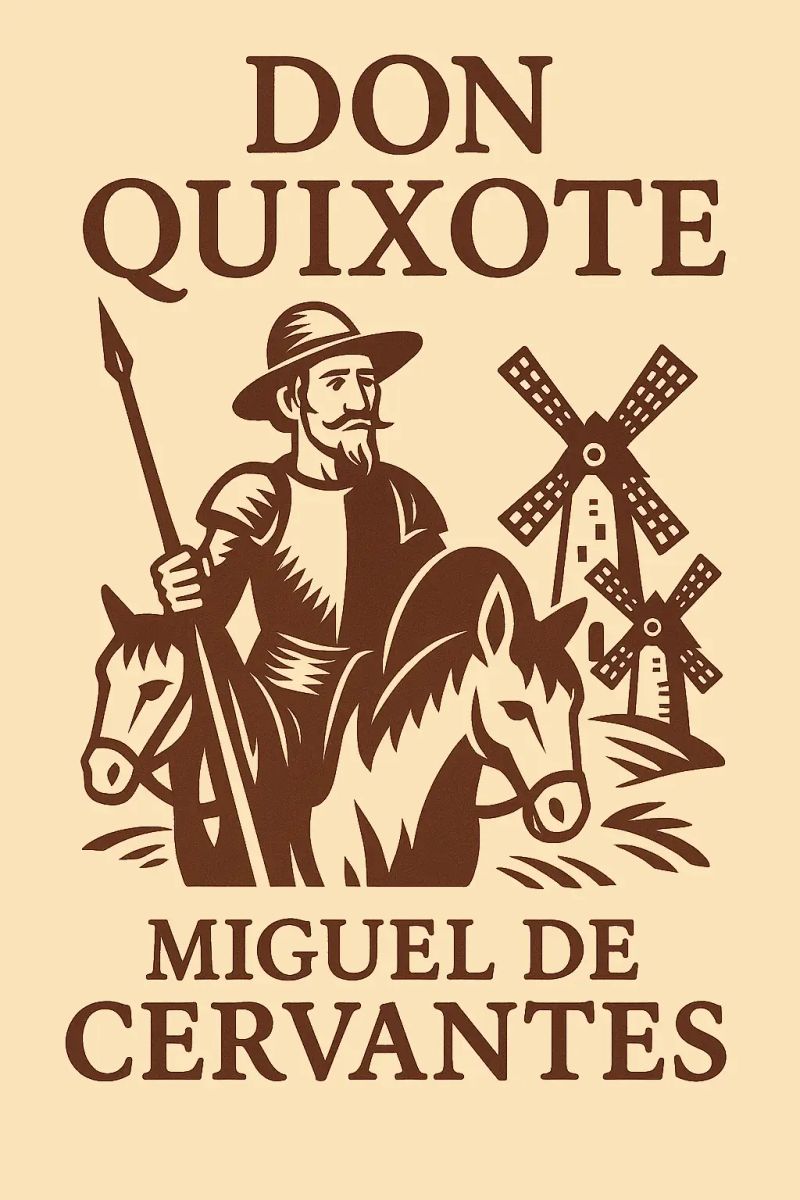
Miguel de Cervantes, a Spanish novelist, poet, and playwright born in 1547, wrote Don Quixote during the early 17th century, a period marked by Spain’s political decline and cultural flourishing known as the Spanish Golden Age. Cervantes himself led a turbulent life, serving as a soldier, enduring captivity in Algiers, and later struggling financially despite his literary achievements. The first part of Don Quixote was published in 1605, with the second part appearing in 1615. It is widely regarded as one of the first modern novels due to its complex narrative structure, layered storytelling, and metafictional qualities. Written at a time when chivalric romances were falling out of fashion, the novel served both as a parody of those tales and a reflection on Spain’s shifting social and moral landscape.
Themes in Don Quixote include the nature of reality versus illusion, the clash between idealism and pragmatism, and the transformative power of literature and imagination. Its satirical examination of outdated social ideals resonated with contemporary readers and continues to inspire reinterpretation across centuries. The book profoundly influenced the development of the novel as a literary form, impacting authors from Laurence Sterne to Gustave Flaubert and beyond. Its enduring relevance lies in its multilayered narrative voice, its blend of humor and pathos, and its exploration of human aspiration in the face of disillusionment. By intertwining social commentary with innovative narrative techniques, Cervantes created a work that remains foundational in both Western literature and global storytelling traditions.