

Preserving Life, Transforming Power
Civil Commons, Living Coordination, and the Conditions of Corrigible TransitionBy Dr. Bichara Sahely


Length1h 4m
About this audiobook
How can societies change harmful institutions without losing the essential services on which people depend? In this Listener’s Edition, Bichara Sahely explores how protection, political agency, and accountable institutions might develop together. Drawing on financial resolution, energy-supplier administration, Jackson’s drinking-water intervention, and the Montreal Protocol, the paper distinguishes preserving life-enabling functions from preserving the power of their current controllers. It proposes binding transition agreements, examines successor capture and ecological burden displacement, and asks what evidence would support or weaken the framework. A full spoken adaptation of the academic white paper, including its objections, safeguards, and proposed tests. The framework remains a hypothesis for inquiry, not an empirically validated transition formula.
Audiobook details
GenreEducation and Learning, Politics and Government
Length1 hr 4 mins
Narrated byListen with 1,000+ voices
FormateBook with Audio
Publish dateFeb 29, 2020
LanguageEnglish
Table of contents
1Introduction
2About this edition
3Series relationship
4Scope and method
5Listening roadmap
Show all chaptersShow less
61. The central problem: people depend on arrangements they may need to change
72. Preserve life-enabling functions, not every incumbent activity
83. The proposed mechanism: protection can change the conditions of power
94. Existing mechanisms show that function and control can be separated
104.1 Financial resolution
114.2 Energy-supplier administration
124.3 Jackson's drinking-water intervention
134.4 The Montreal Protocol
145. Overcoming the political circularity
156. A binding transition agreement
167. Govern loss without making vulnerable people finance the transition
178. Living coordination: the capacity to change together without compulsory agreement
189. Prevent the successor from becoming indispensable and unanswerable
1910. Bioregional responsibility: continuity cannot be purchased through displacement
2011. Constitutionalize the capacity for institutional correction
2112. Testing the proposal without claiming that it is already validated
2213. The limits of the proposed resolution
23Conclusion: preserve the conditions of life while changing the conditions of power
24Appendix A. Testable propositions and contrary findings
25Listener’s Guide in one pass
26Scholarly and production note
27About the author
Preserving Life, Transforming Power in GazaDr Bichara Sahely1h 42mFree
Putting the Missing Bridge to WorkDr. Bichara Sahely2h 12mFree
The Missing BridgeDr. Bichara Sahely1h 5mFree
Transformational Laboratories ProtocolDr. Bichara Sahely2h 33mFree
Artificial Intelligence and the Epistemic CommonsDr Bichara Sahely3h 12mFree

Conflict, Repair, and Non-DominationDr Bichara Sahely2h 21mFree
Institutions of Reflexive TransformationDr Bichara Sahely1h 51mFree
The Politics of Civilizational HealingDr. Bichara Sahely2h 13mFree

The Missing Grammar of Modern CivilizationDr. Bichara Sahely2h 8mFree
Civilizational Healing Research ArchitectureDr. Bichara Sahely1h 24mFree
How Does a Civilization Learn to Heal?Dr. Bichara Sahely1h 16mFree

From Competent Physicians to Healing SocietiesDr. Bichara Sahely2h 20mFree

Competence Is Necessary, but Not SufficientDr. Bichara Sahely1h 15mFree
Life-Grounding CanMEDSDr. Bichara Sahely1h 13mFree
The Dynamic Architecture of ViabilityDr Bichara Sahely2h 1mFree

Completing the Life-Value Onto-Axiology ProgramDr. Bichara Sahely1h 9m5.0 (1)Free
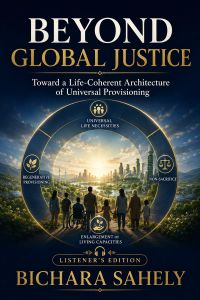
BEYOND GLOBAL JUSTICEDr. Bichara Sahely1h 25mFree

The Sweetness That Consumed the WorldBichara Sahely16h 14mFree
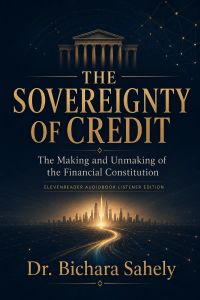
THE SOVEREIGNTY OF CREDITDr. Bichara Sahely3h 56mFree
A Brief History of IntelligenceMax S. Bennett12h 18m4.6 (6.6K)$29 · $0.00

HomeschooledStefan Merrill Block7h 10m3.6 (18.5K)$28 · $0.00

EducationEllen G. White9h 41m4.6 (1.5K)$2 · $0.00

Parents and Children (Annotated)Charlotte Mason9h 23m4.6 (988)$2 · $0.00

Children Under FireJohn Woodrow Cox10h 17m4.5 (1.6K)$29 · $0.00

The State Must ProvideAdam Harris7h 15m4.5 (775)$24 · $0.00

The Call of the Wild and FreeAinsley Arment9h 7m4.4 (21.2K)$29 · $0.00

The Freelance WayRobert Vlach19h 48m4.5 (528)$40 · $0.00
Race to the BottomLuke Rosiak9h 20m4.5 (600)$29 · $0.00

They Came for the SchoolsMike Hixenbaugh9h 5m4.5 (2.6K)$8 · $0.00

Find Me UnafraidKennedy Odede, Jessica Posner11h 11m4.5 (2.7K)$29 · $0.00

Asking for ItKate Harding8h 55m4.4 (5.3K)$20 · $0.00
Defining Moments in Black HistoryDick Gregory7h 37m4.4 (6K)$26 · $0.00

The Emerald Tablets of Thoth the AtlanteanMaurice Doreal3h 4m4.4 (8.8K)$6 · $0.00

Learning AmericaLuma Mufleh6h 37m4.4 (564)$24 · $0.00

Math-ishJo Boaler7h 21m4.4 (588)$24 · $0.00
It Worked For MeColin Powell7h 42m4.3 (9.8K)$26 · $0.00

Little SoldiersLenora Chu11h 30m4.3 (3.1K)$29 · $0.00

Financial FeministTori Dunlap8h 3m4.2 (22.2K)$8 · $0.00

Grammar-land; Or, Grammar in Fun for the Children of Schoolroom-shireM. L. Nesbitt2h 36m4.4 (487)$1 · $0.00
RiggedMollie Hemingway12h 48m4.6 (4.2K)$23 · $0.00

SledgehammerDavid Friedman8h 21m4.7 (589)$26 · $0.00

Citizenship in a Republic (Annotated)Theodore Roosevelt2h 44m4.6 (1.4K)$2 · $0.00

No EscapeNury Turkel9h 30m4.6 (809)$28 · $0.00

Always FaithfulThomas Schueman, Zainullah Zaki12h 12m4.6 (977)$29 · $0.00
UnthinkableJamie Raskin15h 8m4.5 (9.3K)$8 · $0.00
My Fourth Time, We DrownedSally Hayden13h 59m4.6 (2.9K)$23 · $0.00
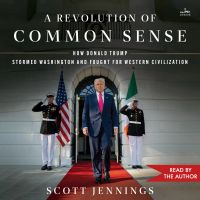
A Revolution of Common SenseScott Jennings9h 29m4.6 (528)$29 · $0.00
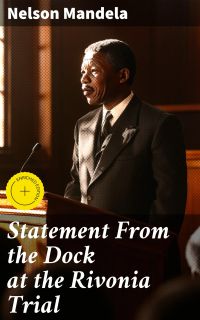
Statement From the Dock at the Rivonia TrialNelson Mandela2h 18m4.6 (1.3K)$1 · $0.00

Lessons from the EdgeMarie Yovanovitch17h 11m4.5 (5.9K)$40 · $0.00

To Rescue the American SpiritBret Baier10h 12m4.5 (2.7K)$8 · $0.00

StonewalledSharyl Attkisson15h 19m4.5 (4.3K)$33 · $0.00
The World According to Orwell: 1984 & Animal FarmGeorge Orwell15h 42m4.6 (1.1K)$1 · $0.00
Basic EconomicsThomas Sowell18h 32m4.5 (29.3K)$28 · $0.00
To Rescue the RepublicBret Baier, Catherine Whitney11h 42m4.5 (8.6K)$29 · $0.00

Modern WarriorsPete Hegseth7h 10m4.5 (4.7K)$24 · $0.00

Philosophy and Opinions of Marcus Garvey (Annotated)Marcus Mosiah Garvey4h 42m4.5 (1.7K)$1.99 · $0.00

A Plague Upon Our HouseScott W. Atlas MD10h 37m4.5 (3.4K)$20 · $0.00

One Bright MoonAndrew Kwong12h 21m4.5 (813)$29 · $0.00

CredibleDeborah Tuerkheimer8h 5m4.6 (551)$26 · $0.00
You may also like

The History of Rome (Volumes 1-5)Theodor Mommsen101h 1m4.4 (892)$2 · $0.00

Fiat Money Inflation in France: How it Came, What it Brought, and How it EndedAndrew Dickson White3h 41m4.2 (842)$1 · $0.00

My Weird School: Class Pet Mess!Dan Gutman7m4.2 (519)$4 · $0.00

The Art of WarNiccolò Machiavelli7h 15m4.0 (11.9K)$21 · $0.00
Basic EconomicsThomas Sowell18h 32m4.5 (29.3K)$28 · $0.00
The Servile StateHilaire Belloc5h 11m4.1 (1.3K)$1.99 · $0.00
The Politically Incorrect Guide to SocialismKevin Williamson8h 44m4.0 (1.4K)$17

Some Principles of Maritime Strategy (Annotated)Julian Stafford Corbett11h 14m4.1 (385)$1.99 · $0.00

The United States ConstitutionUnited States1h 57m4.5 (41.6K)$2 · $0.00
Experiments in Government and the Essentials of the Constitution (Annotated)Elihu Root2h 13m4.0 (16)$1.99 · $0.00

Constitution of the Republic of SerbiaRepublic of Serbia4h 9m$2 · $0.00

Open Letter to AmericaArthur Ransome1h$2 · $0.00

A Second Letter to the Rev. William Maskell, M.AMayow Wynell Mayow4h 55m$1 · $0.00

The Balkans: Old, New InstabilitiesGiorgio Fruscione5h 6m$7

The Sabbath and the Crystal PalaceAnonymous25m$2 · $0.00

Eighth State of the Union AddressAndrew Jackson1h 24m$1 · $0.00

Vienna Convention on the Law of TreatiesVarious Authors1h 30m$2 · $0.00

Life and Letters of Sir Wilfrid LaurierOscar Douglas Skelton15h 40m$2 · $0.00

Student Success Act ( HR5 ; 113th Congress)John Kline4h 9m$2 · $0.00
Analytic Summary of The Wealth of NationsAdam Smith22m$7 · $0.00