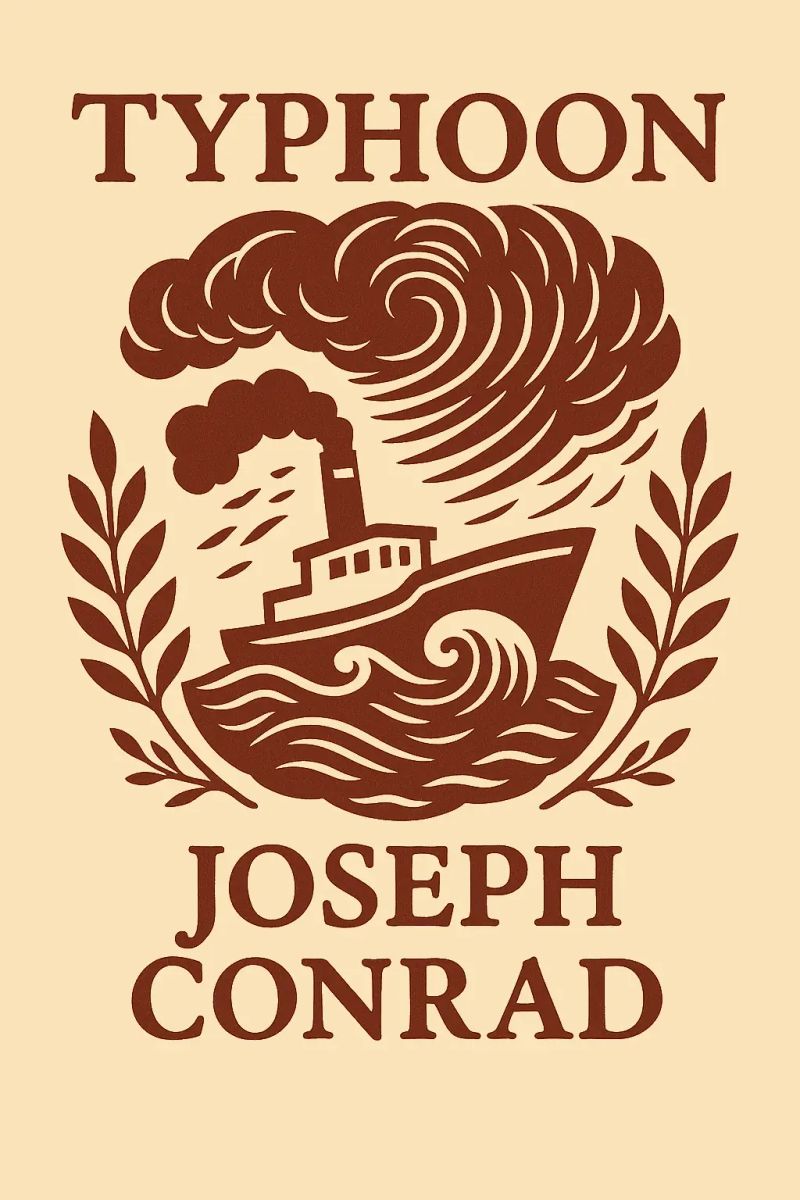
Joseph Conrad (born Jozef Teodor Konrad Korzeniowski) was a Polish-born novelist whose career as a seaman supplied the experiential bedrock for a prolific body of sea fiction that matured at the turn of the twentieth century. Writing in English—his third language—he fused documentary exactness with a wary, almost premonitory, sensitivity to human limitation in the presence of vast, indifferent forces. Typhoon, first published in 1902 as part of the collection Typhoon and Other Stories, situates its ostensibly modest hero, Captain MacWhirr, within the imperial maritime world of British ownership, Asian commerce, and colonial labor. The story’s setting aboard the Nan-Shan, a ship built in Dumbarton and later transferred to Siamese registry, exemplifies the era’s transnational networks of finance and flag, while its tonal restraint and clinical description—long passages of observation rather than overt melodrama—embody Conrad’s late-Victorian/Edwardian realism and his belief that truth emerges through careful attention to surface rather than through rhetoric. In this publication context, Conrad joined a generation that exposed the fragility of certainties amid global trade, often turning to ordinary captains and ordinary days to probe larger questions of fate, authority, and perception.