About this audiobook
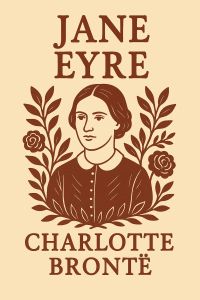
Charlotte Brontë’s Jane Eyre was first published in 1847 in London by Smith, Elder & Co., under the masculine pseudonym “Currer Bell,” a strategy adopted by the Brontë sisters to evade gendered prejudice in the Victorian literary marketplace. Brontë (1816–1855), the daughter of an Irish Anglican clergyman in Yorkshire, drew on her experiences of precarious gentility, educational deprivation, and governess work to shape a narrative that reflects the social realities of early industrial Britain. The novel emerged at a moment when the English Bildungsroman and the domestic novel were being refashioned by debates about class mobility, women’s labor, religious dissent, and moral authority, and it quickly attracted both popular readership and controversy for the intensity of its voice and its perceived challenges to decorum.
Structured as a first-person retrospective “autobiography,” the novel fuses Gothic atmosphere, psychological realism, and moral inquiry to chart a heroine’s struggle for dignity, autonomy, and ethical self-determination within constraining social hierarchies. Its central tensions—between passion and principle, dependence and self-respect, social law and inward conscience—are dramatized through emblematic spaces of confinement and exposure, as well as through a sustained interrogation of gendered power in the household, the church, and the marriage market. Jane Eyre proved highly influential for its confident, intimate narrative voice and its insistence on a woman’s interior life as a source of authority; it helped redefine possibilities for the Victorian heroine and continues to shape later feminist, postcolonial, and psychoanalytic readings of the nineteenth-century novel.