

Bringing Forth Life-Coherence
From Technical Distinctions to Co-Owned Living WorldsBy Dr. Bichara Sahely

Length5h 25m
About this audiobook
Bringing Forth Life-Coherence is the audiobook edition of Life-Coherent Transition: A Maturana-Informed Stakeholder Engagement Framework. It explores how precise life-coherent ideas can move from theory into lived transformation without becoming imposed, diluted, or captured.
Drawing on Humberto Maturana’s insights into structural coupling, languaging, emotioning, and the legitimacy of the other, this work reframes stakeholder engagement as a process of co-participation and co-ownership. It offers a practical relational praxis for listening, translating, piloting, measuring, reflecting, and adapting together.
This is a guide for anyone working in nation-building, public finance, health, education, food systems, water, climate, tourism, technology, spirituality, or community renewal who seeks to help bring forth a more life-coherent world.
Audiobook details
GenrePhilosophy, Politics and Government
Length5 hrs 25 mins
Narrated byListen with 1,000+ voices
FormateBook with Audio
Publish dateJun 4, 2026
LanguageEnglish
Table of contents
1Chapter 1
2Description
3Opening Note to Listeners
4Chapter 1. Introduction: The Threshold Between Framework and Field
5The emerging problem of implementation without embodiment
Show all chaptersShow less
6Why life-coherent frameworks need a relational praxis
7From policy architecture to living transition
8The risk of free-floating abstraction
9The Maturana contribution
10The core argument of this work
11Chapter 2. The Need for Precise Life-Coherent Distinctions
12Why vague aspiration is not enough
13Life-ground
14Life-capital
15Civil commons
16Mis-nesting
17Re-nesting
18Life-capital budgeting
19The Life-Capital Test and Dashboard
20From technical distinction to lived translation
21Chapter 3. The Limits of Information Transfer
22Why evidence does not determine transformation
23Reports, dashboards, and policies as perturbations
24The failure of persuasion-only implementation
25Why stakeholder resistance is often structural, not irrational
26From communication strategy to relational design
27Chapter 4. Maturana’s Biology of Knowing and Its Relevance for Transition
28Living systems as structurally determined systems
29Structural coupling
30Languaging as coordination of action
31Emotioning and domains of possible action
32Objectivity in parentheses
33The legitimacy of the other
34Coexistence as the ground of co-participation
35Chapter 5. Stakeholders as Legitimate Worlds
36Why stakeholders are not implementation targets
37Conserved concerns and lived pressures
38Cabinet and political leadership
39Finance and public administration
40Water, food, health, energy, tourism, and waste sectors
41Youth, households, communities, churches, and civil society
42Farmers, fishers, workers, local enterprises, and cooperatives
43Nevis, federal legitimacy, and place-specific worlds
44Diaspora and international partners
45The guiding question: what is each stakeholder trying to conserve?
46Chapter 6. From Buy-In to Co-Ownership
47Why “buy-in” is too small a goal
48The problem with top-down consultation
49Co-ownership as recurrent participation
50Shared seeing, shared measuring, shared learning

Preserving Life, Transforming Power in GazaDr Bichara Sahely1h 42mFree

Preserving Life, Transforming PowerDr. Bichara Sahely1h 4mFree

Putting the Missing Bridge to WorkDr. Bichara Sahely2h 12mFree

The Missing BridgeDr. Bichara Sahely1h 5mFree

Transformational Laboratories ProtocolDr. Bichara Sahely2h 33mFree

Artificial Intelligence and the Epistemic CommonsDr Bichara Sahely3h 12mFree

Conflict, Repair, and Non-DominationDr Bichara Sahely2h 21mFree

Institutions of Reflexive TransformationDr Bichara Sahely1h 51mFree

The Politics of Civilizational HealingDr. Bichara Sahely2h 13mFree

The Missing Grammar of Modern CivilizationDr. Bichara Sahely2h 8mFree

Civilizational Healing Research ArchitectureDr. Bichara Sahely1h 24mFree

How Does a Civilization Learn to Heal?Dr. Bichara Sahely1h 16mFree

From Competent Physicians to Healing SocietiesDr. Bichara Sahely2h 20mFree

Competence Is Necessary, but Not SufficientDr. Bichara Sahely1h 15mFree

Life-Grounding CanMEDSDr. Bichara Sahely1h 13mFree

The Dynamic Architecture of ViabilityDr Bichara Sahely2h 1mFree

Completing the Life-Value Onto-Axiology ProgramDr. Bichara Sahely1h 9m5.0 (1)Free

BEYOND GLOBAL JUSTICEDr. Bichara Sahely1h 25mFree

The Sweetness That Consumed the WorldBichara Sahely16h 14mFree

THE SOVEREIGNTY OF CREDITDr. Bichara Sahely3h 56mFree

IlluminationsWalter Benjamin10h 12m4.4 (16.2K)$20 · $0.00

That Bird Has My WingsJarvis Jay Masters9h 49m4.4 (13.7K)$29 · $0.00

Tâo Teh KingLaozi2h 34m4.4 (230.9K)$2 · $0.00

Buddhist Boot CampTimber Hawkeye2h 39m4.4 (8.4K)$18 · $0.00

Enchiridion & The Discourses of Epictetus (Annotated)Arrian Epictetus18h 9m4.4 (3.5K)$2 · $0.00

The Meditations of the Emperor Marcus Aurelius AntoninusEmperor of Rome Marcus Aurelius5h 41m4.4 (1.8M)$1 · $0.00

Crime and PunishmentFyodor Dostoevsky23h 11m4.4 (1.3M)$12 · $0.00

MeditationsMarcus Aurelius5h 52m4.4 (433.7K)$1 · $0.00
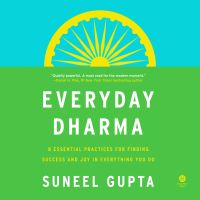
Everyday DharmaSuneel Gupta5h 2m4.5 (761)$20 · $0.00

The Joyful Wisdom ("La Gaya Scienza")Friedrich Wilhelm Nietzsche11h 37m4.4 (26.6K)$1 · $0.00
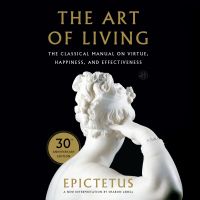
The Art of LivingEpictetus, Sharon Lebell3h 16m4.4 (50.1K)$18 · $0.00

Sadhana: the realisation of lifeRabindranath Tagore3h 49m4.4 (8.6K)$6 · $0.00

SapiensYuval Noah Harari15h 18m4.3 (1.4M)$33 · $0.00

You BelongSebene Selassie8h 35m4.4 (2.7K)$26 · $0.00

The Song Celestial; Or, Bhagavad-Gîtâ (from the Mahâbhârata)Anonymous2h 18m4.4 (3.2K)$2 · $0.00

Chuang Tzu: Mystic, Moralist, and Social ReformerZhuangzi14h 42m4.4 (1.2K)$1 · $0.00

High-RisersBen Austen13h 33m4.4 (2.8K)$33 · $0.00

The Great OmissionDallas Willard7h 45m4.4 (4K)$26 · $0.00

The Grand InquisitorFyodor Dostoyevsky2h 24m4.3 (10.7K)$1 · $0.00

Praying with the PsalmsEugene H. Peterson7h 20m4.5 (312)$24 · $0.00

KrantikariSanjeev Sanyal11h 44m4.6 (1.3K)$16 · $0.00

Unbroken Bonds of BattleJohnny Joey Jones8h 31m4.6 (2.6K)$8 · $0.00

On Democracies and Death CultsDouglas Murray10h 38m4.6 (6.5K)$29 · $0.00

Balcony Over Jerusalem: A Middle East Memoir - Israel, Palestine and BeyondJohn Lyons12h 37m4.6 (1.4K)$33 · $0.00

RiggedMollie Hemingway12h 48m4.6 (4.2K)$23 · $0.00

SledgehammerDavid Friedman8h 21m4.7 (589)$26 · $0.00

Citizenship in a Republic (Annotated)Theodore Roosevelt2h 44m4.6 (1.4K)$2 · $0.00

No EscapeNury Turkel9h 30m4.6 (809)$28 · $0.00

Always FaithfulThomas Schueman, Zainullah Zaki12h 12m4.6 (977)$29 · $0.00

UnthinkableJamie Raskin15h 8m4.5 (9.3K)$8 · $0.00

My Fourth Time, We DrownedSally Hayden13h 59m4.6 (2.9K)$23 · $0.00

A Revolution of Common SenseScott Jennings9h 29m4.6 (528)$29 · $0.00

Statement From the Dock at the Rivonia TrialNelson Mandela2h 18m4.6 (1.3K)$1 · $0.00

Lessons from the EdgeMarie Yovanovitch17h 11m4.5 (5.9K)$40 · $0.00

To Rescue the American SpiritBret Baier10h 12m4.5 (2.7K)$8 · $0.00

StonewalledSharyl Attkisson15h 19m4.5 (4.3K)$33 · $0.00

The World According to Orwell: 1984 & Animal FarmGeorge Orwell15h 42m4.6 (1.1K)$1 · $0.00
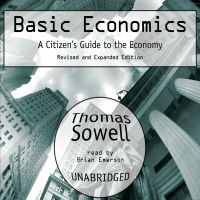
Basic EconomicsThomas Sowell18h 32m4.5 (29.3K)$28 · $0.00

To Rescue the RepublicBret Baier, Catherine Whitney11h 42m4.5 (8.6K)$29 · $0.00

Modern WarriorsPete Hegseth7h 10m4.5 (4.7K)$24 · $0.00
You may also like

The End of DietingJoel Fuhrman5h 57m4.1 (4.5K)$24 · $0.00

BiomimicryJanine M. Benyus14h 54m4.1 (3.6K)$33 · $0.00

The 5 ResetsAditi Nerurkar8h 19m3.9 (2.6K)$26 · $0.00

A Call for RevolutionDalai Lama, Sofia Stril-Rever1h 30m4.2 (1.4K)$16 · $0.00

BLACK BEAUTY (With Original Illustrations) (Annotated)Anna Sewell7h 27m4.3 (595)$2 · $0.00

WildingIsabella Tree12h 22m4.5 (13.4K)$23

Never Be Fat AgainRaymond Francis MSc, Michelle P. King11h 13m4.2 (414)$21

Grand Central Winter, Expanded Second EditionLee Stringer7h4.0 (1.3K)$20 · $0.00
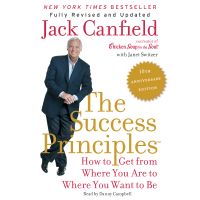
The Success Principles(TM) - 10th Anniversary EditionJack Canfield, Janet Switzer21h 46m4.4 (35.5K)$46 · $0.00

Will's Red CoatTom Ryan8h 23m4.5 (2.3K)$26 · $0.00

Retrain Your BrainSeth J. Gillihan PhD4h 17m4.1 (8.4K)$20

Thank You PowerDeborah Norville4h 11m3.9 (1.6K)$20 · $0.00

Of Time and TurtlesSy Montgomery10h 34m4.5 (5K)$29 · $0.00

Goodbye to InflammationSandra Monino5h 46m4.1 (3.3K)$24 · $0.00

Things I Learned from FallingClaire Nelson7h 24m4.2 (19.5K)$24 · $0.00

Necessary EndingsHenry Cloud7h 16m4.3 (15.7K)$24 · $0.00

The Mental Toughness AdvantageDouglas Comstock2h 49m4.0 (2.1K)$15 · $0.00

Eat for LifeJoel Fuhrman9h 8m4.3 (2K)$6 · $0.00

Recalled to HealthTim Hennessy MD6h 16m$14 · $0.00

The Wolves and Moose of Isle RoyaleNancy F. Castaldo1h 47m4.3 (112)$16 · $0.00